In 2018, I spent a semester on a credit transfer mobility program at Szent Istvan University (now Hungarian University of Agriculture and Life Sciences) in Godollo, Hungary. I was a Computer Science student at Institut Teknologi Nasional Bandung (ITENAS), but the exchange placed me in the Faculty of Mechanical Engineering, taking courses in CAD, Electronics, Quality Management, and Informatics.
Beyond the academics, life on campus came with experiences I never expected. One of them was Researchers Night.
Every year, the university hosts this event where international students showcase their home countries through food, music, clothing, and conversation. The main activity is Global Village: each country gets a booth in the Rector Hall, and visitors walk around tasting food and learning about different cultures. Not just students either. Local Hungarian families came too, parents bringing their kids to try food from around the world.
On September 28, 2018, seven of us Indonesian exchange students represented our country. I brought a camera along and put together this short documentation of the evening.
Setting Up the Booth
The Rector Hall was packed with booths. Next to us, the Malaysian team had their display set up. Across the room, a Kyrgyz student was playing a komuz (a traditional string instrument), and the Indian delegation had artwork and cultural displays covering their entire table.
We draped the red and white flag across the front of our table and set up a laptop playing the "Wonderful Indonesia" promotional video on loop. Behind the screen, we laid out the real stars of the booth: the food.
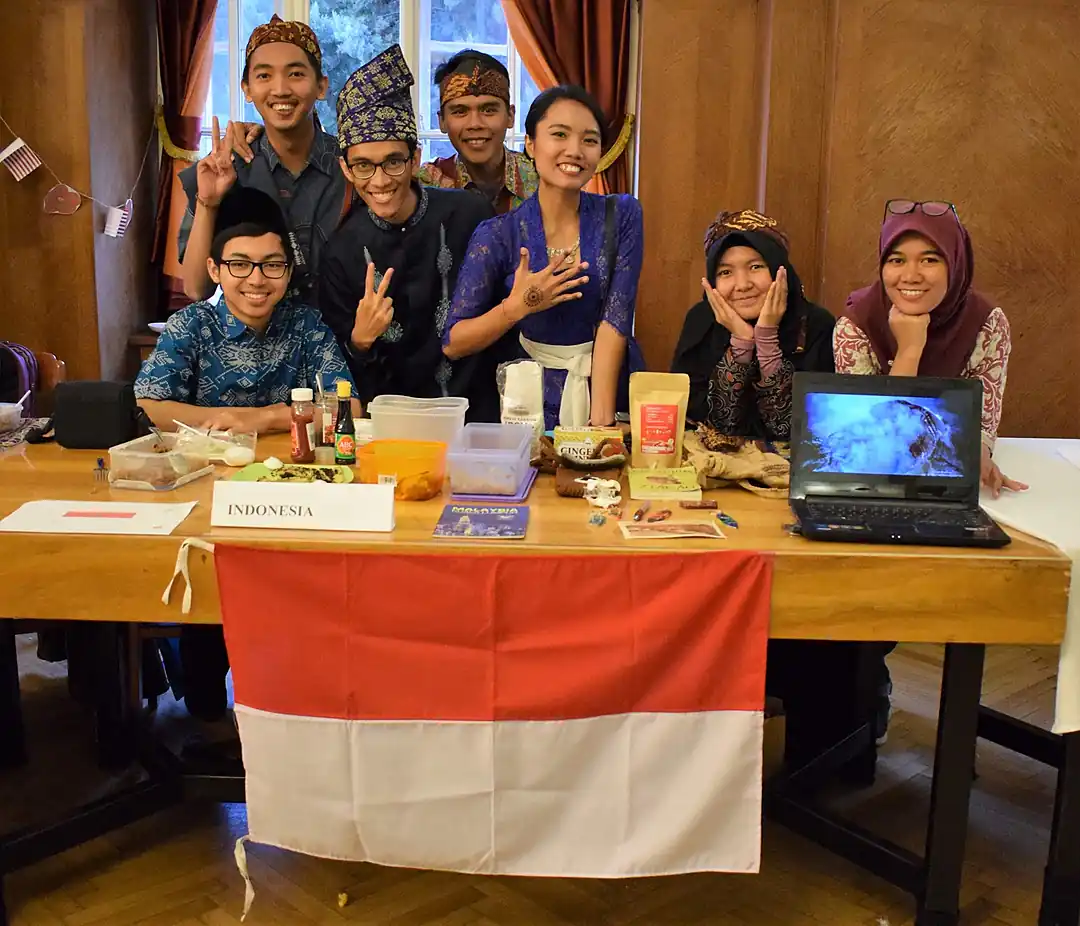
We cooked everything ourselves: perkedel (potato fritters), bala-bala (vegetable fritters), Indomie Mie Goreng, and rendang. We also prepared wedang jahe, a traditional ginger drink to warm people up on the chilly Hungarian evening.
The rendang disappeared fast. The Indomie got a lot of "wait, this is instant noodles?" reactions. And the wedang jahe caught people off guard because most visitors expected it to be tea, not a spicy ginger punch.
The Totopong Surprise
We brought a stack of Javanese totopong headwear mostly as decoration. We figured people would look at them, maybe ask a question or two, and move on.
That is not what happened.
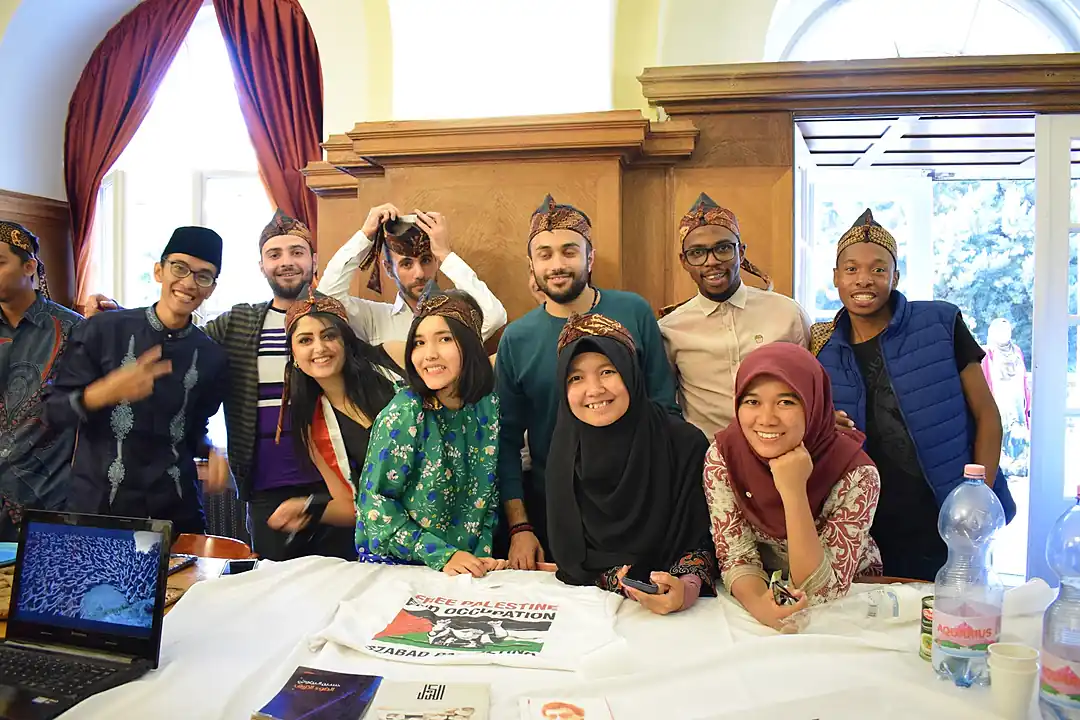
Students from every booth started lining up to try them on. A Kenyan student came over and we helped tie one on his head. A European girl in a yellow shirt wanted one too. They'd put one on, pose for photos, then call their friends over. Before we knew it, the totopong had spread beyond our booth entirely. Over at the Palestinian table, a whole group was posing together, Indonesian and Palestinian students side by side, all wearing batik headwear. One Arab student wore a totopong over his keffiyeh for the rest of the night. An African student in a white button-down walked around the hall proudly wearing one like it was his own.
The exchange went both ways. One of our team members ended up wearing a Turkish fez he got from another booth. That's the thing about the evening: it stopped being about individual booths pretty quickly and became everyone mixing everything together.
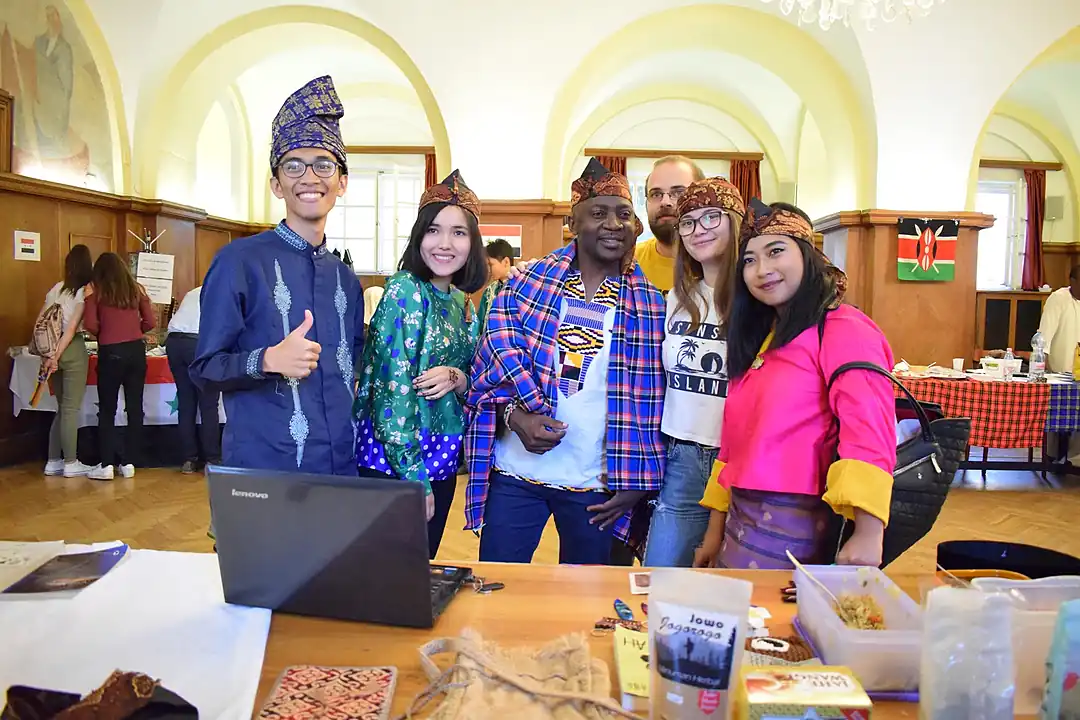
We spent half the night teaching people how to fold and tie totopong properly. It was one of those moments where you realize cultural exchange actually works. Not through presentations or pamphlets, but through something as simple as letting someone wear a piece of your tradition and seeing their face light up.
The Bigger Picture
At some point, someone put on music and the center of the hall turned into a dance floor. Indonesian, Middle Eastern, European, and Mongolian students all dancing together, nobody really knowing the moves, everyone just going with it.
By the end of the night, all the booths came together for a group photo. Dozens of students from different continents, most still wearing bits and pieces of each other's cultural clothing, squeezed into the frame. It took a few chaotic attempts to get everyone in.
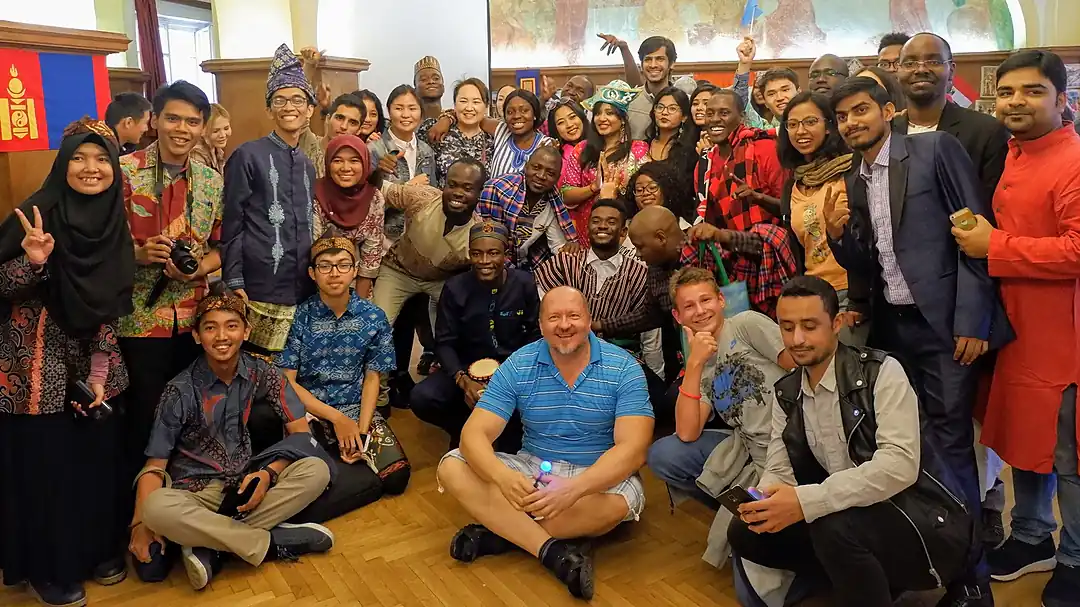
Looking at that photo now, it's a nice reminder that these small moments of genuine curiosity and openness are what make exchange programs worth it. Not the coursework, not the certificate. The evenings where you cook rendang in a tiny Hungarian kitchen and watch a Kenyan student try on a Javanese headpiece for the first time.
The Team
Our Indonesian delegation: Aldira, Muktiadi, Aditya, Haekal, Utami, Ni Putu, and Nini. Seven people, one very busy kitchen, and a night we still talk about.
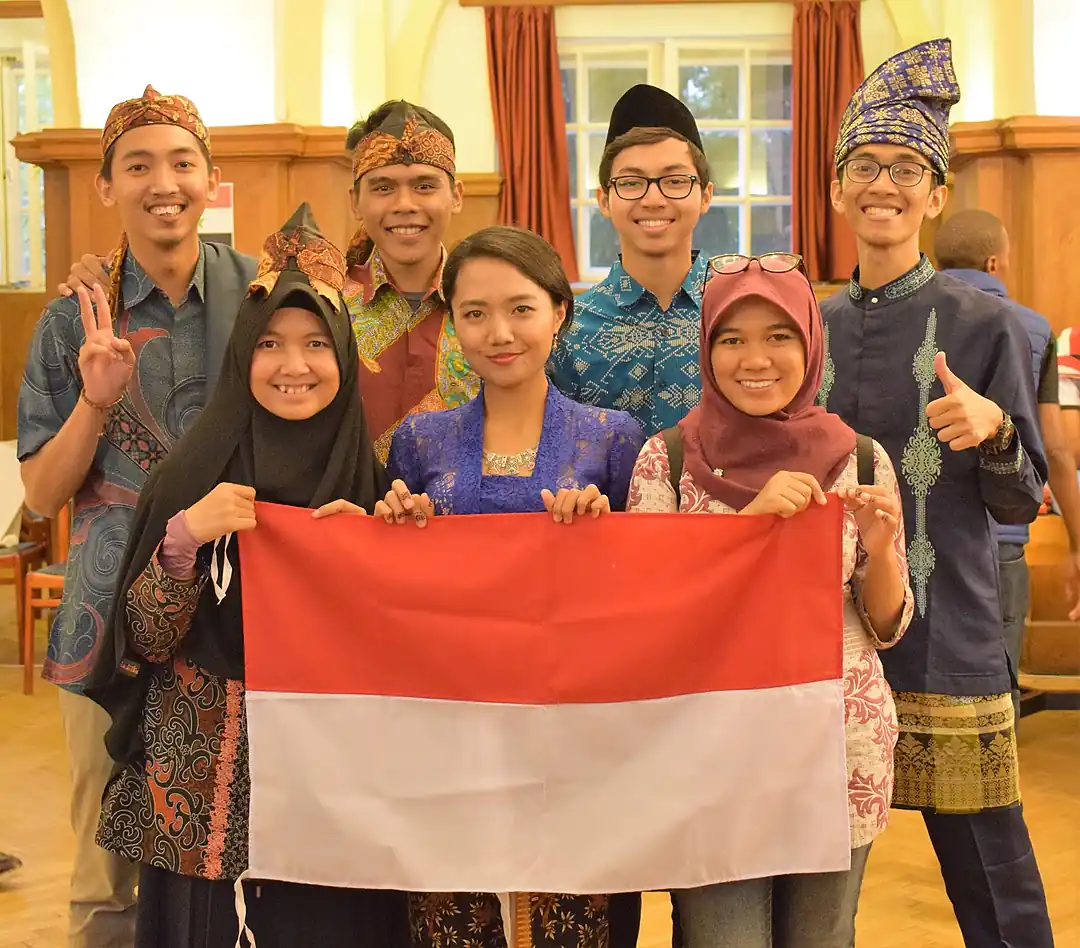
September 28, 2018, Godollo, Hungary