At a glance
What the work reached
The numbers that matter most, each a link to the chapter that tells it.
The page in the book
Tap a page to open it full screen. Every page is also in the PDF.
The work, in depth · 24 November 2026
Ten years of systems people run on, from a national selection platform to a refinery crisis, each told the same way: the pain I found, the system I designed, and what it delivered. Scroll it here as one page, or take the whole book as a PDF.
25 chapters, one page
PDFForeword
Most of the systems in this book were built for people who will never read it: a scholarship applicant in eastern Indonesia filling a long form on an old phone with one bar of signal; a judge from a partner university who should not need an account to score a candidate; a family near the Balongan refinery waiting for a damaged house to become a payment they can trust.
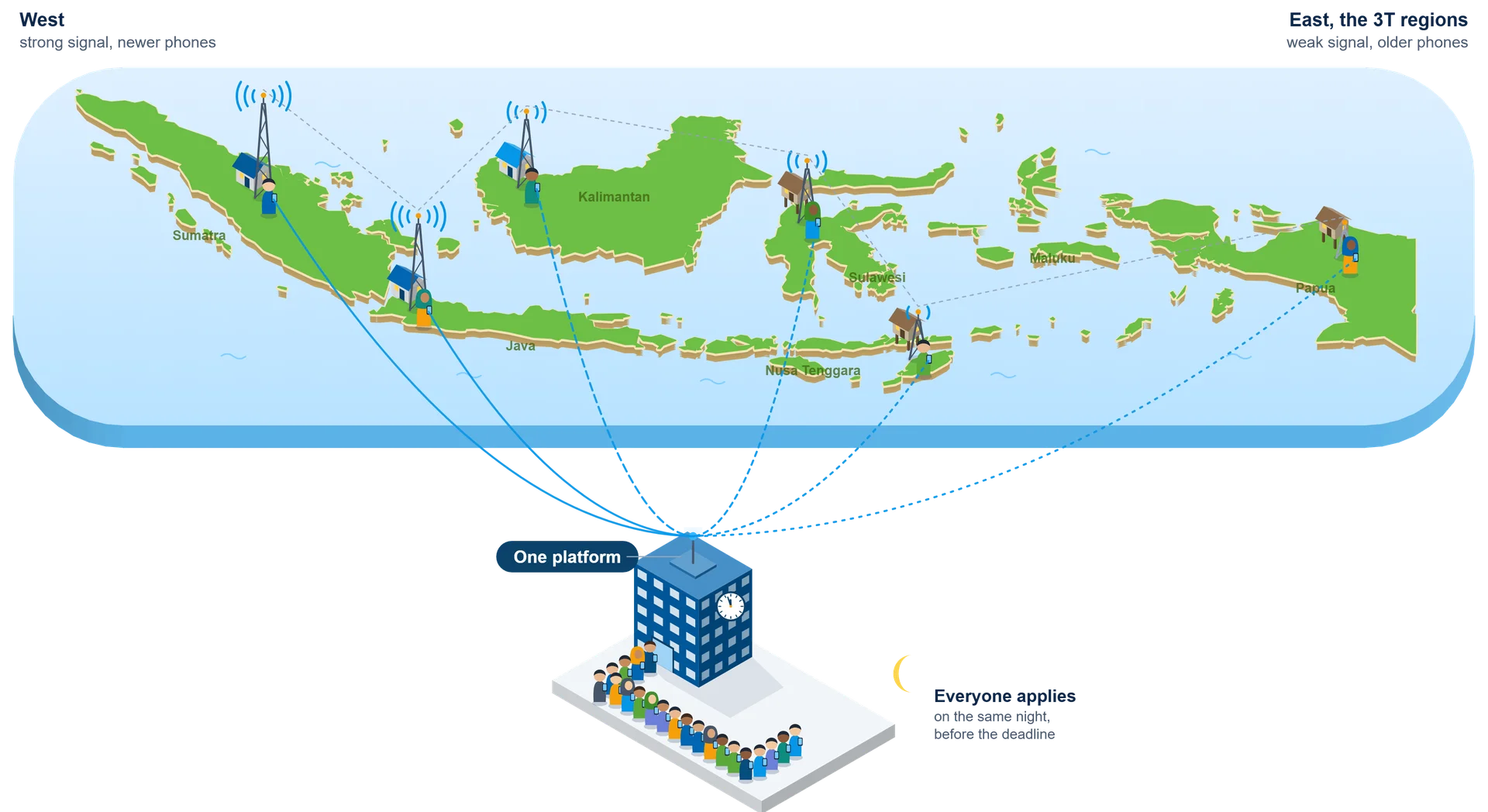
I start with them. Before any screen, I sit with the people who own the problem until the real one is on paper. Then I design for the worst day rather than the average one: the deadline night when everyone arrives at once, the field with no signal, the audit that comes years later and never asks first. And I stay until the system is used without me.
At the foundation that has meant one person carrying the whole IT estate, from requirements to architecture to the production run. It taught me to choose plain, affordable parts that fail alone, to run every change to live data as a script that refuses when unsure, and to let AI read and draft while a named person decides.
This book tells the work in that order: the pain, the design, the change. It also shows what broke, and who else built what.
Organisations invest in business outcomes, not in technology. So I build technology meant to disappear.
The best systems do not demand attention. They remove friction, respect time, and support decisions quietly, until the only thing anyone notices is the outcome: a programme that runs, a decision made in time, an audit that passes.
Muktiadi
Muktiadi Akhmad Januar
Solutions Architect · Jakarta, November 2026
Foreword
Most of the systems in this book were built for people who will never read it: a scholarship applicant in eastern Indonesia filling a long form on an old phone with one bar of signal; a judge from a partner university who should not need an account to score a candidate; a family near the Balongan refinery waiting for a damaged house to become a payment they can trust.
I start with them. Before any screen, I sit with the people who own the problem until the real one is on paper. Then I design for the worst day rather than the average one: the deadline night when everyone arrives at once, the field with no signal, the audit that comes years later and never asks first. And I stay until the system is used without me.
At the foundation that has meant one person carrying the whole IT estate, from requirements to architecture to the production run. It taught me to choose plain, affordable parts that fail alone, to run every change to live data as a script that refuses when unsure, and to let AI read and draft while a named person decides.
This book tells the work in that order: the pain, the design, the change. It also shows what broke, and who else built what.
Organisations invest in business outcomes, not in technology. So I build technology meant to disappear.
The best systems do not demand attention. They remove friction, respect time, and support decisions quietly, until the only thing anyone notices is the outcome: a programme that runs, a decision made in time, an audit that passes.
Muktiadi
Muktiadi Akhmad Januar
Solutions Architect · Jakarta, November 2026
At a glance
Ten years of turning what organisations need into working systems: sitting with the people who own the problem, designing the architecture, building it, and staying until it is adopted.
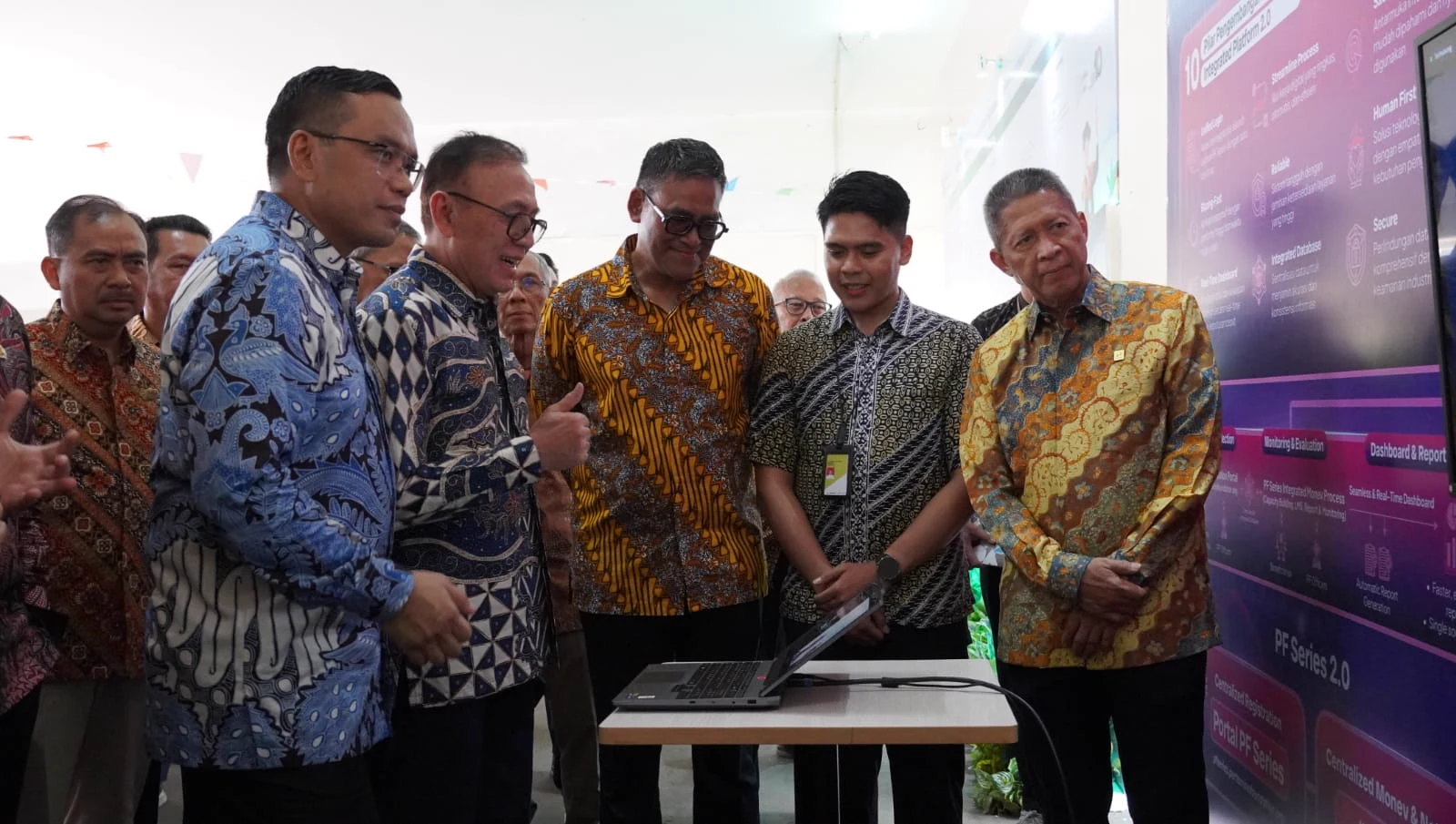
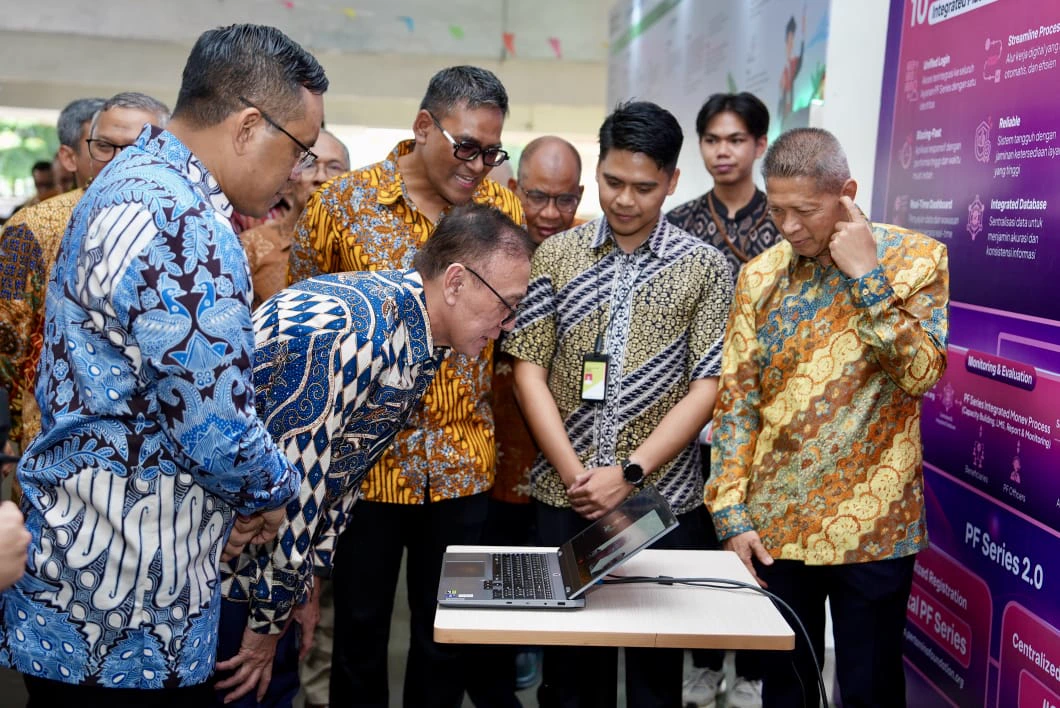
February 2026 · the foundation’s 15th anniversary
Pertamina’s President Commissioner and President Director try the AI interviewer I built
80,000+
people use PFSeries 2.0
From the cities to the 3T regions, many on the oldest phone in the house.
p. 18500+
judges, not one account
Lecturers from dozens of universities scored candidates from a link and a PIN per seat.
p. 610 years
from administrator to architect
A university’s web systems in 2016; a national foundation’s whole IT estate in 2026.
p. 47Platinum
Annual Pertamina Quality Award 2026
Six months after Gold, with the PF Lestari team: I built its field tools and flew the surveys.
p. 9½
of all applications arrive on the last day
So the platform is built for the last night, not for the average one.
p. 134.8
out of 5, rated from inside the platform
Thousands of applicants; one in three used a word for easy.
At a glance
The numbers that matter most, each a link to the chapter that tells it.
Tap a page to open it full screen. Every page is also in the PDF.
Muktiadi Akhmad Januar · Contents
Contents
Every chapter opens the same way: Discover the pain, Design the system, Deliver the change. Every line here is a link, and the tabs at the top of each page jump between parts.
NextA solutions architect’s job, from the first meeting to the last handover.
Muktiadi Akhmad Januar · The role
Requirements, architecture, delivery: the three words on my name card, one person’s job in a small organisation, and the three beats that open every chapter. Each line links to its proof.
Requirements
Discover.
Sit with the people who own the problem until the real one is on paper.
Architecture
Design.
Turn constraints into principles, and principles into parts that fail alone.
Delivery
Deliver.
Build it, run it through the peak, and stay until people use it without me.
Across five
kinds of system
Software
Data
Cloud and operations
Learnedwork built before the design was agreed got thrown away, so I now align on a clickable artefact before building.
NextTen years of that work on one page.
The role
Requirements, architecture, delivery: the three words on my name card, one person’s job in a small organisation, and the three beats that open every chapter. Each line links to its proof.
Tap a page to open it full screen. Every page is also in the PDF.
Muktiadi Akhmad Januar · Ten years on one page
Every dot is a project, sized by how deep it goes. Time widens toward the present (years, then half years, then quarters) because that is where most of the depth sits.
Learnedmanual work on a schedule is a computer’s job done by hand, so every system since starts from spotting it.
NextThe biggest dot on the map comes first: PFSeries 2.0, the platform every programme of the foundation runs on.
At a glance
Every dot is a project, sized by how deep it goes. Time widens toward the present (years, then half years, then quarters) because that is where most of the depth sits.
Tap a page to open it full screen. Every page is also in the PDF.
Muktiadi Akhmad Januar · Part 1 · PFSeries 2.0
Part 1
One platform, every programme, each choosing people its own way
It comes first because it goes deepest: ten months, more than a thousand commits, and every programme of a national foundation running through one system, for applicants from the cities to the most remote regions.
Indonesia, where every applicant comes from: 38 provinces, from Aceh to Papua.
NextFirst the platform as a whole: why it was built the way it was, and how it works inside.
Part 1
One platform, every programme, each choosing people its own way
It comes first because it goes deepest: ten months, more than a thousand commits, and every programme of a national foundation running through one system, for applicants from the cities to the most remote regions.
Muktiadi Akhmad Januar · Part 1 · PFSeries 2.0
What it isPFSeries 2.0 is Pertamina Foundation’s registration and selection platform. Every programme runs on it, from scholarships and innovation funding to youth leadership, women’s entrepreneurship and disaster volunteers: applicants register, fill one form, learn, test and record; judges score; final deciders choose; leadership watches.
Discover.
Every programme of the foundation chose its people on separate spreadsheets, forms and inboxes, for applicants spread from the big cities to the most remote regions.
Design.
One platform where every programme registers and selects, designed for old phones, weak signal and deadline-night surges, with the front end, back end, database and files kept apart.
Deliver.
Every programme of the year on one platform, used by more than 80,000 people across Indonesia.
80,000+
people use it, from the big cities to the most remote regions, many on the oldest phone in the house.
Six principles, always in mind: every feature in this book traces back to one
Any phone
Light pages, installable, no app store.
Any signal
Never lose what was typed or recorded.
Any crowd
Stay standing when everyone arrives at once.
Kept apart
One busy part never drags the others down.
People decide
AI reads and drafts; a named person decides.
On the record
Every action audited, every live change scripted.
Learnedsome mobile networks block direct storage uploads, so every upload tries the direct road first, then detours through our own domain.
NextThose principles decided the architecture: four parts, kept apart.
Muktiadi Akhmad Januar · The system
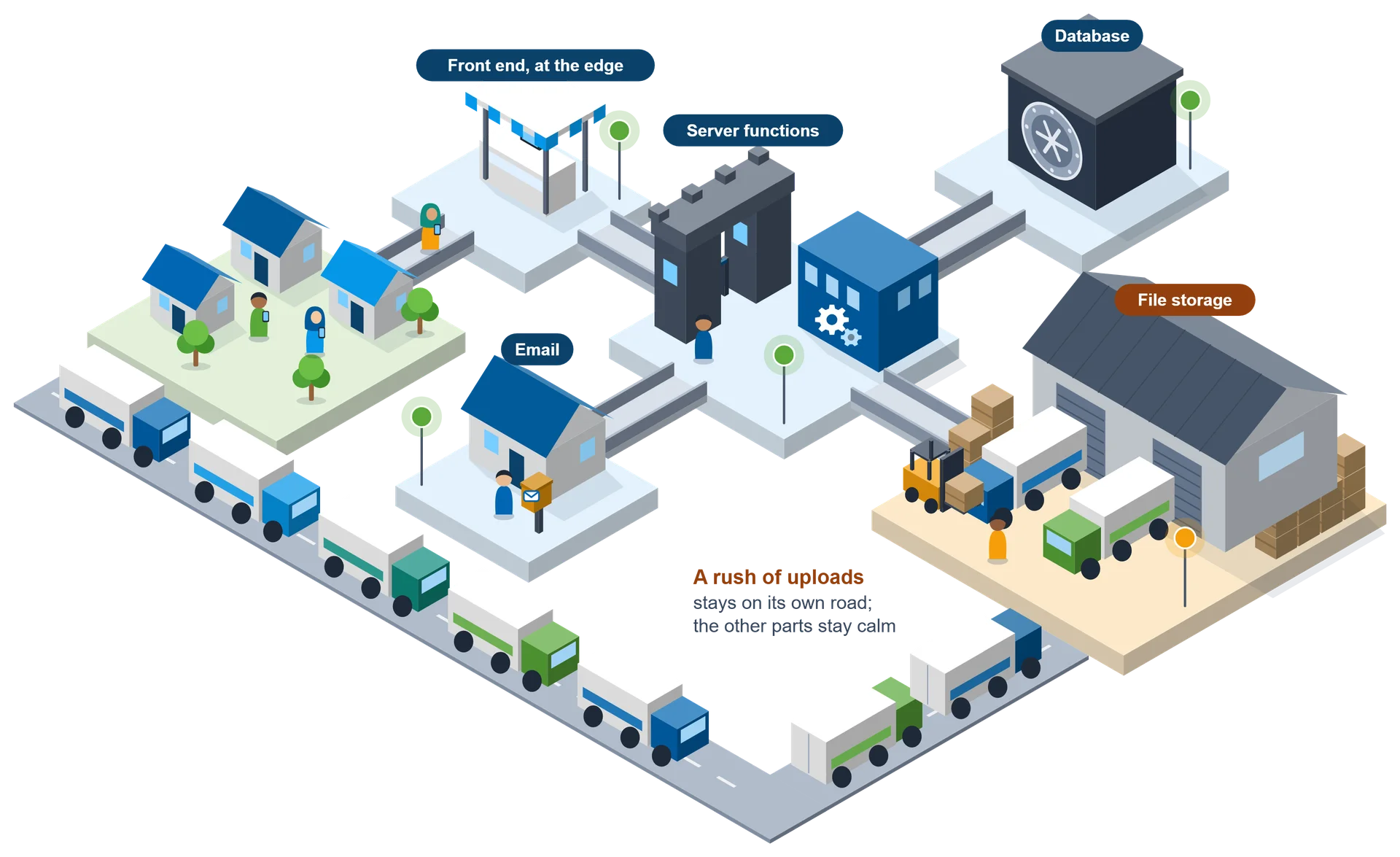
Everyone arrives in the last hours, and the files arrive heaviest. So each kind of traffic gets its own road to its own place: the flood of uploads never queues in front of the database that saves everyone’s answers.
Pages, from the edge
Cloudflare Pages and Workers
Answers, to a calm database
PocketBase
Files, the flood
Cloudflare R2
Email, in batches
Postmark
Pages that ask little of the phone
Served from the edge and installable from the browser; a tab left open across a release reloads itself once instead of breaking.
Any phone
A door that forgives
Bot checks retry at the peak instead of rejecting people, and links opened inside Instagram or WhatsApp jump to the real browser.
Any crowd
A database never asked for everything
Dashboards read a page at a time and answer from cache while they refresh.
Kept apart
Six ways to upload one file
Some carriers block cloud storage, so uploads try the direct road first, then detours through our own domain.
Any signal
Email that cannot slow the site
Announcements to thousands leave in throttled batches that heal themselves.
Kept apart
A heartbeat for every part
Each part is timed on its own, so the slow one shows by name instead of “the site is slow”.
On the record
½
of all applications arrived on the last day; one in eight in the final hour.
Learneda heartbeat can stay green while uploads fail, so it now tests every leg, including the server’s own credentials.
NextDeadline night, as it really happened, and what changed after it.
Muktiadi Akhmad Januar · Deadline night
The final three days, hour by hour
The same shape, programme after programme
Fixes in the final weeks
Closed with no fixes
Closed with no fixes
What changed. PFpreneur and Sobat Bumi needed fixes in their final week; PFmuda and PFsains then closed with the same wall and no fixes at all.
Pages stayed near a second all week. Saves crept toward a minute once, on 28 May; one index fixed it that night, and the final night ran at four times the load with saves under half a second.
Load went up; the platform did not slow down
Illustrative, from the incident log; real page loads measured 1.07 to 1.17 s.
Learnedaccounts arrive at launch and work arrives at the deadline, so the platform is built for reads at the start and writes at the end.
NextOn top of those parts runs one selection engine that every programme configures.
Muktiadi Akhmad Januar · The selection engine
Programmes arrive with their own rules and weeks to launch. Instead of a system each, every programme is a configuration of one engine: which stages it uses, how it scores, who judges.
The switchboard: stages across, programmes down, lit where switched on
A new programme is a configuration, not a project: switch on its stages, set its rubric and its people, and it runs on the same tested line.
80,000+ users and more than a thousand commits in ten months. The architecture, every screen and every production run are mine; most of the code was typed by AI agents working under rules, tests and gates I wrote (how, on page 65).
The same engine, four programmes, four different forms
Sobat Bumi
Each aspect scored beside the candidate’s own claims
PFsains
Levels, a pass line, a note the judge must write
PFmuda
A mentor’s seven aspects, never a score
BSBK
Looks like the paper form it replaced
Who works inside
Learnedprogramme rules hard-coded in a portal turn every new programme into code, so here a programme is configuration.
NextThen the things nobody asks for, which make the platform feel made for people.
Muktiadi Akhmad Januar · The small things
Nobody asks for these. Each one removes a moment of doubt for someone filling a long form on a small phone.
“Did you mean gmail.com?”
Typos caught at sign-up, the fix one tap away. An applicant who mistyped can still reclaim the account by their registration ID.
A save status that never lies
Saving, saved or offline, always on screen. A failed save stays on screen with a retry, so work is never lost silently.
A page that waits for the signal
What was typed is never lost. App code is never cached, so a release never serves a stale screen.
A judge’s door: one link, one PIN
Outside judges never make an account. Lecturers from partner campuses score from a link and a PIN per seat.
And twelve more
5Unsaved work is never silent
A bar and a timer until it is stored.
6Help that stays out of the way
Drag it aside: guides, answers, a chat.
7A passport photo, guided
Face guides in the browser; nothing to install.
8A campaign frame in one tap
Applicants share it; the programme spreads.
9Certificates that verify themselves
Scan the QR, see it is real.
10Each programme in its own colour
One platform, many identities.
11A first-visit walkthrough
Five steps, so nobody starts lost.
12Installable, no app store
On the home screen from the browser.
13Addresses from official codes
Province to village, matchable later.
14WhatsApp-first invitations
Join from a personal link in a chat.
15Links that preview properly
A real card, not a bare address.
16Maintenance without a release
Switched on and off without deploying.
Learneda swallowed error once made a form look saved while nothing persisted, so a silent catch is banned across the codebase.
NextThe people using it noticed, and said so in the platform itself.
Muktiadi Akhmad Januar · In their own words
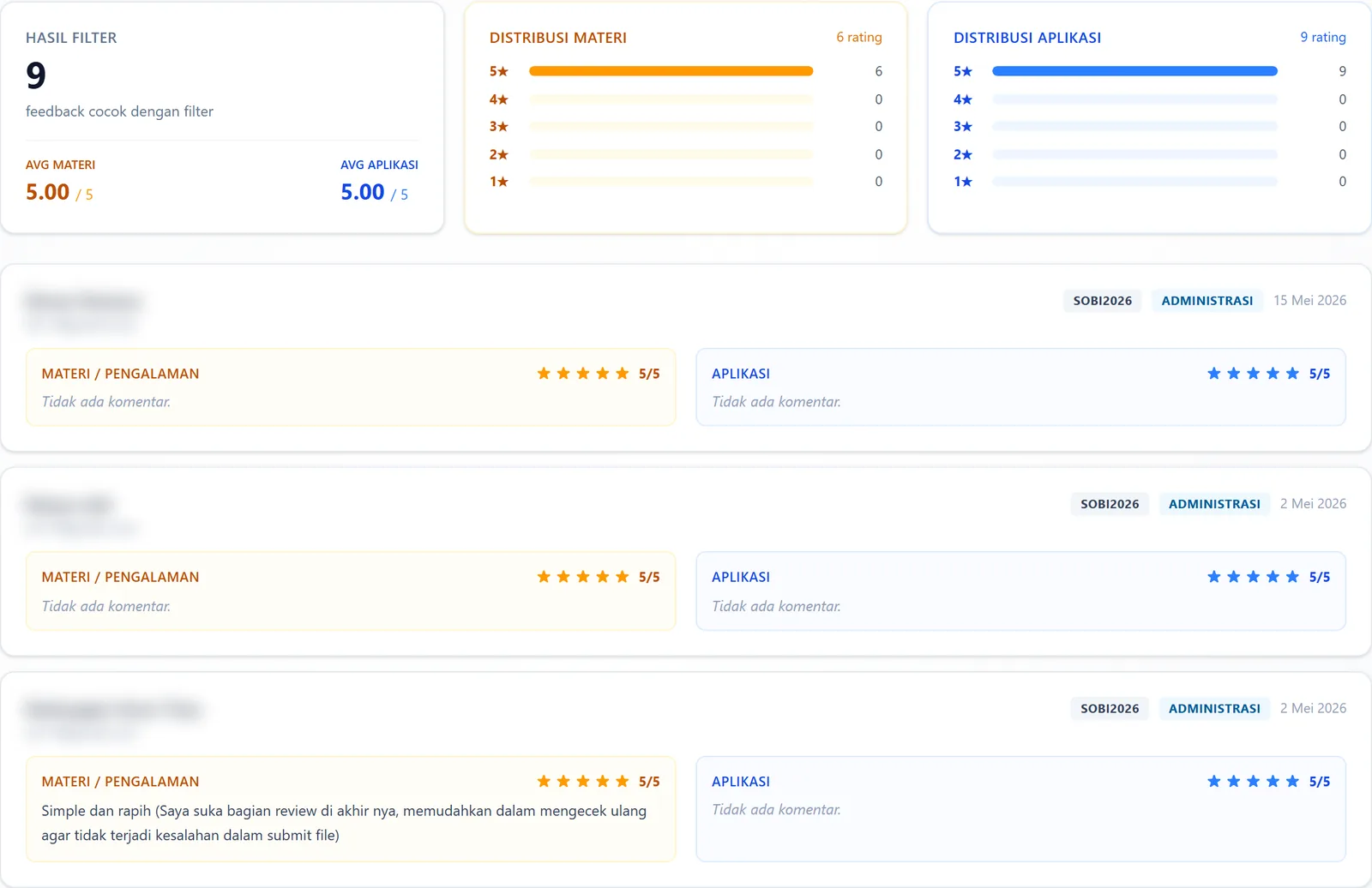
Rated from inside the platform
4.8
out of 5, from thousands of ratings given inside the platform, in the middle of 2026.
The experience overall
How clear the form was
Nearly all
gave four or five stars.
One in three
written comments used a word for easy: mudah, gampang, tidak ribet.
Built for them
Many writers called themselves not tech-savvy, older, or a mum: exactly the reader it was designed for.
In their own words · Indonesian as written, with an English gloss
“Awalnya saya takut gaptek, ternyata aplikasinya gampang.”
“At first I was afraid I was too clumsy with tech, but the app turned out easy.”
“Dari Pf preneur yg sebelumnya, ini jauh lebih bagus dan mudah kami mengaksesnya.”
Compared with the previous PFpreneur, this one is much better and easier for us to access.
PFpreneur applicant
“Terus terang saya sendiri baru pertama x ikut program seprti ini ditambah jarang utak atik hp, awal agak kaku tapi KEREN LOH !”
My first programme like this, and I rarely fiddle with my phone. Stiff at first, but it is COOL!
PFpreneur applicant
“Label serta pilihan menu yang disediakan juga konsisten dari awal hingga akhir… Pertahankan kualitas sistemnya!”
Labels and choices stay consistent from start to finish. Keep the system’s quality up!
Sobat Bumi applicant
“Sangat baik sekali, meskipun saya gaptek, akan tetapi masih bisa mengoperasikan dengan mudah. Ketakutan sebelum nya hilang”
Even though I am not tech-savvy, I could still use it easily. The fear I had before is gone.
PFpreneur applicant
“Bagi emak2 pensiunan seperti saya aplikasinya tdk ribet.”
For a retired mum like me, the app is no hassle.
PFpreneur applicant
“Sistem berjalan dengan lancar tidak pernah ada error maupun kendala yang berarti.”
The system runs smoothly, never an error or any real problem.
PFpreneur applicant
“Dengan adanya aplikasi ini seumuran saya tadinya malas belajar. Ini malah semangat untuk mencari tahu.”
At my age I used to be reluctant to learn. With this app I actually got eager to find out.
PFpreneur applicant
“…langsung bisa melihat hasil pretest, postest dan tugas tugasnya yang sdh dikirim, jadi tidak was was, apakah sudah terkirim atau belum.”
I see my test results and submitted work right away, so I never worry whether it was sent.
PFpreneur applicant
“Proses digitalisasi seluruh rangkaian program ini sangat membantu pelaku UMKM yang memiliki mobilitas tinggi seperti saya.”
Putting the whole programme online really helps small business owners always on the move, like me.
PFpreneur applicant
“Aplikasi Pf series sangat membantu selama kurasi 2 ..stabil materi mudah diakses ulang dan hasil pretest dan postest langsung keluar”
Stable, materials easy to reopen, and test results come out immediately.
PFpreneur applicant
“Tidak terdapat kendala sama sekali untuk pertanyaan dalam formulir, semua ditulis dengan jelas…”
No trouble at all with the form; everything is clearly written.
PPN Diploma applicant
“apalagi bisa dibuatkan twibbon. itu sangat memudahkan para pendaftar”
It even makes you a campaign photo frame, which makes it very easy for applicants.
Sobat Bumi applicant
“Sekali klik lsg masuk ke inti yg akan kita bahas”
One click and you are straight into what we will discuss.
PFpreneur applicant
Learneda tiny save indicator loses work under load, so unsaved changes now show a timer, a banner and a leave-page warning.
NextWhat they asked for, in the same boxes, and how the platform listens.
Muktiadi Akhmad Januar · Listening
A rating closes a learning phase, follows a submitted form and sits before the last screen of a recorded session. The same boxes also carried what people wanted next.
What they asked for, in the same comment boxes
“Mungkin bisa ditambahkan fitur push notification atau kalender pengingat…”
Push notifications or a reminder calendar for deadlines.
“Masih perlu ada CS manusia bukan robot”
Still needs human support, not a robot.
“Tulisan di aplikasi hurufnya terlalu kecil dan instruksi terlalu panjang”
The text is too small and the instructions too long.
“…saat pindah ke soal berikutnya tampilan tidak langsung ke awal halaman”
The next question does not jump back to the top of the page.
“Fitur preview file sebelum upload untuk meminimalisir salah kirim.”
A preview before upload, so the wrong file is not sent.
“…unggah dokumen yang terkadang lambat dan beberapa bagian formulir perlu diisi ulang ketika jaringan terganggu.”
Uploads are sometimes slow, and a dropped connection meant refilling parts of the form.
How the platform listens
Asked where it happens
A rating closes a learning phase, follows a submitted form, and sits before the last screen of a recorded session. Never a survey link.
People decide
Every star with its reason
Each rating shares a card with the box that explains it, so a three arrives with why.
People decide
Read by the people being rated
Mentors read what their own participants said about their teaching, without admin access.
On the record
Counted at a fixed cost
The statistics are totals, never rows, so the page costs the same at any size.
Kept apart
Learneda busy database can sink a dashboard, so heavy pages stream in chunks and serve the last good copy.
NextLeadership reads all of it from above, on one page.
Muktiadi Akhmad Januar · The leadership view
One read-only page: where applicants come from on a map of Indonesia, a 90-day registration trend, and how registrants flow into each programme and narrow stage by stage.
The leadership page, redrawn with illustrative values.
Every candidate’s path
Each programme’s selection drawn as one flow, passed and stopped at every stage.
On the record
Sliced by operating region
Admins map each regency to a Pertamina operating unit, matched by official region code.
On the record
Watched live
Staff monitors follow interviews, discussions and reviews as they happen, and download each judge’s load.
Any crowd
Numbers before a decision
Final deciders see the spread by campus, field, region and judge, with a quota projection.
People decide
From every province, into each programme, stage by stage
Band widths show the shape only, never counts; those who stop at a stage peel off in grey.
No monthly recap to wait for: the numbers leadership reads are the same records the programmes work in.
NextBeing trusted with that many people’s data had to be built in, not promised.
Muktiadi Akhmad Januar · Trust
A national platform holds the data of tens of thousands of young people, many under eighteen. The feature is only the tip; what sits under it decides whether it is done.
Audited by its own builder. When the data protection law came, I checked my own platform against these nine layers, reported the gaps to management, and proposed two tracks: features continue as minimum safe versions under guardrails, while a foundation track closes each gap and proves it closed with a test.
What the applicant can see and control
Your own login history
Every sign-in with its device, method and time, visible to the person it belongs to.
On the record
An email change confirmed twice
The new address only takes over once its own inbox confirms it.
On the record
Leaving, deliberately
Deleting an account takes three steps, frees the ID and email, and leaves an audit row behind.
People decide
Terms with versions
When the terms change, everyone accepts the new version at their next login, and each acceptance is logged.
On the record
A help desk with threads
Write once, get a threaded answer with attachments by email and in the app; staff triage by programme and state.
Any phone
Support without passwords
Staff view the app as an applicant to reproduce a problem, under a banner, with a one-tap exit.
People decide
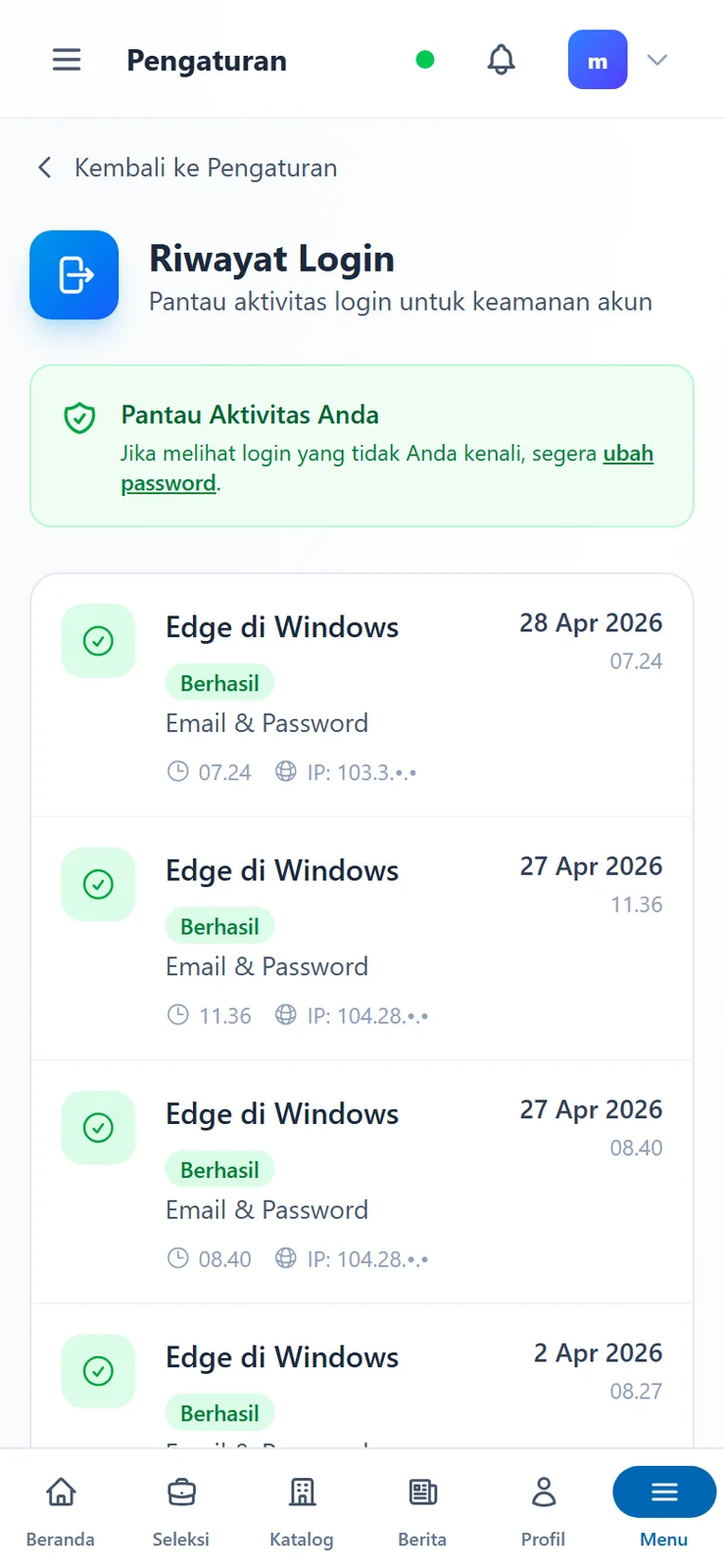
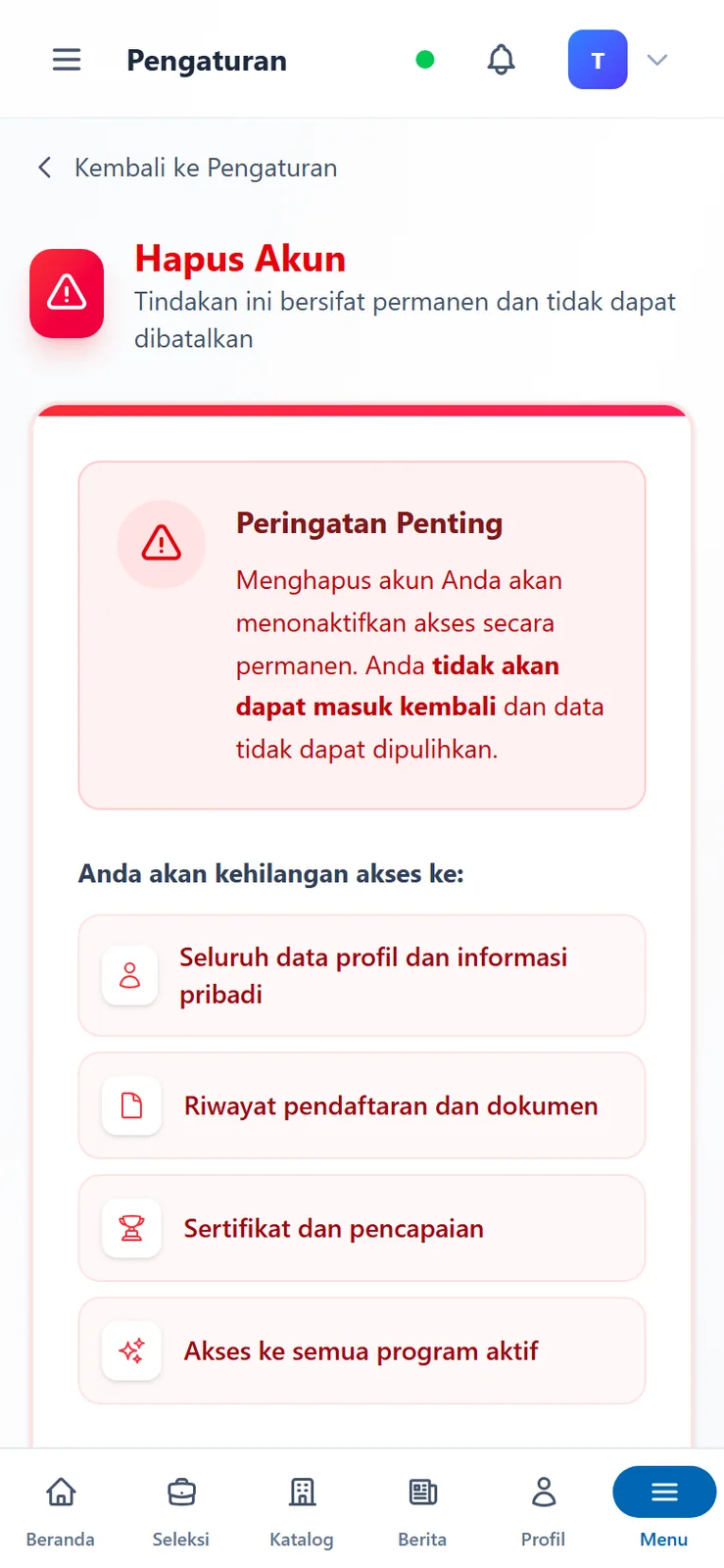
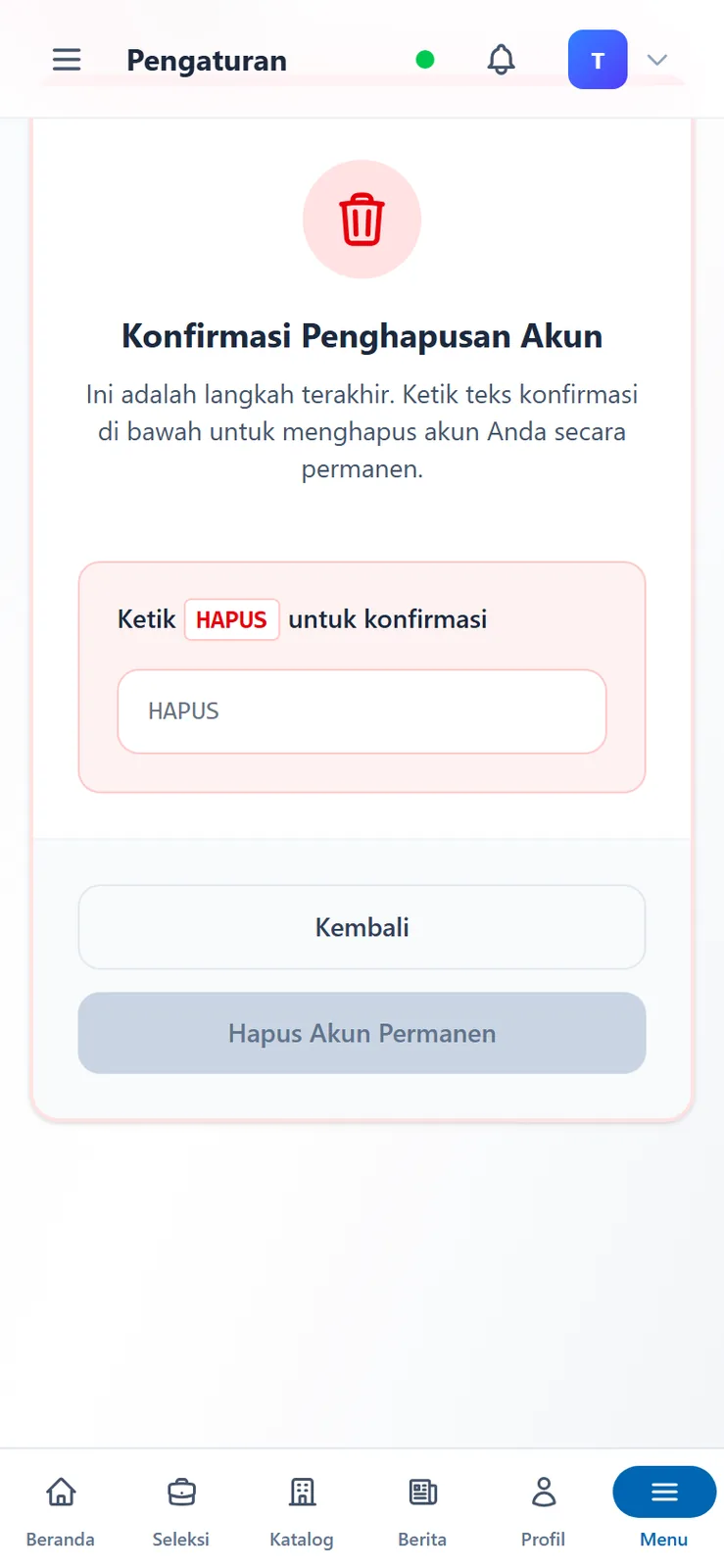
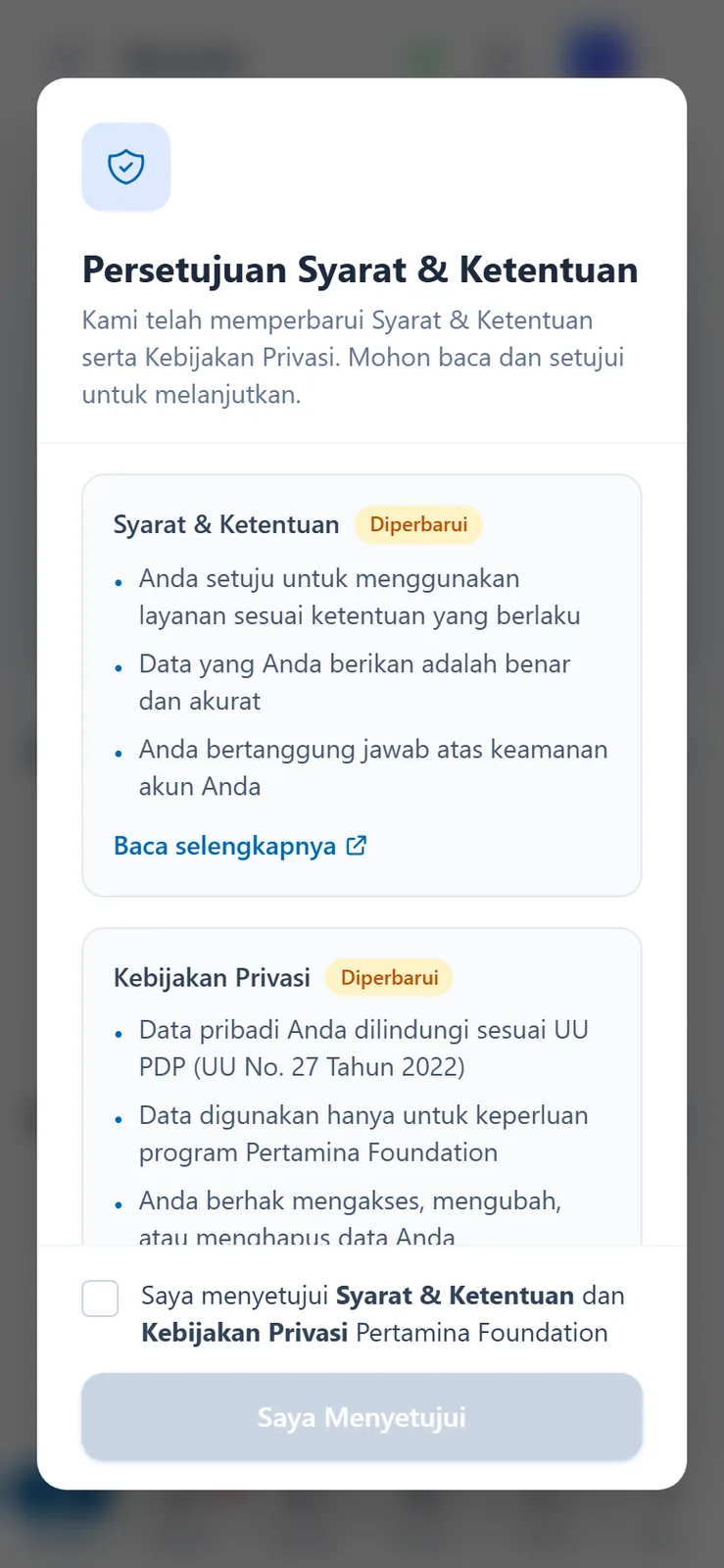
Learneda review of my own system cannot be independent, so the report says so first and traces every finding to code.
NextThe largest programme on the engine: Sobat Bumi, and how every application was read fairly.
Part 1 · 2026
PFSeries 2.0 is Pertamina Foundation’s registration and selection platform. Every programme runs on it, from scholarships and innovation funding to youth leadership, women’s entrepreneurship and disaster volunteers: applicants register, fill one form, learn, test and record; judges score; final deciders choose; leadership watches.
Discover.
Every programme of the foundation chose its people on separate spreadsheets, forms and inboxes, for applicants spread from the big cities to the most remote regions.
Design.
One platform where every programme registers and selects, designed for old phones, weak signal and deadline-night surges, with the front end, back end, database and files kept apart.
Deliver.
Every programme of the year on one platform, used by more than 80,000 people across Indonesia.
Lead architect and builder · SvelteKit · Cloudflare · PocketBase · R2
Tap a page to open it full screen; swipe for the next. Every page is also in the PDF.
Muktiadi Akhmad Januar · Part 1 · Sobat Bumi
What it isSobat Bumi is the foundation’s flagship need-based scholarship for university students across Indonesia. Its selection reads every application with AI notes and human verifiers, then meets candidates in interviews and group discussions at their own campus.
Discover.
Tens of thousands of students apply for a need-based scholarship. That is more than any panel can read carefully, and a skim is unfair to the applicants who need it most.
Design.
Five steps before anyone meets a candidate, then interviews and group discussions judged by hundreds of people who never made an account.
Deliver.
Scholars chosen with a written reason behind every decision, matched name for name to the signed decree.
AI reads, a person decides: three sheets on every application, never written into each other
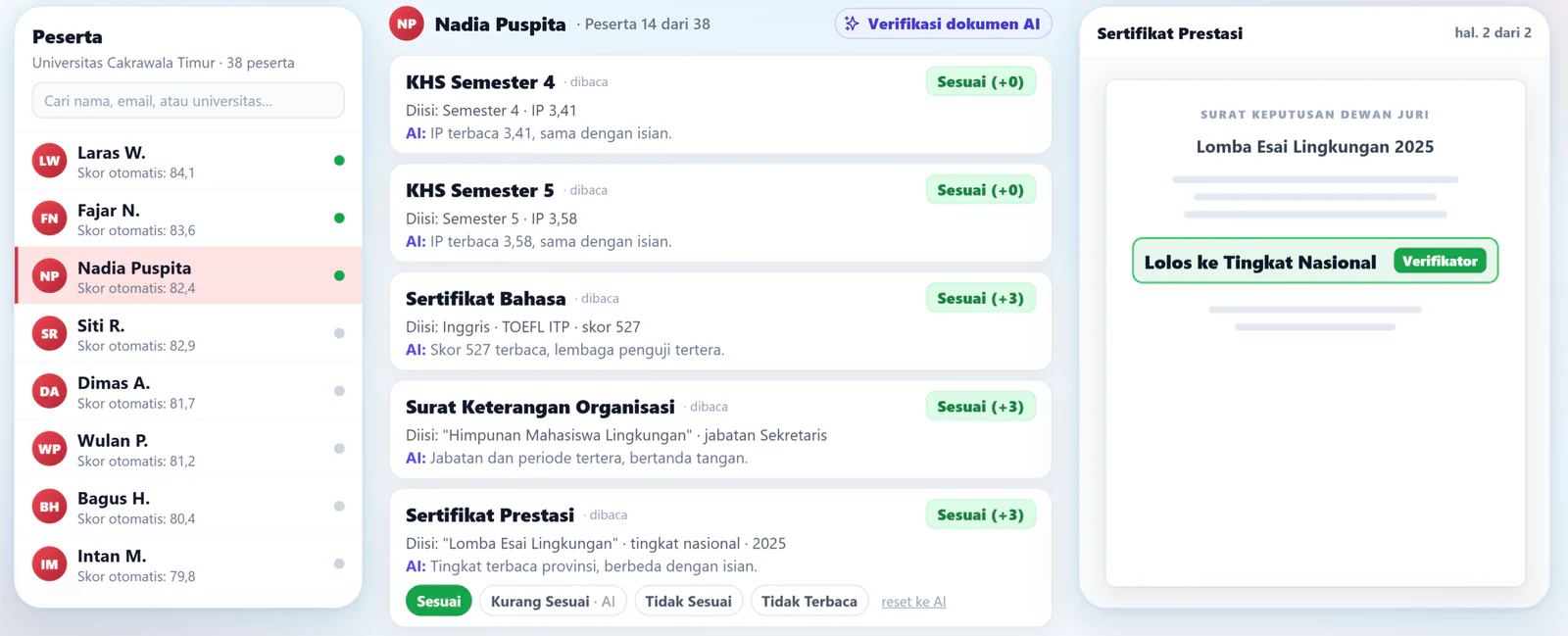
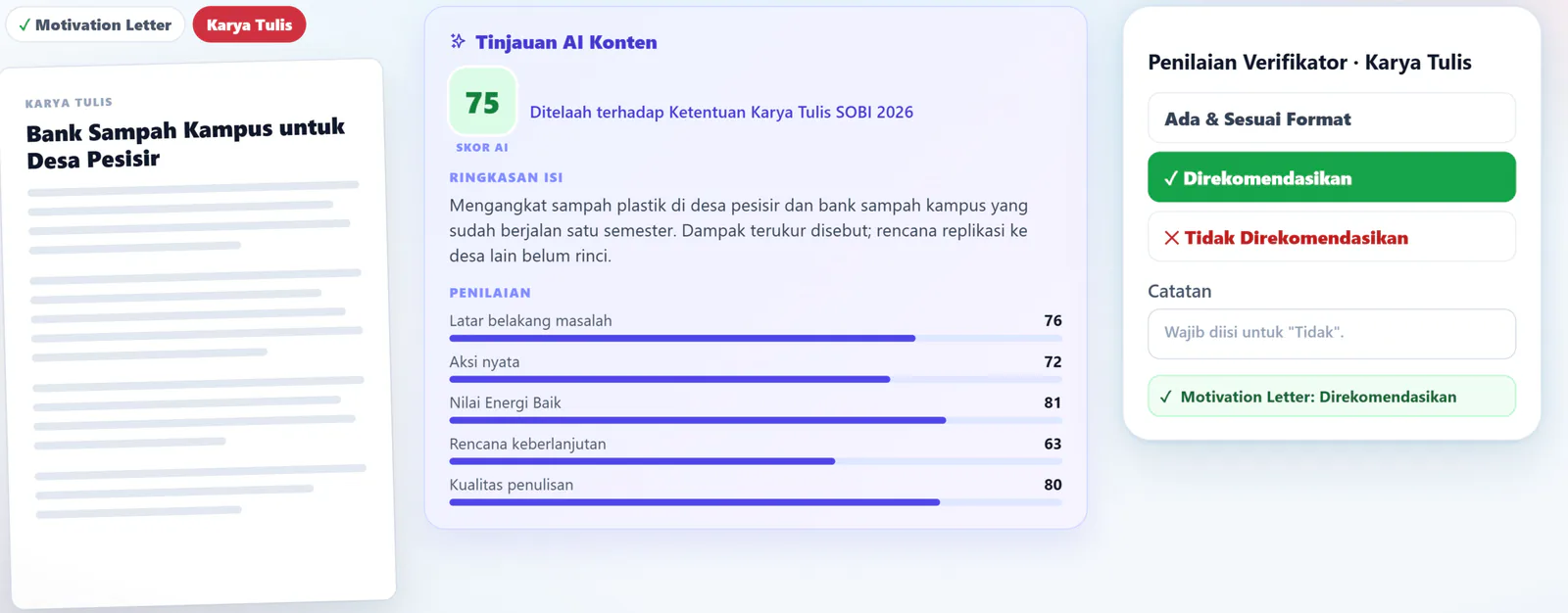
Why it reads fairly
Need before merit
The AI reads anonymised answers with a need-first rubric: hardship counts most, and achievement can only add, never take away.
People decide
Three layers, never mixed
What the AI noticed, what a person verified and what was decided live apart, so a policy could change mid-season without touching the others.
Kept apart
Documents read safely
Scans are read only after text extraction and redaction; identity cards never go to the AI at all.
On the record
The model chosen by a dry run
A small model gave the same ranking as a large one on every essay, for a fraction of the cost, so the small one did the work.
Any crowd
The AI never decides who gets a scholarship. It writes notes; a named person decides, and every decision carries a written reason.
1One long form
Steps in any order, saved as you go; every file confirmed stored before it counts.
2An automatic score
A rubric set as configuration; every disqualification stated with its reason, never deleted.
3AI reads the essays
Notes beside each answer for a person to weigh. Never a verdict.
4A verifier per campus
Each document beside what the AI read in it; the verifier confirms or overrides.
5A final decider
Every judge’s view on one card, then Lolos or Tidak Lolos with a written reason.
Learneddeadline week exposes every missing index, so hot lookups get indexed and audited before a programme opens, not during the rush.
NextThen the people who met the candidates: 500+ judges across dozens of universities, none of whom made an account.
Muktiadi Akhmad Januar · The panels
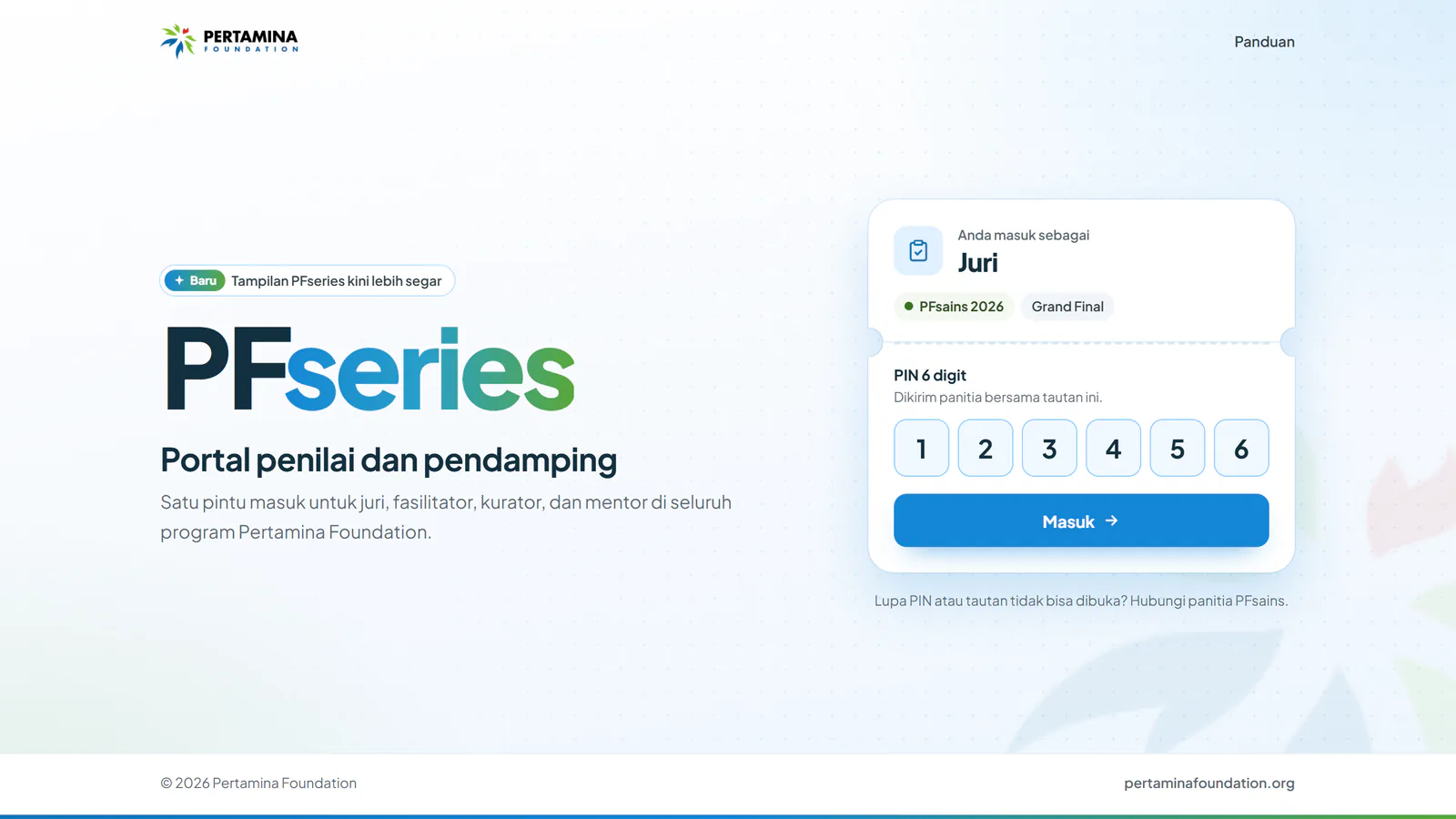
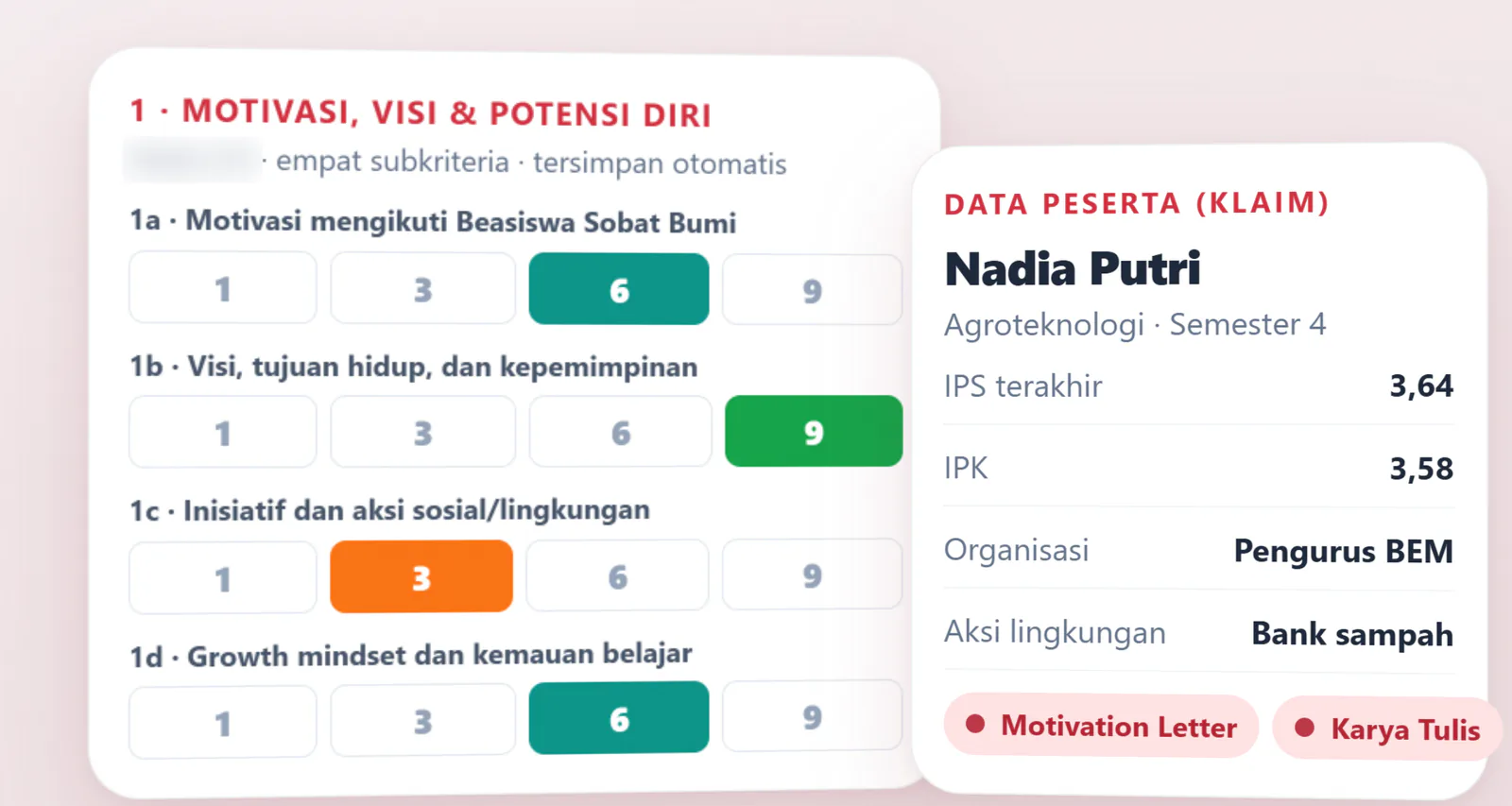
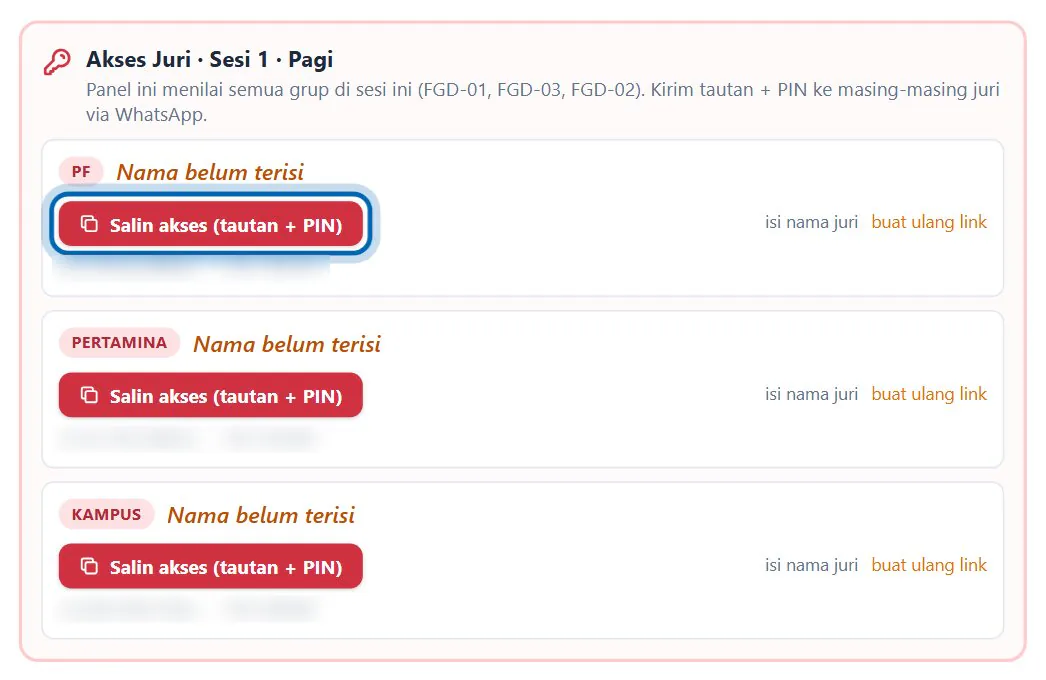
After the reading, candidates met judges from the foundation, Pertamina and their own university: interviews, then group discussions. Hundreds of outside judges would normally mean hundreds of accounts to create and revoke. Instead, every seat opens from one link.
 1
 2
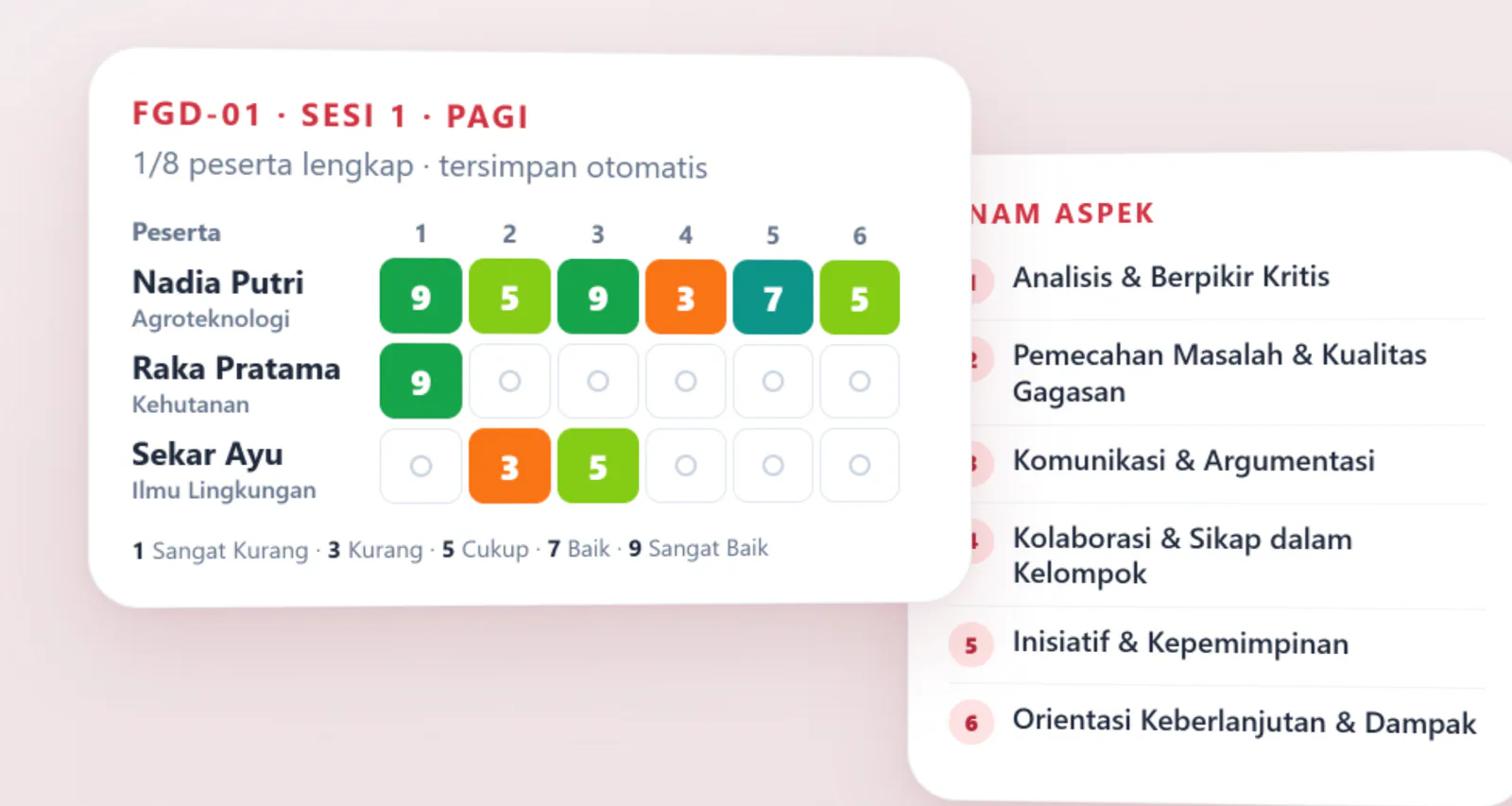 2
 3
 4
 5
One link, one PIN
Each judge’s seat opens from a link stored only as a fingerprint and a six-digit PIN. It locks after repeated wrong tries and expires after one scoring day.
On the record
A tap is a saved score
Each tap saves at once, and if a save fails the cell rolls back, so the screen never shows what the server lacks.
Any signal
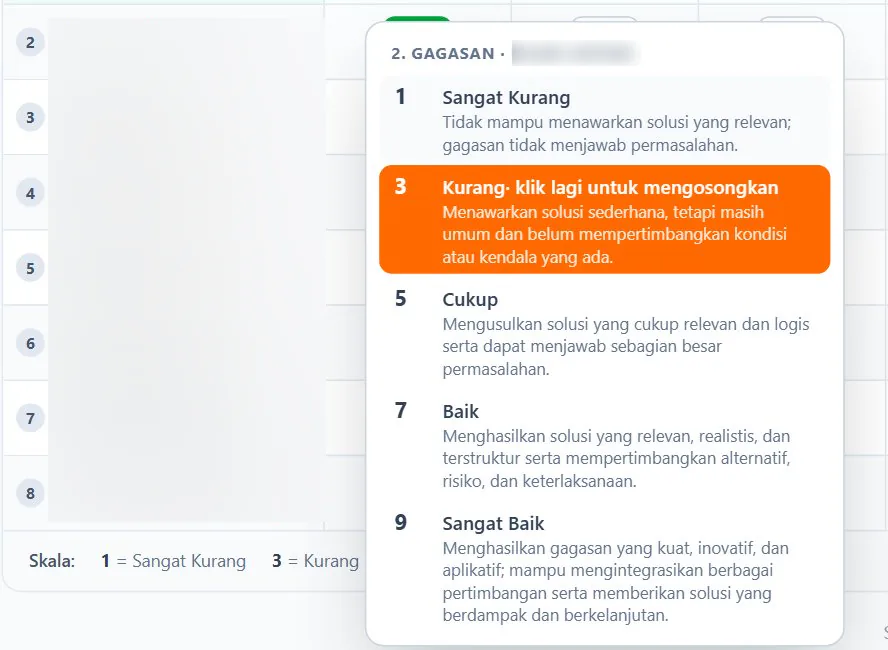
Levels described in words
Each score level carries a sentence of what it looks like, so judges from different campuses score alike.
People decide
Seats that follow the schedule
Panels are derived from each group’s campus, date and session; the facilitator hands out seat links, never accounts.
Kept apart
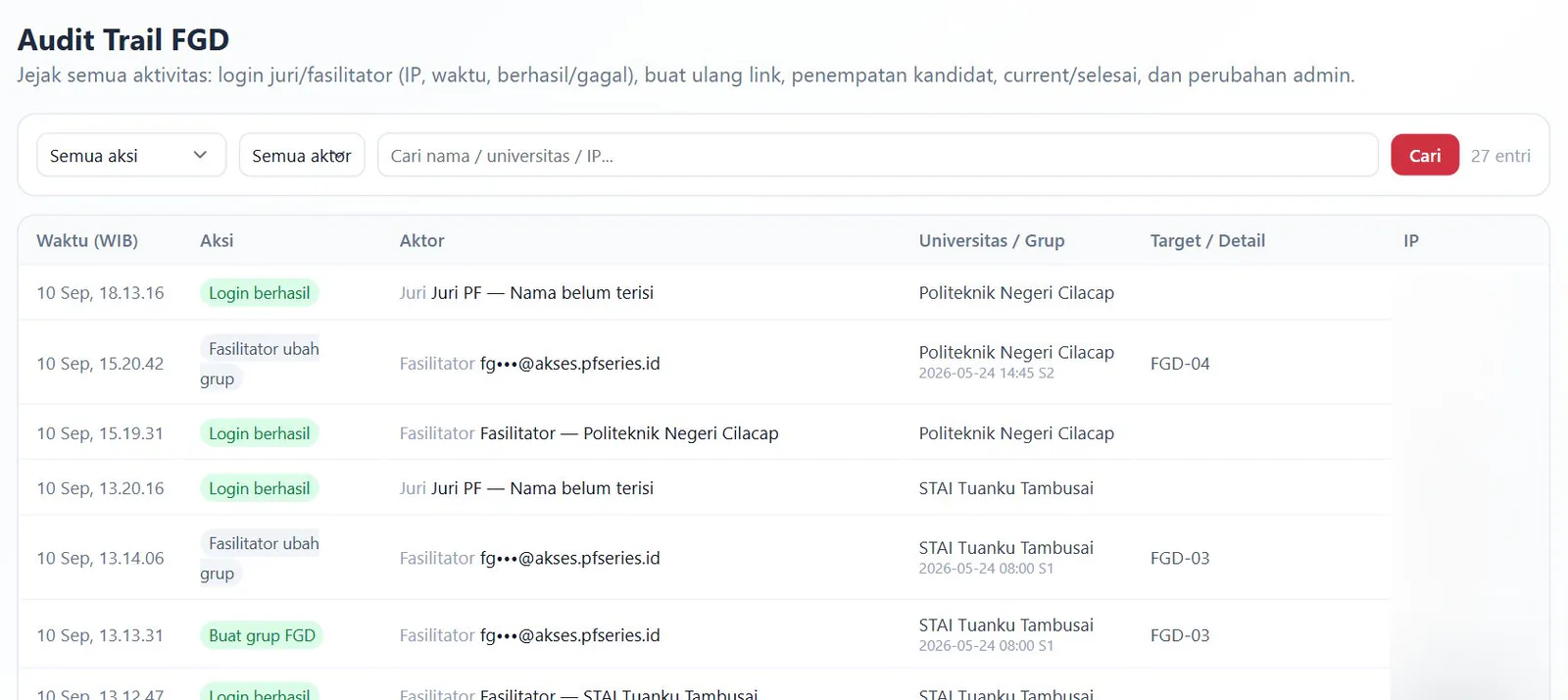
Every change on the record
Who scored what, when, from which seat: an audit trail staff can read, judges cannot edit.
On the record
The decree is the truth
The final list was checked name by name against the signed decree; the script refused to run until they matched.
On the record
0
accounts created for 500+ outside judges
Learnedthe programme team’s final list outranks the system’s ranking, so reconciliation scripts match by email, state each reason and keep backups.
NextPFmuda went further: a stage with no interviewer in the room at all.
Part 1 · 2026
Sobat Bumi is the foundation’s flagship need-based scholarship for university students across Indonesia. Its selection reads every application with AI notes and human verifiers, then meets candidates in interviews and group discussions at their own campus.
Discover.
Tens of thousands of students apply for a need-based scholarship. That is more than any panel can read carefully, and a skim is unfair to the applicants who need it most.
Design.
Five steps before anyone meets a candidate, then interviews and group discussions judged by hundreds of people who never made an account.
Deliver.
Scholars chosen with a written reason behind every decision, matched name for name to the signed decree.
Designed and built every stage · Weighted rubric · Advisory AI · One-link seats
Tap a page to open it full screen; swipe for the next. Every page is also in the PDF.
Muktiadi Akhmad Januar · Part 1 · PFmuda
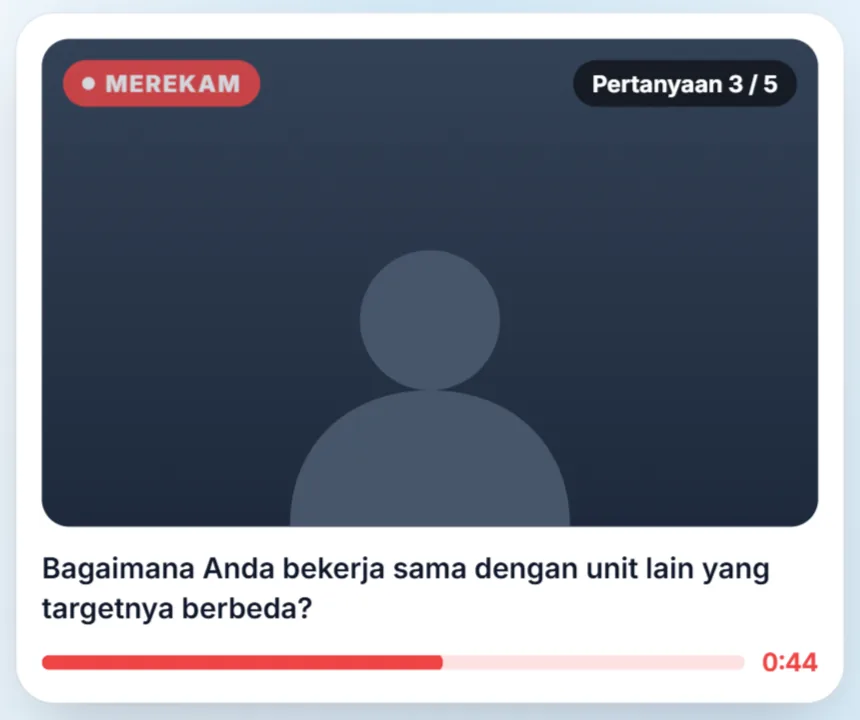
What it isPFmuda is the foundation’s youth programme: student teams propose an idea for their own region and compete for funding and mentoring. Its Case Challenge replaces the live interview with an AI one: an AI narrator reads each team a case, the team answers on camera, and AI turns every answer into a transcript and notes for the panel, who decide.
Discover.
Interviewing hundreds of youth teams across Indonesia meant weeks of scheduling, a different interviewer for every team, and members who could not be in one room.
Design.
An AI narrator reads each team its case, AI transcribes and annotates every answer, and the panel decides with all of it in front of them.
Deliver.
Nearly every invited team completed it with no scheduling, every team heard the same voice and the same words, and the panel read transcripts instead of rewatching hours.
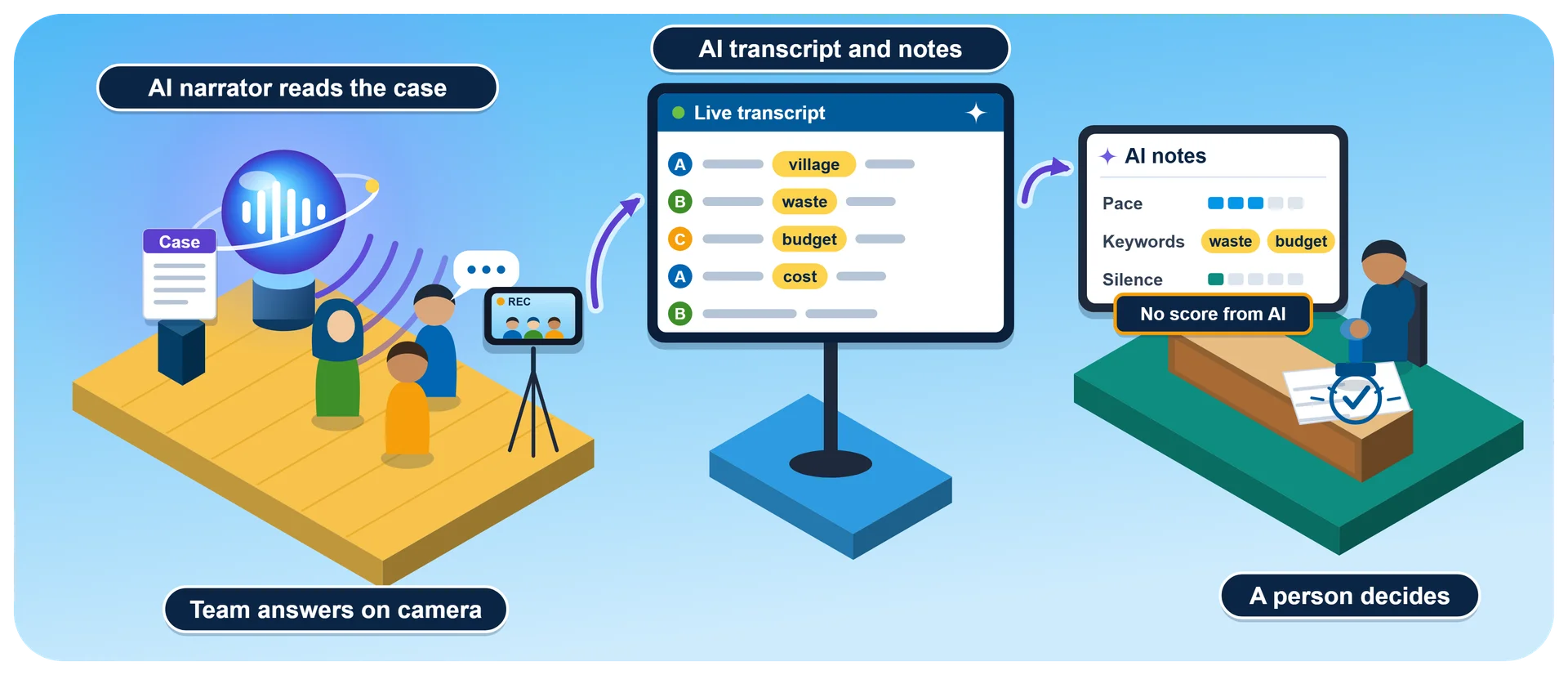
One session, as the team sees it
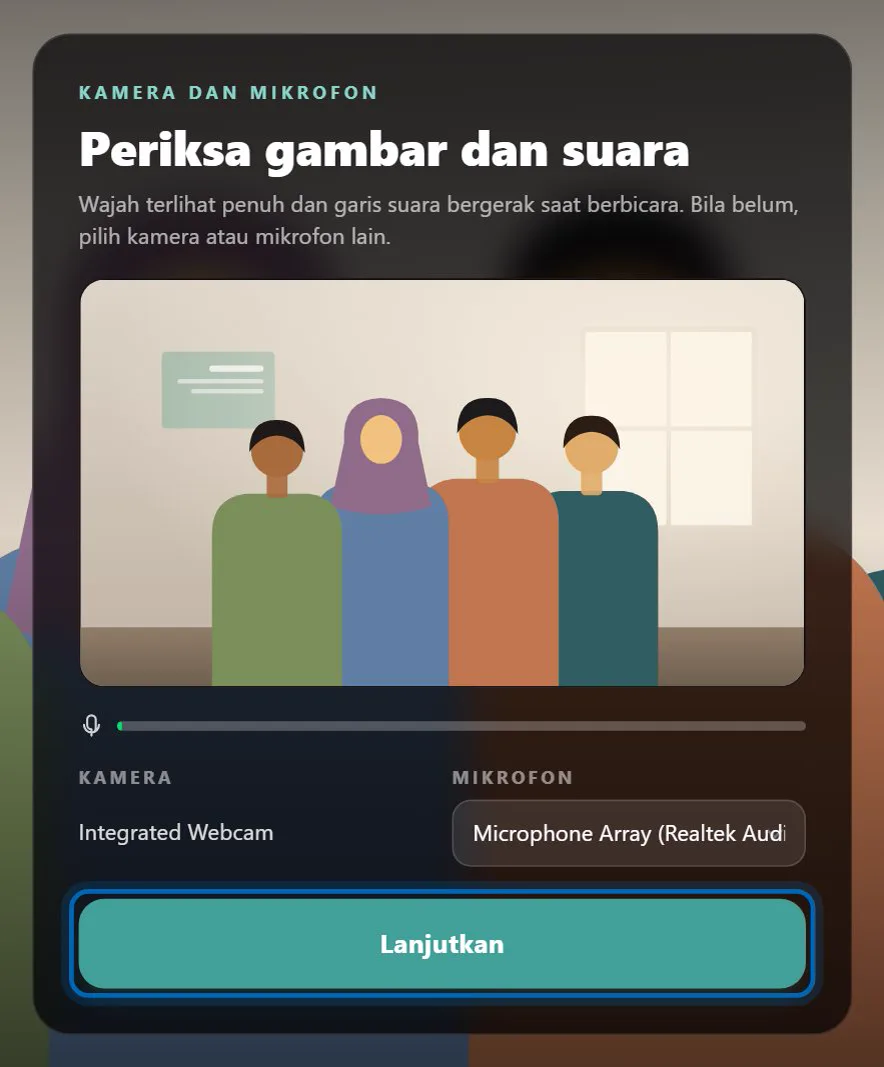 1
Camera and mic
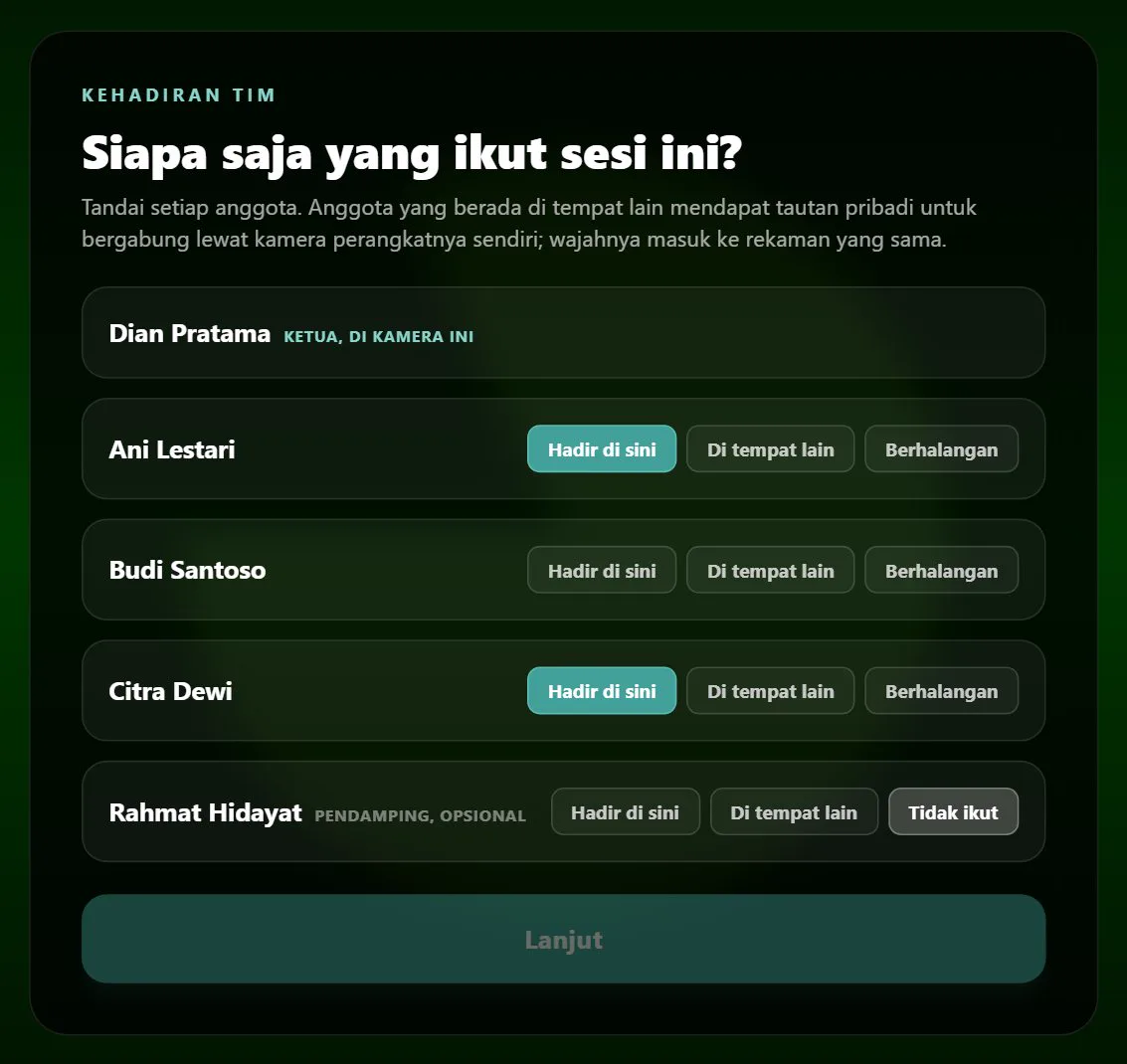 2
Who is here
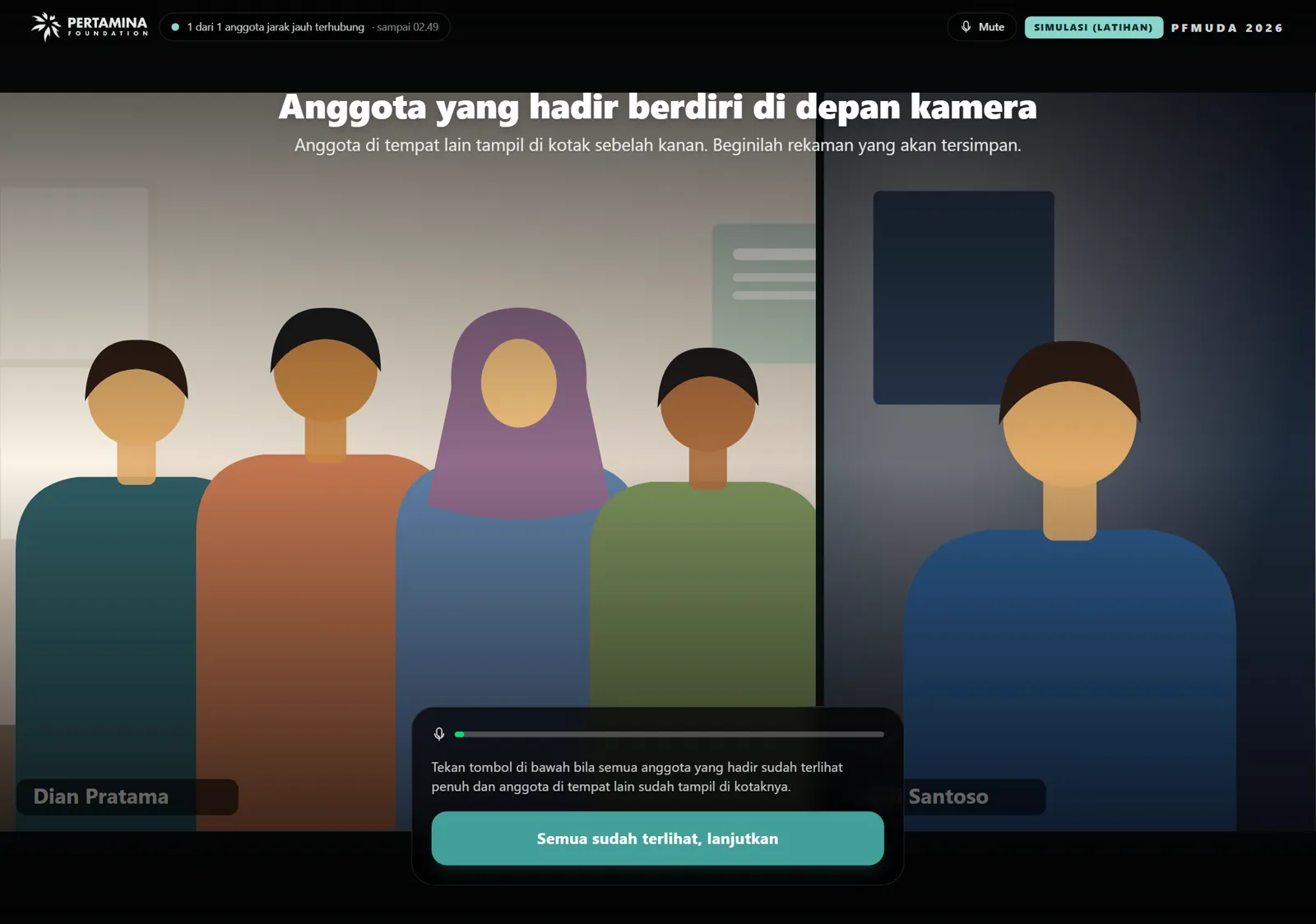 3
One frame, two places
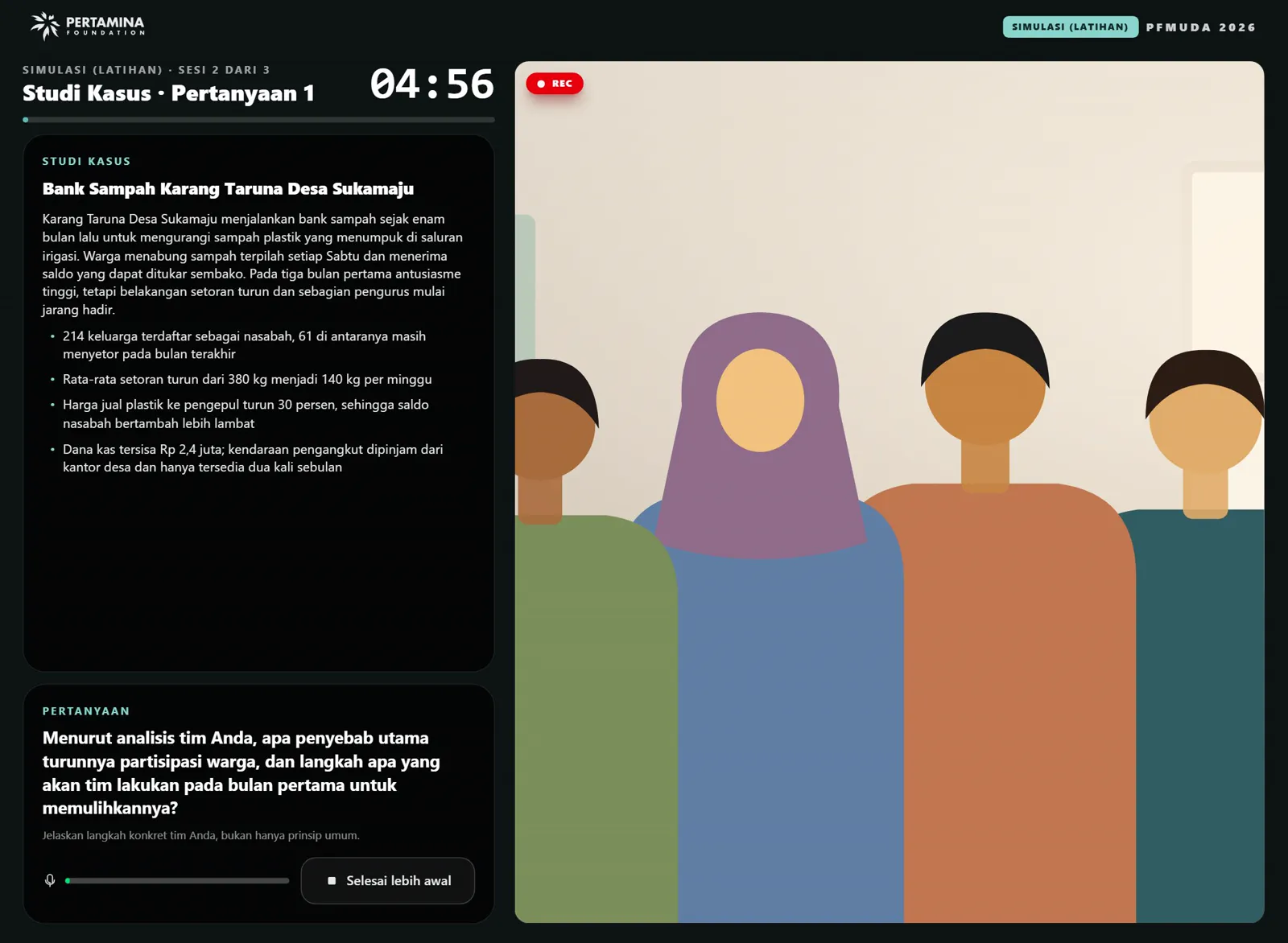 4
The case, read aloud
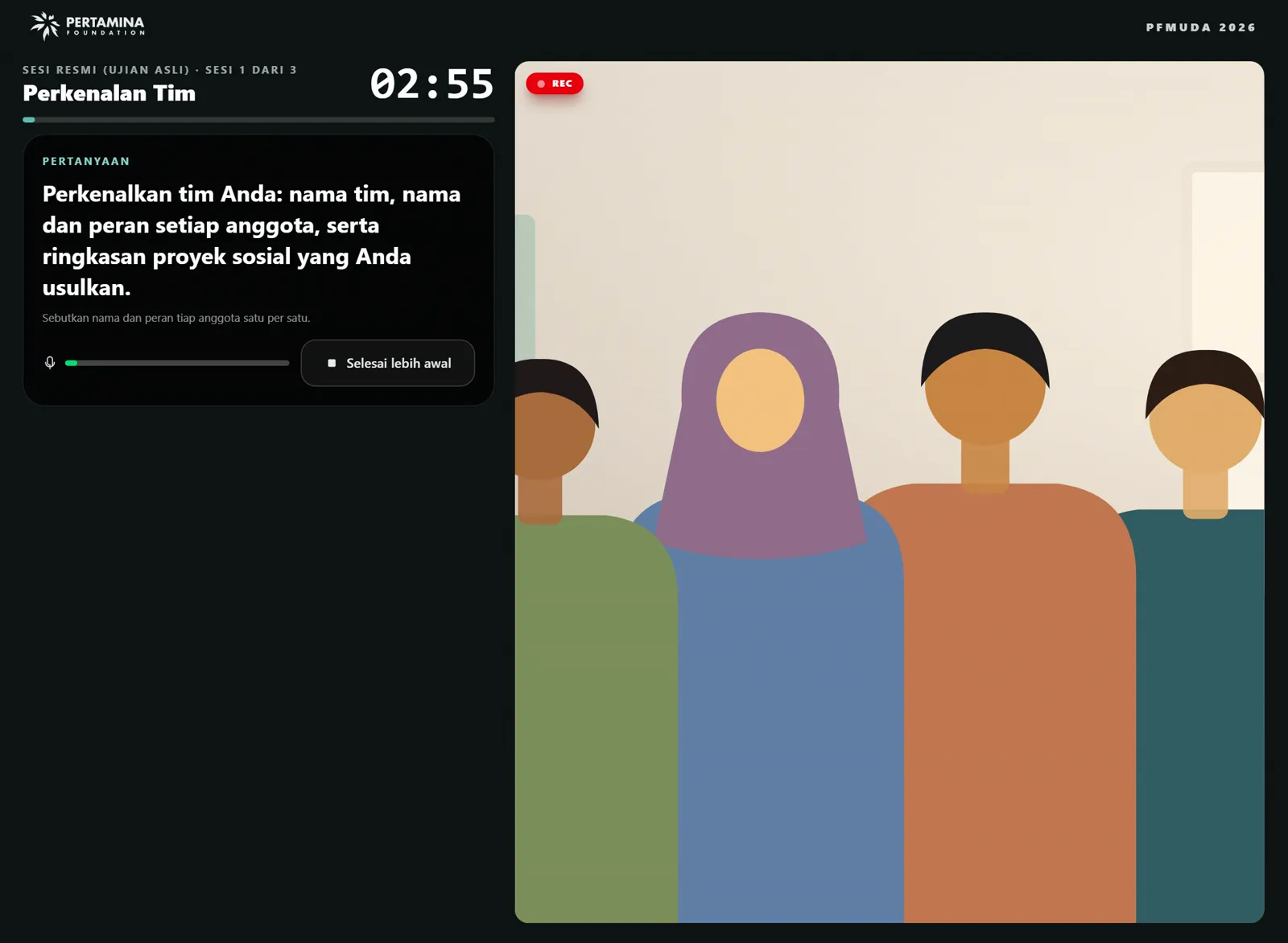 5
The answer
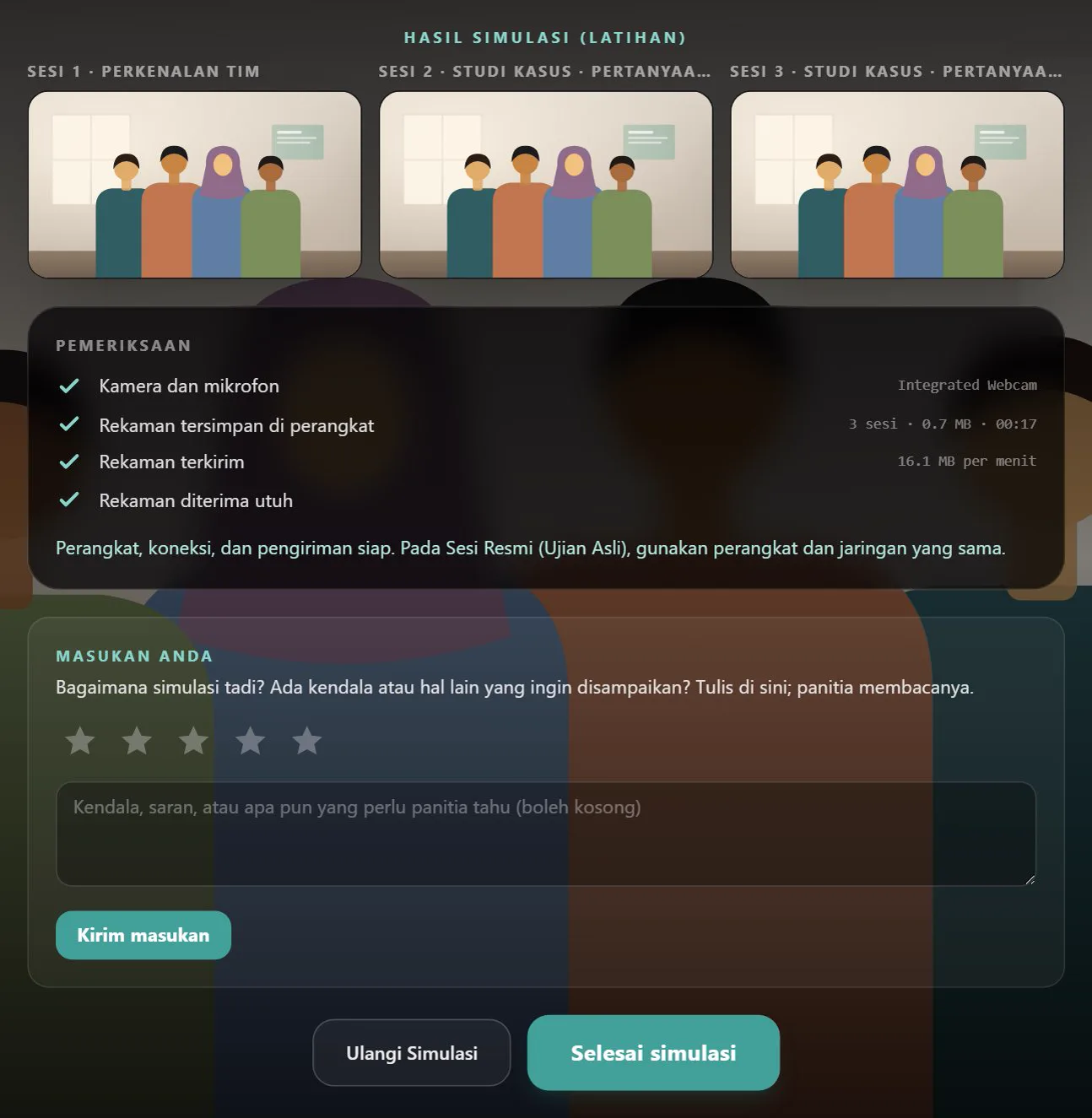 6
Proof it arrived
An AI narrator, the same for all
Every team hears the same voice read the same words; the answer clock never runs while it speaks, and it counts down aloud.
People decide
AI transcripts that know who spoke
Each voice stays one person across every take, so the panel reads who said what instead of rewatching hours.
People decide
AI notes, never a score
Pace, silences and the points each answer covered, beside the video. The rule in the code: no score, no ranking, no recommendation.
People decide
No scheduling at all
Teams start whenever they are ready inside a window of a few days, from anywhere in Indonesia, after a rehearsal proves their setup.
Any crowd
Learnedphones throttle timers in the background, so every recording is timed from a wall-clock end, never from a countdown.
NextWhat the AI does for the panel, and what it is never allowed to do.
Muktiadi Akhmad Januar · The AI behind the panel
The AI does what no panel can do at scale: read every team the same case in the same voice, and turn hours of answers into minutes of reading. The panel decides.
The panel’s screen, redrawn with example content: the recording, the transcript, the AI notes, and the score only a person gives.
Teams wrote in the afternoon; the fix shipped that evening
“Saat kami membaca permasalahannya sudah dimulai sesinya.”
We were still reading the problem when the session started.
Fixed: Sixty seconds of reading time after the case is read out.
“Suara AI terlalu pelan.”
The AI voice is too quiet.
Fixed: Every narration clip remixed louder that night.
“Suara dan wajah ketua tidak terlihat di laptop teman yang jarak jauh.”
The remote teammate got neither the leader’s voice nor face.
Fixed: The room now watches what actually arrives and reconnects a silent device by itself.
No score, no ranking, no recommendation from the AI. A named judge scores, with a reason.
A narrator rendered when the case is saved
Staff type the case; its AI voice is generated and stored at once, and a case locks once any team has answered it.
Kept apart
Transcripts that keep each voice one person
Every take transcribed with speakers matched across takes, so the panel reads who said what.
People decide
Notes counted on our side
Pace and silence are measured locally; the model only marks which points each answer covered.
On the record
Underneath: a recording that survives a bad signal
Saved on the phone every few seconds, sent in parts while the team talks, resumed after a crash: nothing recorded was lost, even on the first exam day.
Learnedtwo devices writing one record overwrite each other, so each writer owns its own field and critical writes are read back.
NextA different kind of selection: one that teaches while it chooses.
Part 1 · 2026
PFmuda is the foundation’s youth programme: student teams propose an idea for their own region and compete for funding and mentoring. Its Case Challenge replaces the live interview with an AI one: an AI narrator reads each team a case, the team answers on camera, and AI turns every answer into a transcript and notes for the panel, who decide.
Discover.
Interviewing hundreds of youth teams across Indonesia meant weeks of scheduling, a different interviewer for every team, and members who could not be in one room.
Design.
An AI narrator reads each team its case, AI transcribes and annotates every answer, and the panel decides with all of it in front of them.
Deliver.
Nearly every invited team completed it with no scheduling, every team heard the same voice and the same words, and the panel read transcripts instead of rewatching hours.
Concept, design and build · Video recording · Resumable upload · AI narration
Tap a page to open it full screen; swipe for the next. Every page is also in the PDF.
Muktiadi Akhmad Januar · Part 1 · PFpreneur
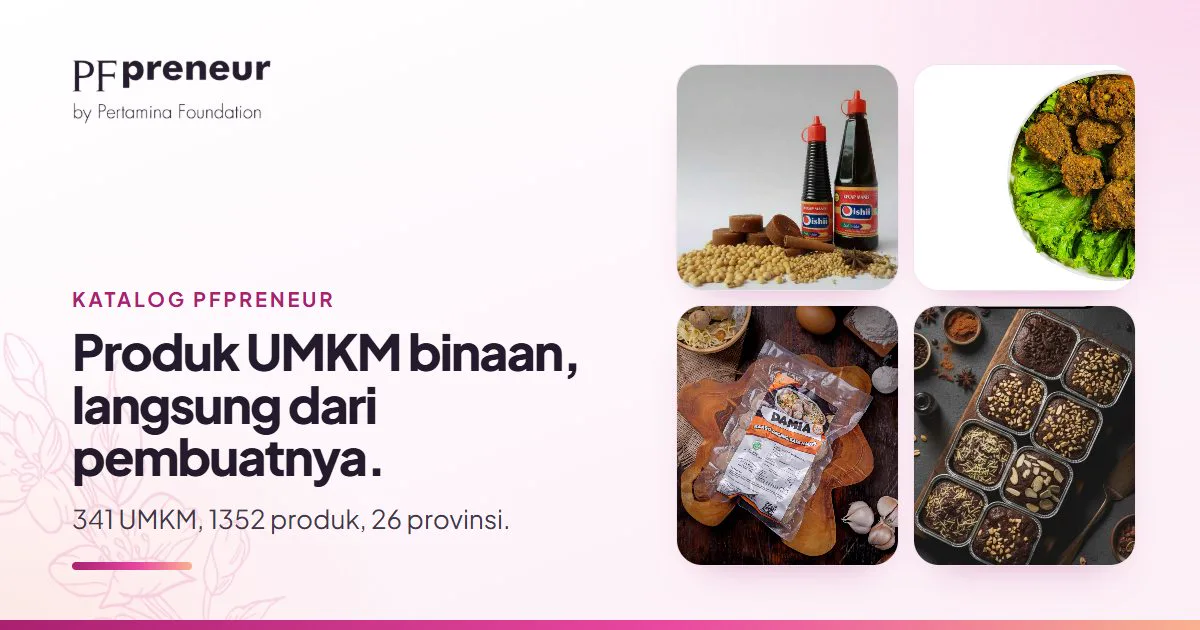
What it isPFpreneur grows women-led small businesses. Its selection is also a course: entrepreneurs learn legality, governance and market access in short modules on their phones, take tests, and are judged on what they learn and build, ending in a public catalogue.
Discover.
Thousands of women entrepreneurs had to be taught and tested fairly, in teams, over four months, most of them on a phone between running a business.
Design.
Selection that teaches: phases of short modules, each a pretest, a class, a posttest and an assignment, ending in certificates that verify themselves.
Deliver.
Finalists chosen through months of learning rather than one form, then a public catalogue that sells their products through WhatsApp.
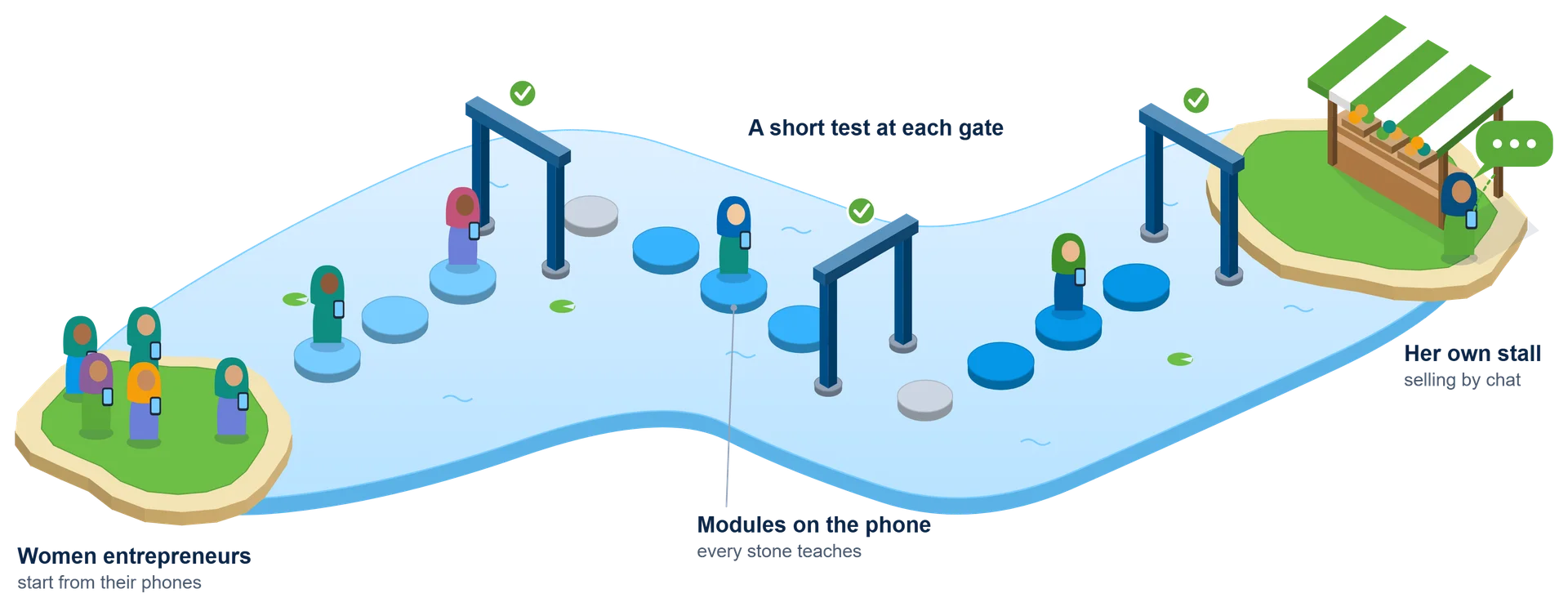
Stepping stones, gates between them, and her own stall at the end.
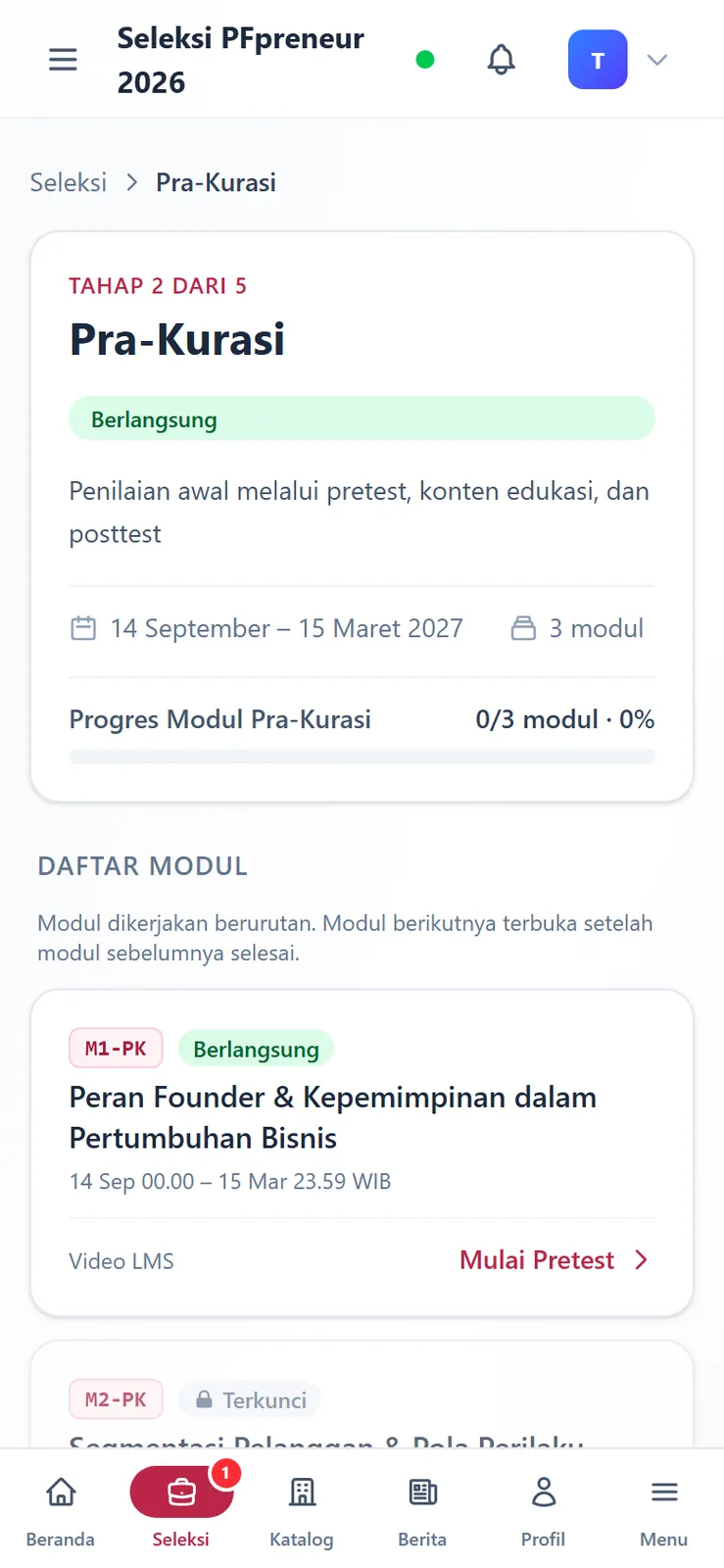
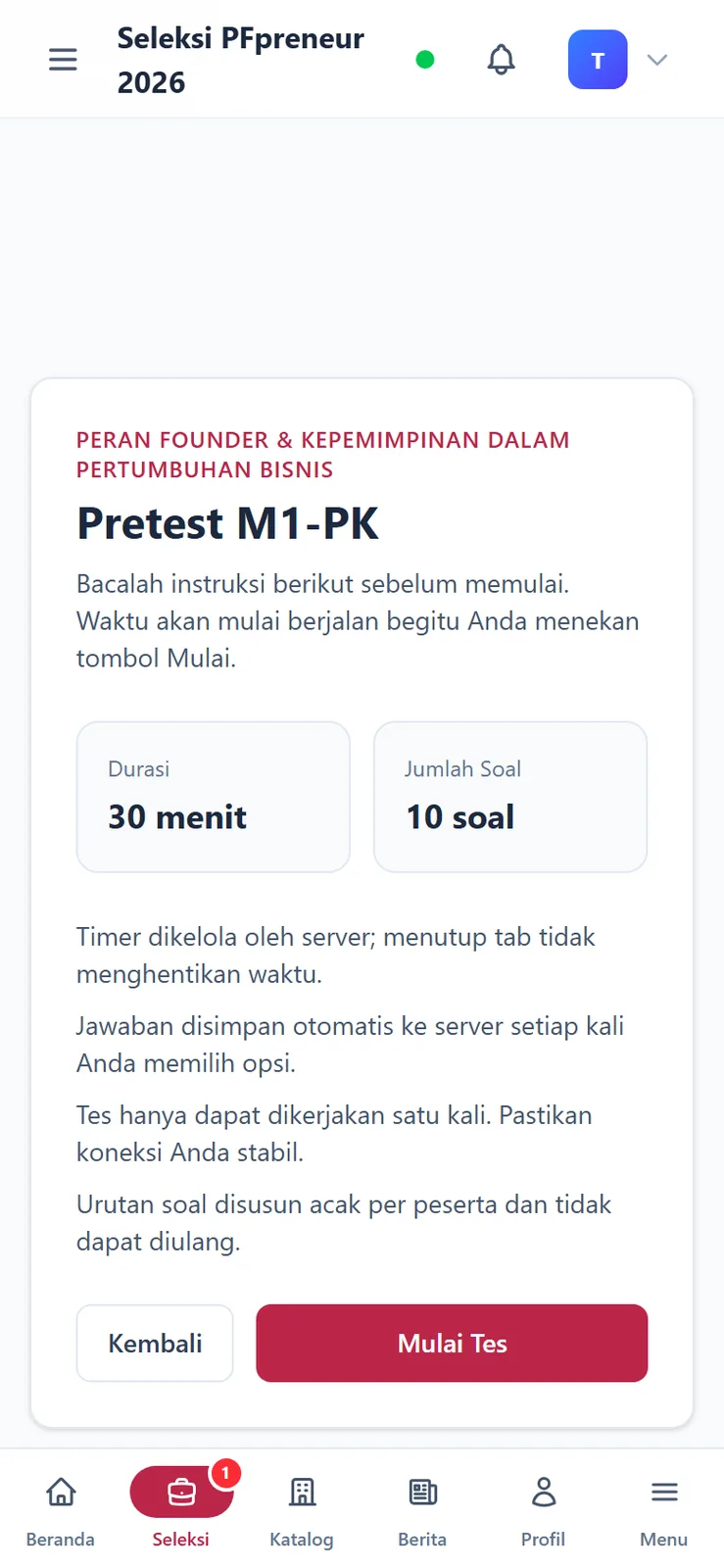
Tests the server keeps the time for
Start and end stamped on the server, each person’s shuffled order kept, answers saved as she goes, no second submission.
Any signal
Attendance by a typed code
The presenter shows a short code in the live class; she types it into the module she is already on. Spacing and case still match.
Any phone
Modules as data
Each module carries its pretest, class, posttest and dates; staff build question banks in Excel.
Kept apart
Find a team
Solo entrepreneurs find teammates by sector and province; the listing closes itself when the team is full.
People decide
Learneda start time kept on the phone can be lost or faked, so the server stamps each test and autosaves answers.
NextInside the classroom: how a phase of modules is built, run and closed.
Muktiadi Akhmad Januar · The classroom
Selection that teaches: thousands of entrepreneurs learn legality, governance and market access, and are judged on what they learn and build. The classroom, the tests, the mentors and the final panel live on one platform, so nothing is copied between systems.
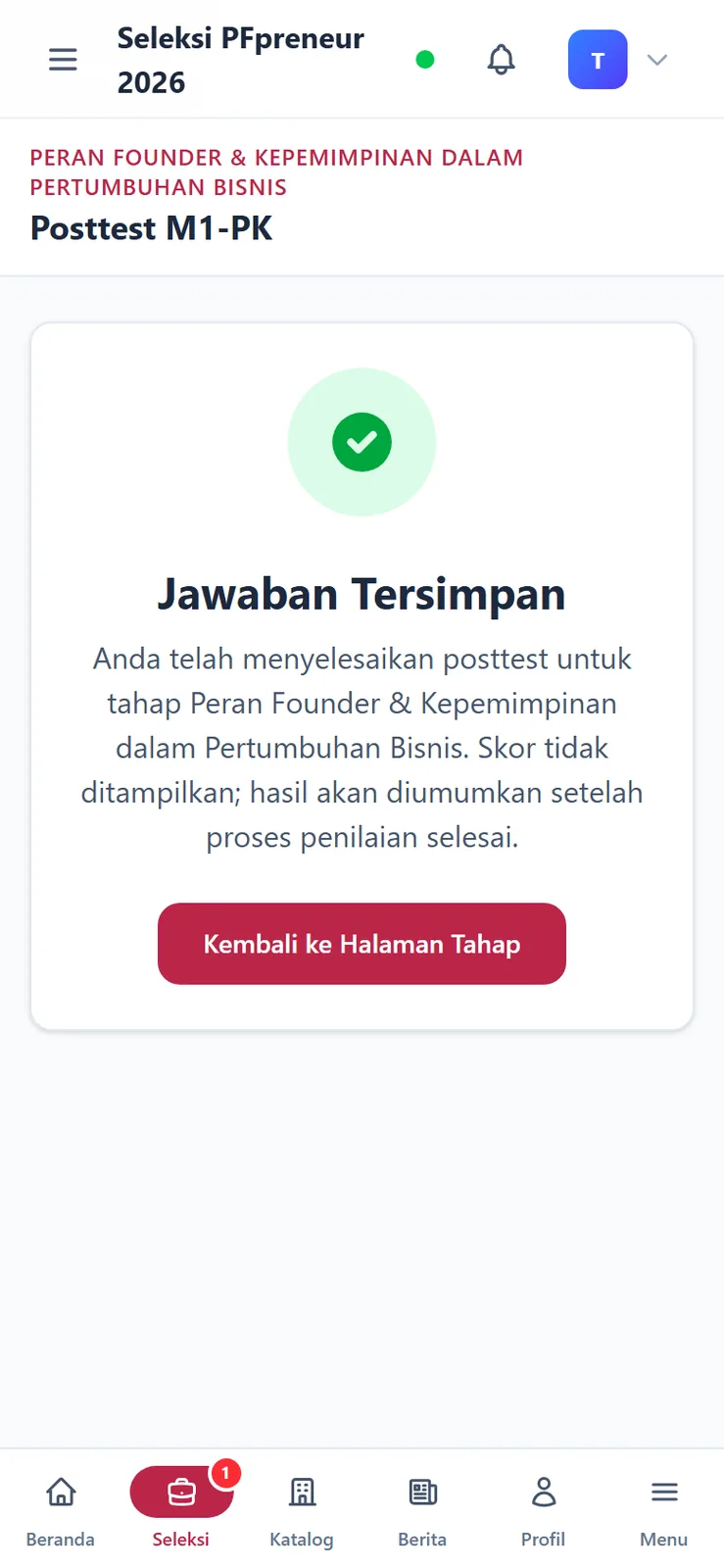
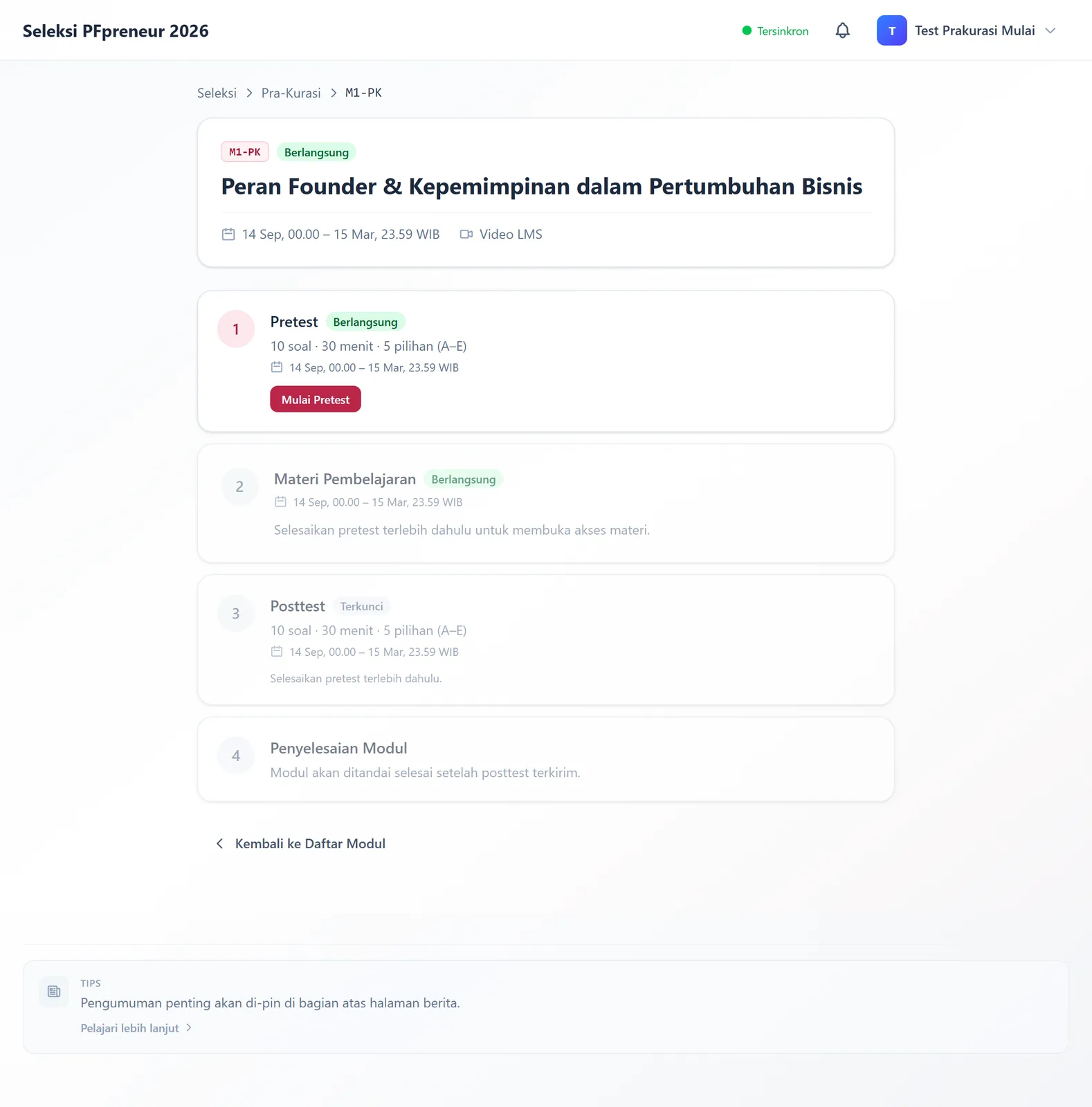
Every state previewed first
Staff see each screen a participant can meet (module locked, all done, feedback sent, certificate) before release, without a real account.
People decide
Feedback closes each phase
Seven rated questions and four open ones, in the programme team’s own words; mentors read what their participants said about them.
People decide
Progress staff can see
Assignments by person and module, submission timing charts, and the whole selection as one flow from registration to final.
On the record
Exports with photos inside
The staff spreadsheet shows each owner’s and product’s photo in its cell, through links that refresh themselves.
On the record
A certificate manager
One page per category: template, field positions, preview any finalist, release, official numbers; each with a QR to its record.
On the record
A catalogue that sells by chat
After selection, a public catalogue where checkout is a WhatsApp message already written, one per maker.
Any phone
Learneda page that reads a field before the server answers can leak results, so every result passes one publish gate.
NextInnovation funding asked a different question: who should judge each proposal.
Part 1 · 2026
PFpreneur grows women-led small businesses. Its selection is also a course: entrepreneurs learn legality, governance and market access in short modules on their phones, take tests, and are judged on what they learn and build, ending in a public catalogue.
Discover.
Thousands of women entrepreneurs had to be taught and tested fairly, in teams, over four months, most of them on a phone between running a business.
Design.
Selection that teaches: phases of short modules, each a pretest, a class, a posttest and an assignment, ending in certificates that verify themselves.
Deliver.
Finalists chosen through months of learning rather than one form, then a public catalogue that sells their products through WhatsApp.
Designed and built · LMS · Timed tests · QR certificates · Catalogue
Tap a page to open it full screen; swipe for the next. Every page is also in the PDF.
Muktiadi Akhmad Januar · Part 1 · PFsains
What it isPFsains funds university engineering teams to solve a real problem at a Pertamina operating site, such as energy, food or waste in a named village. Kurators judge proposals per case study, then a desk evaluation and a grand final decide the funding.
Discover.
Innovation proposals reached reviewers outside their field, and funding decisions lived in a separate sheet from the verdicts.
Design.
Kurator seats scoped to one case study, a desk evaluation, and a grand final where the final decider sets the approved budget beside the verdict.
Deliver.
Finalists judged by the right experts, and funded teams whose budgets are tied to their own plan.
Seven real problems at Pertamina sites, each answered by a university engineering team
7
real problems, each owned by a Pertamina site
2
kurators per case, each seeing only the case they know
1
sheet for the verdict and the money
1Proposals
filed under a case study
2Kurasi
two kurators per case
3Desk evaluation
evidence, then a panel
4Grand final
pitch, judges, a host
5Funding
verdict and approved budget
The grand final sheet: levels, a pass line, a note the judge must write, and the budget beside the verdict.
Seats scoped to one case
A kurator’s link opens only the proposals of their case, late submissions included. No per-proposal assignment to maintain.
People decide
A drawer for the misfiled
The other cases sit beside the form, so a proposal filed under the wrong case is still judged against the right one.
People decide
Decisions at keyboard speed
The final decider sees both kurators’ forms side by side and moves with the keyboard, with agreement and spread statistics a click away.
People decide
Evidence slots that save alone
Test results, specifications and the pitch deck each save on their own, so one failed upload never costs the rest.
Any signal
A host page for the final
The host opens each team’s deck full screen to share; judges score in a kiosk view from one link.
Any phone
The budget beside the verdict
Approved funding is set next to each decision, filled from the team’s own plan and flagged when it goes over.
On the record
Learnedclosing registration and closing submission are separate decisions, so each is its own date in data, not a code change.
NextBehind these programmes sits machinery first proven on the smallest scholarship.
Part 1 · 2026
PFsains funds university engineering teams to solve a real problem at a Pertamina operating site, such as energy, food or waste in a named village. Kurators judge proposals per case study, then a desk evaluation and a grand final decide the funding.
Discover.
Innovation proposals reached reviewers outside their field, and funding decisions lived in a separate sheet from the verdicts.
Design.
Kurator seats scoped to one case study, a desk evaluation, and a grand final where the final decider sets the approved budget beside the verdict.
Deliver.
Finalists judged by the right experts, and funded teams whose budgets are tied to their own plan.
Designed and built · Scoped seats · Desk evaluation · Grand final
Tap a page to open it full screen. Every page is also in the PDF.
Muktiadi Akhmad Januar · Part 1 · PPN, BSBK and the shared machinery
What it isSmaller programmes, such as the PPN maritime diploma scholarship and BSBK for school leavers in Kalimantan, run on the same machinery. Each mechanism was built once for one programme and reused by the others, so a new programme launches in weeks.
Discover.
Each new scholarship arrived with its own rules and a deadline weeks away. Building each from scratch would have meant a new system, and new bugs, every month.
Design.
The scoring engine, the verdict layer and the guarded scripts were piloted on a small merchant-marine scholarship, then carried the largest one.
Deliver.
New programmes launched in weeks on shared machinery, including one that went through five revision rounds with its sponsor.
Built once, ridden by every programme after it: each line starts where the piece was first built
| PPN Diploma | Sobat Bumi | BSBK | PFsains | PFmuda | |
|---|---|---|---|---|---|
Scoring engine from config | |||||
Verdicts in their own layer | |||||
The long application form | |||||
Seats on one link and a PIN | |||||
Promote, lock, then publish | |||||
Access per stage | |||||
Priority-region matching | |||||
Guides drawn from live screens |
first built for this programme reused, not rebuilt
The same machinery, wearing each programme’s colours
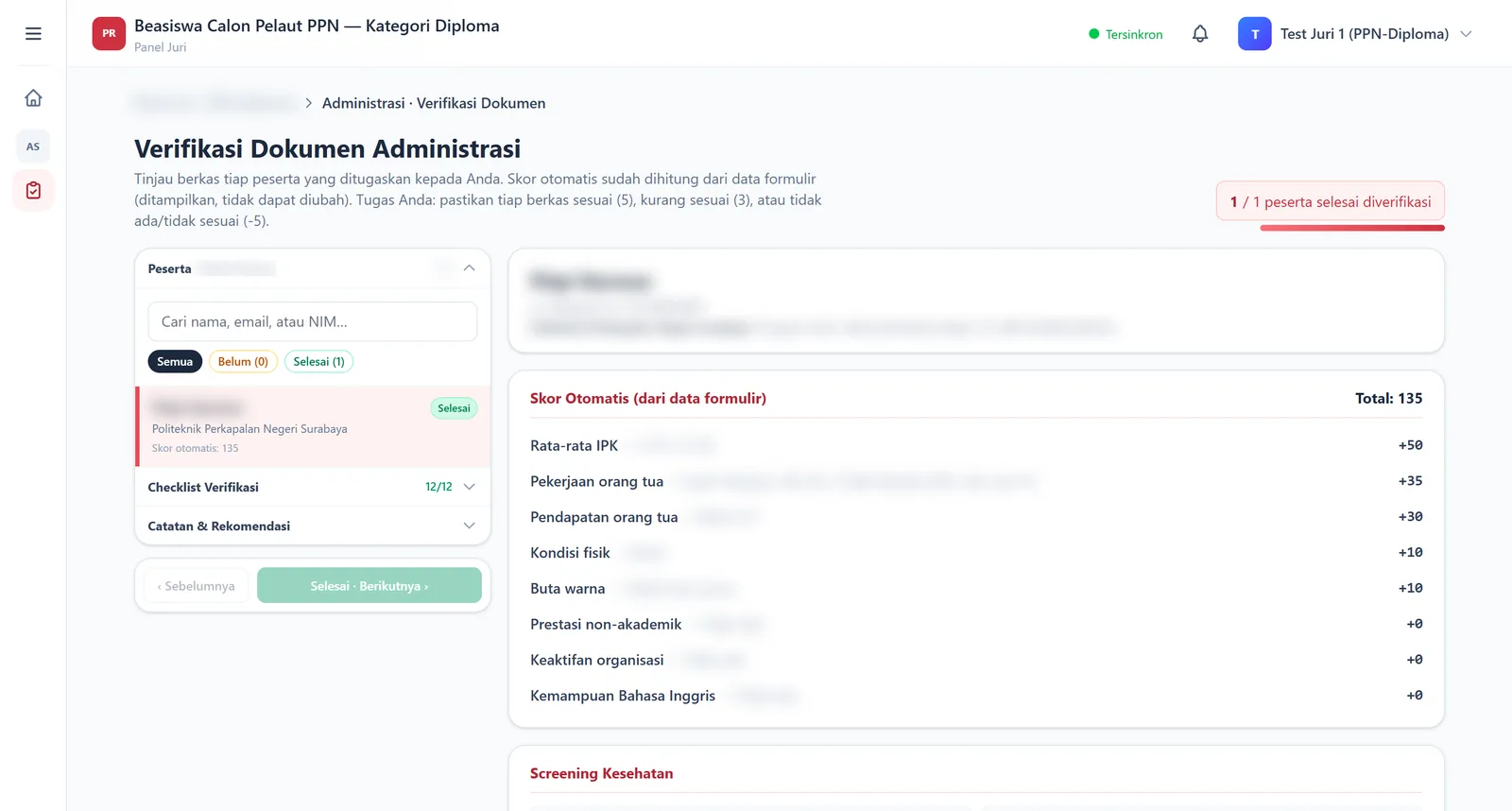
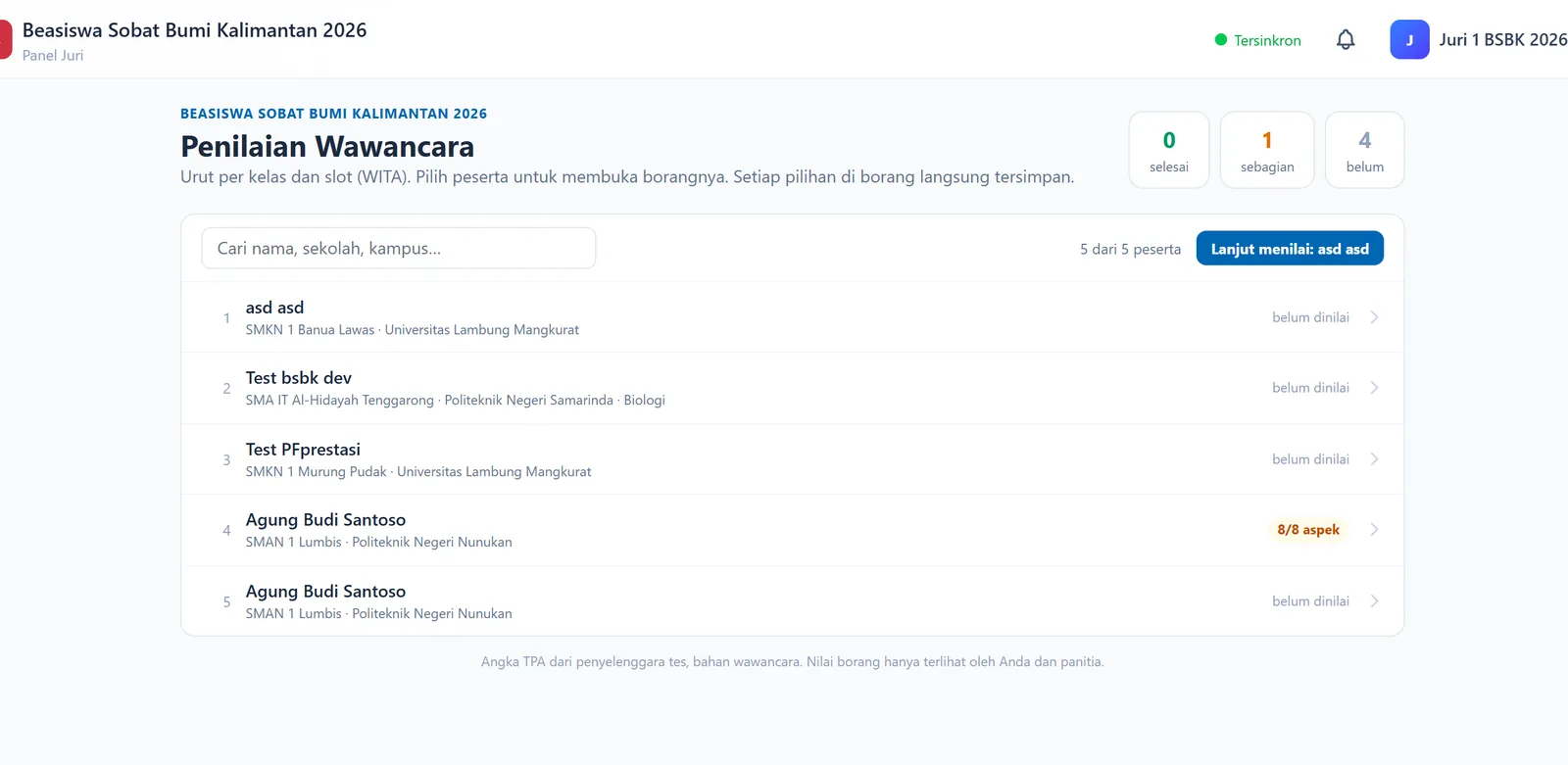
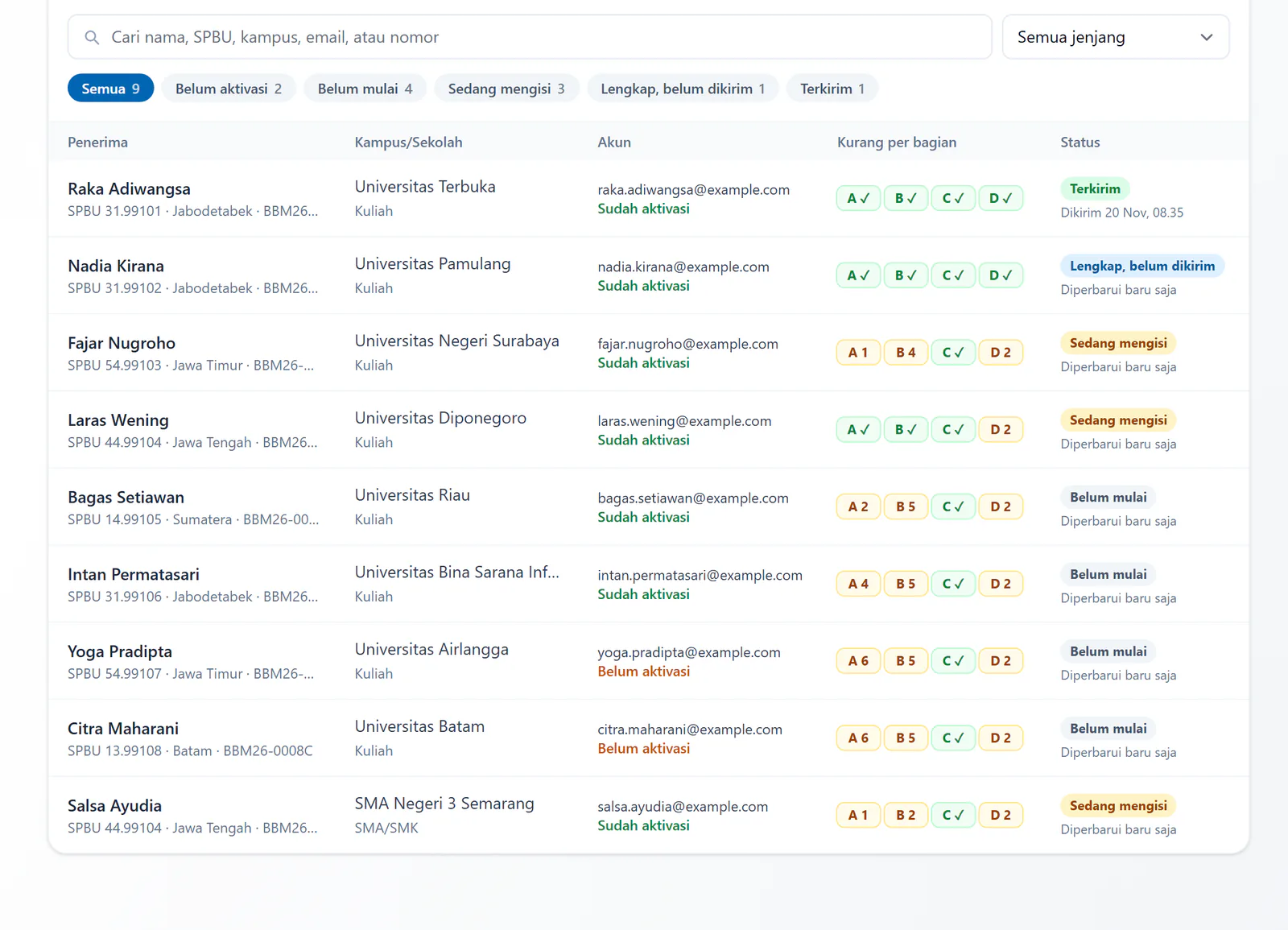
PPN: future ship crew
Merit, not need. Health gates come first, each disqualification shown with its reason, then two blind judges per document. The pilot for the scoring engine.
People decide
BSBK: school leavers in Kalimantan
The sponsor’s priority area is a list of villages, matched by official village code; any it cannot resolve goes to a person, never forced. Aptitude and wellbeing results sit beside the interview.
On the record
Three ways in
Open registration, invitation from an imported sheet for cadets already scouted, and nomination by regional teams, on the same form engine.
Kept apart
Programmes the engine took on later
Volunteers, with a classroom stage
Disaster relief volunteers selected with a learning stage inside the selection, on the same engine.
Kept apart
Invitation-only rounds
Past winners invited back for a continuation round; groups without email join by a personal link.
Any signal
Accounts made for the recipient
Staff import the committee’s list; each recipient activates from a single-use link and fills four parts that save themselves.
Any phone
Learneda pattern built for hundreds breaks at thousands, so every clone is sized against its own programme before it serves.
NextWhat running all of this through one season actually looked like, including what broke.
Part 1 · 2026
Smaller programmes, such as the PPN maritime diploma scholarship and BSBK for school leavers in Kalimantan, run on the same machinery. Each mechanism was built once for one programme and reused by the others, so a new programme launches in weeks.
Discover.
Each new scholarship arrived with its own rules and a deadline weeks away. Building each from scratch would have meant a new system, and new bugs, every month.
Design.
The scoring engine, the verdict layer and the guarded scripts were piloted on a small merchant-marine scholarship, then carried the largest one.
Deliver.
New programmes launched in weeks on shared machinery, including one that went through five revision rounds with its sponsor.
Designed the shared machinery · Config-driven scoring · Health gates · Village matching
Tap a page to open it full screen. Every page is also in the PDF.
Muktiadi Akhmad Januar · Part 1 · Running it live
What it isOne selection season on the platform, told month by month: what was planned, what broke under load, and the fix that went out each time, with the guarded scripts and journals behind every change to live data.
Discover.
A platform that works on a quiet Tuesday can still fail on deadline night, in front of thousands of applicants, with nobody able to see why.
Design.
Twelve breaks that mattered, each fixed at its root, and one rule: nothing touches production data by hand.
Deliver.
Each break fixed so it cannot happen the same way twice, and not one production change made by hand.
The habit behind every fix
Production data is somebody’s scholarship.
So nothing touches it by hand: 248 scripts, each written to be safe to run twice and impossible to run carelessly.
What applicants see instead
During any repair, a calm page that says the site is back soon, with a retry button, switched on without a release.
Any crowd
Errors that say what to do
A failed upload names its fix in one sentence: close the file in Word, or pick it from phone storage instead of a cloud drive.
Any phone
Did you mean gmail.com?
After hundreds of accounts were lost to typos, one prompt at sign-up now catches the typo before the account exists.
Any phone
Learneddeadline night is no time to improvise, so every production change runs as a script with a dry run and a backup.
NextAfter the final list, the chosen move on: how a list of names became signed scholarship contracts.
Part 1 · 2026
One selection season on the platform, told month by month: what was planned, what broke under load, and the fix that went out each time, with the guarded scripts and journals behind every change to live data.
Discover.
A platform that works on a quiet Tuesday can still fail on deadline night, in front of thousands of applicants, with nobody able to see why.
Design.
Every break fixed at its root, and one rule held all season: nothing touches production data by hand.
Deliver.
Each break fixed so it cannot happen the same way twice, and not one production change made by hand.
Operated the platform through the season · Incident response · Guarded scripts · State journals
Tap a page to open it full screen. Every page is also in the PDF.
Muktiadi Akhmad Januar · Part 1 · Beasiswa Pertamina
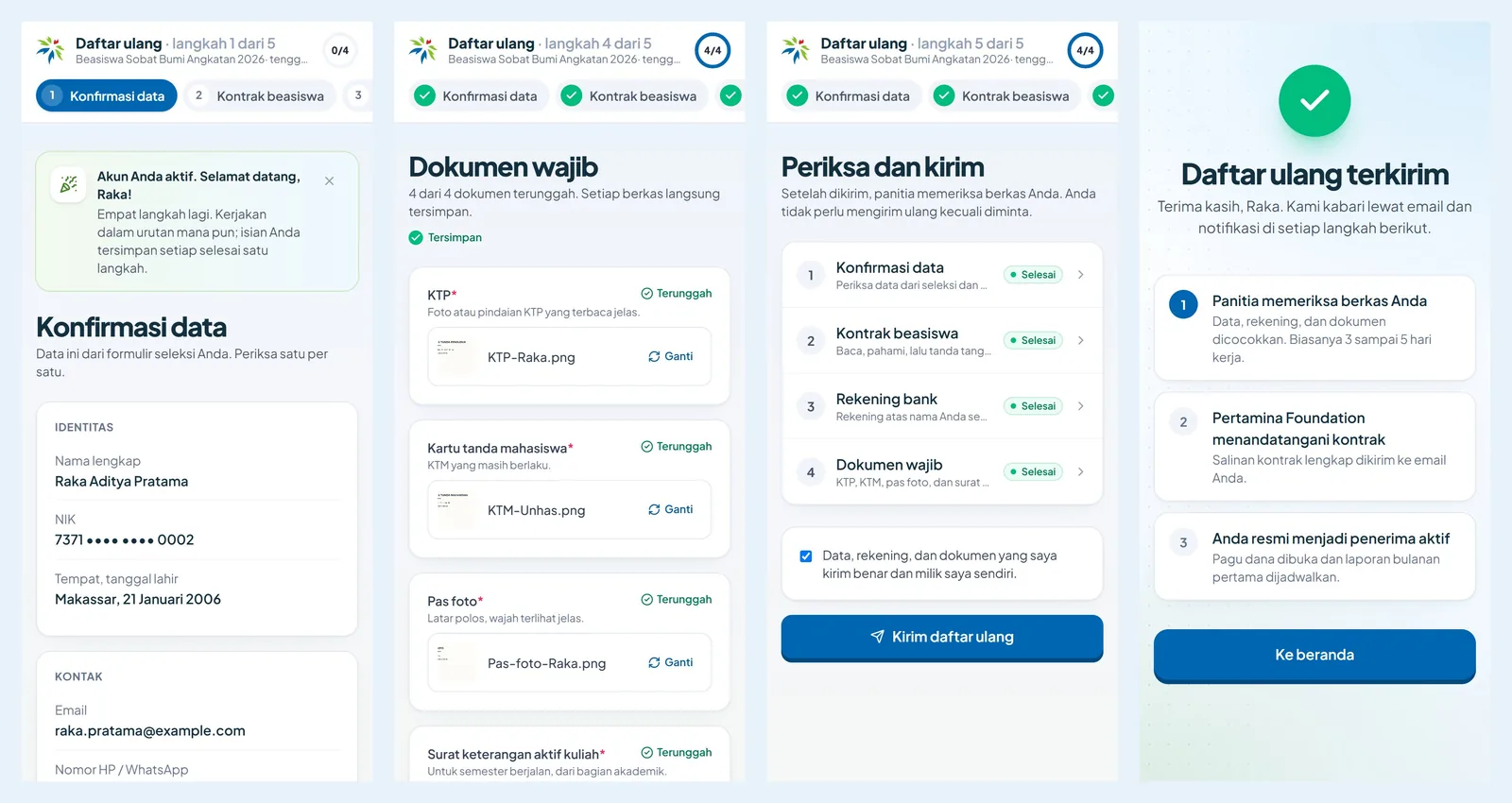
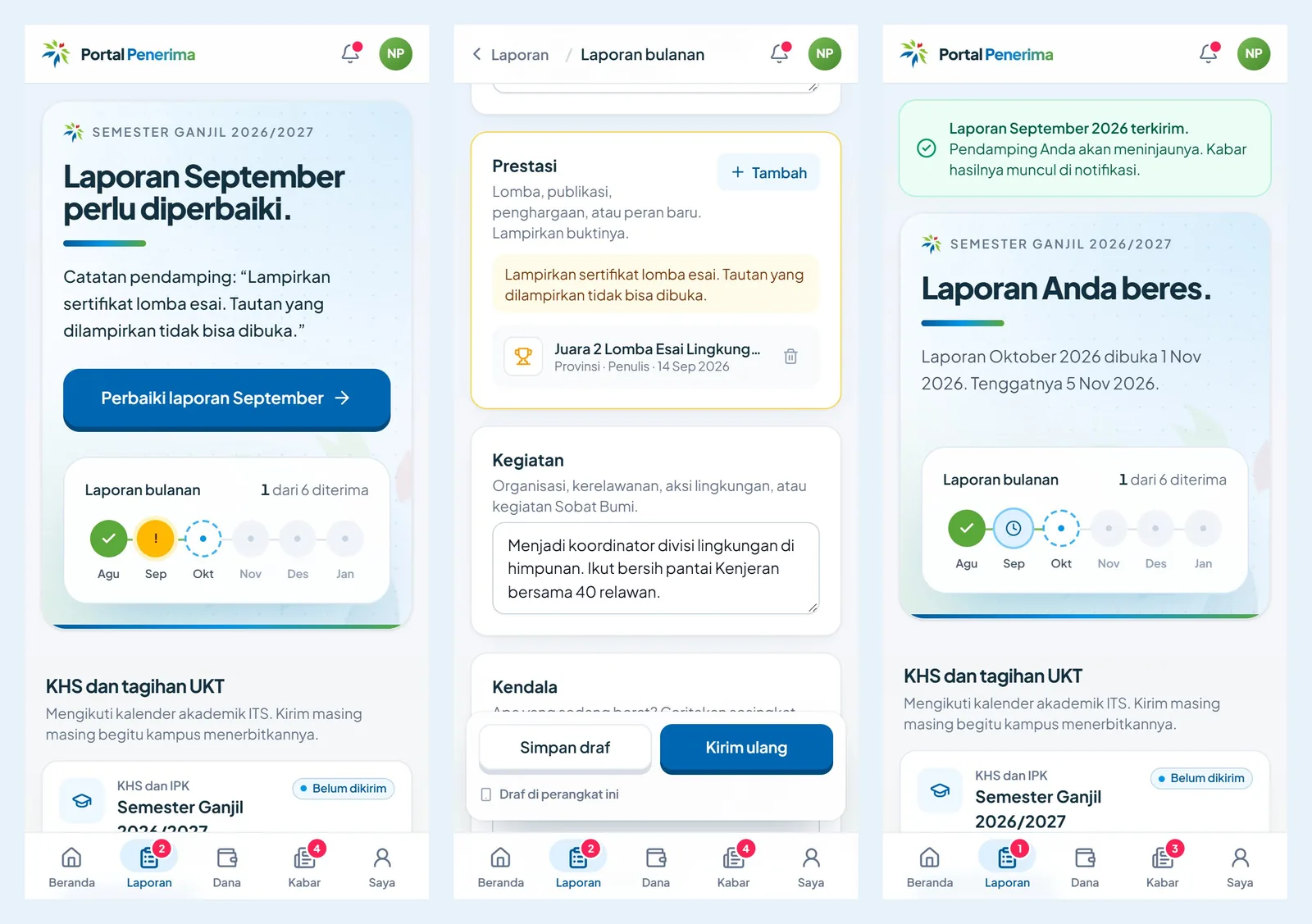
What it isBeasiswa Pertamina is the scholars’ own app after selection: invitation, re-registration, a digital contract signed on the phone, then reports, grades and payments for the years of study.
Discover.
Selection ends with a list of names. Between that list and the first payment sit contracts, bank details and forms that, done by hand, invite retyping errors and disputes over what was signed.
Design.
The scholars’ own home after selection: data imported, a contract signed on the phone and checked at the moment of signing, payments priced from it.
Deliver.
Every new scholar onboarded without retyping, each contract checked at signing, and payments generated from what they signed. Built in about a month.
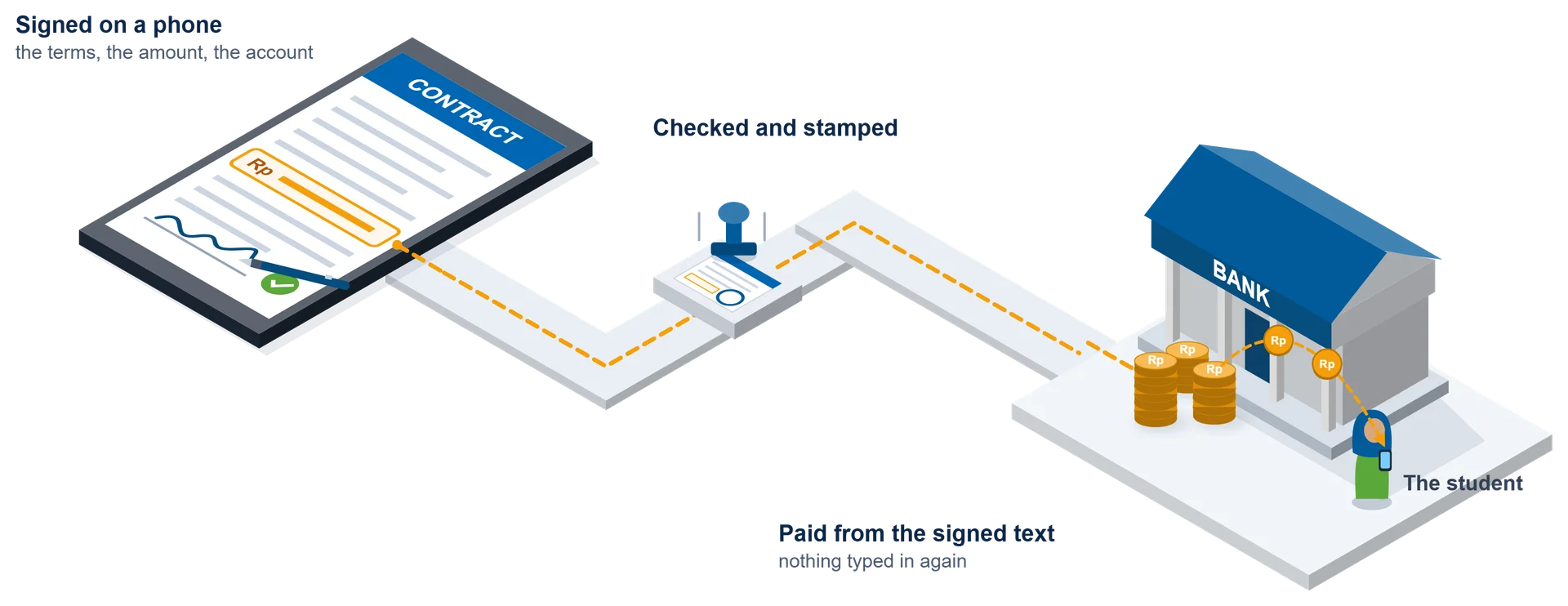
From a decree to money in a student’s account, without one number retyped.
The years after signing, on the scholar’s phone
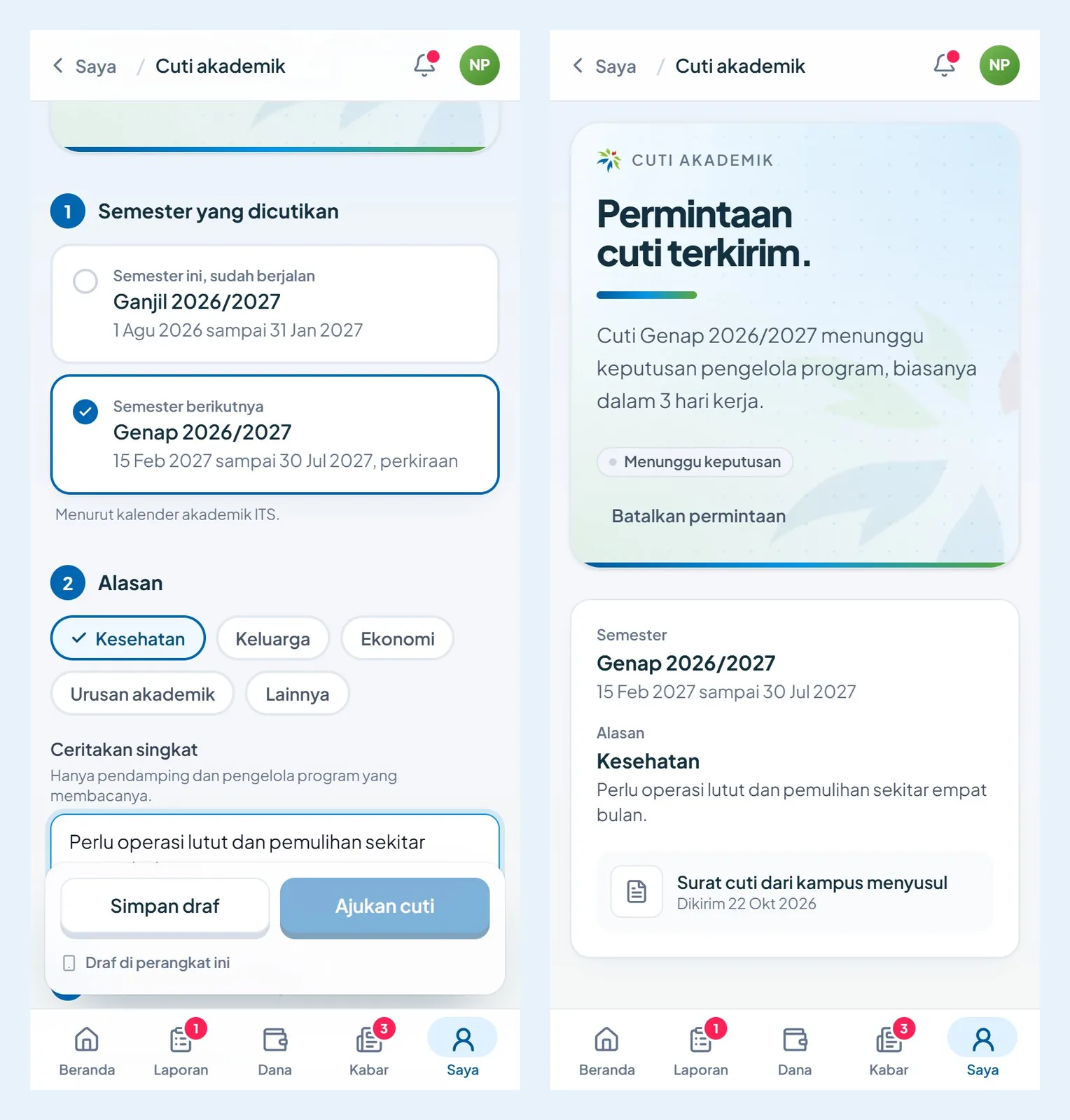
And what staff see
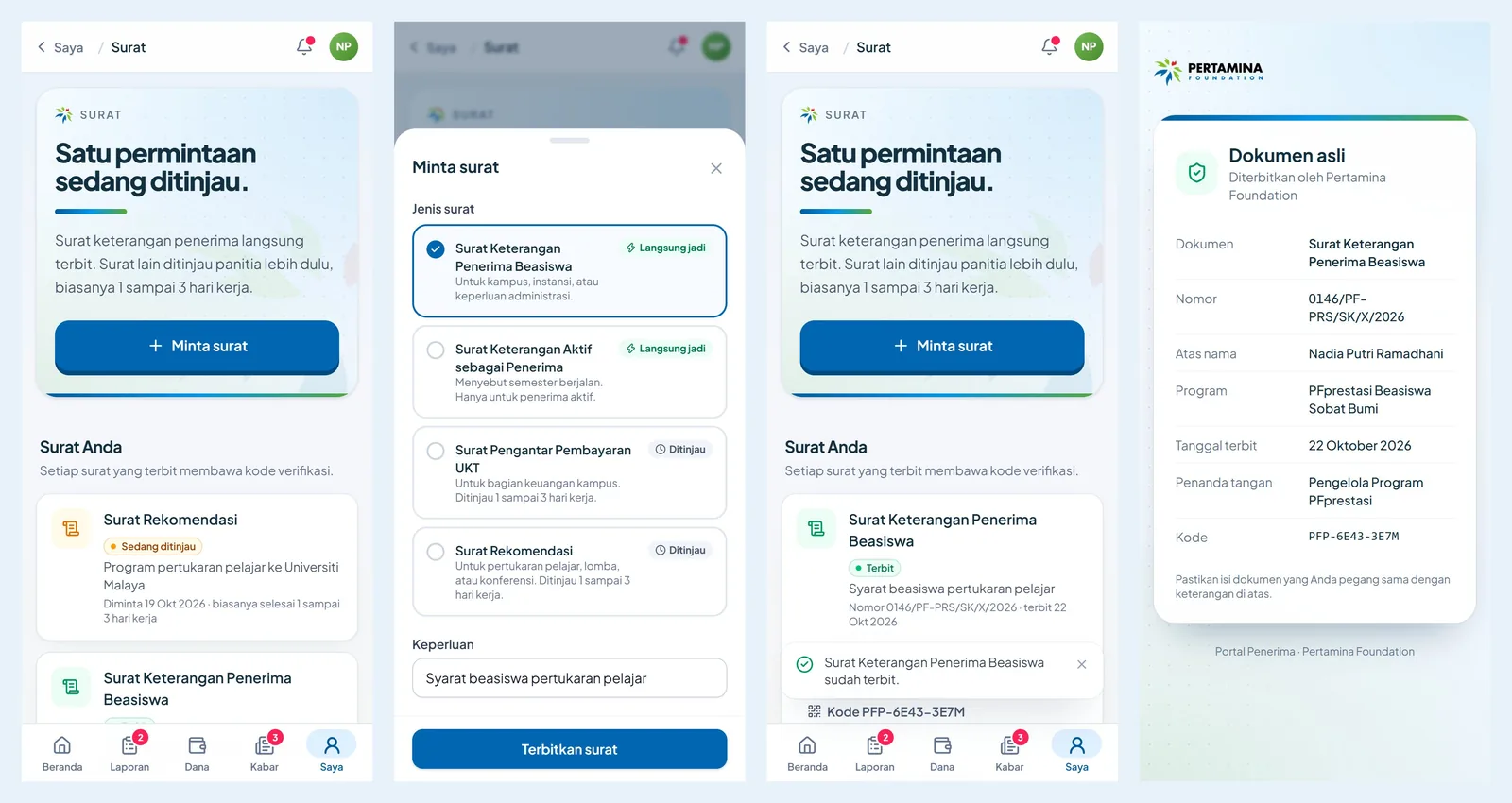
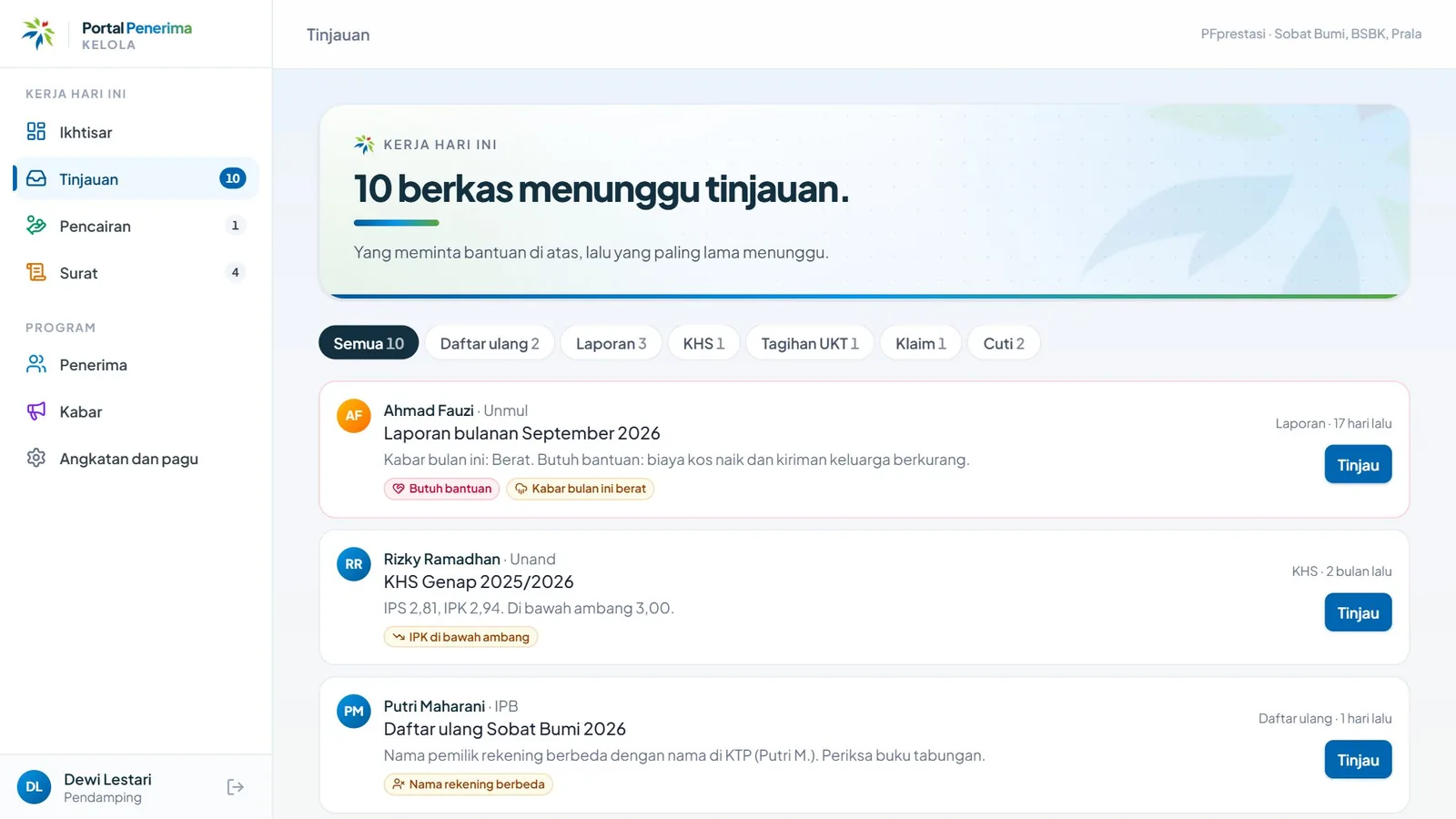
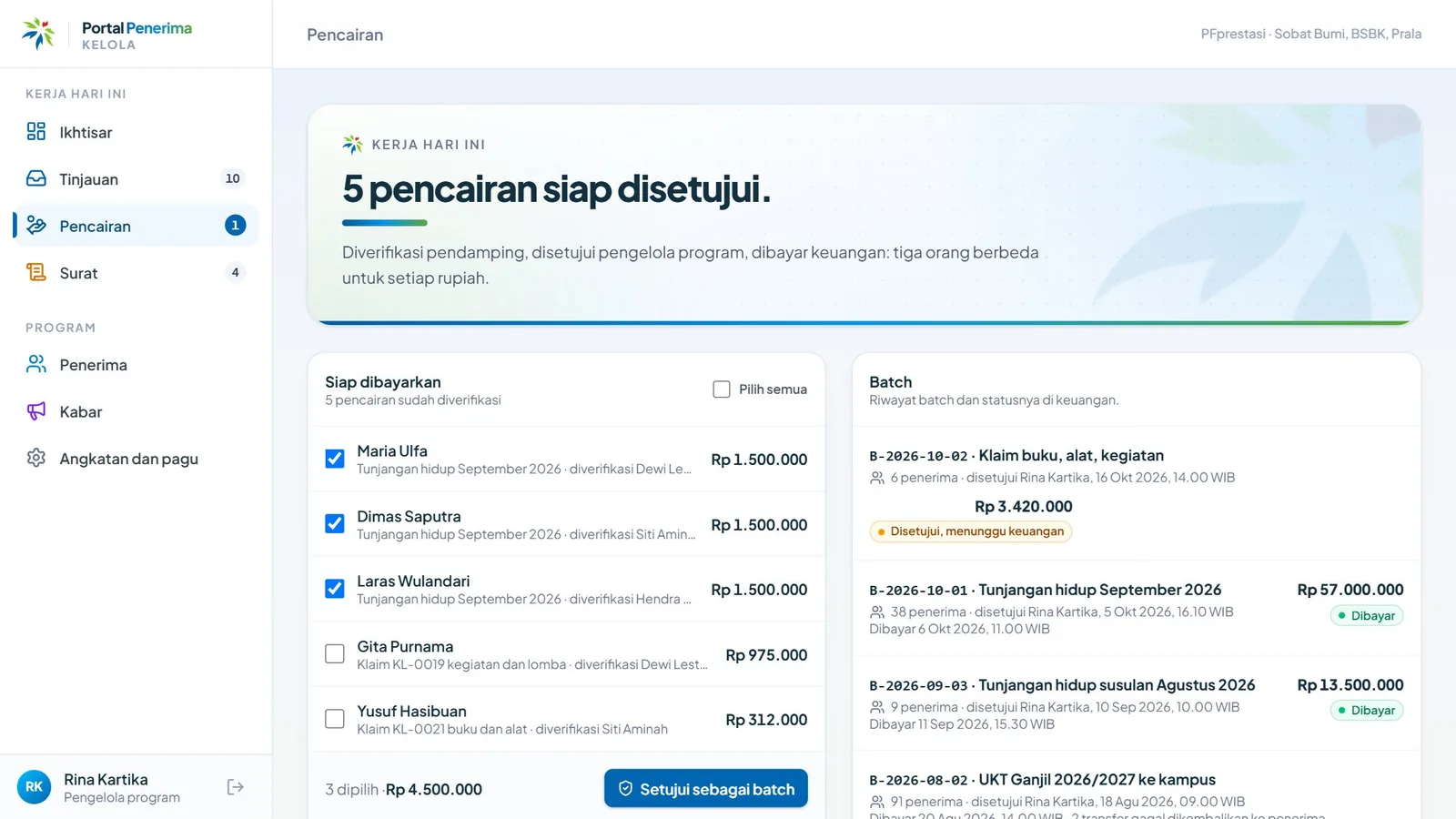
Learneda signed text must never change under its signer, so a correction becomes a new version that only unsigned scholars receive.
NextSigning, up close: one text, checked to the character.
Muktiadi Akhmad Januar · Signing
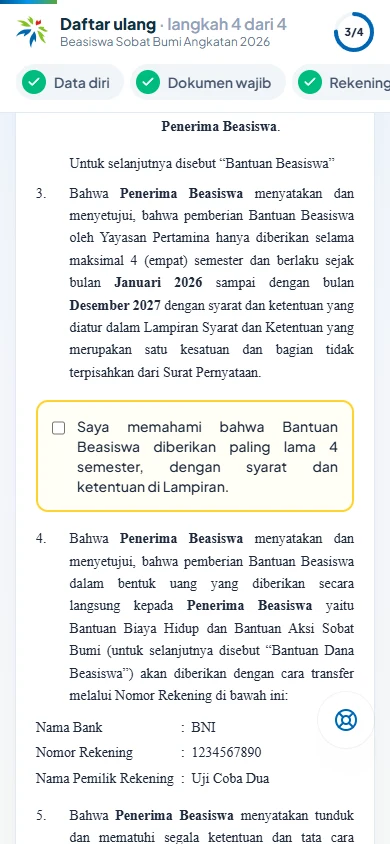
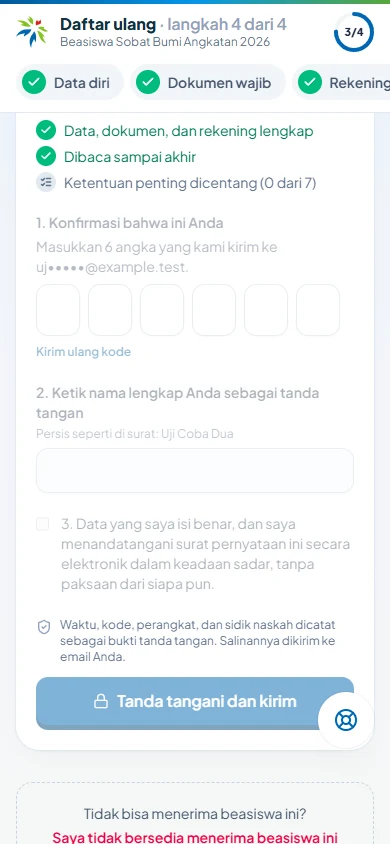
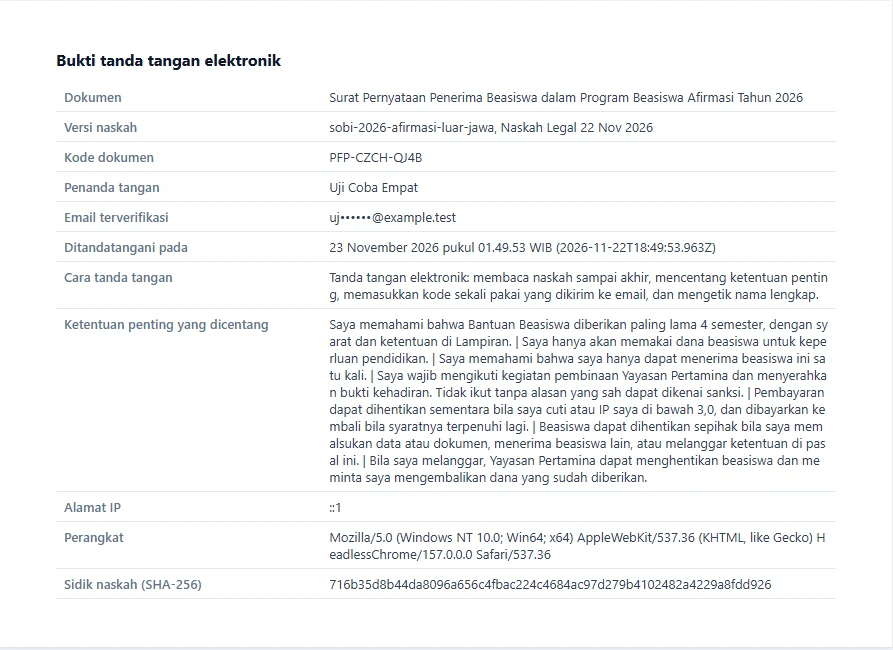
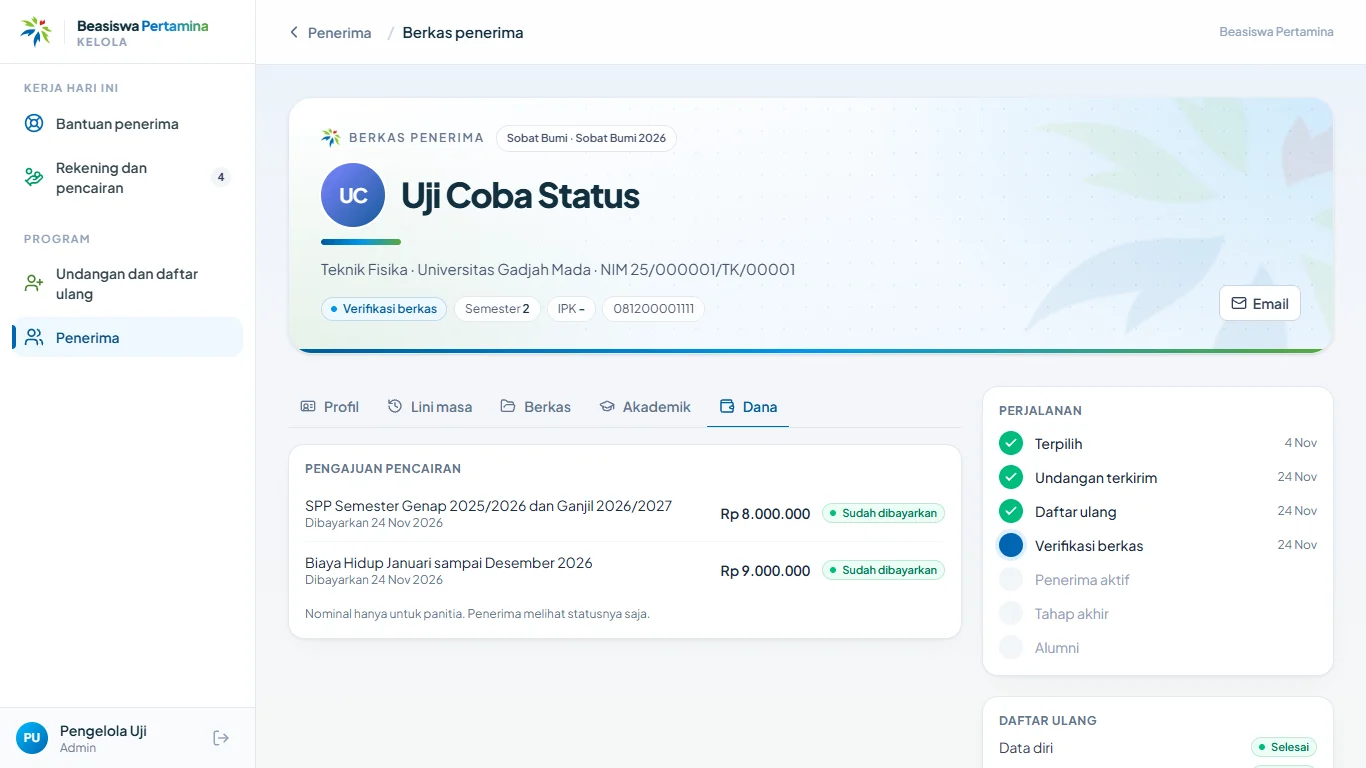
A scholarship is a legal promise with money behind it. If a scholar signs one text and finance pays from another, the promise breaks. So the contract is Legal’s exact words, checked at the moment of signing, and the payments come from that signed text, never typed.
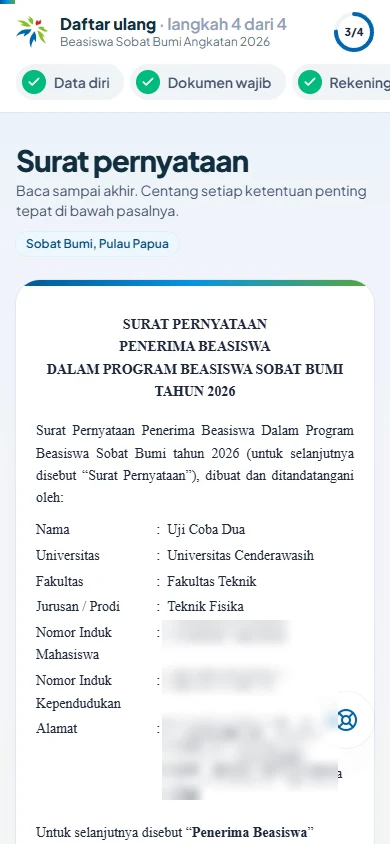 1
 2
 3
 4
If one character of the contract differs from what she read, the server refuses the signature.
Legal’s own words
Contracts converted word for word from Legal’s files, one version per track and campus region. A signed text is never edited; a correction becomes a new version for those who have not signed.
On the record
Read, then acknowledge
Reading is measured from the scroll, and every clause that matters has its own box to tick.
People decide
A code, then the full name
A short-lived code to the verified email, rate-limited and stored hashed, then the full name typed as on the ID card.
On the record
Checked at the moment of signing
The phone sends a fingerprint of the exact text it showed; the server rebuilds the text and refuses if one character differs. Anyone can verify the signature by code.
On the record
Money from the signed text
Signing creates the payment schedule, each amount from that scholar’s own contract. Finance checks every bank account before money moves.
Kept apart
Tested on the live site, safely
A launch test walks the real site as one fake scholar, refuses to act if it sees anyone else, and removes every trace afterwards.
On the record
Learnedeach selection-season failure taught a rule, so the scholar app started with those rules, domain tests and a gated pipeline.
NextThat closes Part 1. Part 2 turns from one platform to the rest of the organisation it runs in.
Part 1 · 2026
Beasiswa Pertamina is the scholars’ own app after selection: invitation, re-registration, a digital contract signed on the phone, then reports, grades and payments for the years of study.
Discover.
Selection ends with a list of names. Between that list and the first payment sit contracts, bank details and forms that, done by hand, invite retyping errors and disputes over what was signed.
Design.
The scholars’ own home after selection: data imported, a contract signed on the phone and checked at the moment of signing, payments priced from it.
Deliver.
Every new scholar onboarded without retyping, each contract checked at signing, and payments generated from what they signed. Built in about a month.
Architect and builder · Digital contract · Tamper evidence · Payments
Tap a page to open it full screen; swipe for the next. Every page is also in the PDF.
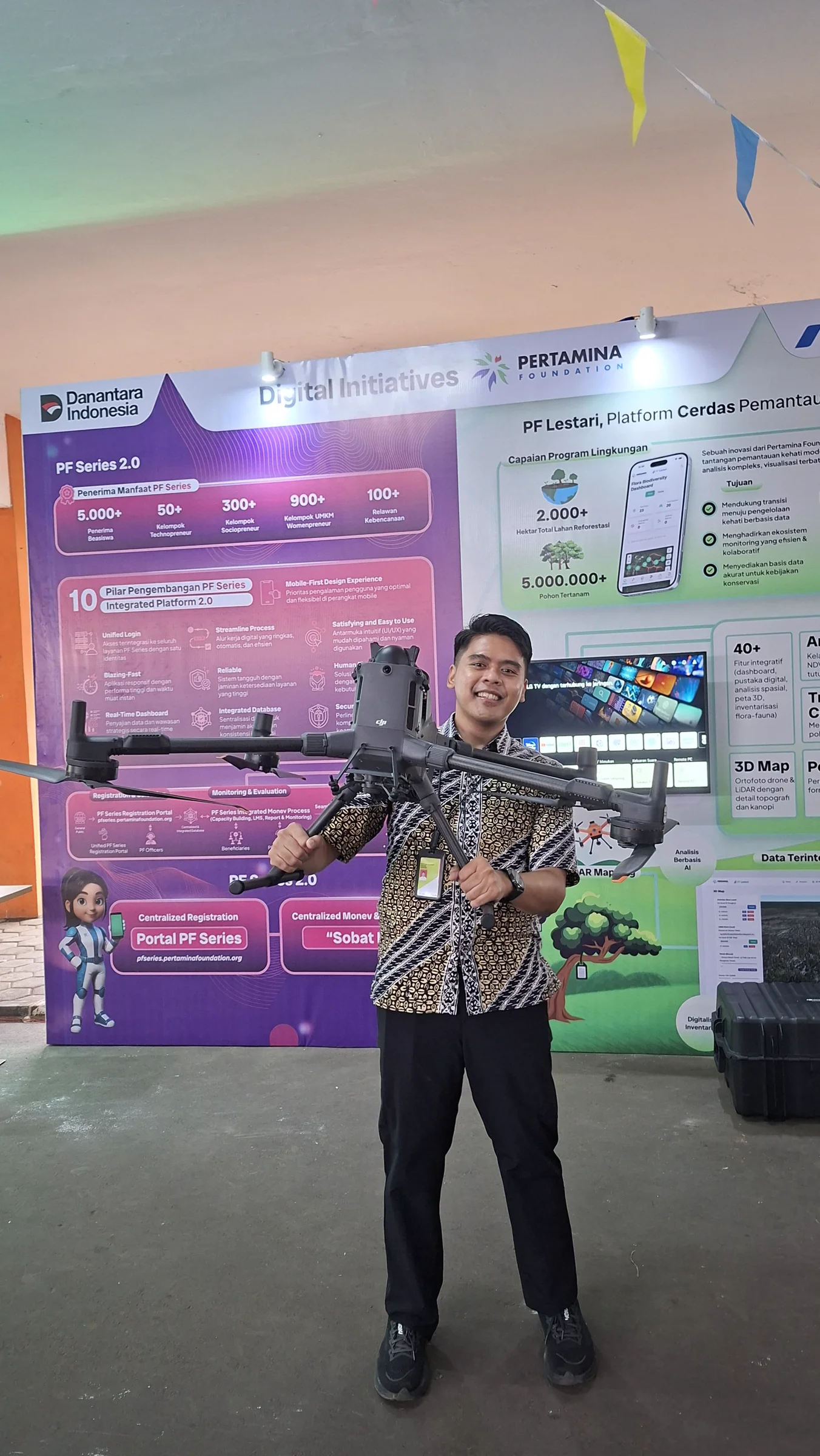
At the foundation’s Digital Initiatives booth, 2026: PFSeries 2.0 and PF Lestari on the wall, the LiDAR drone in hand.
Muktiadi Akhmad Januar · Part 2 · Running a foundation on software
Part 2
The same habits, pointed at very different problems
PFSeries shows depth. This part shows range inside the same organisation: staff work, AI, live events, money, servers and the documents that let others build.
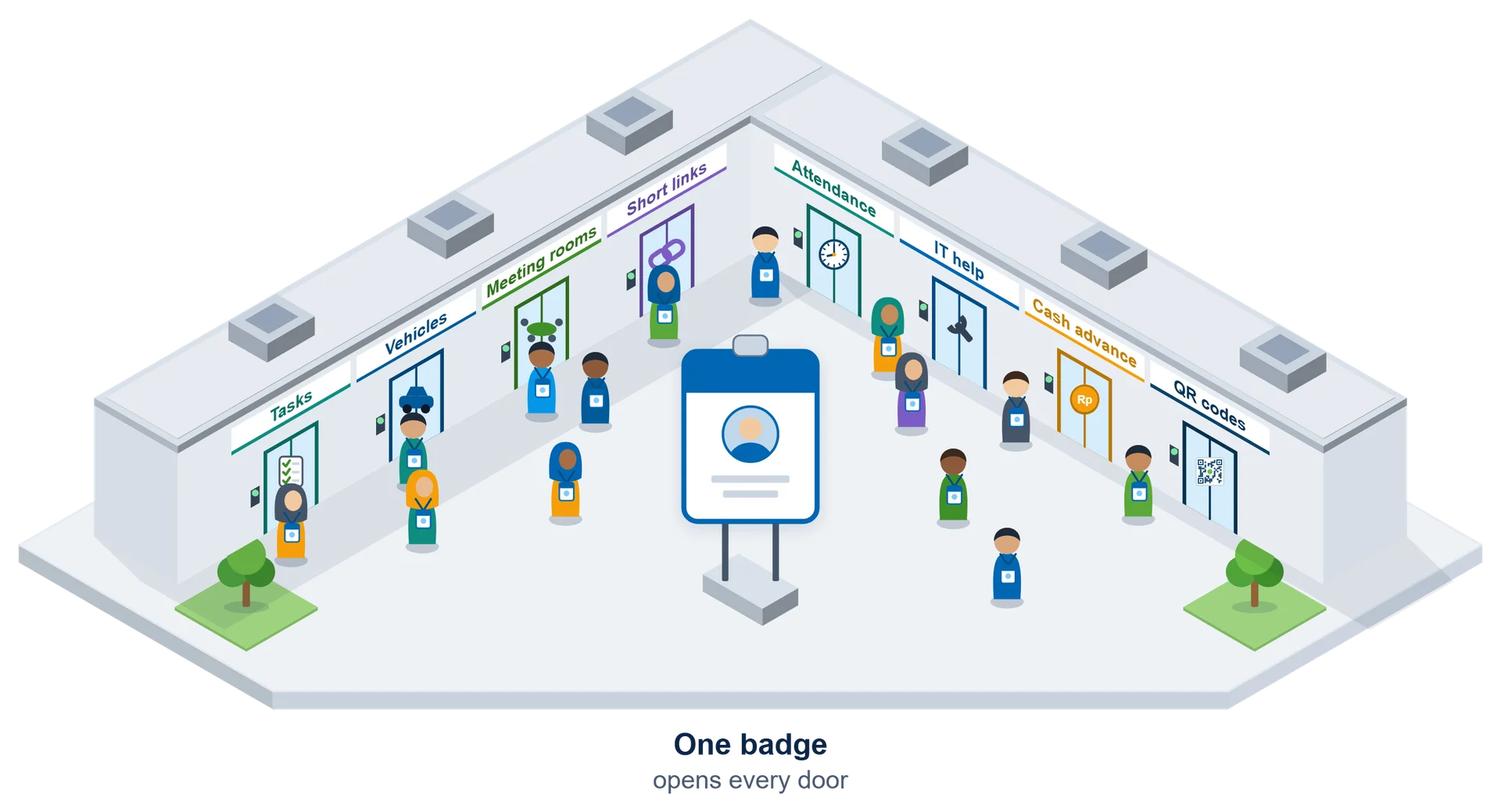 PFdrive A dozen jobs spread across forms, chats and sheets
 Kira and the AI work Skilled people spending hours listening and reading
 Prototypes and UI/UX Ideas nobody can judge from a slide
 Events and big screens Live moments where nothing can go wrong
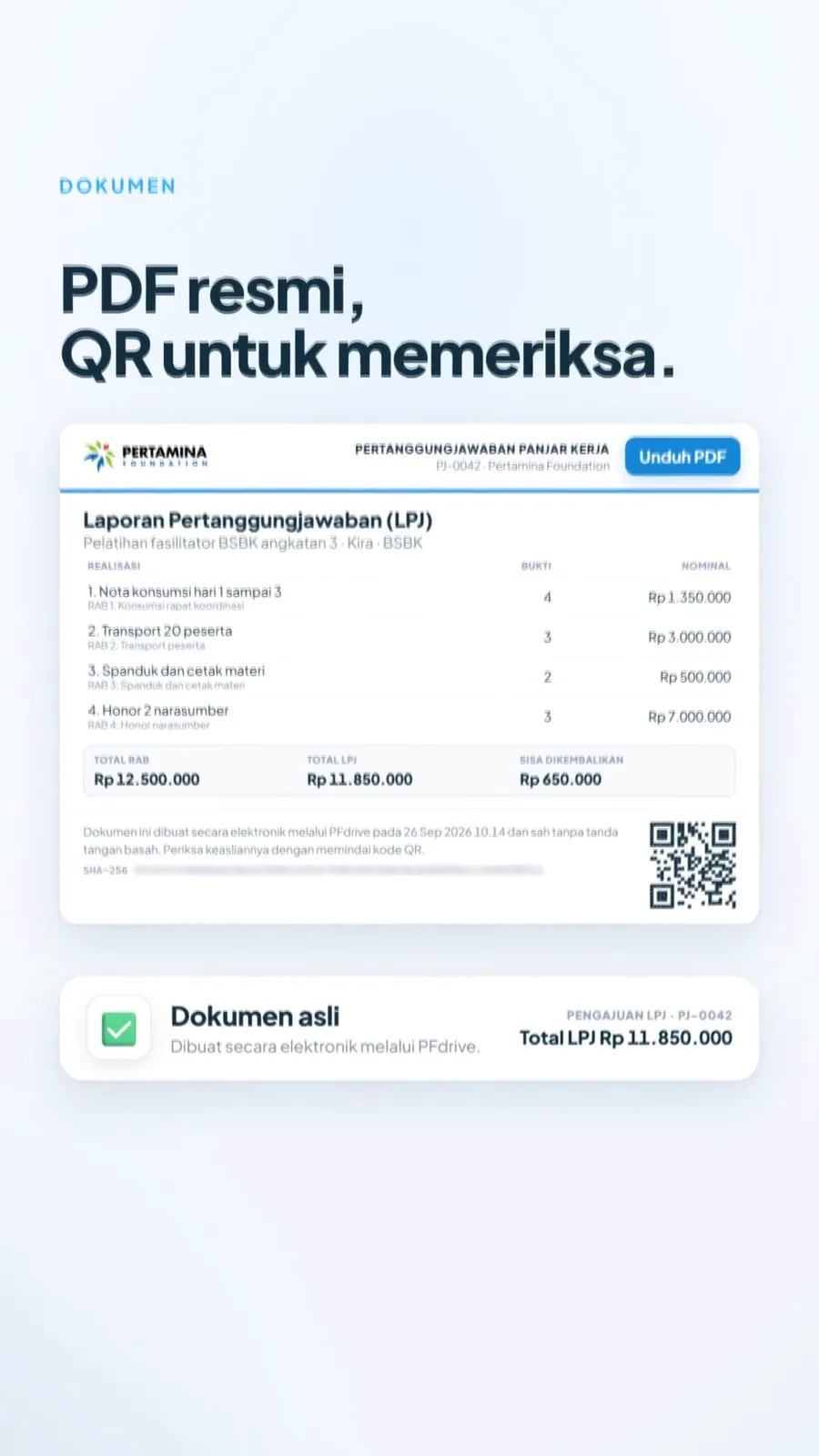 Grant monitoring and disbursement Money out, and no way to prove who changed what
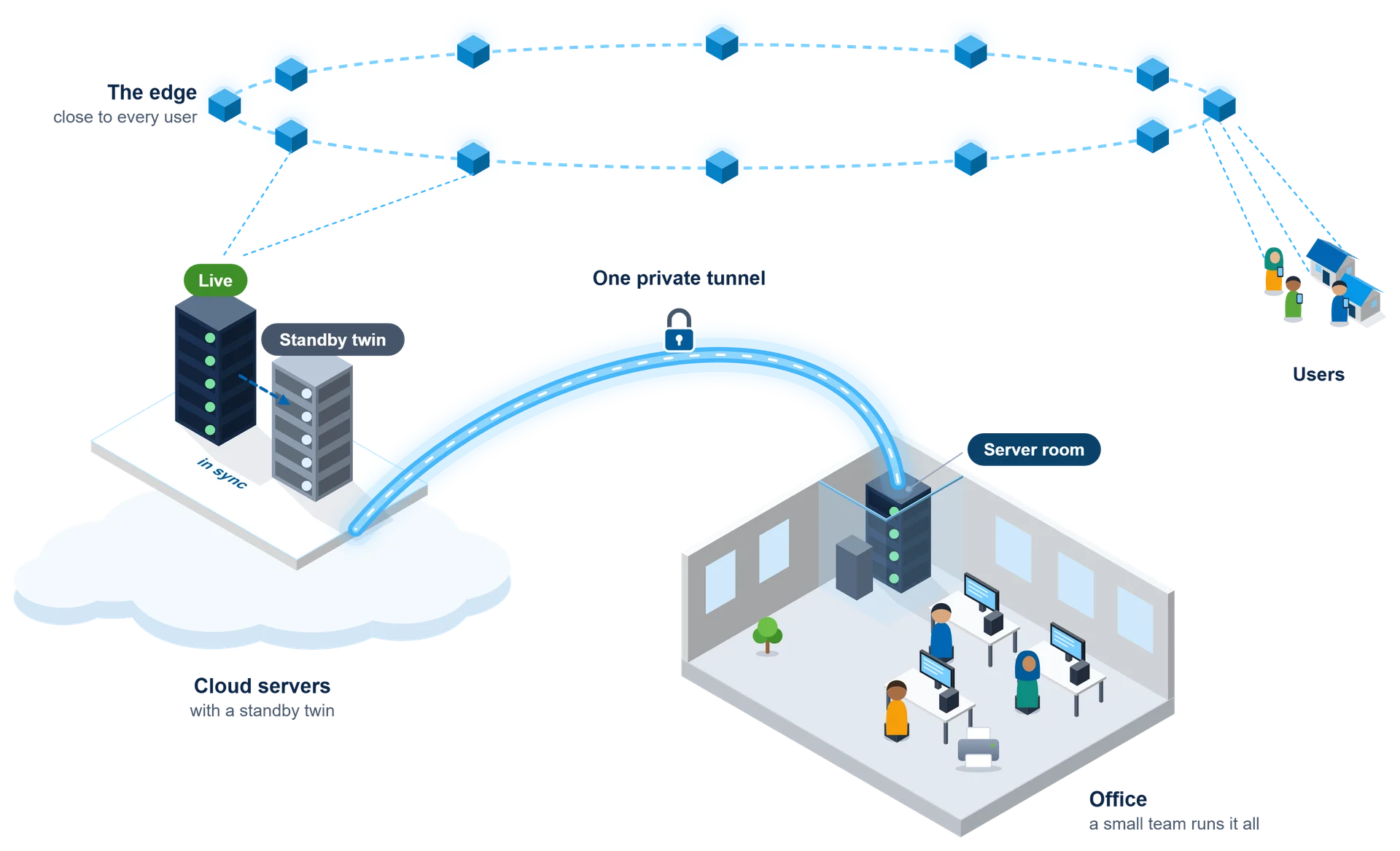 Infrastructure and operations A small team, national peaks, a small budget
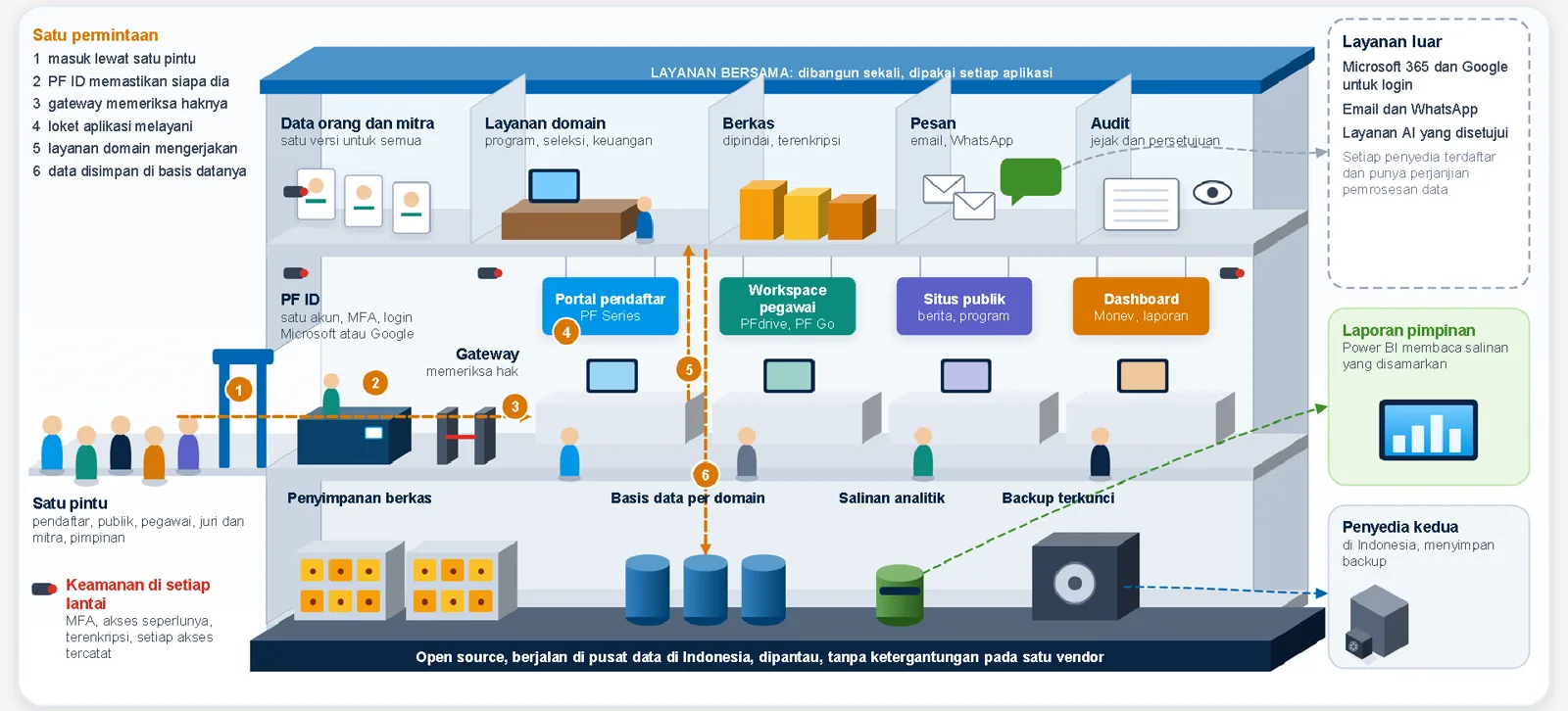 Architecture documents A system only one person could explain
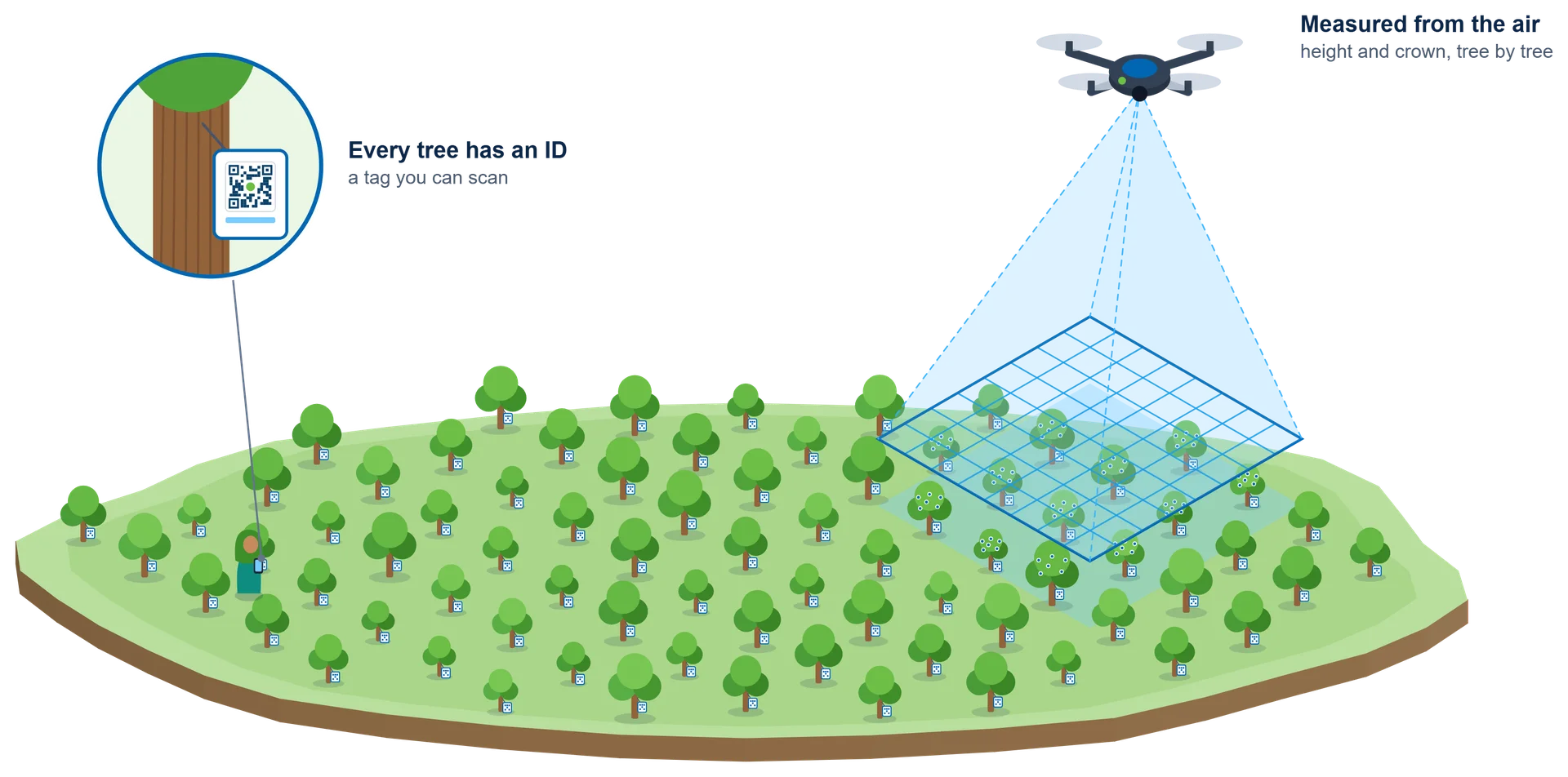 Forest, tags and vision Trees that cannot be found or checked again
NextFirst PFdrive, the system staff open every morning, because everything else in this part either lives inside it or feeds it.
Part 2
The same habits, pointed at very different problems
PFSeries shows depth. This part shows range inside the same organisation: staff work, AI, live events, money, servers and the documents that let others build.
Muktiadi Akhmad Januar · Part 2 · PFdrive
What it isPFdrive is the foundation’s internal staff system: one login for programmes and tasks, approvals, IT help, cash advances, attendance and live questions, meeting rooms, short links, broadcasts and file tools.
Discover.
Daily work was spread across separate tools: forms for attendance and prize claims, a separate publications site, IT requests on paper or WhatsApp, cash advances in spreadsheets, and no single view of programme progress.
Design.
One login, one programme tree and one permission model, with a module for each job. It grew from a task tracker into the system staff open for nearly everything.
Deliver.
One staff system live on several addresses, with modules that replaced forms, spreadsheets, paper and chat threads.
Permissions follow the programme tree, not job titles, and every list is filtered on the server: hiding is not scoping.
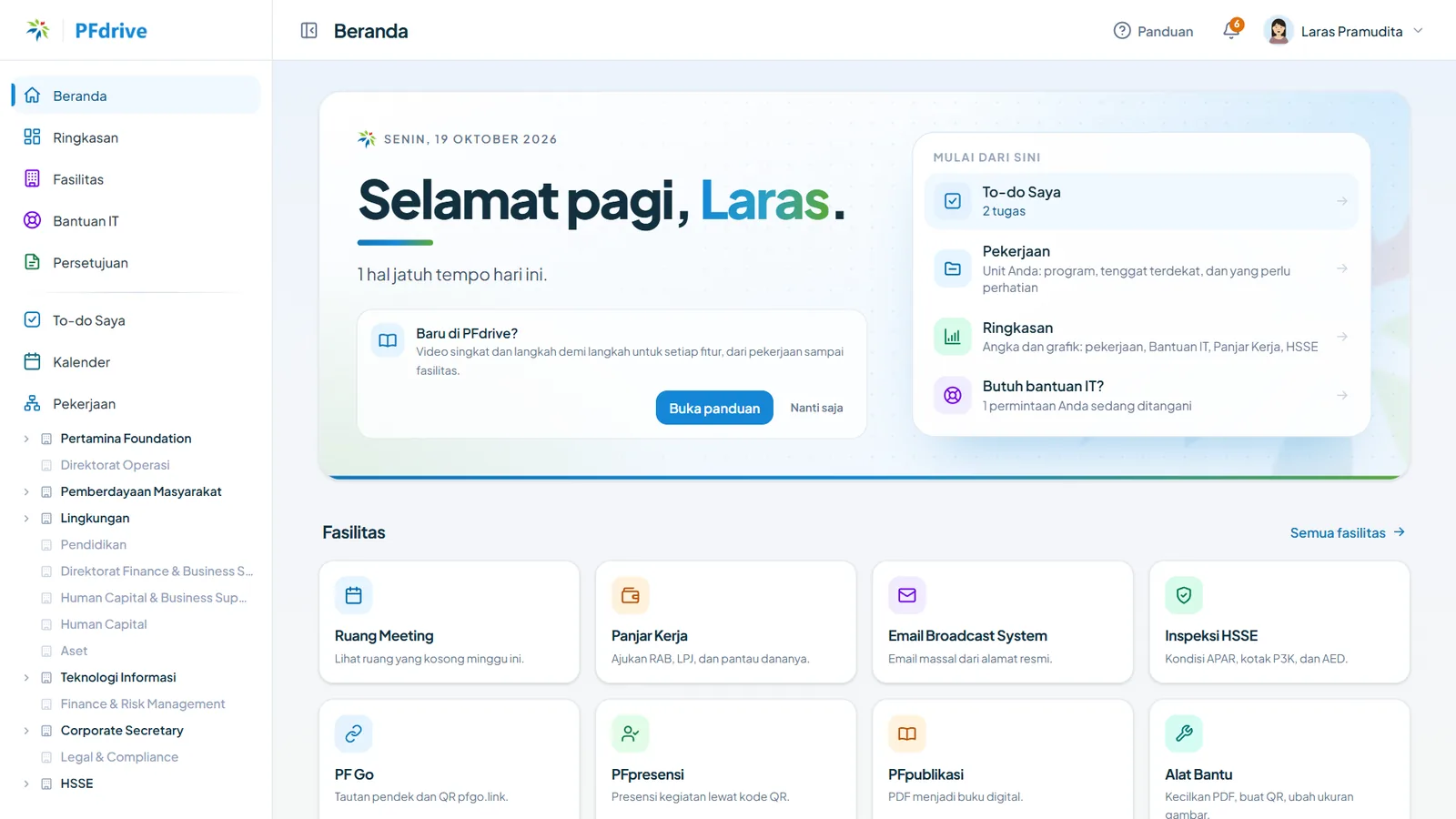
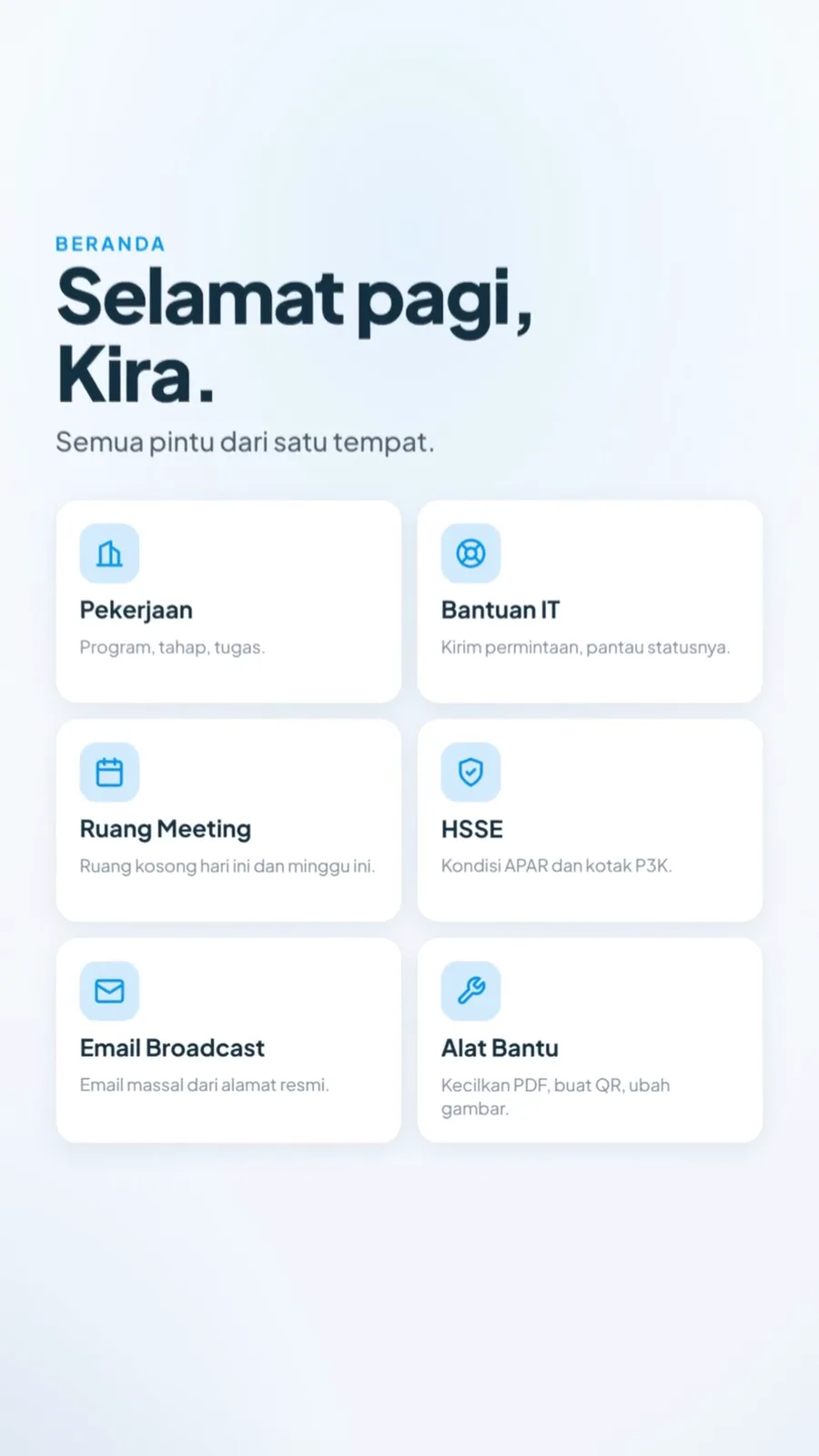
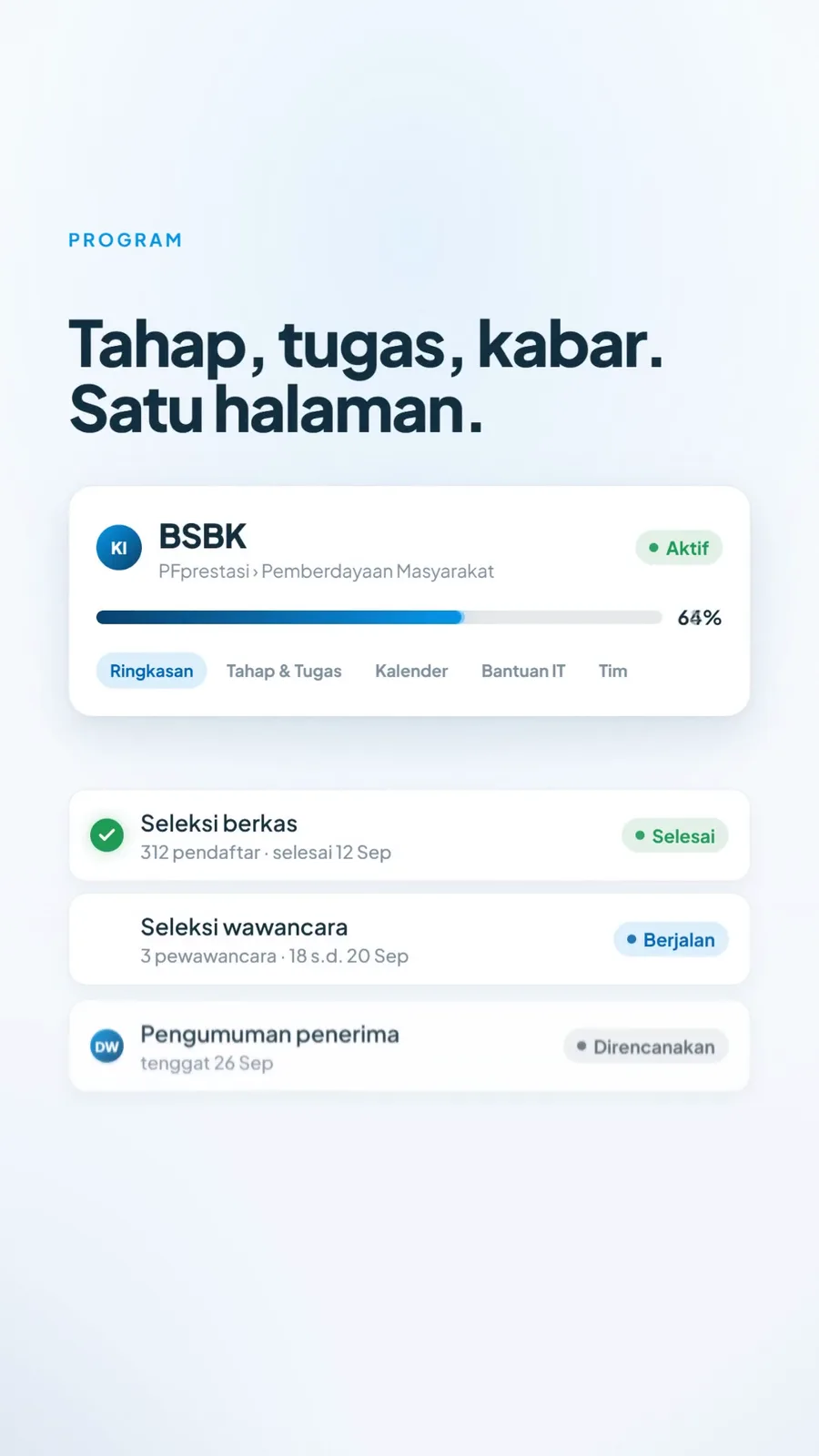
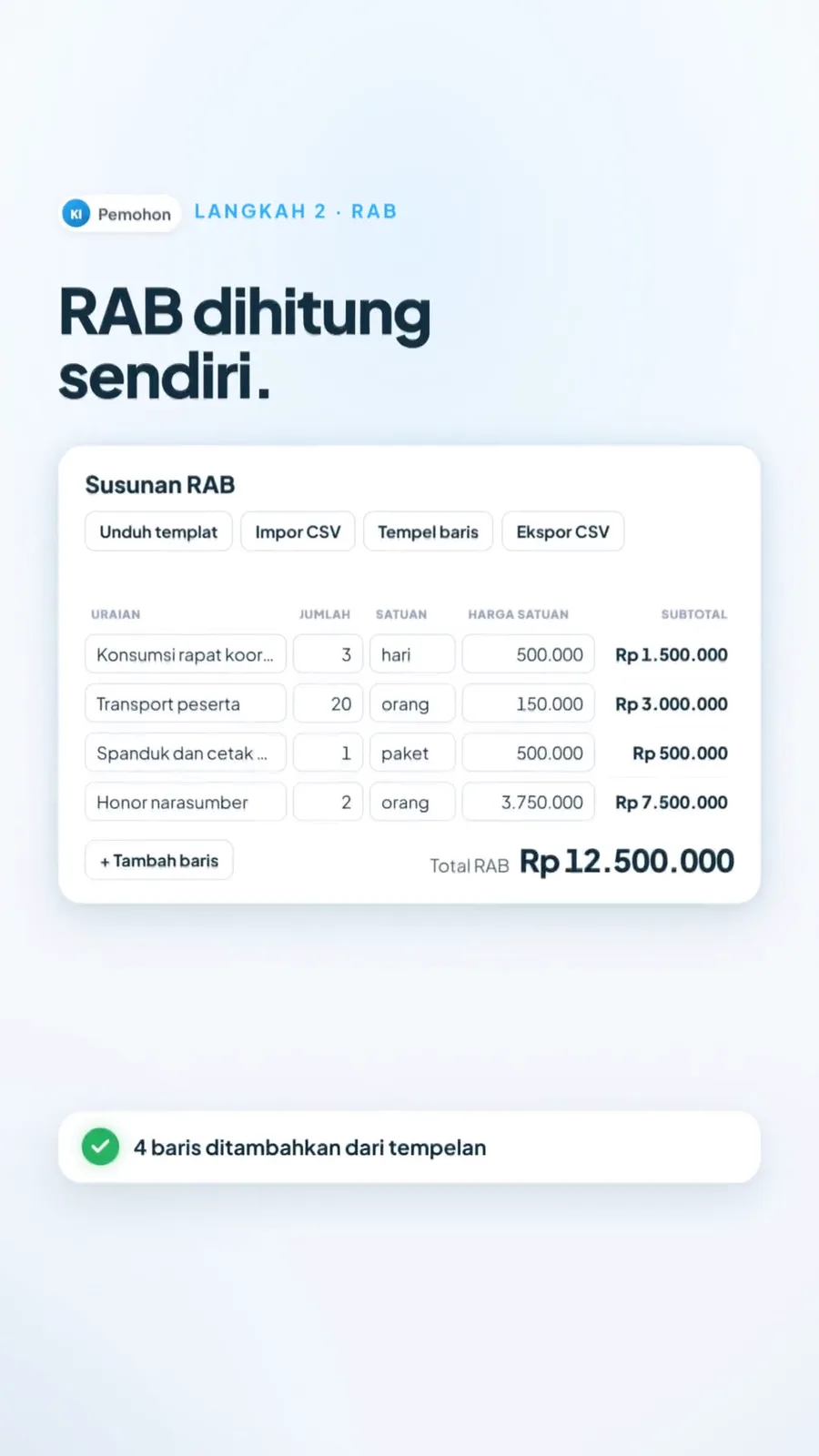
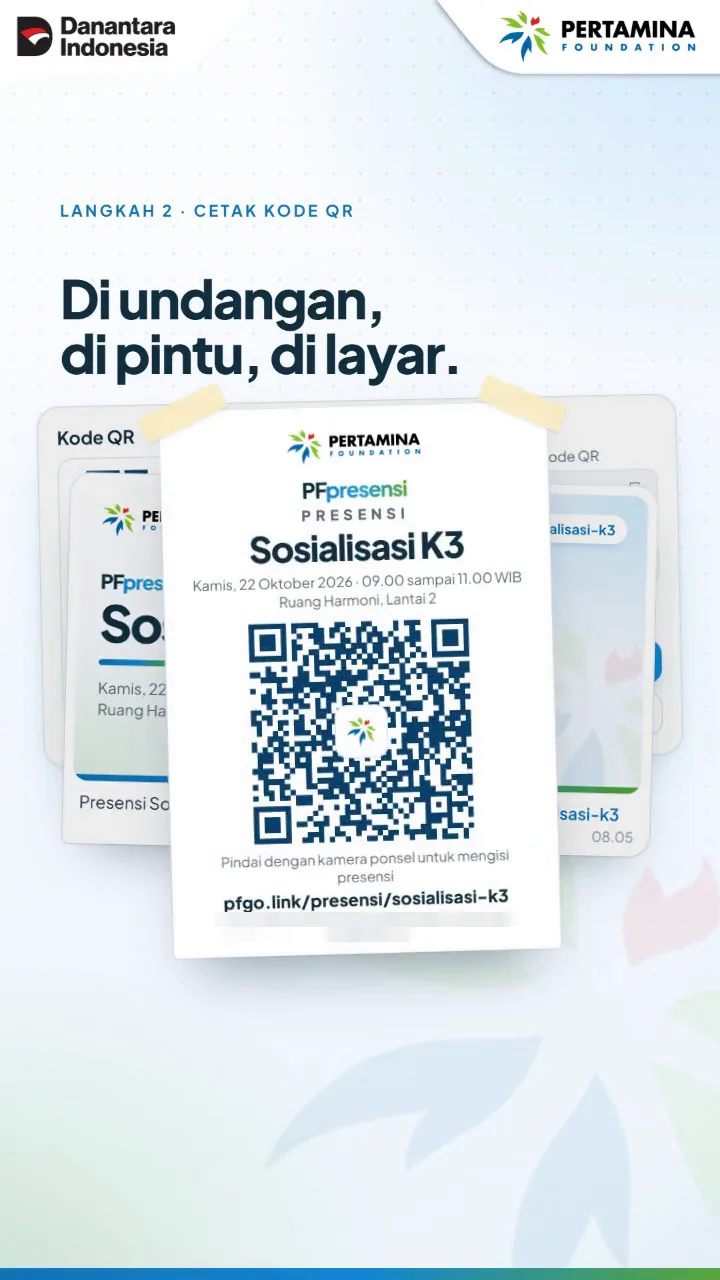
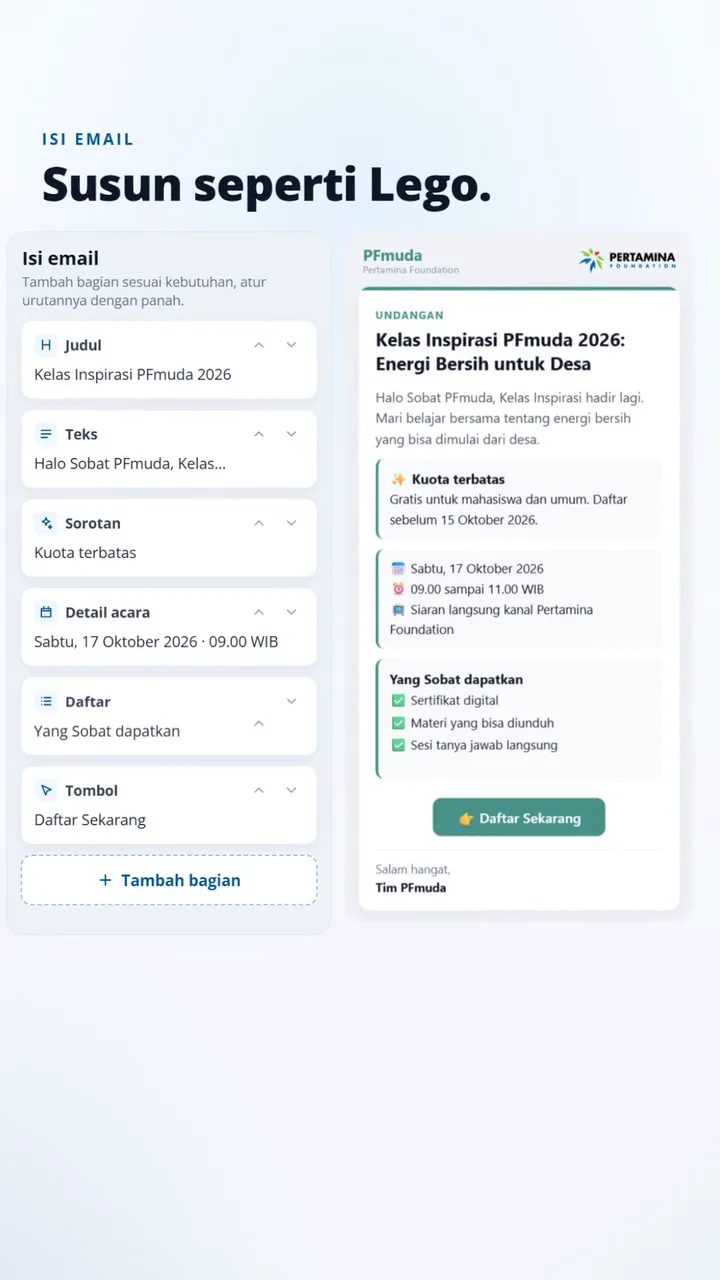
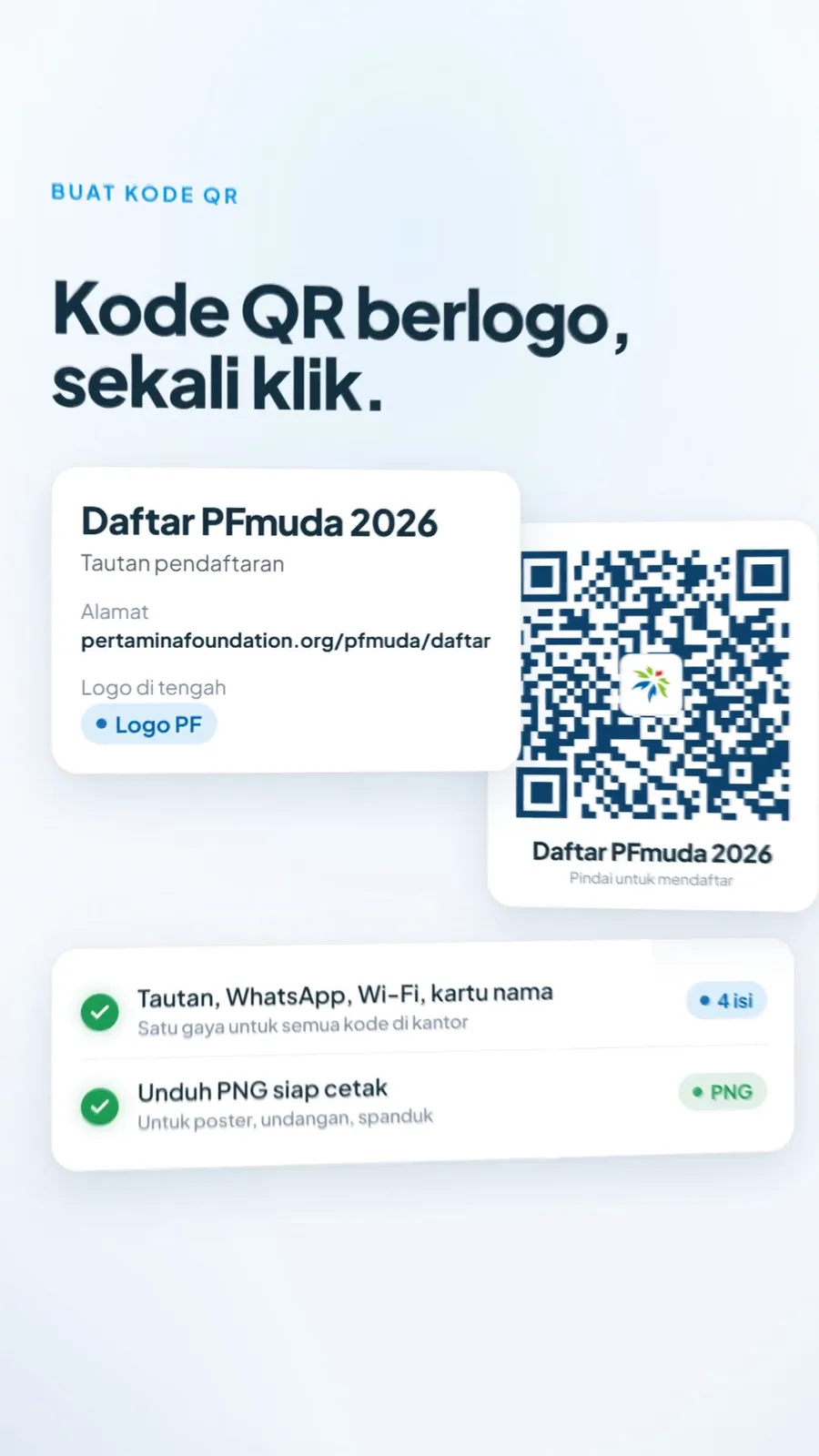
Programmes, Gantt, approvals
Programmes as a tree with stages and approvals; anything awaiting a signature waits in one place.
People decide
IT help from a sticker
A QR on each printer opens a request already labelled; guests can report without logging in.
Any phone
Cash advances
From budget to report, no one approves their own, and printouts carry a QR to verify.
On the record
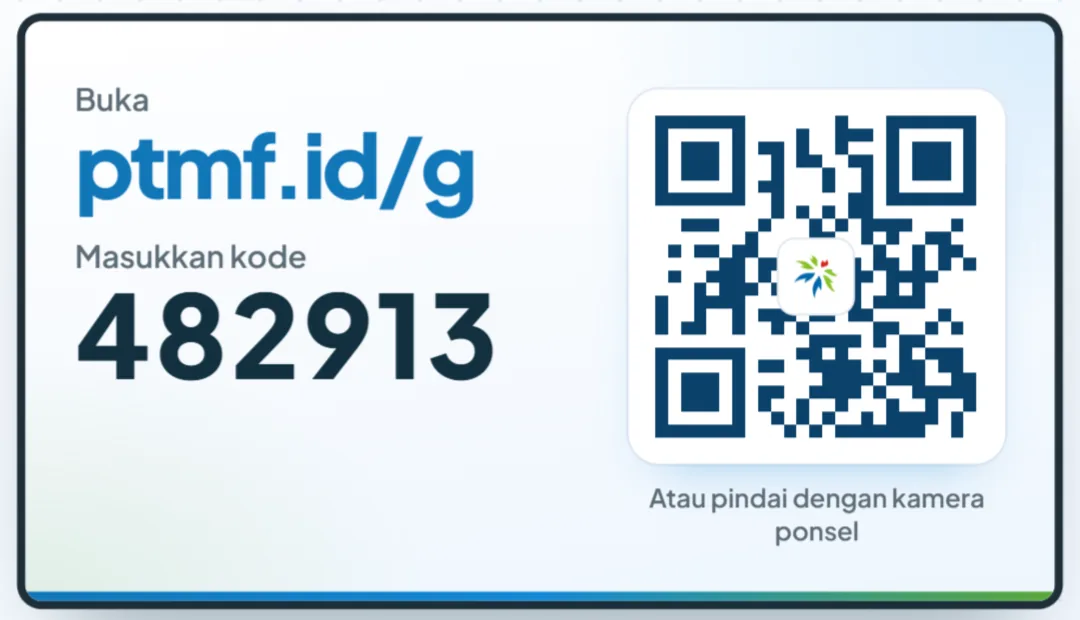
Attendance and live questions
One link per event: check in, ask any speaker, upvote; the chosen question fills the projector.
Any crowd
Meeting rooms from the calendar
Rooms booked against the office calendar; the room’s TV shows its own agenda.
Any phone
Work boards, open to AI
Sprints and stand-ups that AI assistants can update through the same permissions. Done stays with the person.
People decide
Learnedjob titles make poor permissions, so a person’s seat in the programme tree decides what they can see and do.
NextA day at the foundation, hour by hour, inside that one system.
Muktiadi Akhmad Januar · A day inside
A programme officer’s day, from morning to evening, left to right along the line: every job below used to live in a different form, chat or spreadsheet. Example data.
07:30
The programme tree
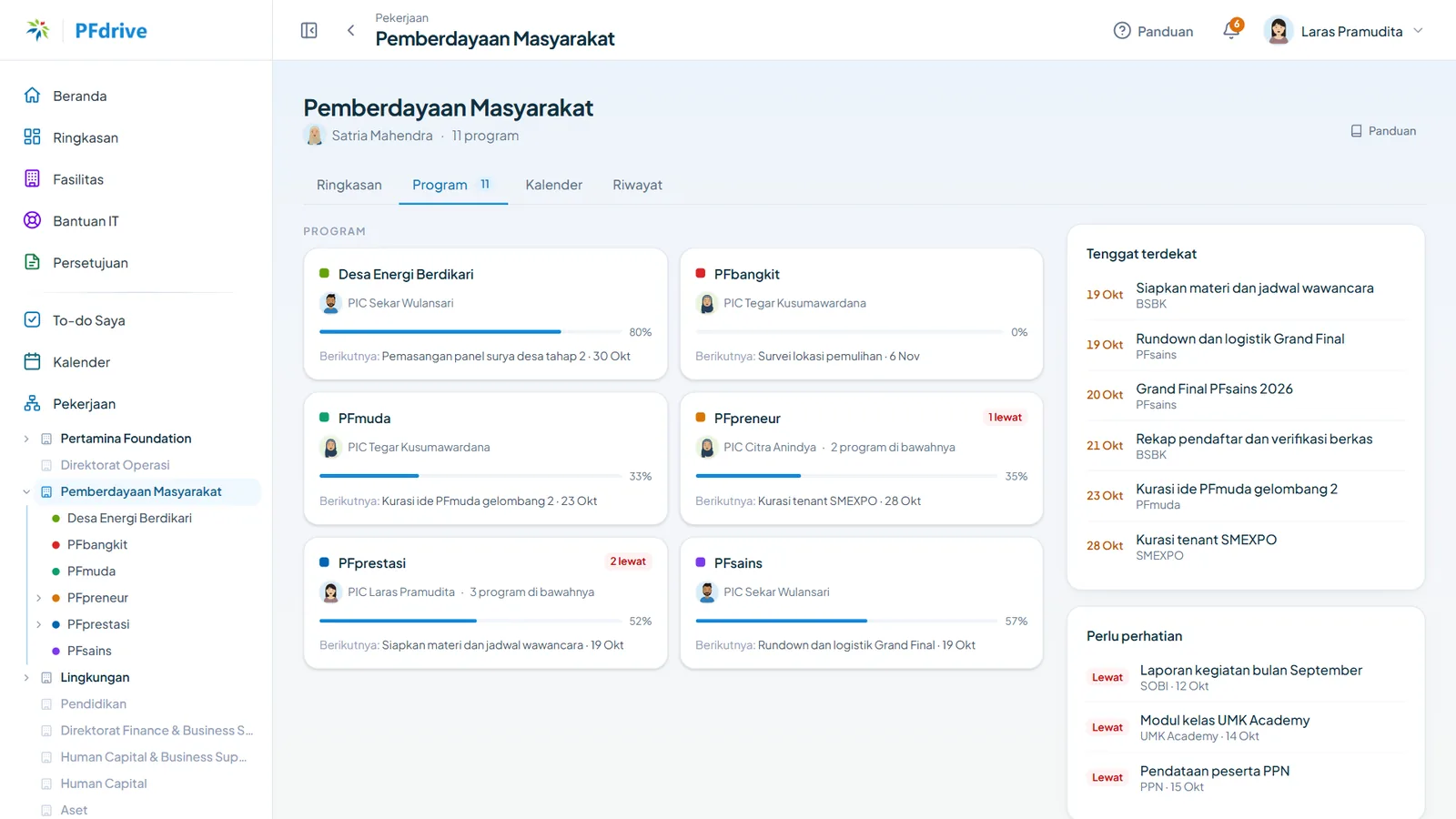
Every unit, programme and stage; your seat decides what you see.
08:30
One approvals inbox
Anything waiting for a signature, in one place.
10:00
IT help from a sticker
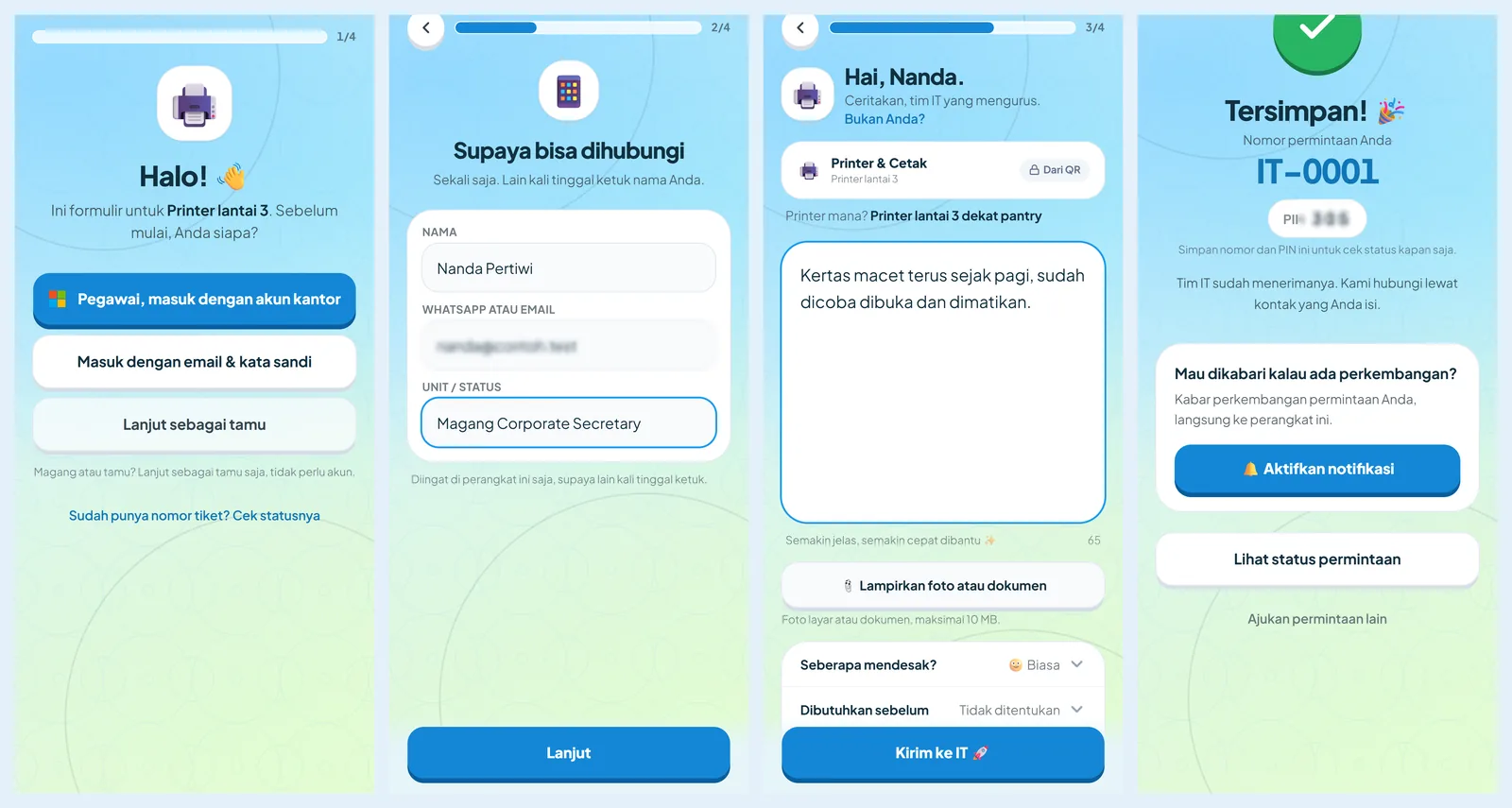
Scan the printer’s QR: the request arrives already labelled.
11:00
Live polls and Q&A
One code on the screen; the room joins from their phones.
13:30
One calendar of events
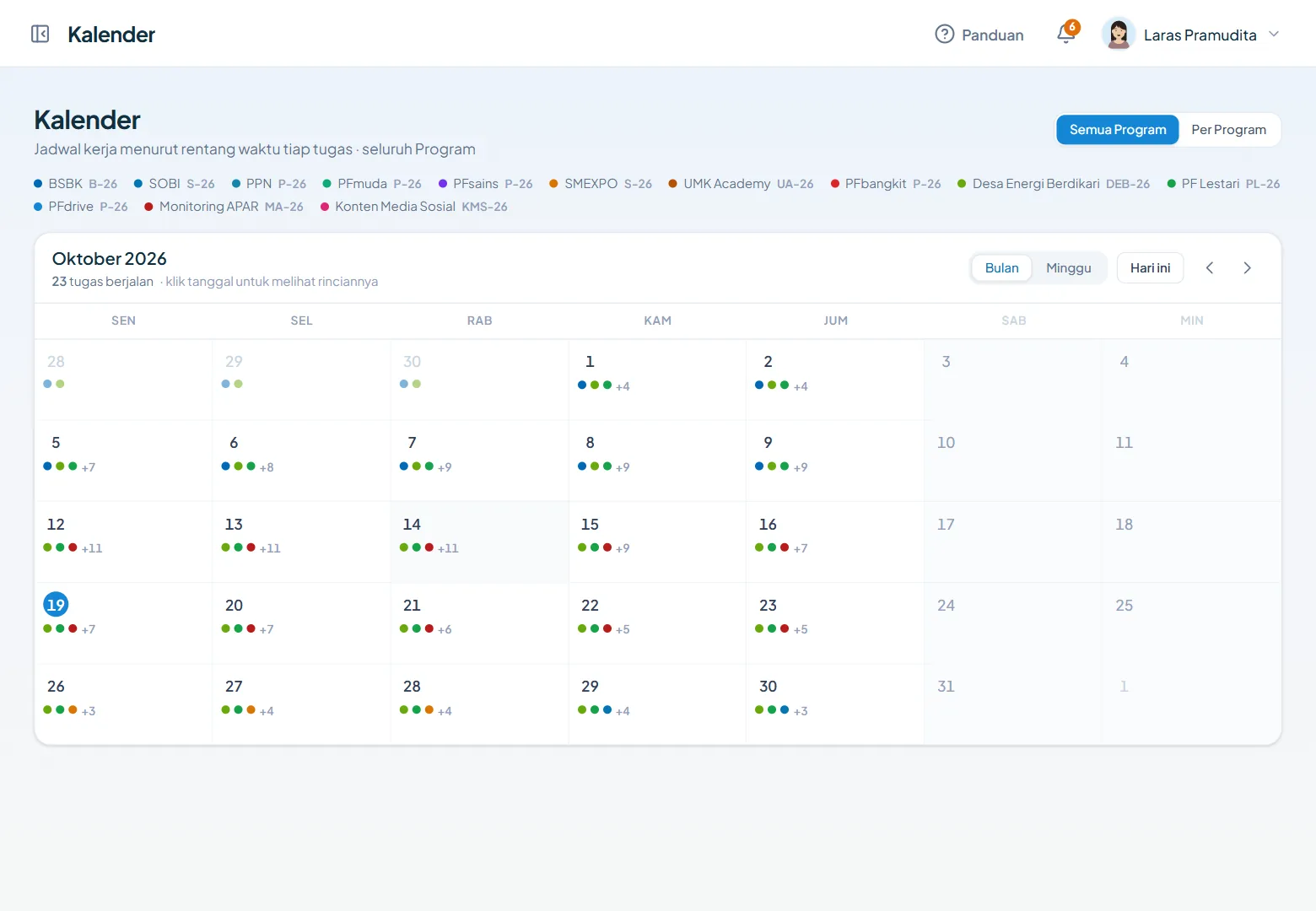
Every programme’s dates on one shared calendar.
15:30
File tools that never upload
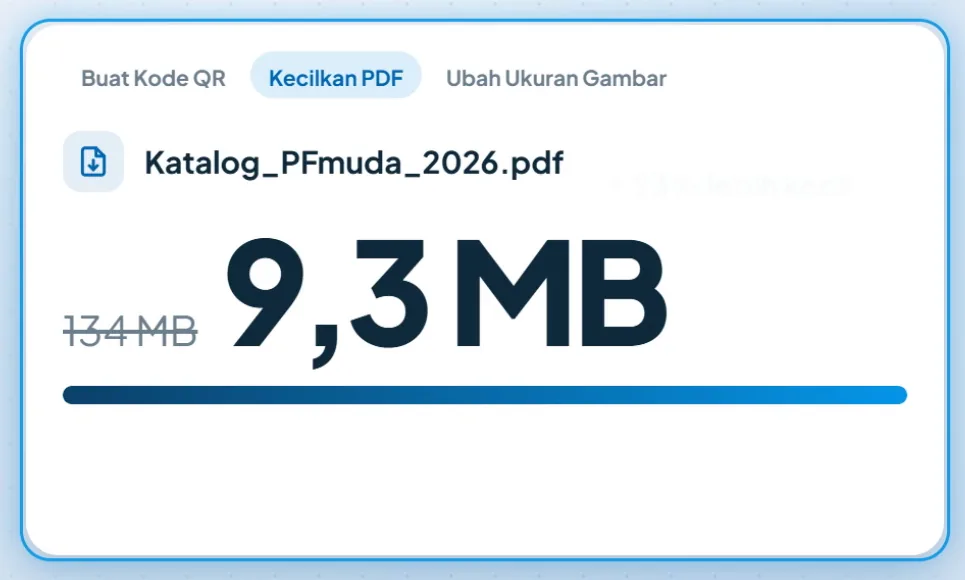
Compress and merge PDFs on the device; the file never leaves it.
08:00
Updates, not meetings
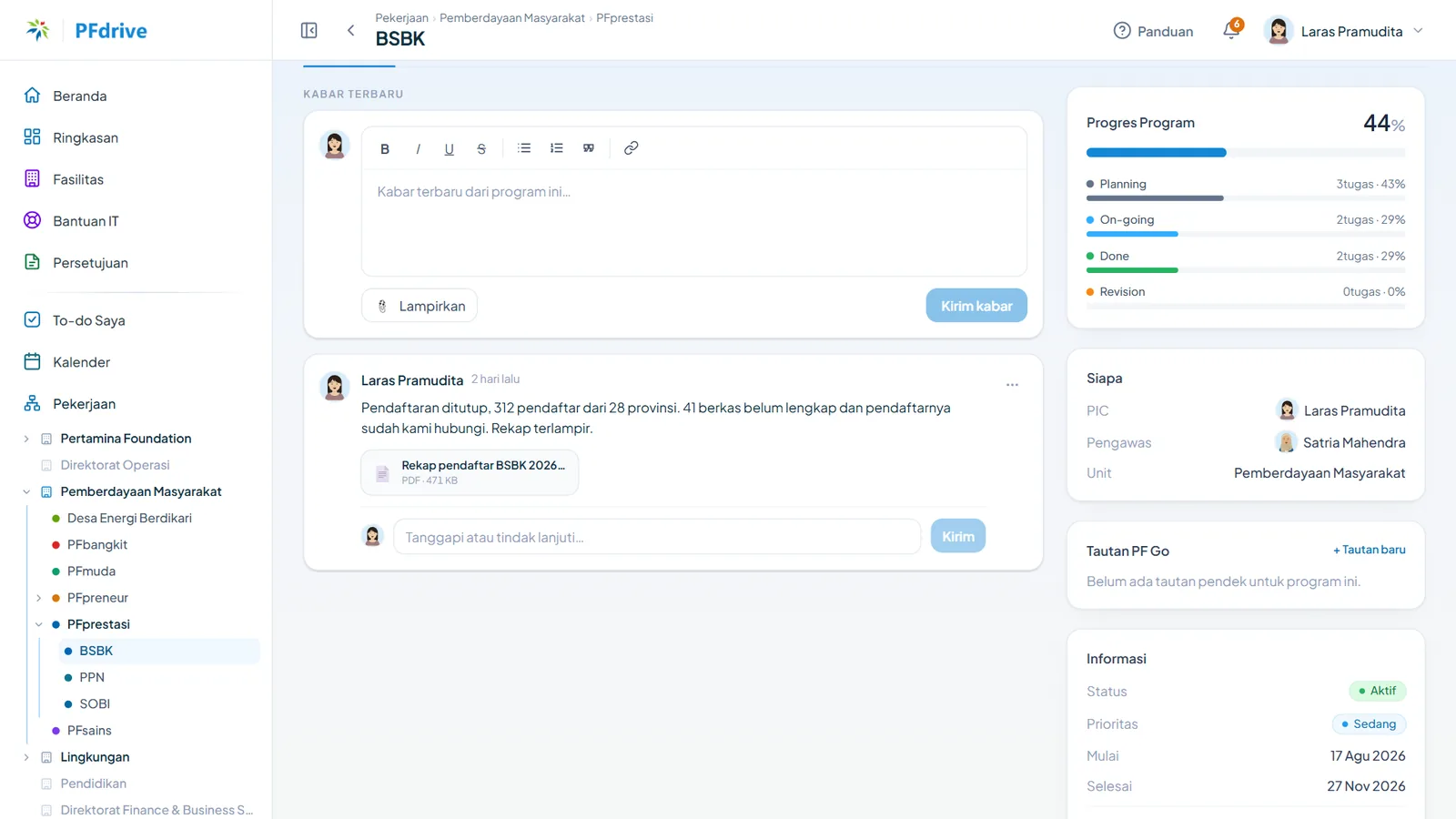
Progress posted where the work lives, approved by a supervisor.
09:15
A trail on every task
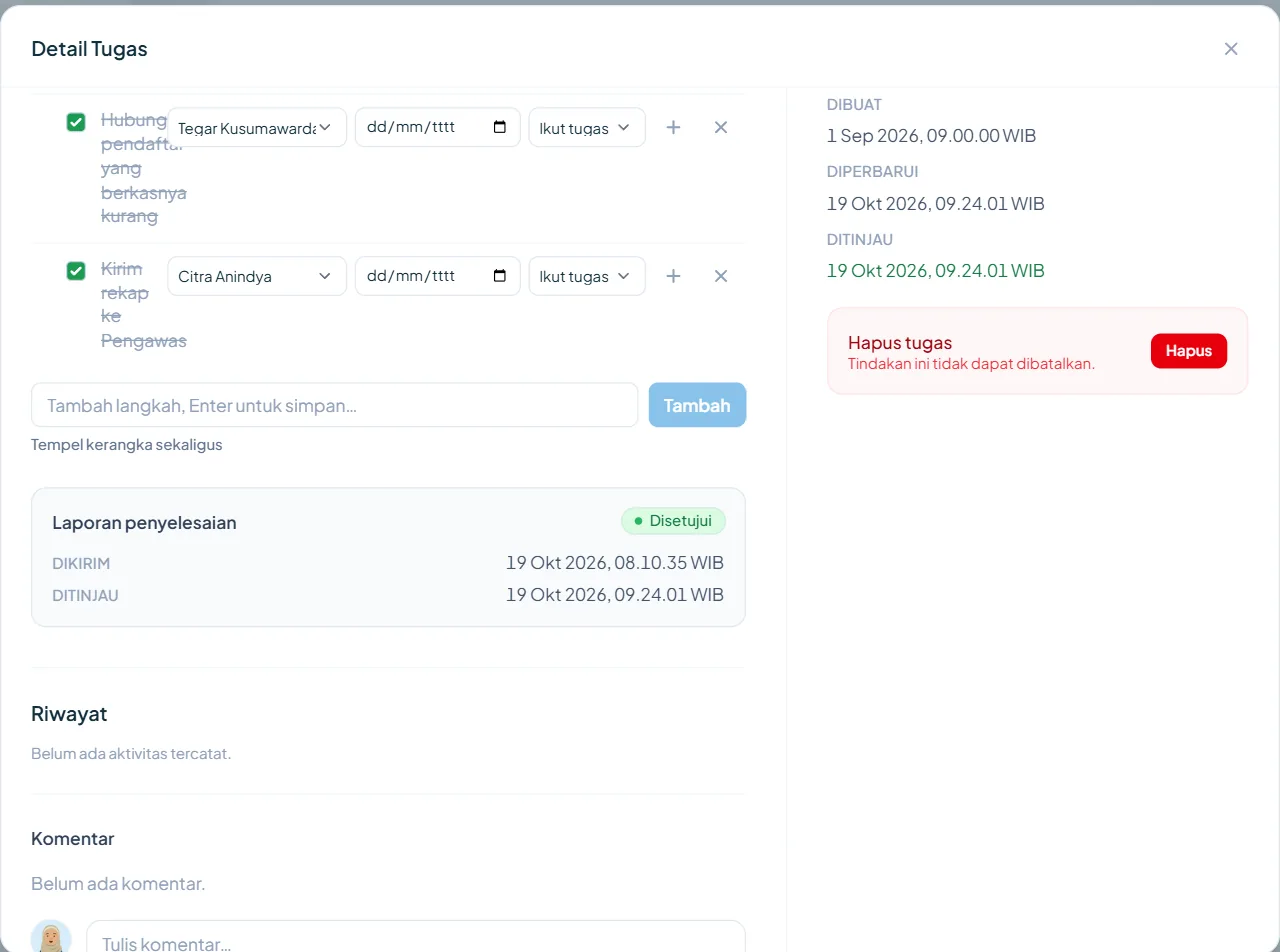
Who asked, who did, who approved, and when.
10:20
A ticket that talks back
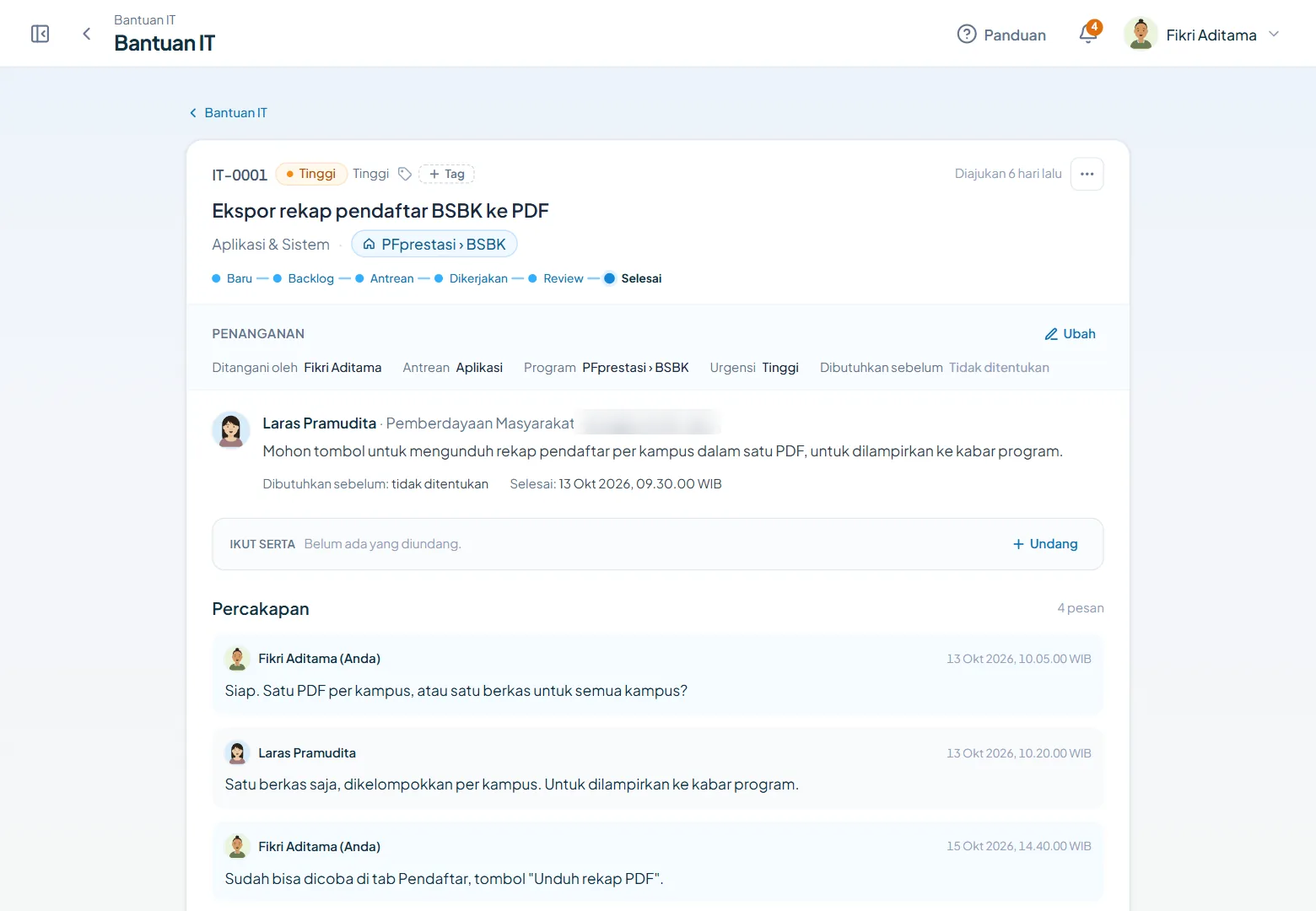
Two-way chat and a staged queue; the clock is read from the system.
11:30
Moderated, then shown
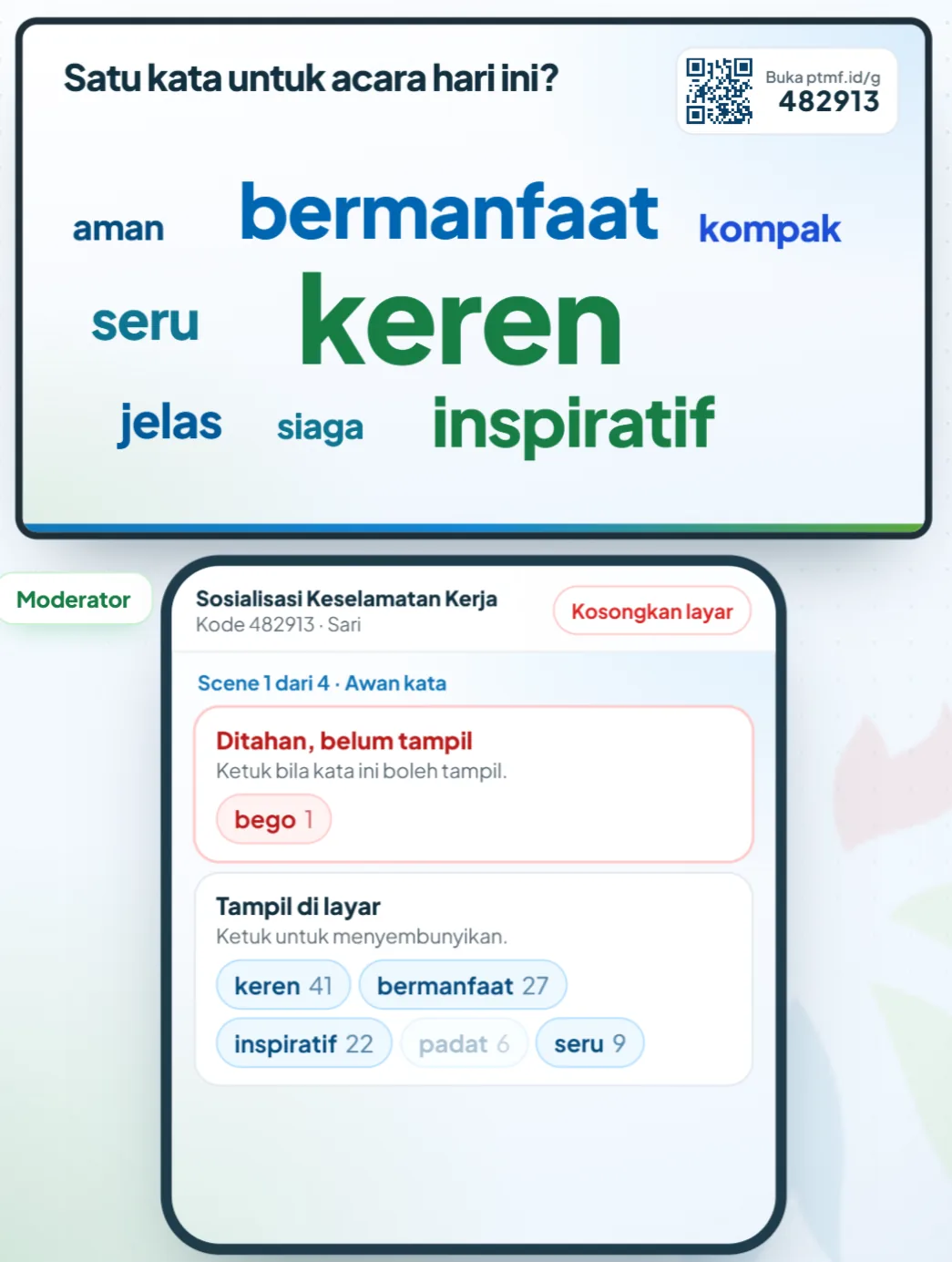
Answers wait for a moderator before they reach the screen.
14:30
Safety checks by QR
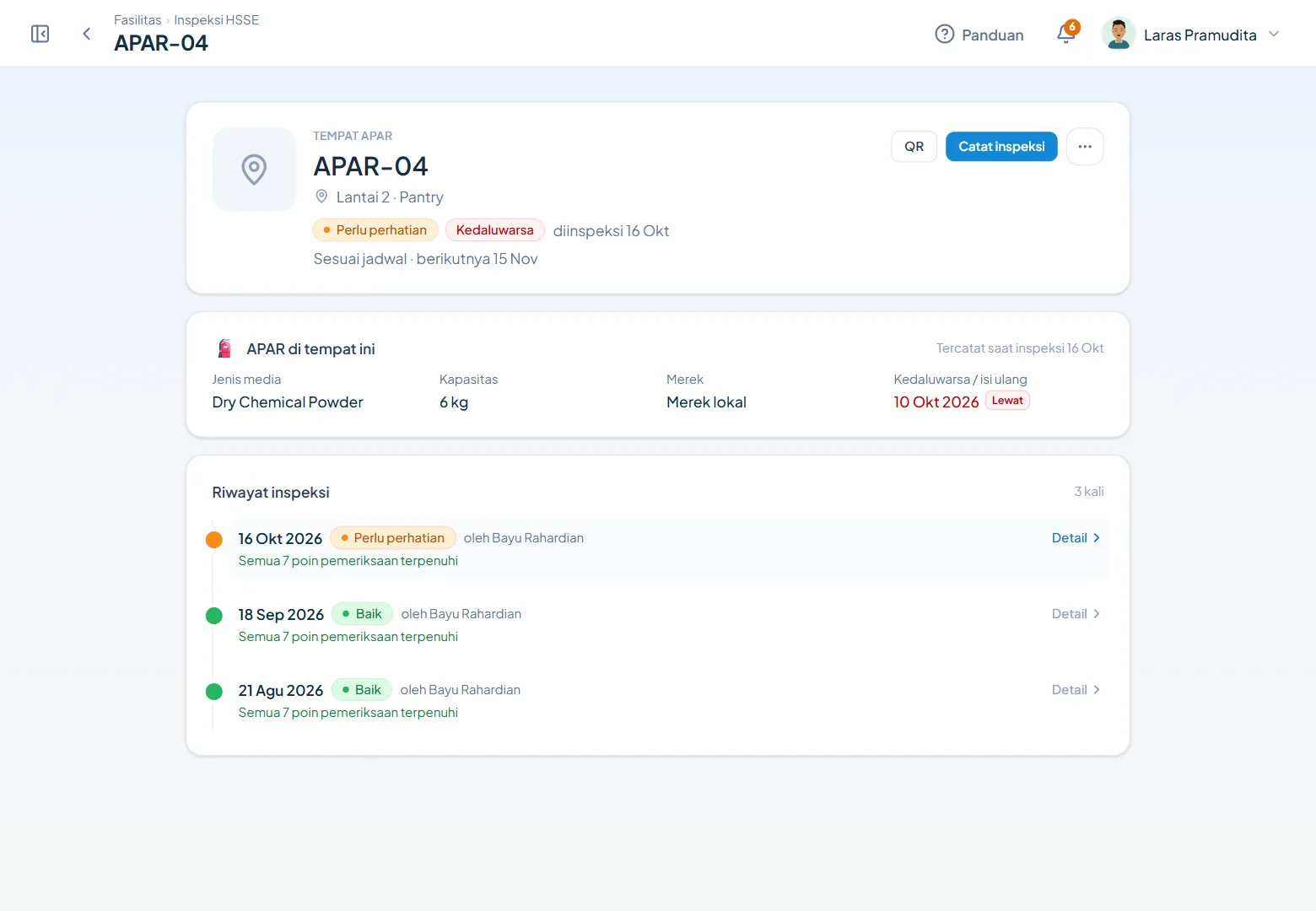
Extinguishers and first aid kits open their own inspection log.
16:45
A summary that fills itself
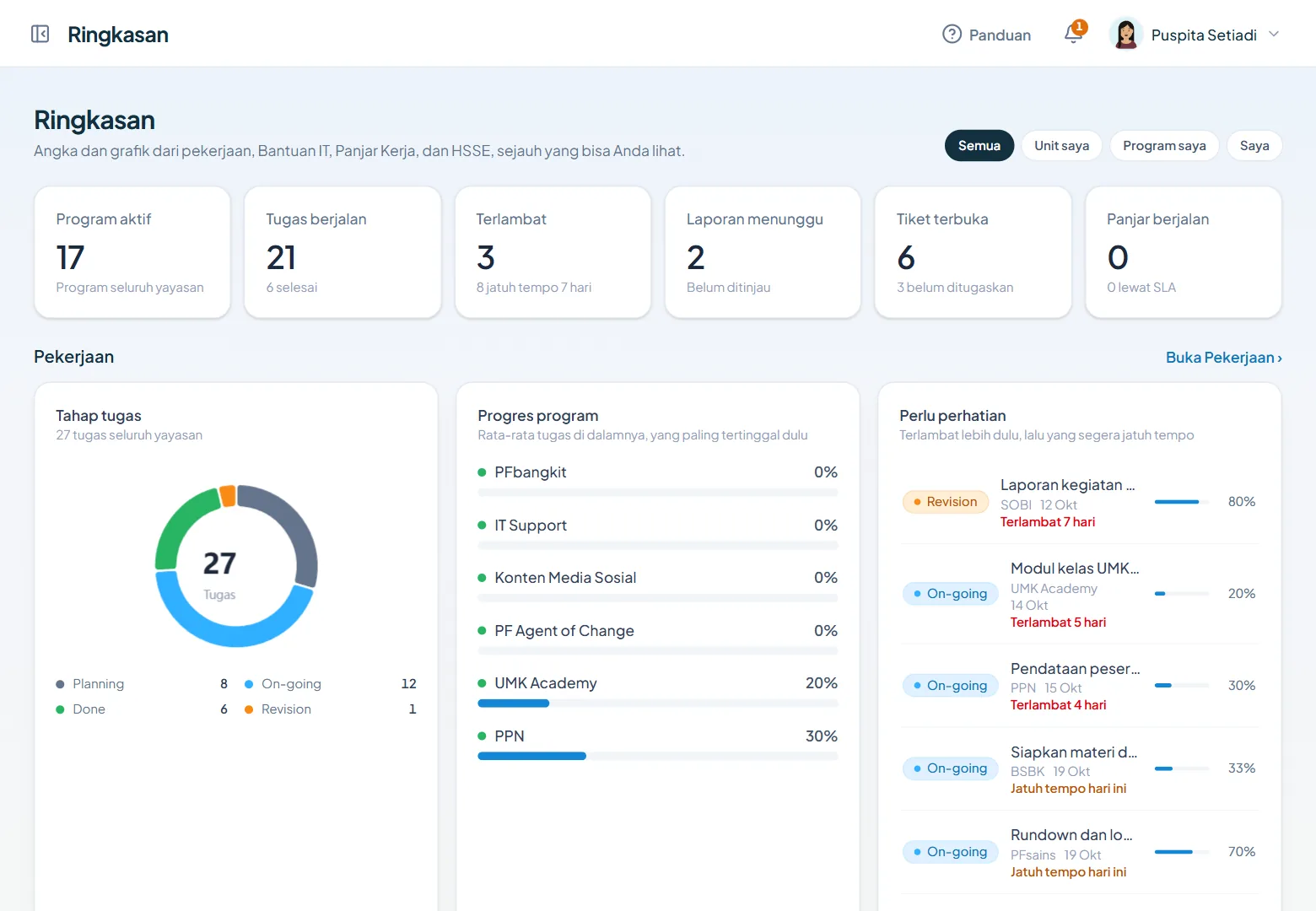
Daily work moves the numbers; nobody types a month-end recap.
Learnedmeasure before moving anything: the lag was polling, not where the data lived, so screens now get a live signal instead.
NextWhy build it at all: to keep the foundation’s data inside its own fence.
Muktiadi Akhmad Januar · Inside the fence
Staff work had leaned on free outside tools: form builders, quiz apps, link shorteners, QR and PDF sites. Answers, winners’ ID cards and internal documents sat on other people’s servers with no agreement and no deletion date. Each of those jobs now runs inside, behind one door.
Answers, winners’ ID cards and documents now stay on the foundation’s own servers, each with a date when it is deleted.
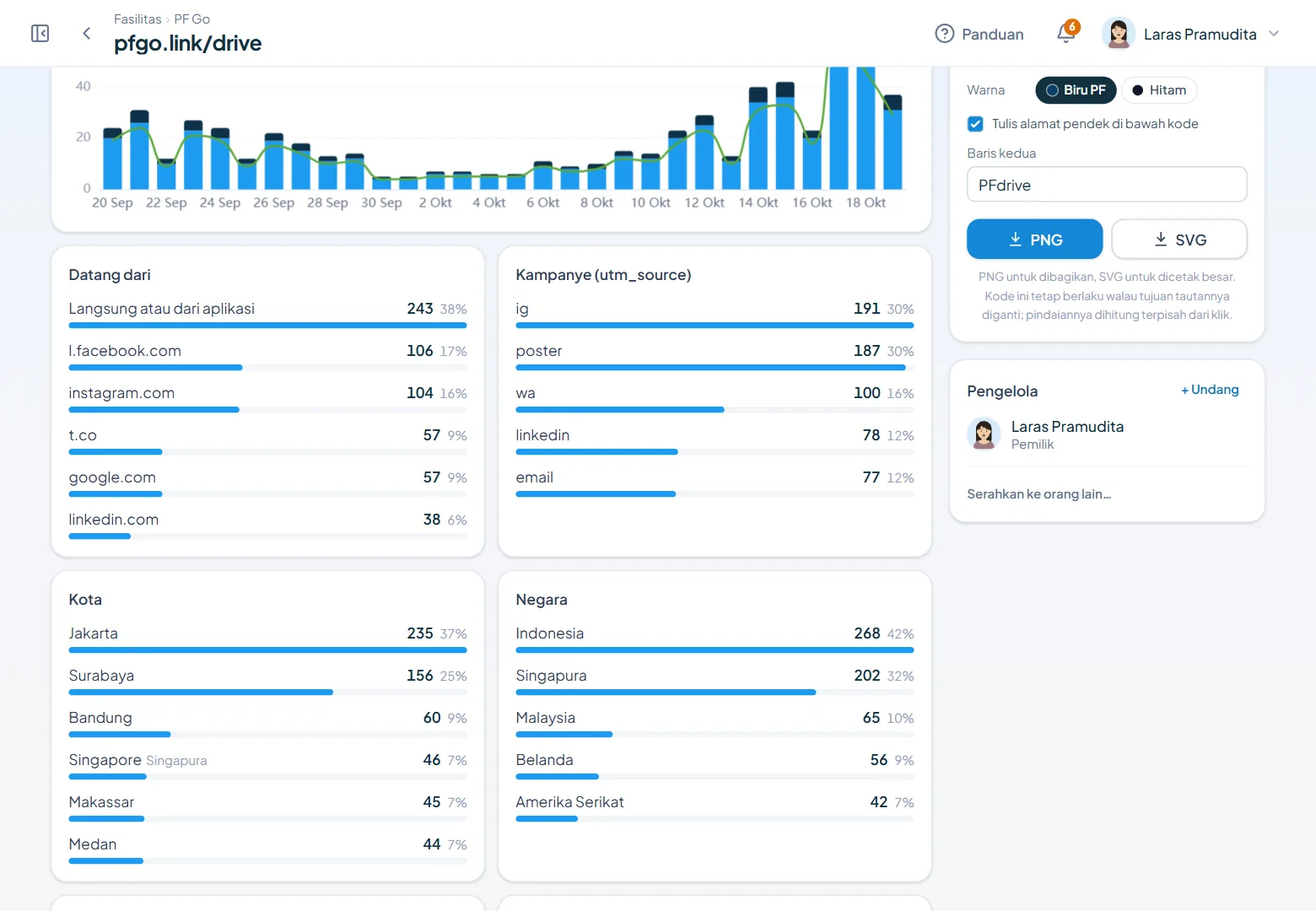
Clicks by day, rough city and device; no visitor address stored.
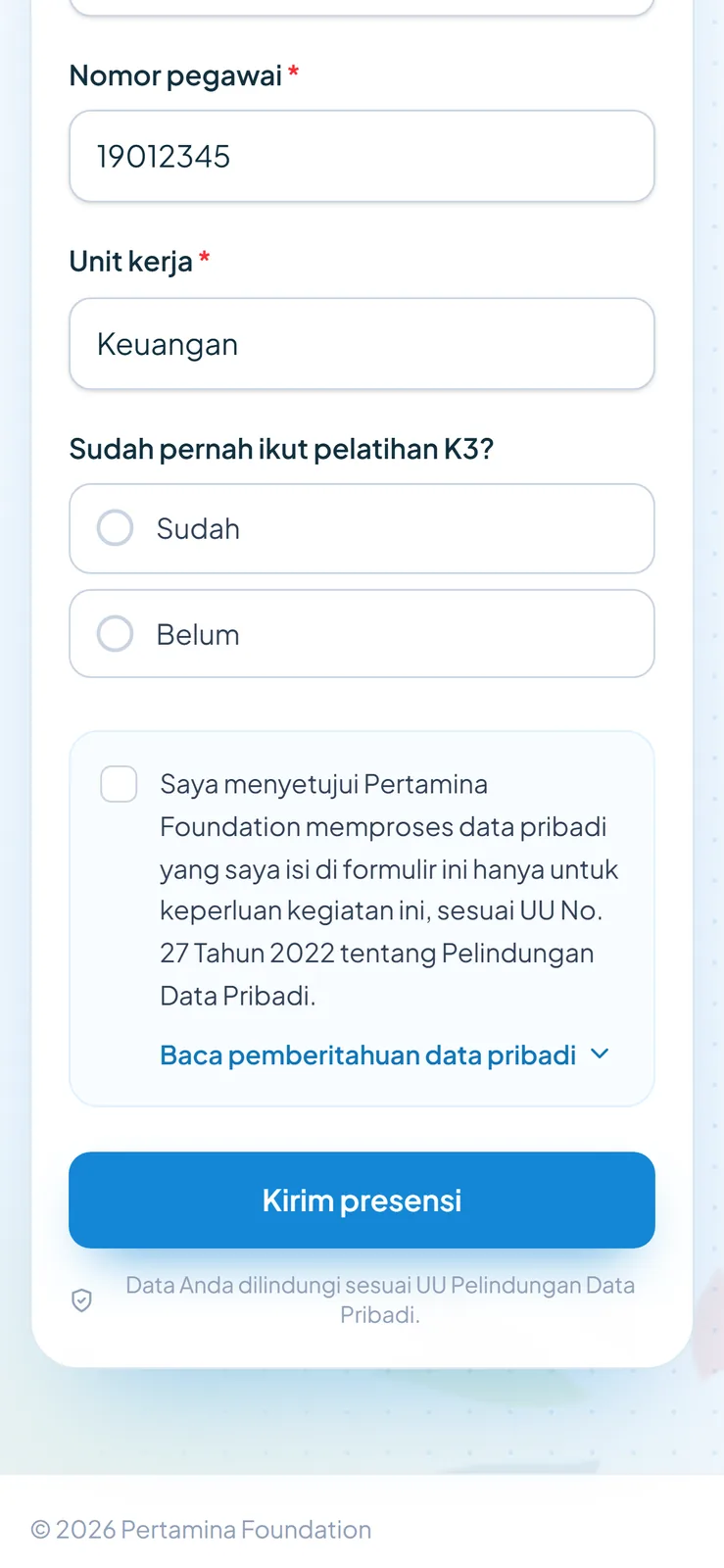
Consent per purpose before a single answer is stored.
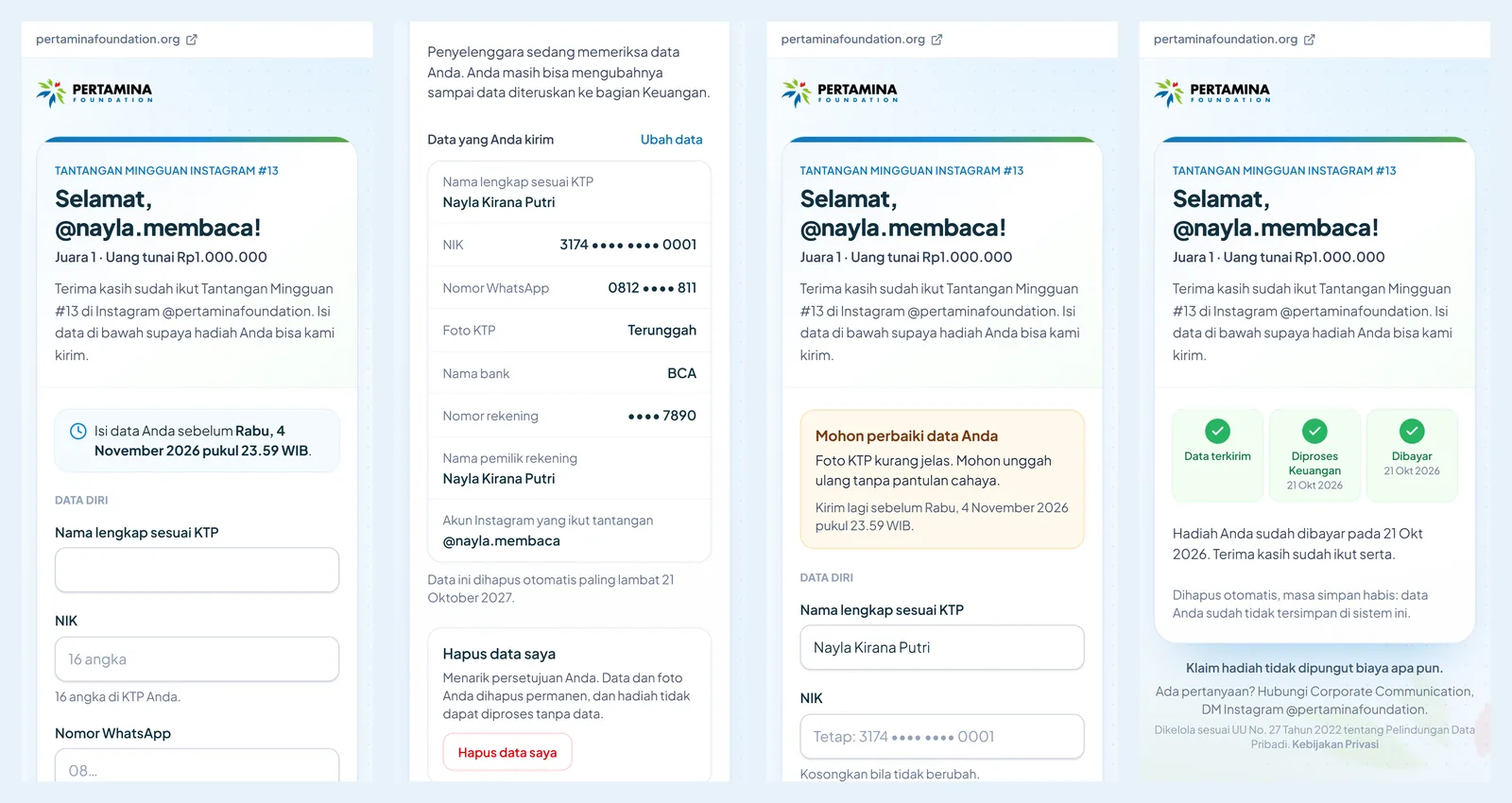
Never shortened, never shared; it opens only that winner’s claim.
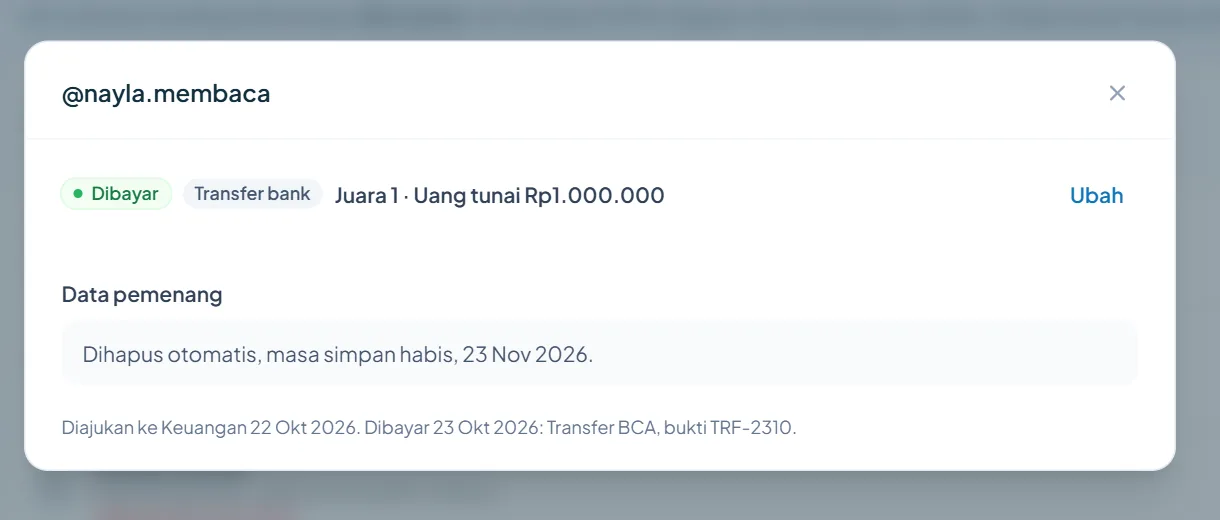
Gone after the handover; the prize history stays.
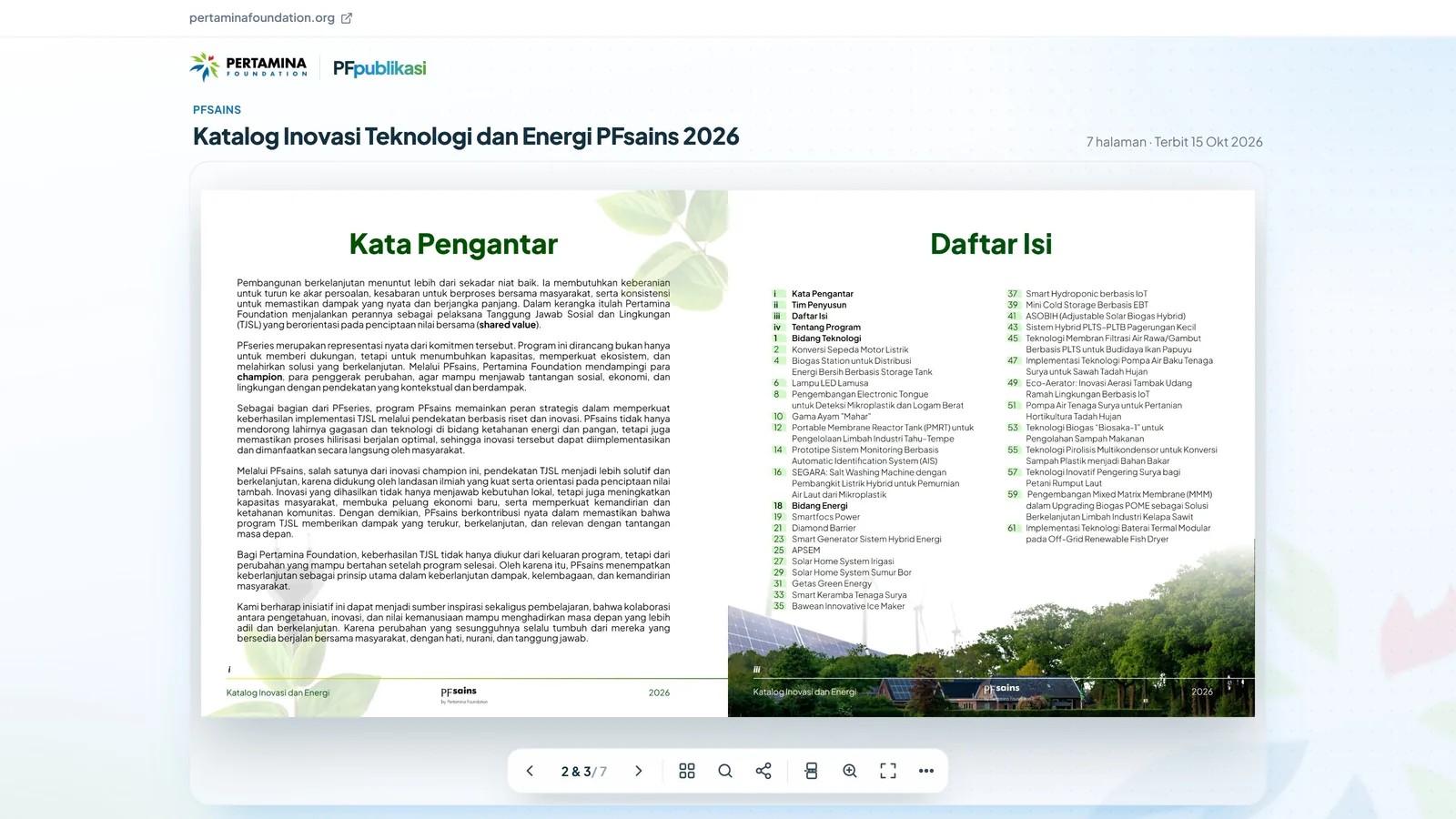
Publications as page-turning books, searchable, on our own servers.
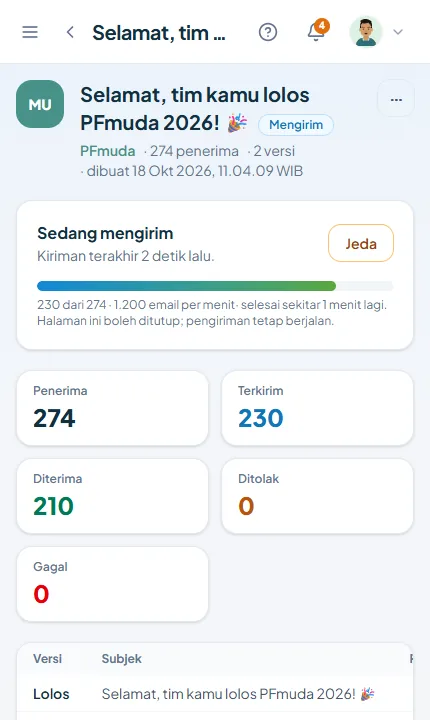
Throttled batches on the server, tracked per person.
Learneda printed QR code outlives any server, so short links run on their own edge database, apart from the main backend.
NextThe same organisation also needed AI that helps people decide without deciding for them.
Part 2 · 2025 to 2026
PFdrive is the foundation’s internal staff system: one login for programmes and tasks, approvals, IT help, cash advances, attendance and live questions, meeting rooms, short links, broadcasts and file tools.
Discover.
Daily work was spread across separate tools: forms for attendance and prize claims, a separate publications site, IT requests on paper or WhatsApp, cash advances in spreadsheets, and no single view of programme progress.
Design.
One login, one programme tree and one permission model, with a module for each job. It grew from a task tracker into the system staff open for nearly everything.
Deliver.
One staff system live on several addresses, with modules that replaced forms, spreadsheets, paper and chat threads.
Architect, product owner, main builder · Programme tree · Gantt · Approvals · Modules
Tap a page to open it full screen; swipe for the next. Every page is also in the PDF.
In daily use at drive.pertaminafoundation.org, behind the staff sign-in.
Muktiadi Akhmad Januar · Part 2 · Applied AI
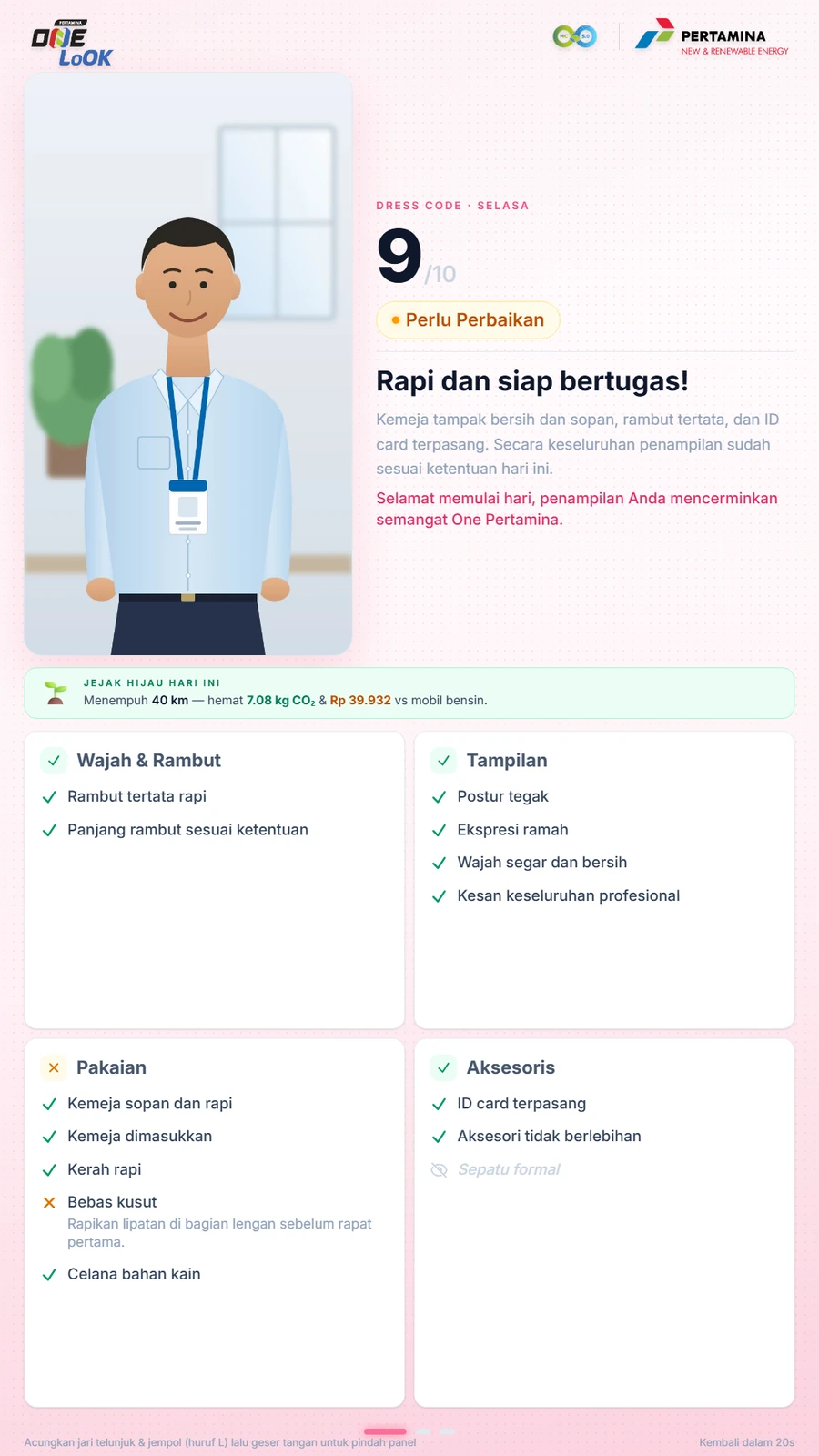
What it isApplied AI at the foundation: a voice interviewer, a competency assessment, a CV filled in by talking, a dress-code mirror and meeting minutes from recordings. Each hands a person a draft or a score to review; none of them decides.
Discover.
Screening interviews exhaust panels, competency assessments need trained assessors, and meeting minutes arrive late and incomplete. Each is a listening or reading job that eats skilled people’s time.
Design.
Tools that hand people a draft, a transcript or a score to review, and leave every decision with a named person.
Deliver.
An interviewer shown live to Pertamina’s CEO and President Commissioner, and meeting minutes at cents an hour.
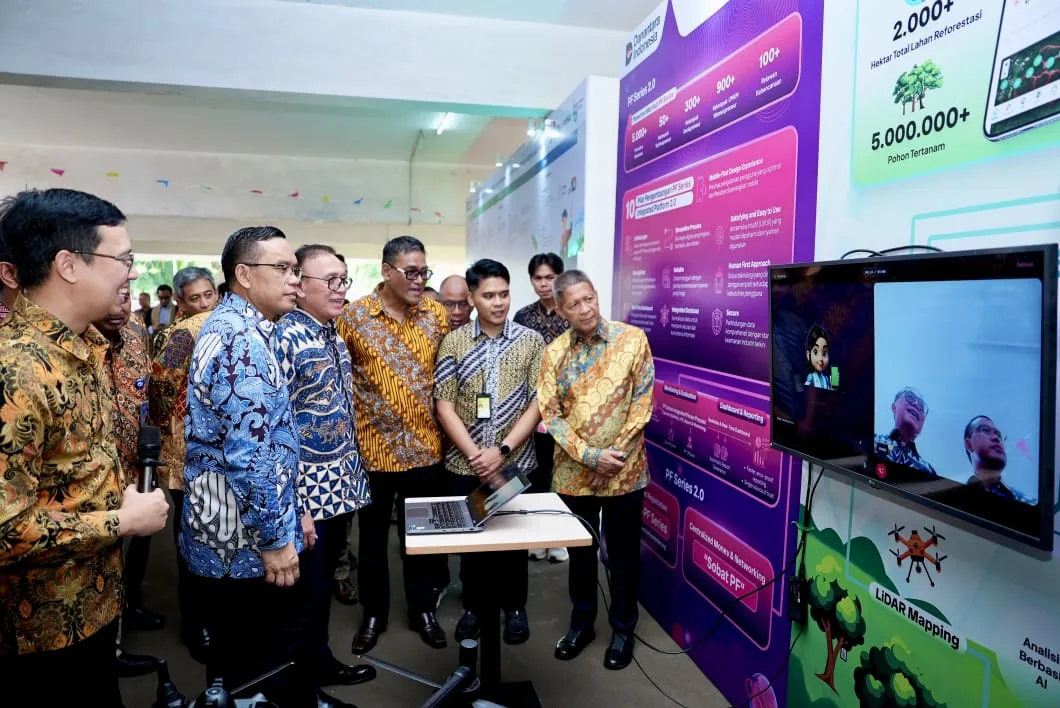
The foundation’s 15th anniversary
Kira on the screen, me at the laptop, Pertamina’s leadership listening.
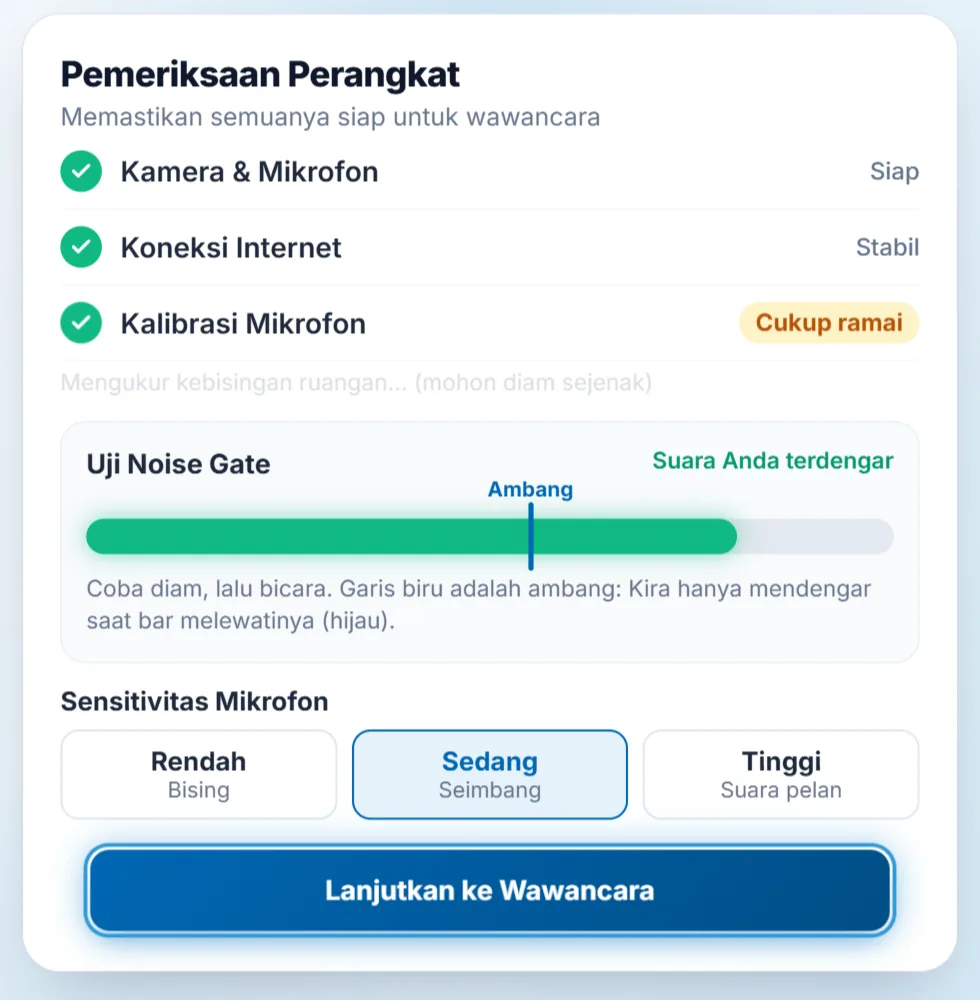 1
 2
 3
 4
Kira
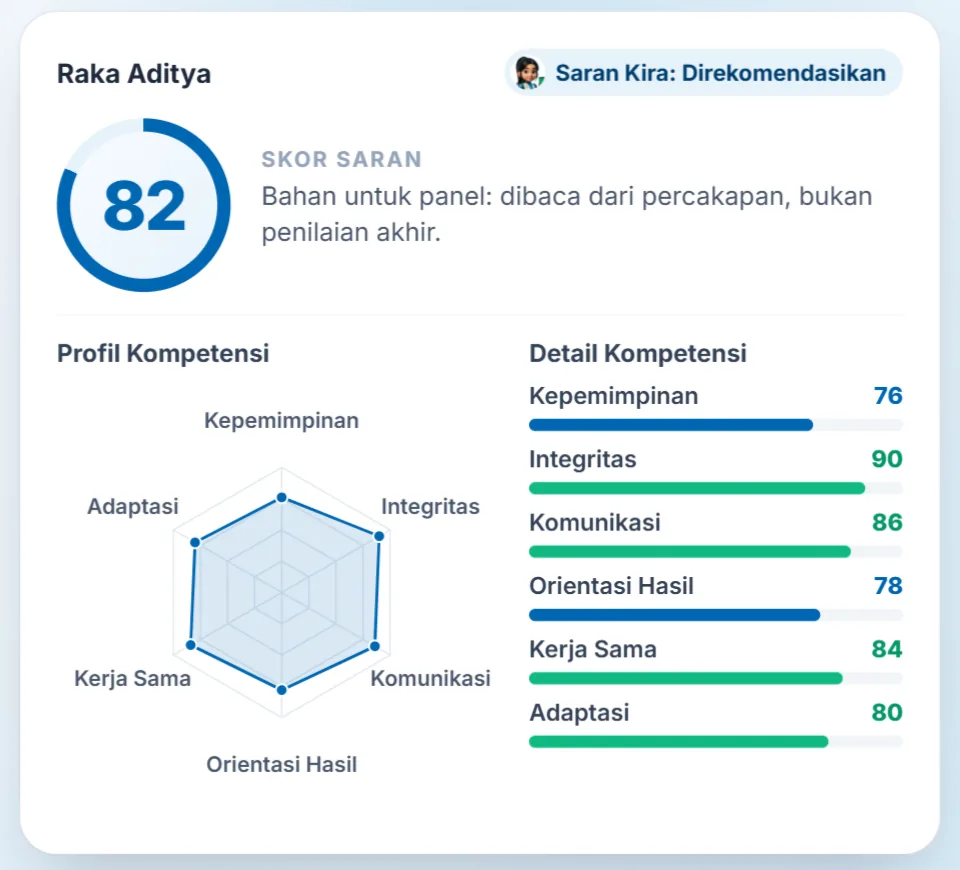
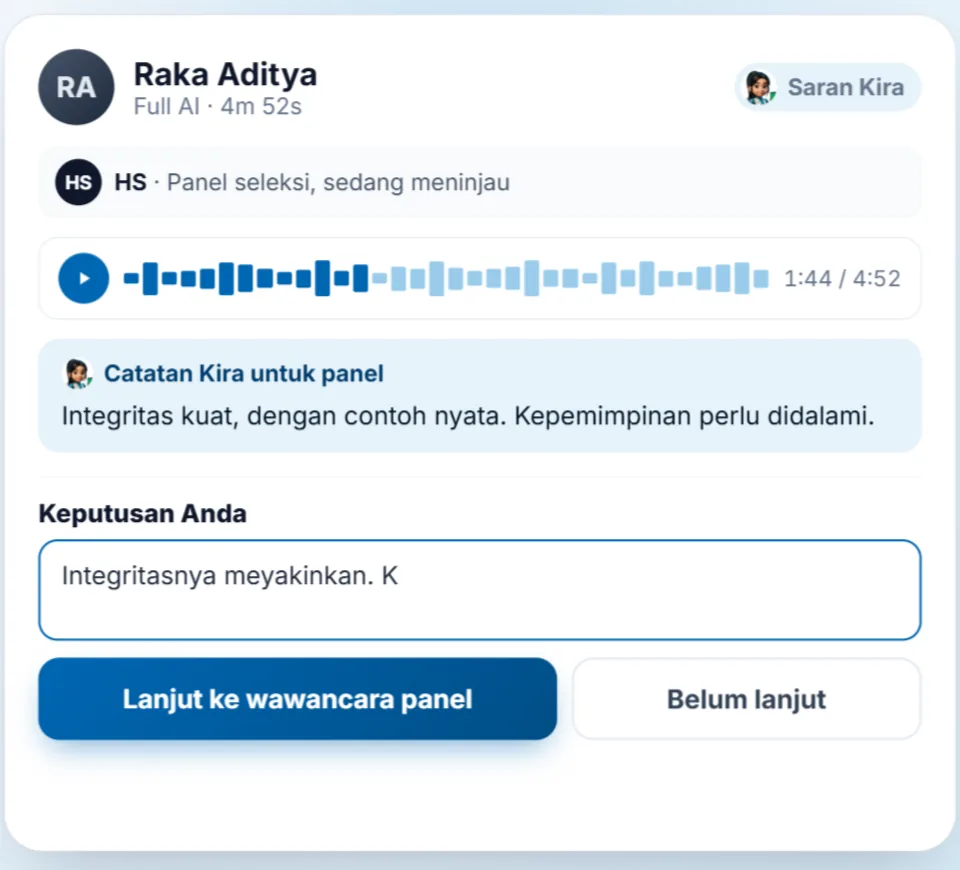
A voice in the browser that interviews, reads and drafts. It scores on six dimensions for people to weigh, and never decides.
Kira, the voice interviewer
A voice interviewer in the browser on OpenAI’s real-time API; a room-calibrated noise gate makes it usable in a crowded hall. Scores on six dimensions go to people, not to a verdict.
People decide
Competency assessment
Kira asks behavioural questions and scores against the dictionary through structured calls and anchored scales. Built for a pilot.
People decide
A CV filled by talking
Kira as a career counsellor who fills them through conversation. A one-day proof of concept.
Any phone
A mirror that checks the dress code
A mirror triggered by a hand sign, on a gesture model I trained, with a cost study of a cloud model against one run in-house. A proof of concept for management.
Kept apart
Minutes from the recording
Meeting recordings become minutes in the house format for cents per hour of audio, with a guard against invented content. In use for real meetings.
People decide
Audio never touches our servers; only a one-time key does.
Learnedin a crowded hall the AI mistook noise for answers, so the microphone now sends silence below the measured room noise.
NextIdeas like these reach leaders best as working prototypes, inside the app they already use.
Part 2 · 2026
Applied AI at the foundation: a voice interviewer, a competency assessment, a CV filled in by talking, a dress-code mirror and meeting minutes from recordings. Each hands a person a draft or a score to review; none of them decides.
Discover.
Screening interviews exhaust panels, competency assessments need trained assessors, and meeting minutes arrive late and incomplete. Each is a listening or reading job that eats skilled people’s time.
Design.
Tools that hand people a draft, a transcript or a score to review, and leave every decision with a named person.
Deliver.
An interviewer shown live to Pertamina’s CEO and President Commissioner, and meeting minutes at cents an hour.
Sole author · Real-time voice · Computer vision · Transcription
Tap a page to open it full screen. Every page is also in the PDF.
Muktiadi Akhmad Januar · Part 2 · Prototypes
What it isWorking prototypes for Pertamina Group: features built inside copies of the employee app, so managers try them where they would live, and clickable frontends on sample data that settle requirements before anything is built.
Discover.
Leaders cannot judge an idea from a slide, and requirements written in a meeting mean something different to everyone in the room. A feature shown outside the app where it would live never feels real.
Design.
Working prototypes inside copies of the employee app, so a manager meets the feature where it would live, and frontends on sample data that let people walk their own process first.
Deliver.
A carbon tracker Pertamina’s HC team is taking toward the whole group, a grooming check shown as a booth, and prototypes stakeholders clicked through before anything was built.
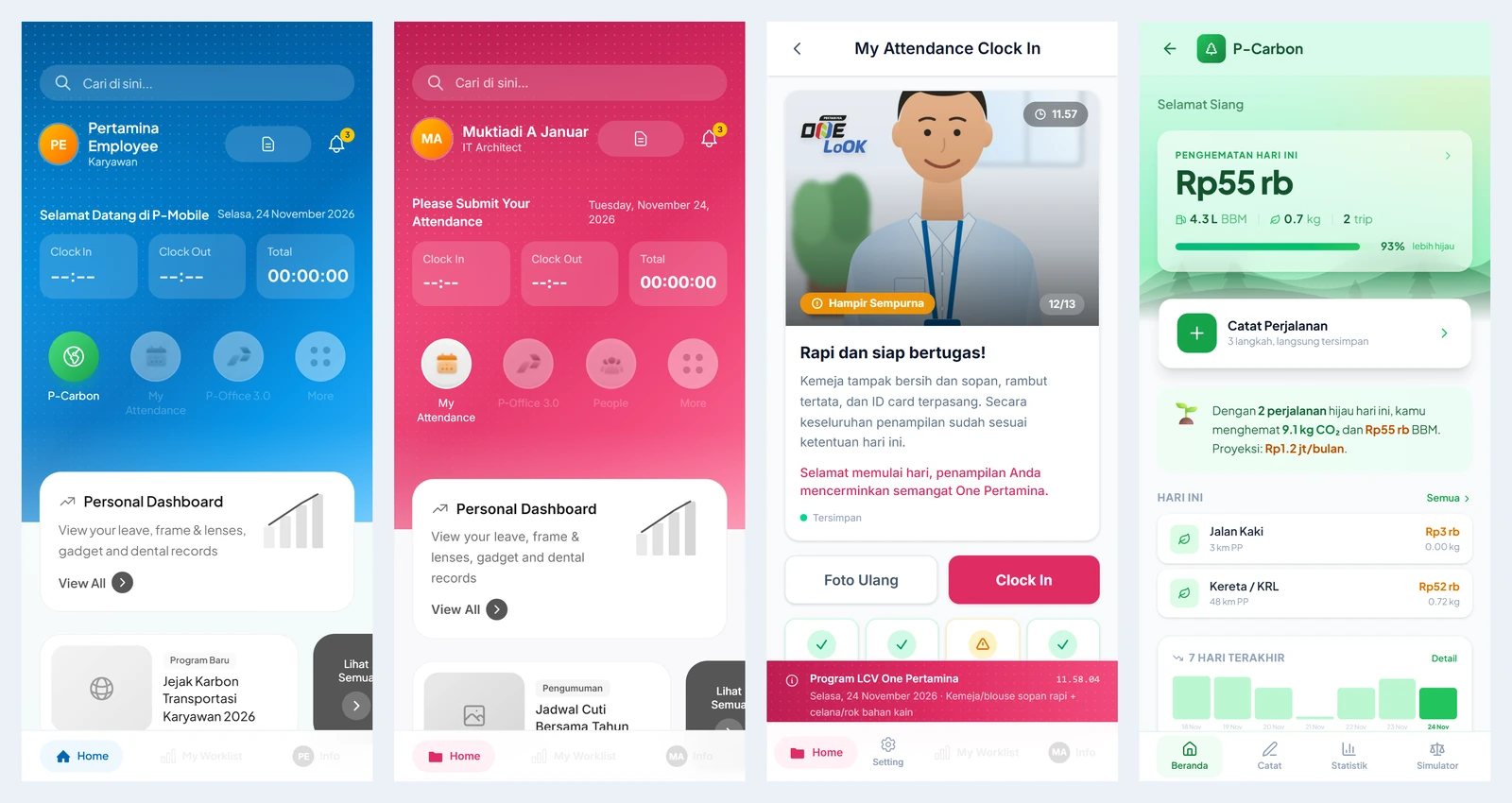
P-Mobile is not mine; it is the group’s employee app. I built copies of its shell to hold my prototypes, so a manager meets each feature exactly where it would live.
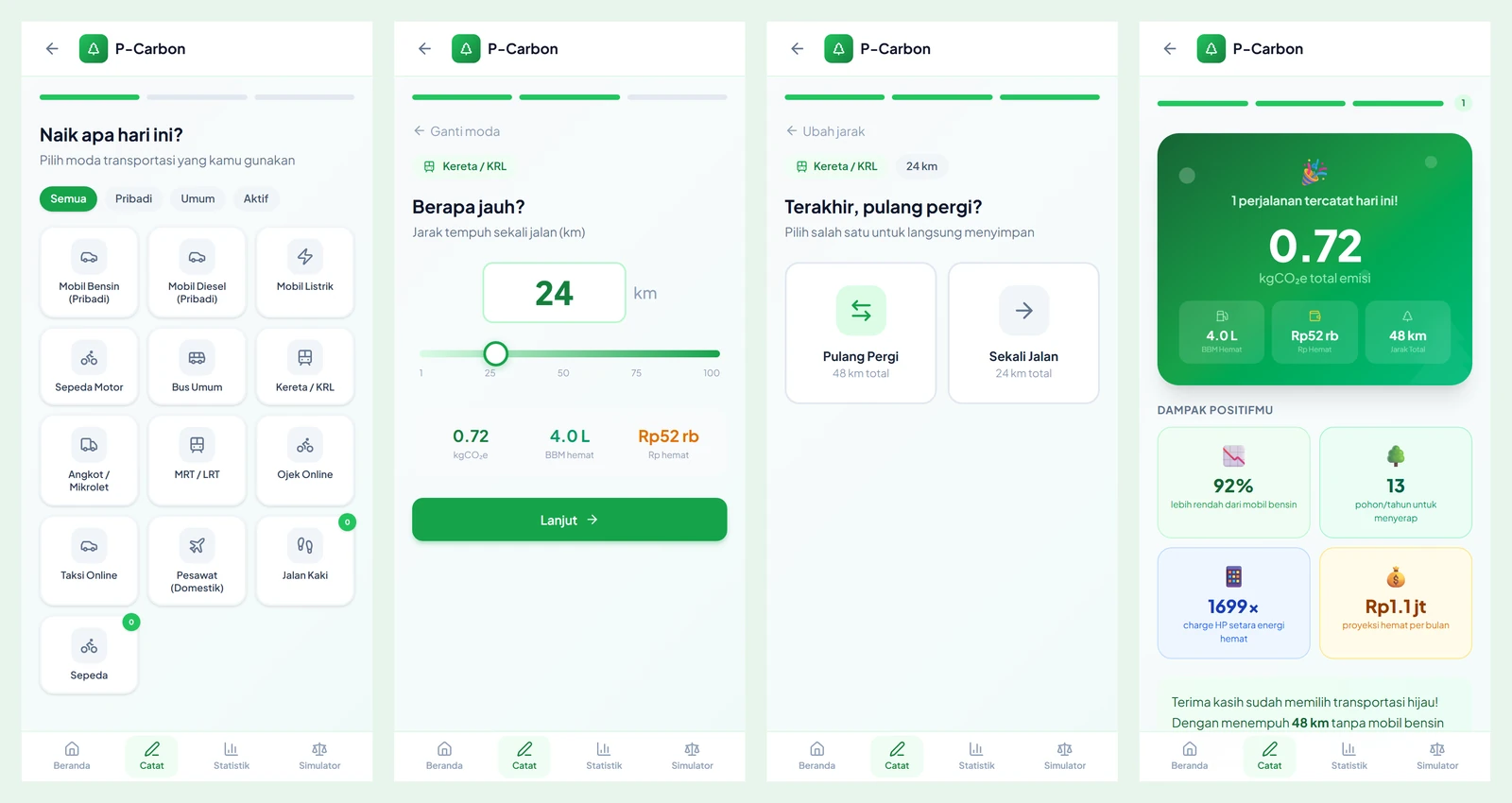
P-Carbon, the app HC called Jejak Karbonku: a commute logged in three taps
No login in the way
A device ID identifies the person, so the first trip takes seconds; signing in is optional.
Any phone
The last tap saves
Pick a mode, slide the distance while the savings update live, tap round trip or one way: stored. No save button.
Any phone
“Any other transit?”
A train then a motorbike taxi becomes one journey without starting over.
Any phone
Results in human terms
CO₂ avoided as trees a year, phone charges and kilometres not driven, with a monthly projection.
People decide
Every factor shown
A reference page lists each emission factor and its source, so the numbers can be checked.
On the record
A habit that spreads itself
A story card for Instagram and WhatsApp; trips save on the phone first and sync later.
Any signal
Learneda login wall stops casual participation, so the commute tracker works without login, tagging trips by device and saving offline first.
NextThe second module in the same shell: a grooming check at clock in, and a mirror in the lobby.
Muktiadi Akhmad Januar · ONE LoOK
Pertamina’s HC team wanted the group’s dress code to become a daily habit, not a poster. In the first meeting I showed a mockup inside My Attendance and proposed keeping every photo on the device; they asked for it linked to clock in. It grew into a lobby mirror and a booth at an event.
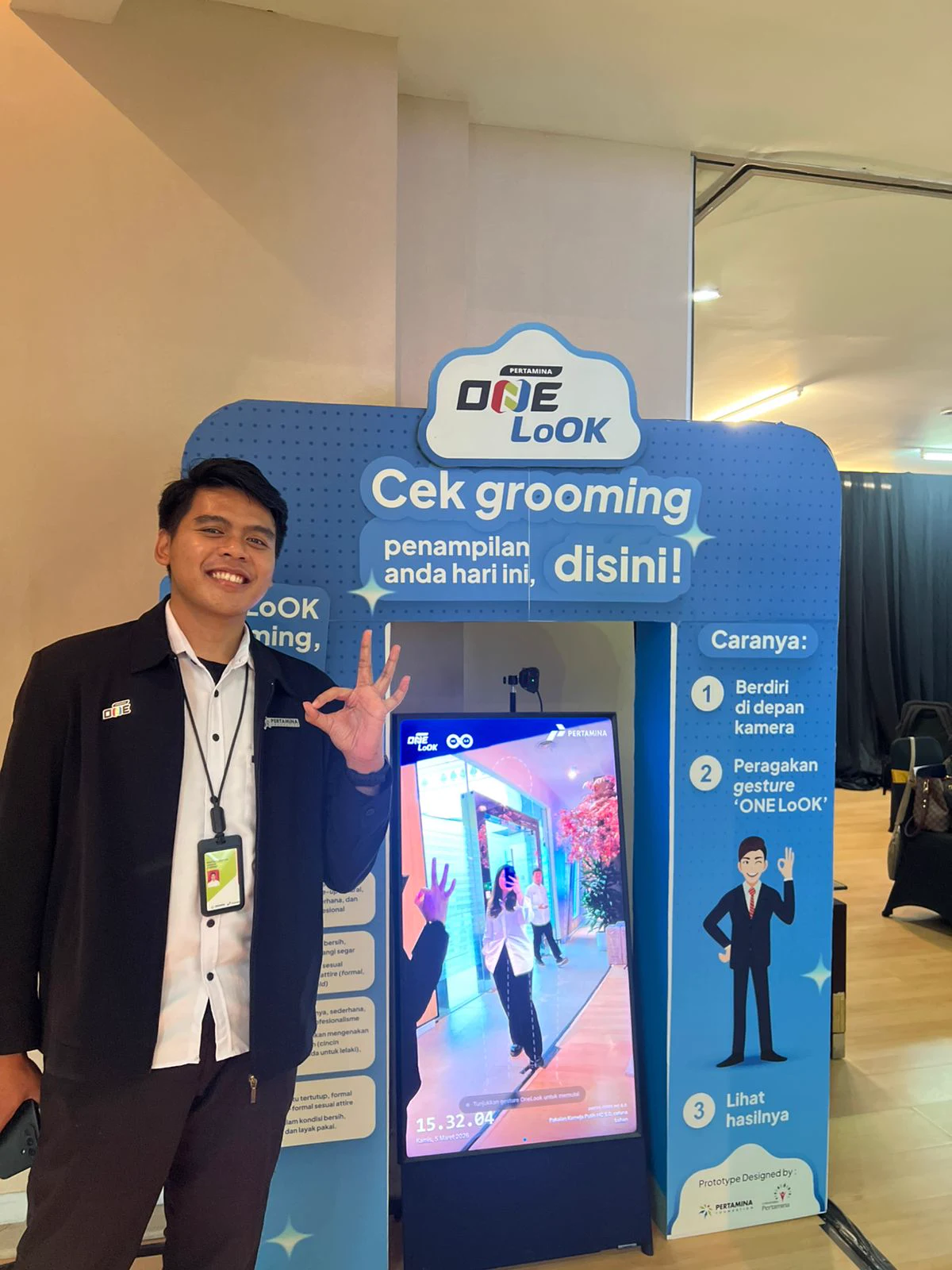
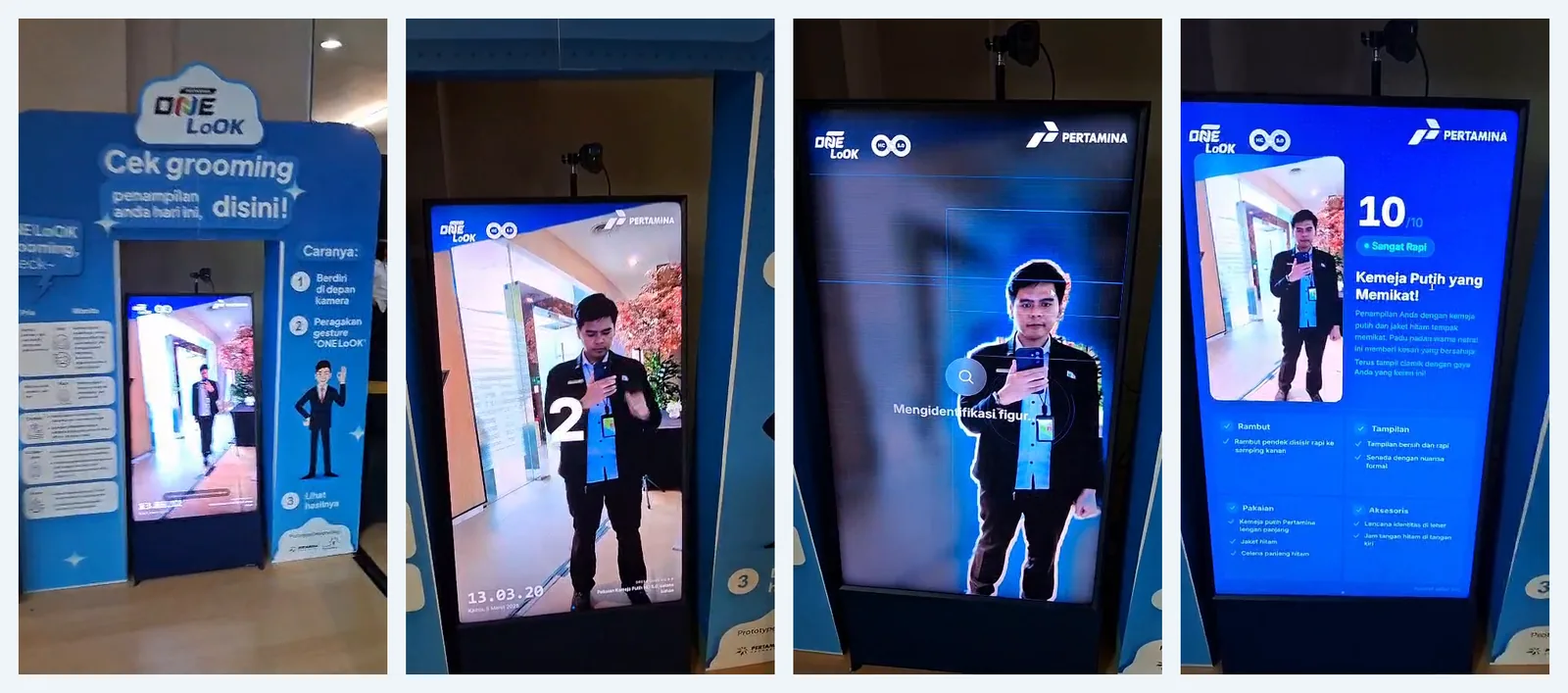
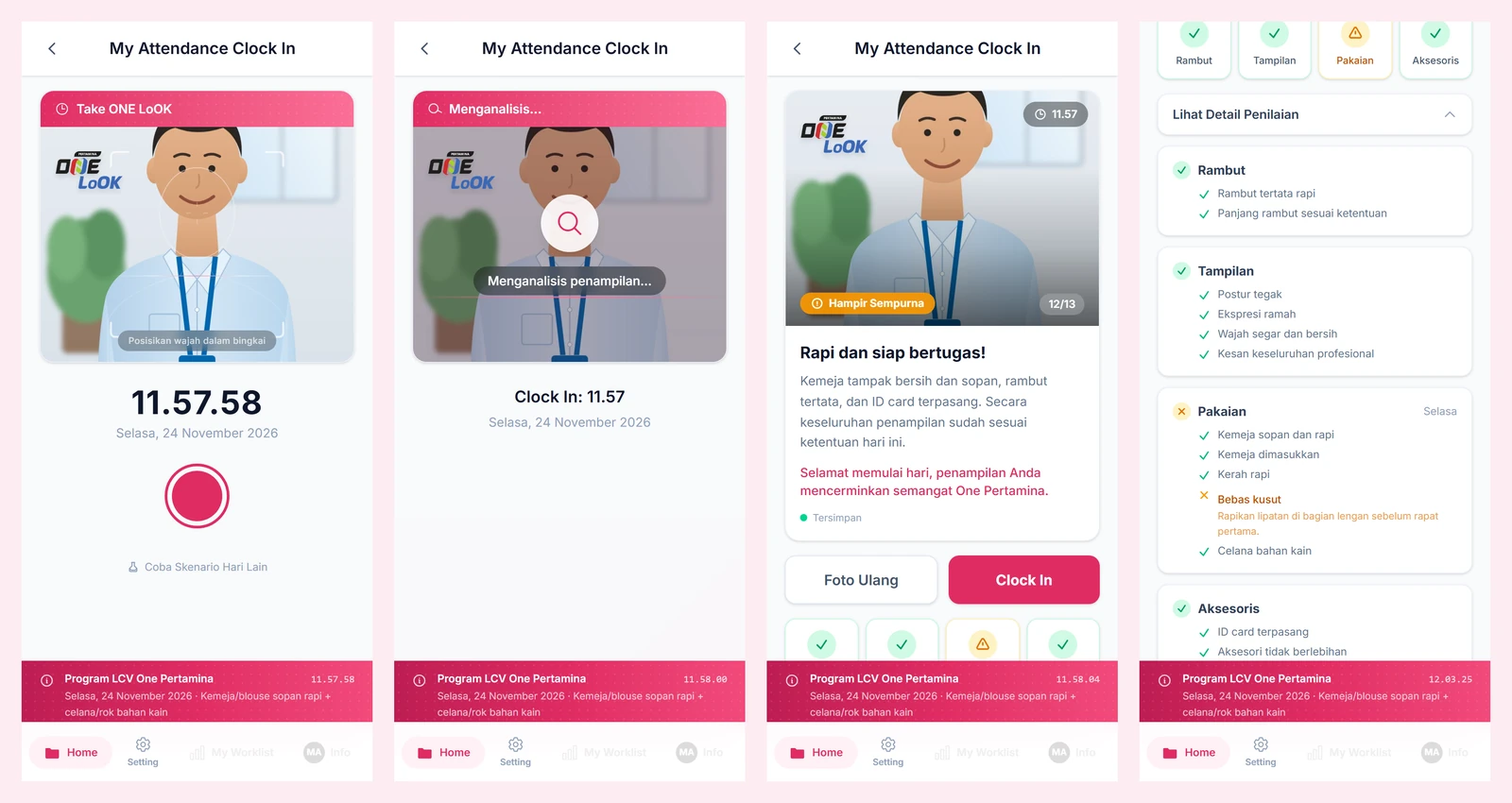
Where the habit already is
The check runs on the Clock In button. It never blocks clocking in: retake, or clock in anyway.
People decide
Coaching, not judging
A warm headline, four categories, and a suggestion only for what failed; what the camera cannot see is greyed, never failed.
People decide
Dress code as data
Each weekday’s code is configuration, shown in a band at the foot of the screen.
Kept apart
A touchless mirror
Hold an OK sign for a countdown, swipe results with a gesture, reset after thirty seconds.
Any crowd
The wait made useful
While the AI works, the visitor logs today’s commute, and both results show together.
Any crowd
Photos stay on the device
Proposed in the first meeting because of the data protection law, before a line was written.
On the record
Learnedthe dress-code AI penalised what it could not see, so it now judges only what is visible.
NextSome prototypes exist to settle requirements: clickable systems people walk through before anything is built.
Muktiadi Akhmad Januar · Clickable first
Requirements written in a meeting mean something different to everyone in the room. A frontend that works on sample data settles them: people click through their own process, point at what is wrong, and the backend is built once.
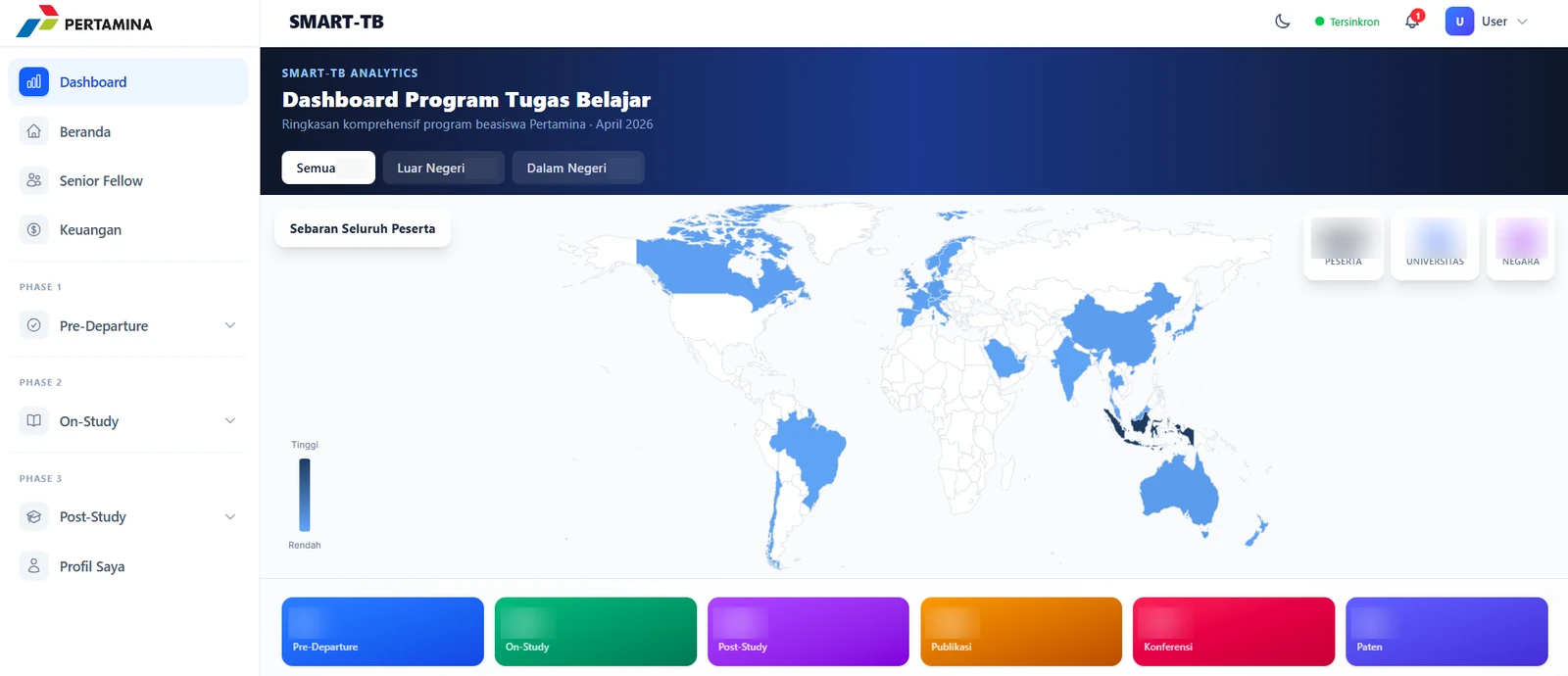
SMART-TB · study leave, end to end
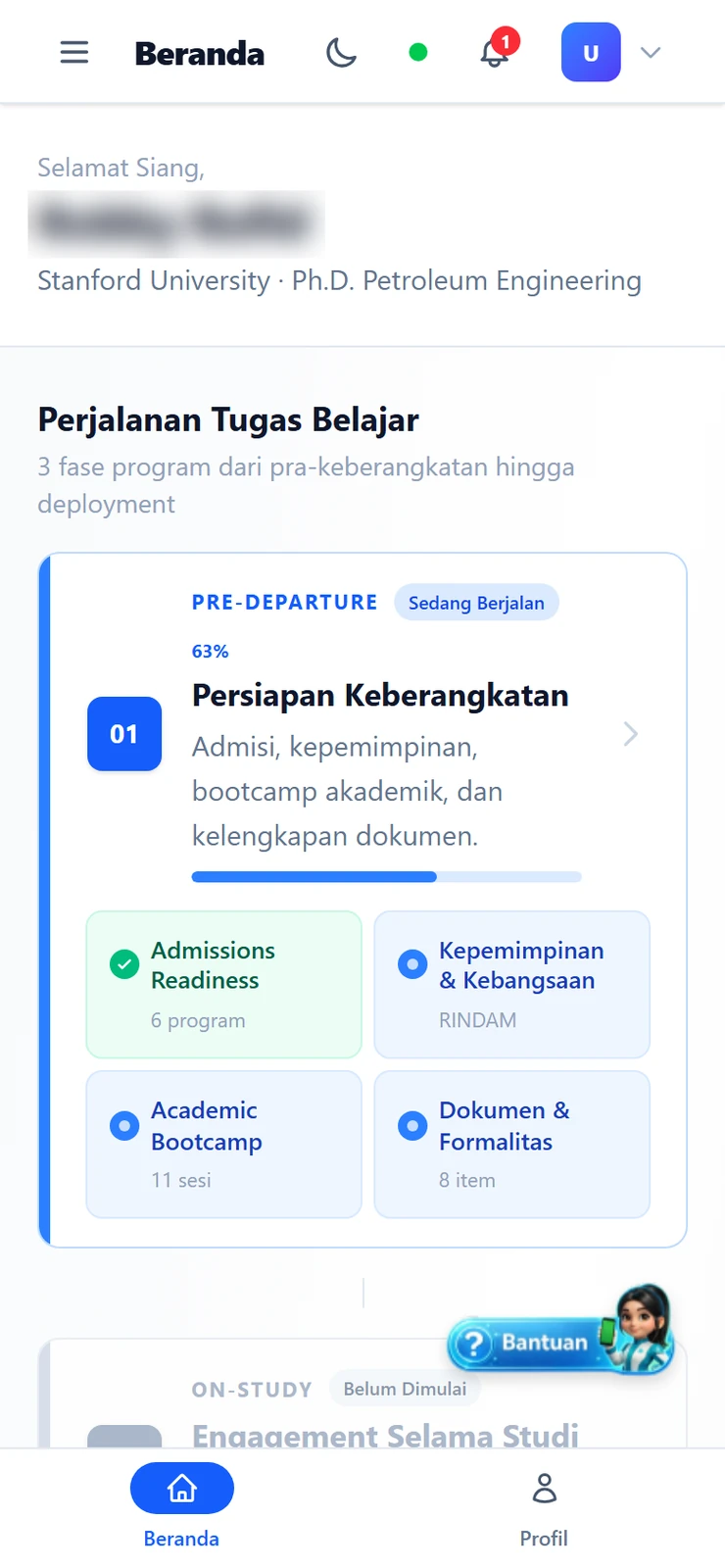
One app from pre-departure through study to deployment back home, for scholars, mentors and three admin teams. A clickable prototype of dozens of pages, built from a recorded meeting’s minutes.
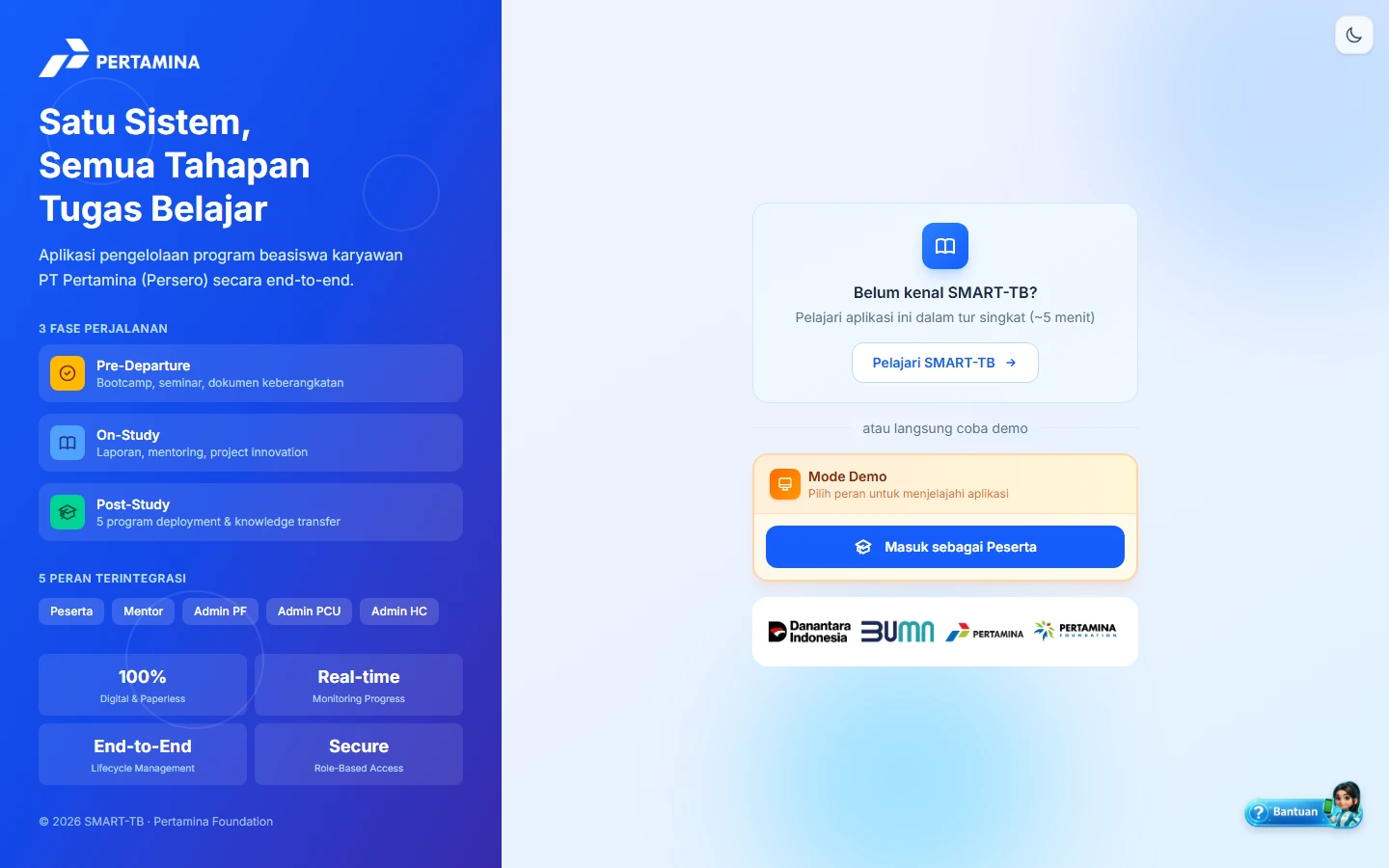
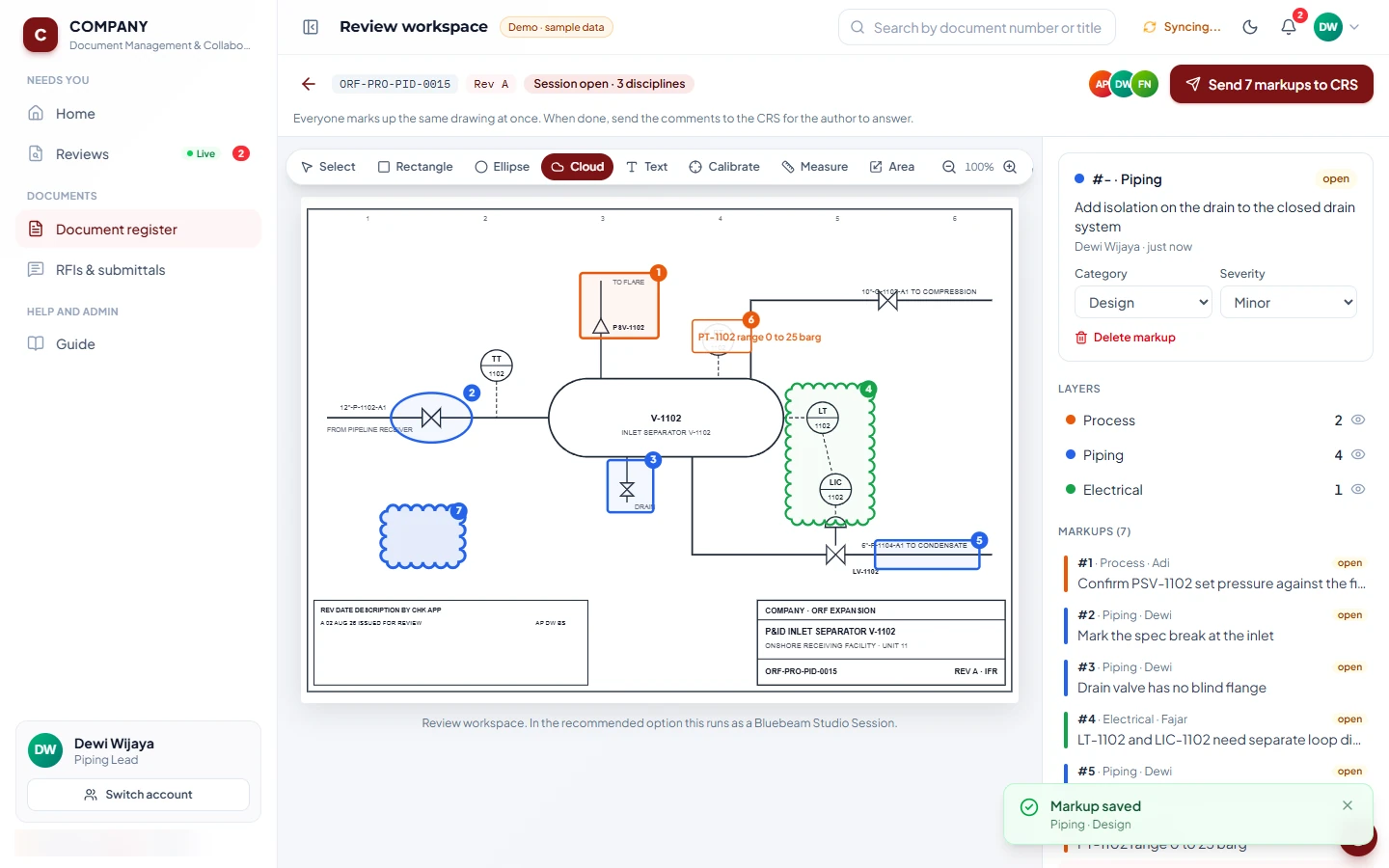
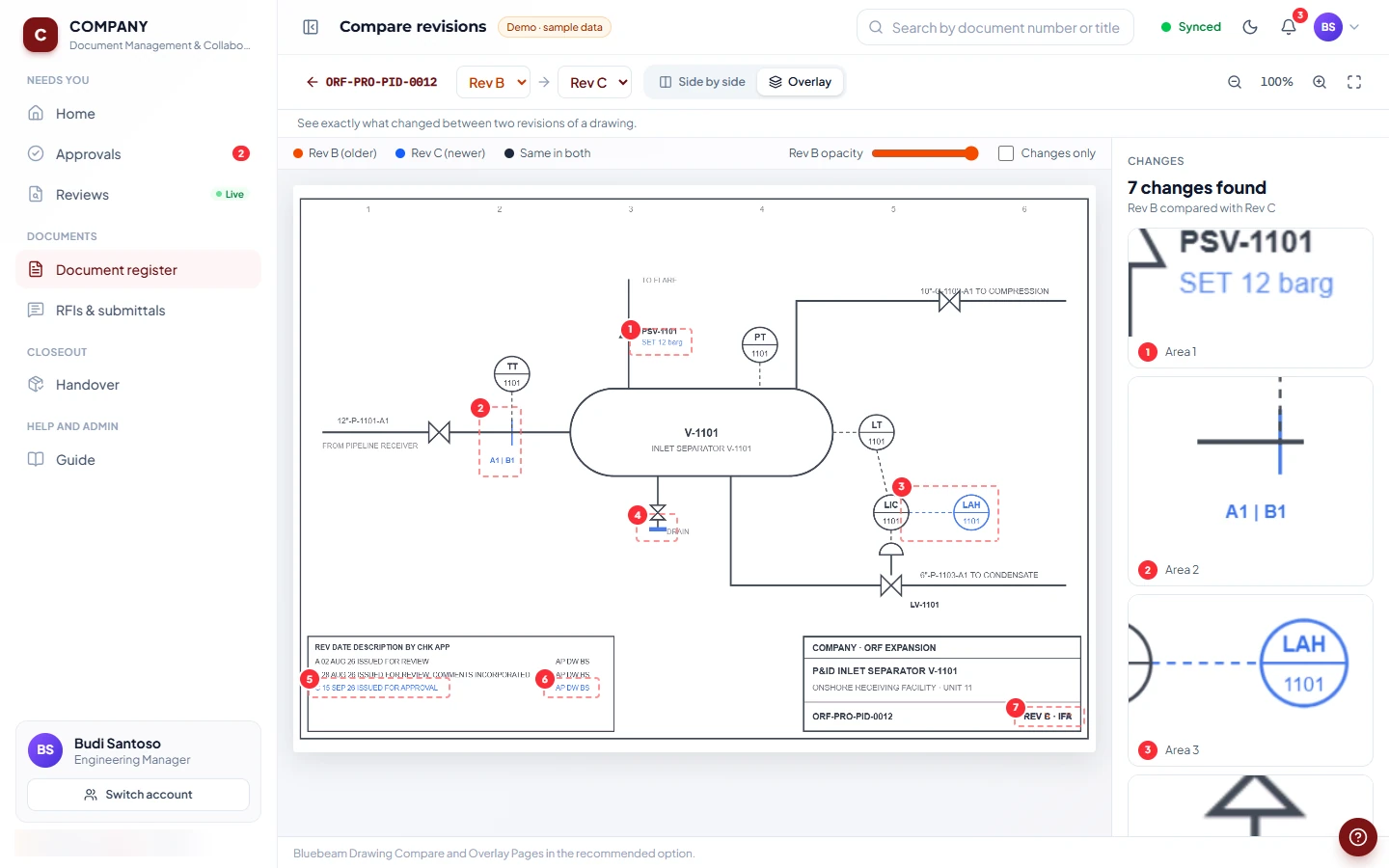
Engineering documents · a presales exercise
A usable mockup of document control for an oil and gas project, made with the proposal: register, multi-discipline review, approvals and handover, every screen marked as sample data.
The journey is the home screen
A study-leave scholar sees three phases as numbered cards, the current one running, the next ones waiting.
Any phone
Five roles, one door
One login page shows the phases and roles before anyone signs in; a guided tour before first use.
People decide
Everyone marks up the same drawing
Reviewers from each discipline mark one drawing at once, numbered and coloured by layer, then send all markups to the comment sheet in one go.
People decide
Revisions compared by eye
An overlay slider and a list of what changed between two revisions.
On the record
Learnedcheck what company systems already cover, so the finance module was cut from the study-leave prototype before any build.
NextSome systems have to work live, in front of a room, where nothing can go wrong.
Part 2 · 2026
Working prototypes for Pertamina Group: features built inside copies of the employee app, so managers try them where they would live, and clickable frontends on sample data that settle requirements before anything is built.
Discover.
Leaders cannot judge an idea from a slide, and requirements written in a meeting mean something different to everyone in the room. A feature shown outside the app where it would live never feels real.
Design.
Working prototypes inside copies of the employee app, so a manager meets the feature where it would live, and frontends on sample data that let people walk their own process first.
Deliver.
A carbon tracker Pertamina’s HC team is taking toward the whole group, a grooming check shown as a booth, and prototypes stakeholders clicked through before anything was built.
Designer and lead builder · UI/UX · Prototyping · PWA · Computer vision
Tap a page to open it full screen; swipe for the next. Every page is also in the PDF.
Muktiadi Akhmad Januar · Part 2 · In front of a room
What it isSystems built for one live moment: a ceremony where officials sign on a tablet while the hall watches, a field app that handed school uniforms to a whole community in one day, and leadership’s command room.
Discover.
Live moments forgive nothing: a signature wiped on a tablet in front of officials, a crowd of families in a field with no signal, a leadership room where switching screens stops the meeting.
Design.
Each built for one live moment: no login that can fail on stage, no network that has to cooperate, no setup anyone has to touch.
Deliver.
Ceremonies signed live, a field app verified on its full list of children, and a command room that runs itself.
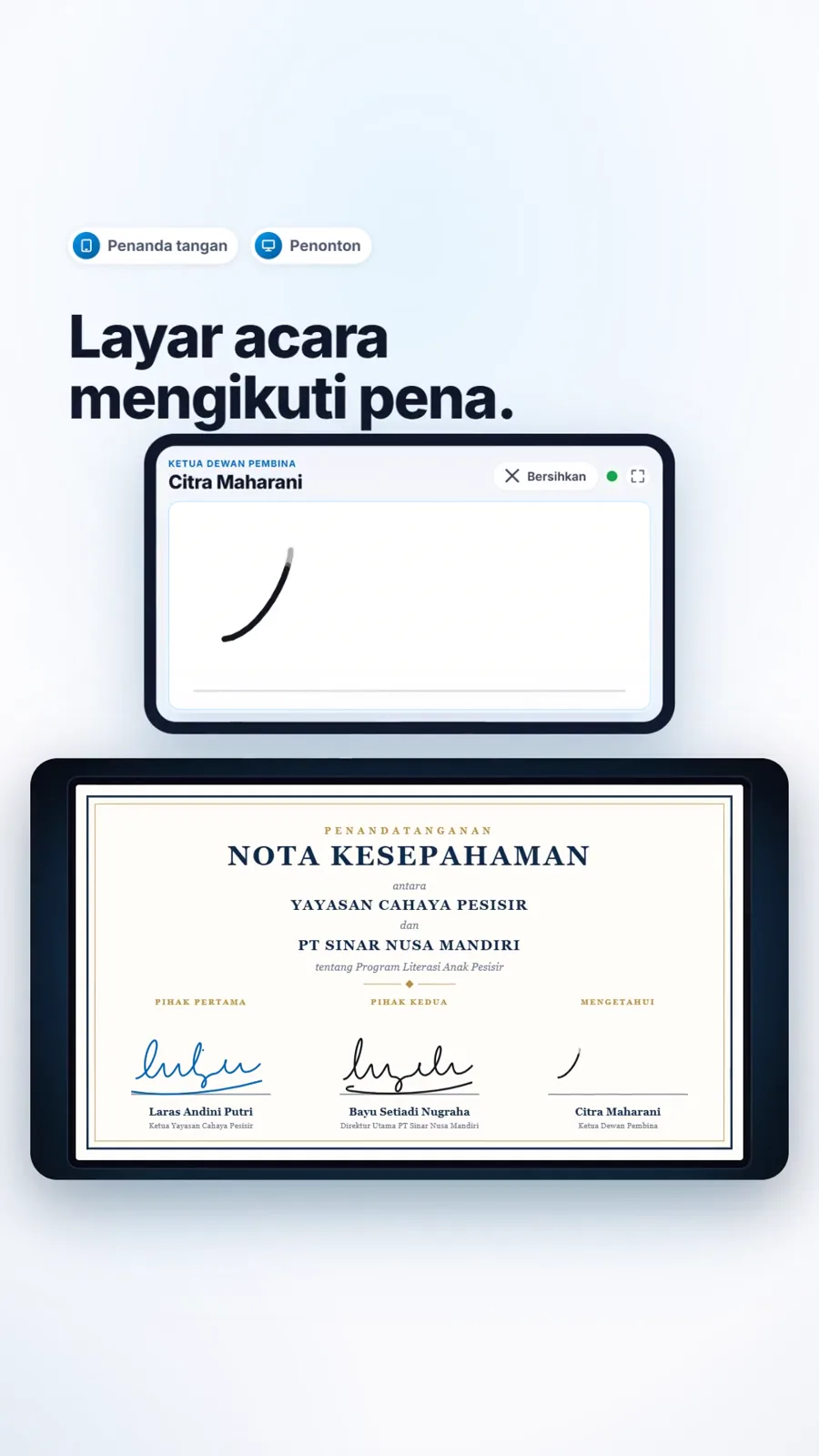
On stageSigning CeremonyMy own product, signing.muktiadi.com
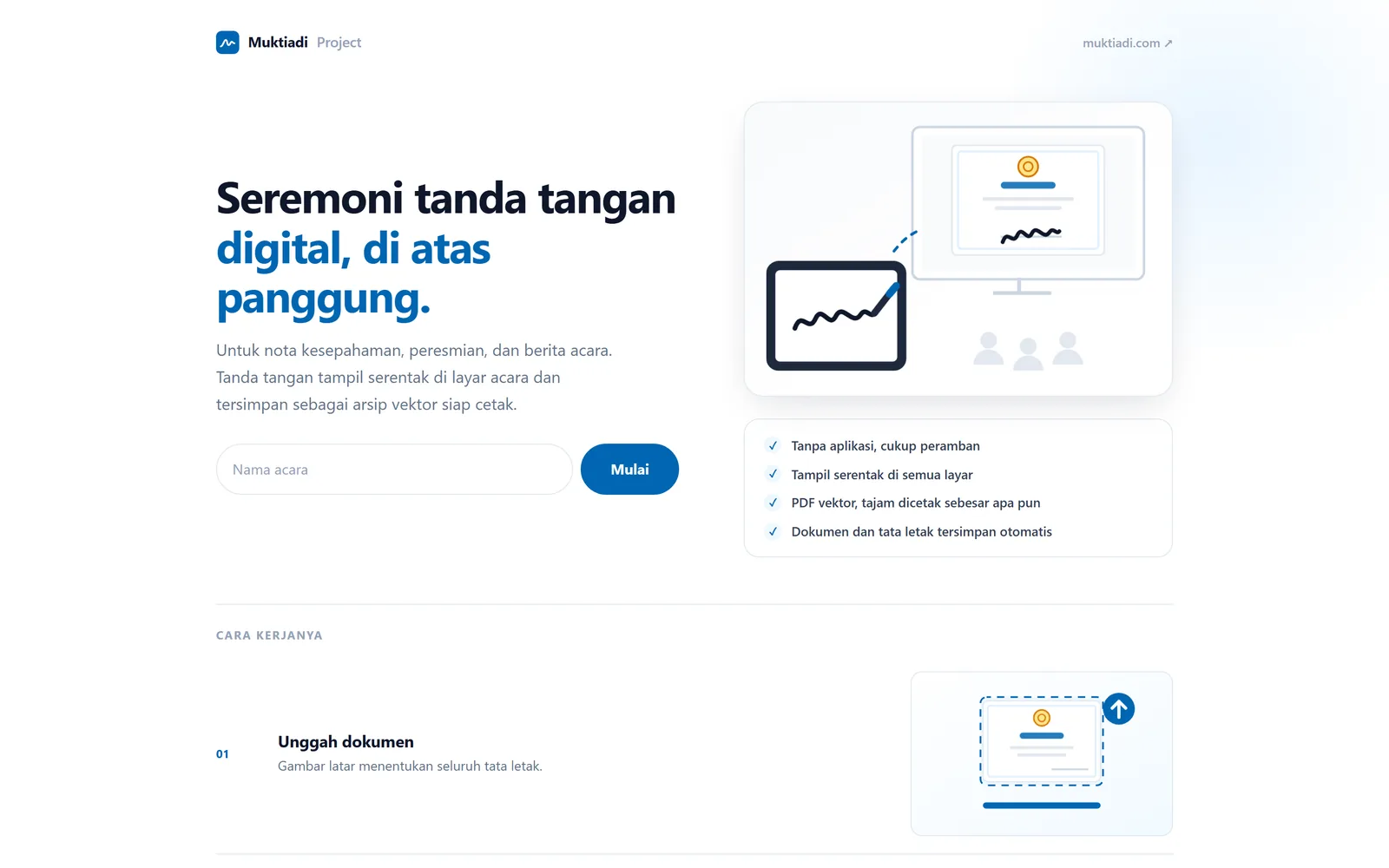
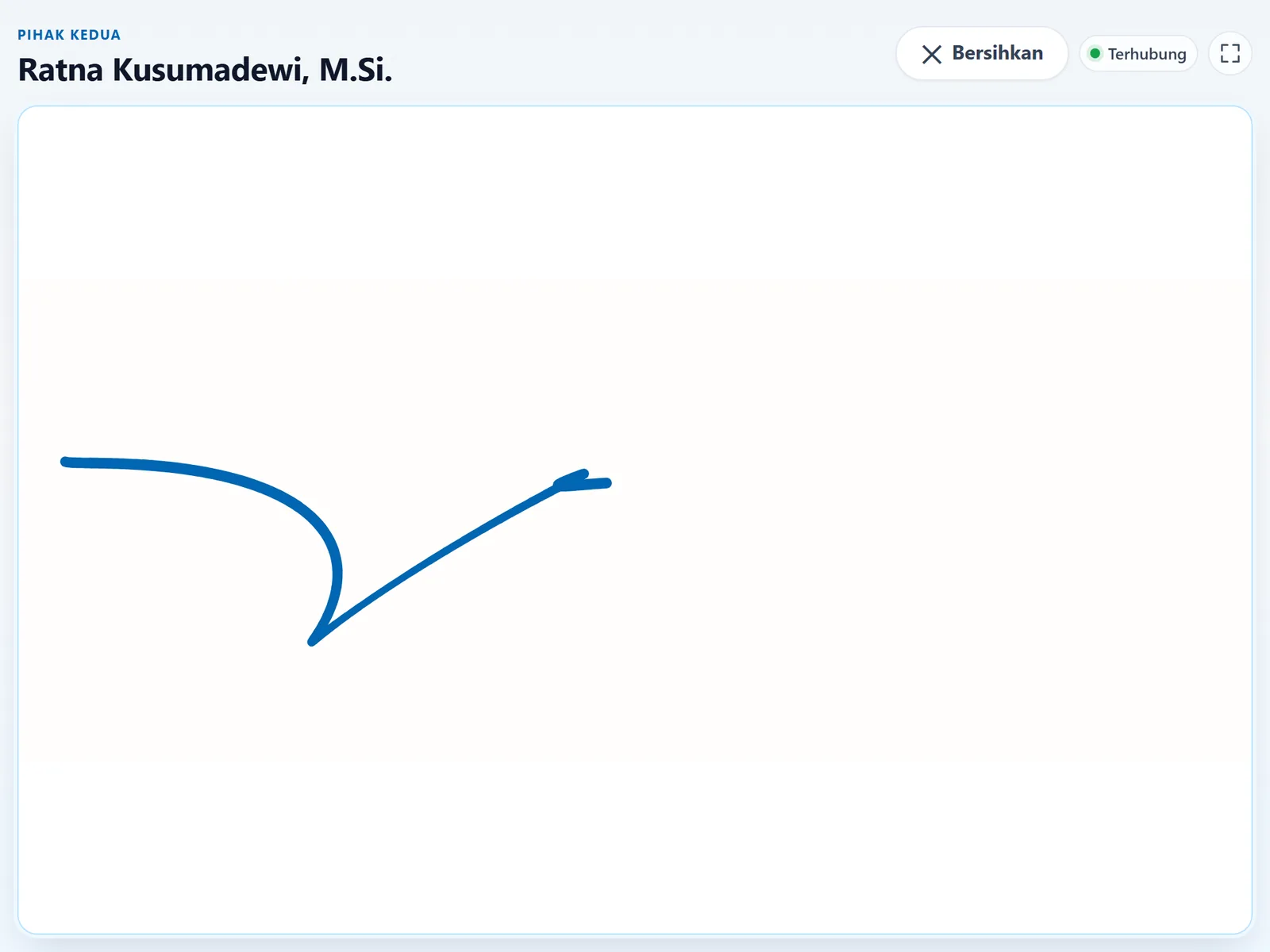
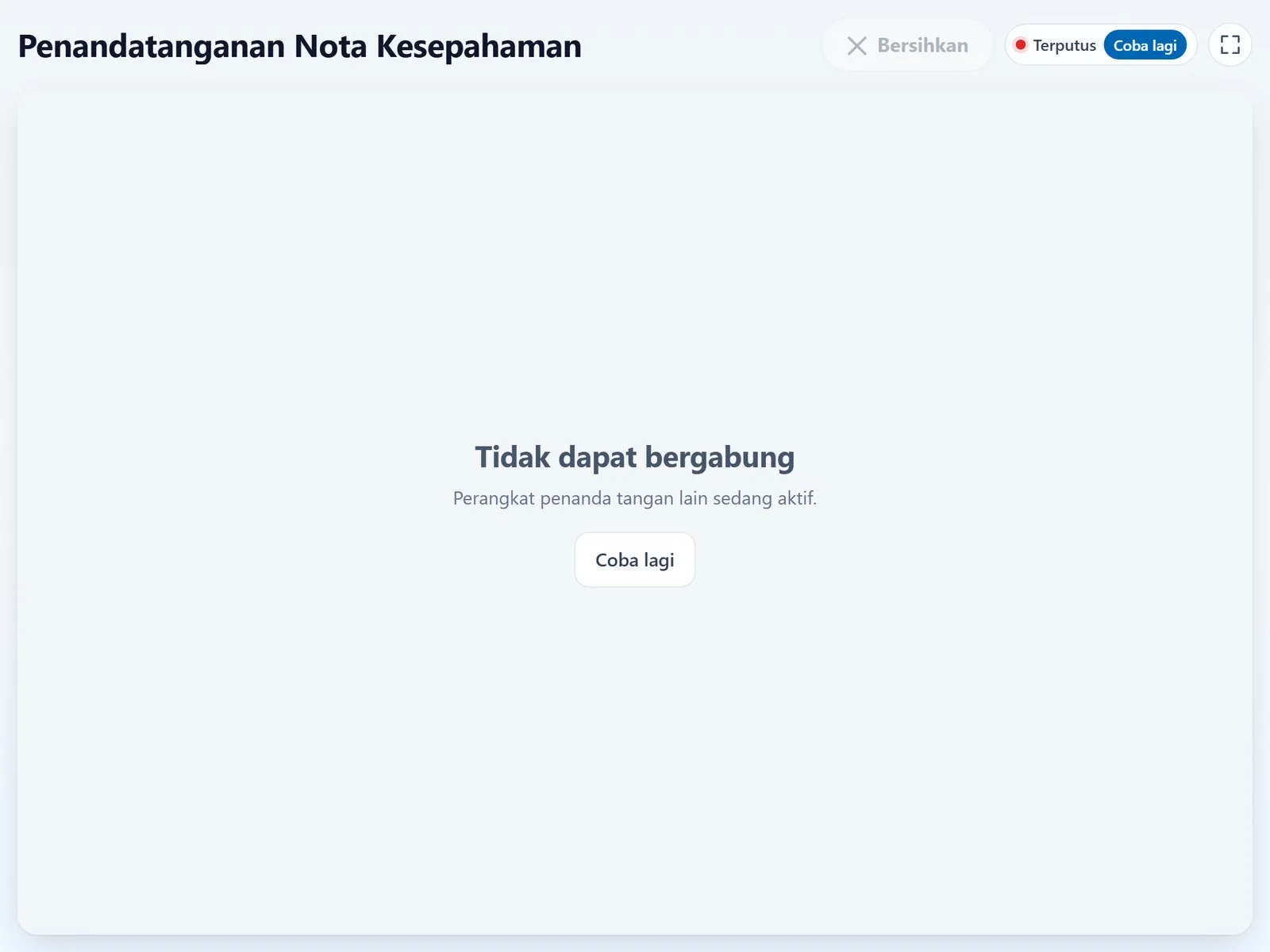
Officials sign while the hall watches
One tablet, one operator, any number of screens following the pen. Only strokes cross the network, so a screen that reconnects redraws the ink exactly.
Any signal
An archive, not a screenshot
Every signature leaves as a vector PDF with the event’s own layout.
On the record
In a fieldSESAMASchool uniforms for a whole community, in one day
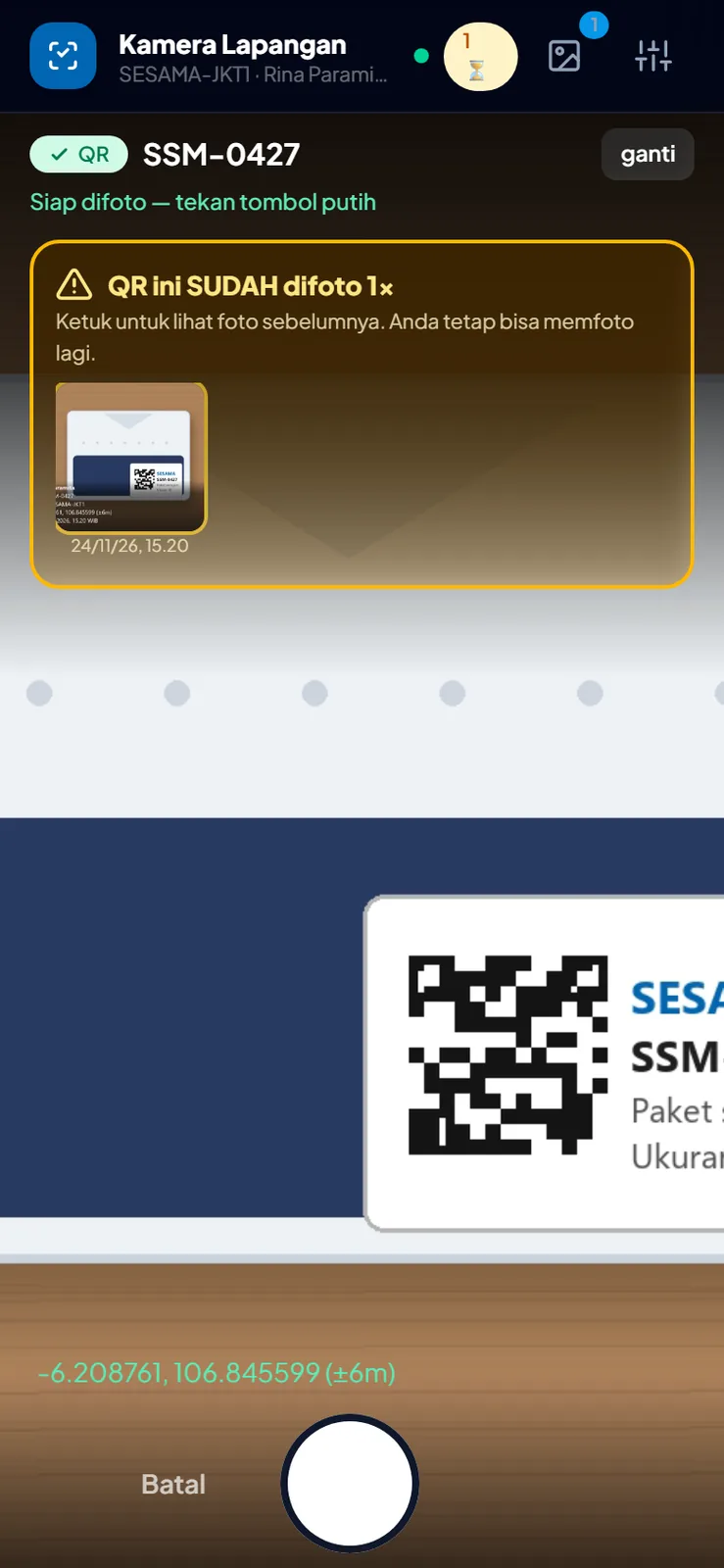
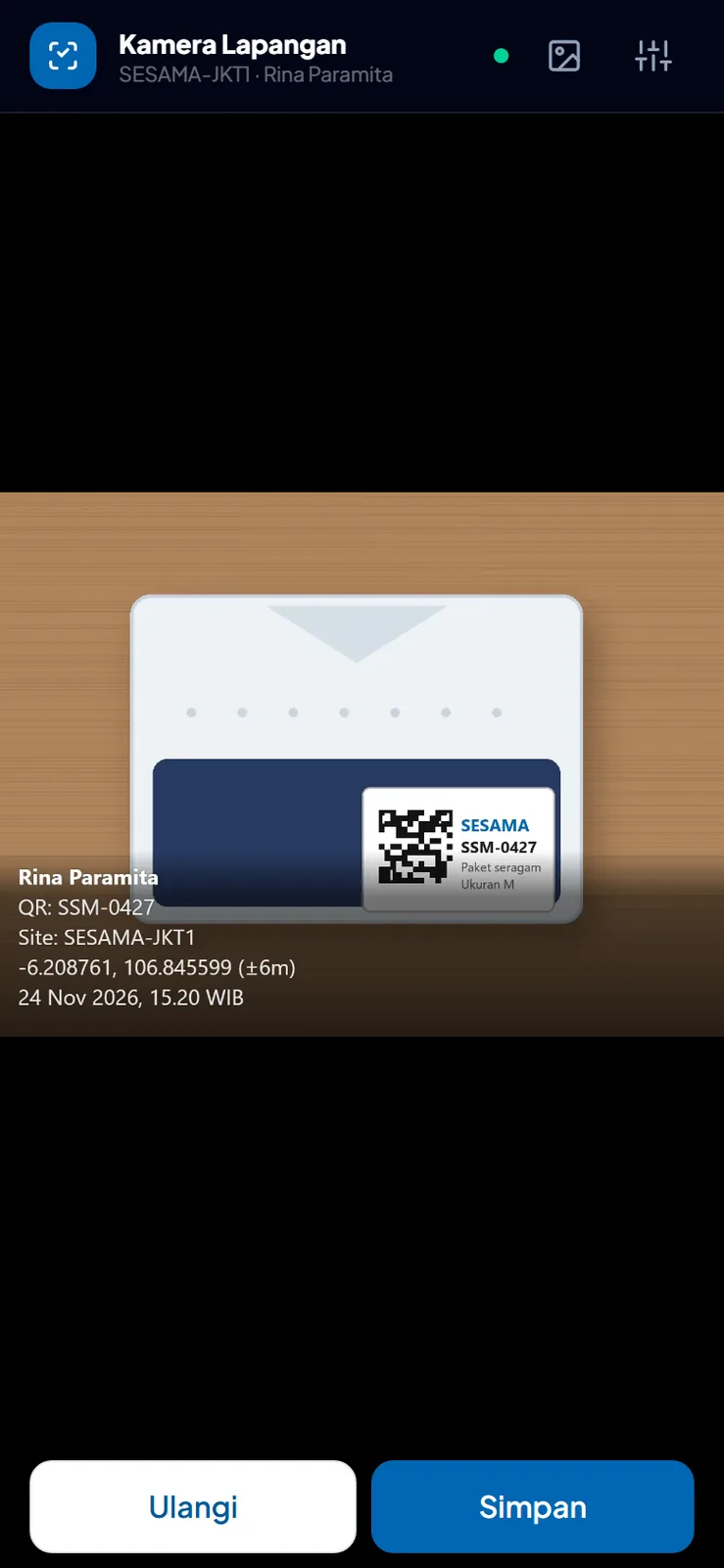
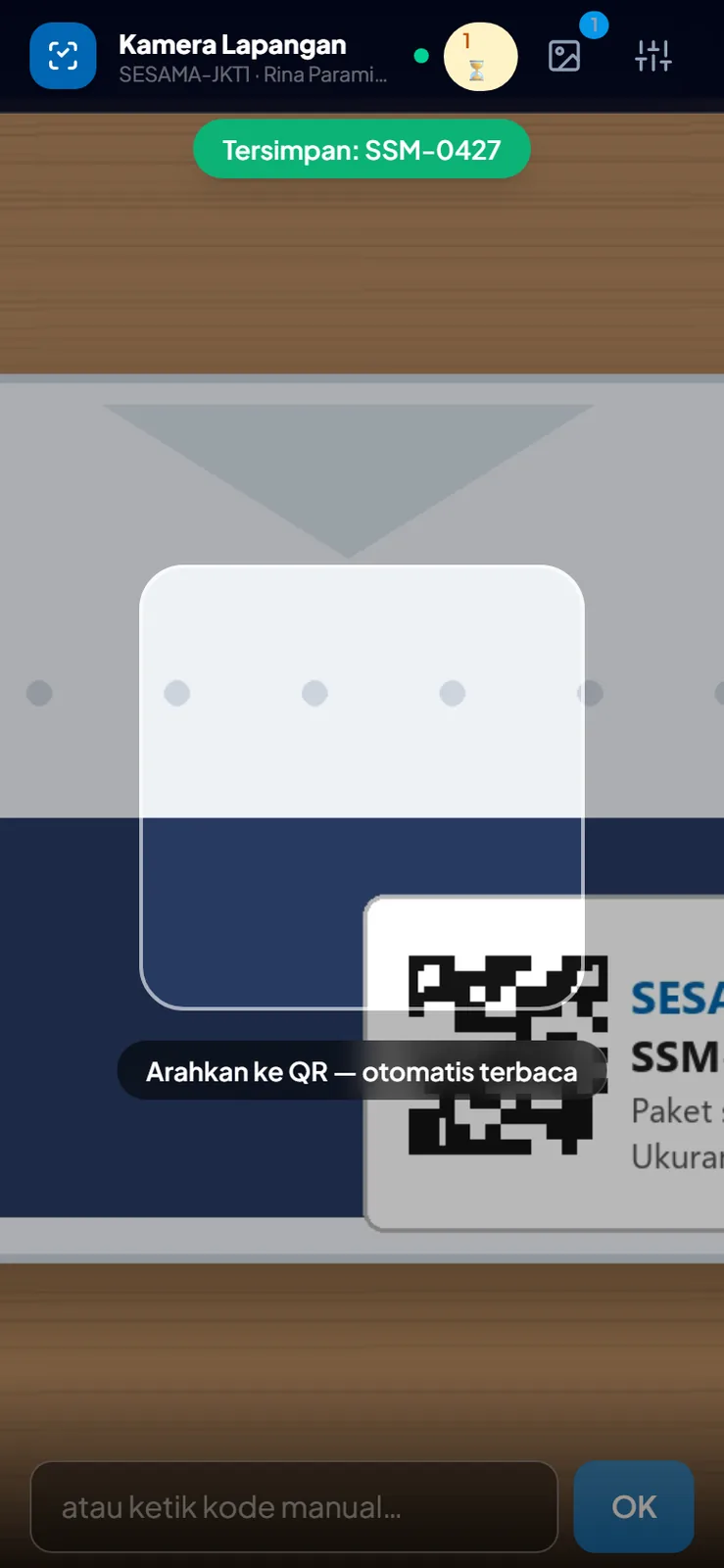
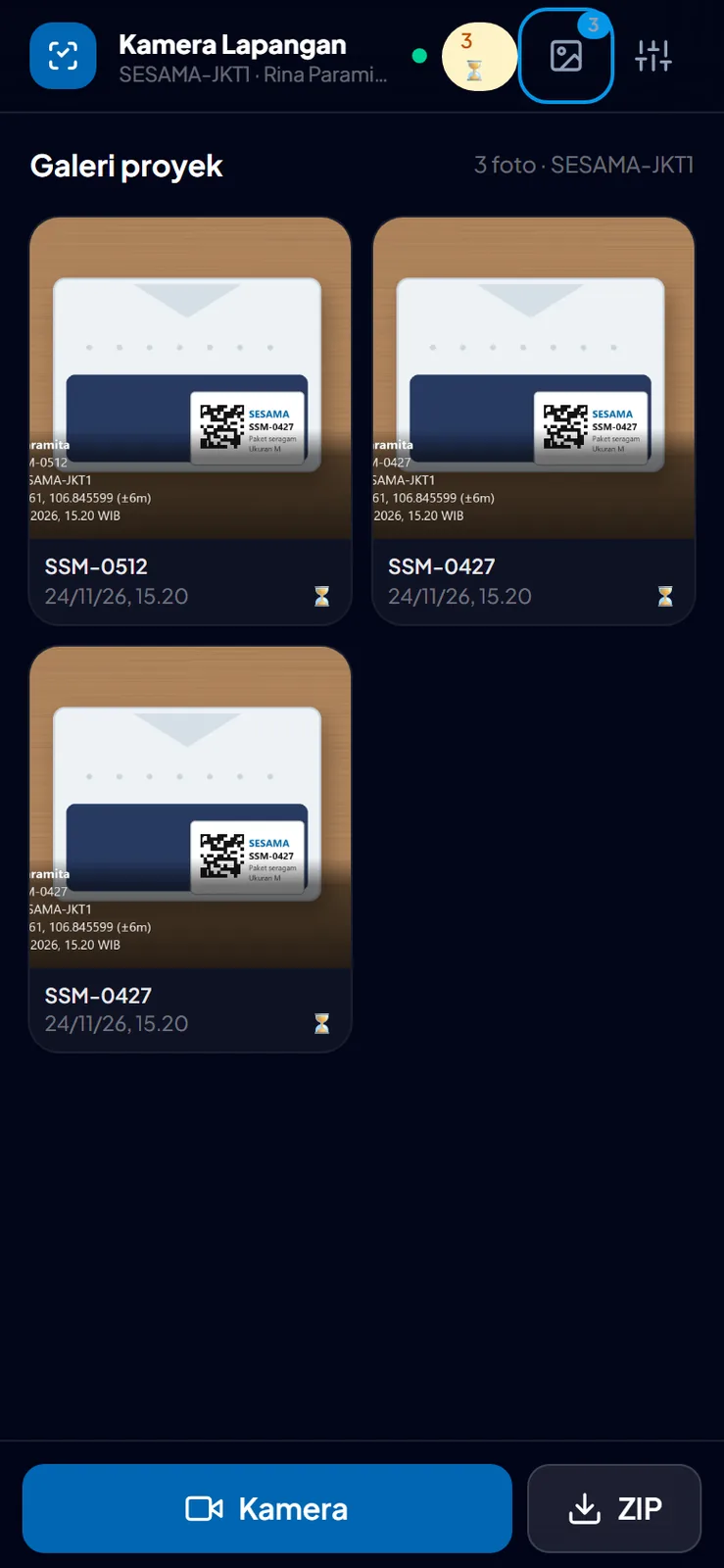
Every record on every device
The whole list lives on each phone with instant search, so a field with no signal changes nothing.
Any signal
A numbered slip, then a photo
A slip printed over USB or Bluetooth, QR codes with no personal data, and a photo of each handover the server confirms.
On the record
Learnedhiding other signatures on a shared tablet is not enough, so each signer’s screen receives only their own box.
NextThe third room is leadership’s own: a command center fed by everyone’s daily work.
Muktiadi Akhmad Januar · Command Center
Leadership wanted one room where the foundation’s work is visible. The answer was not a monthly recap: numbers are recorded once in the apps where the work happens, flow into one copy without names, and fill two large screens.
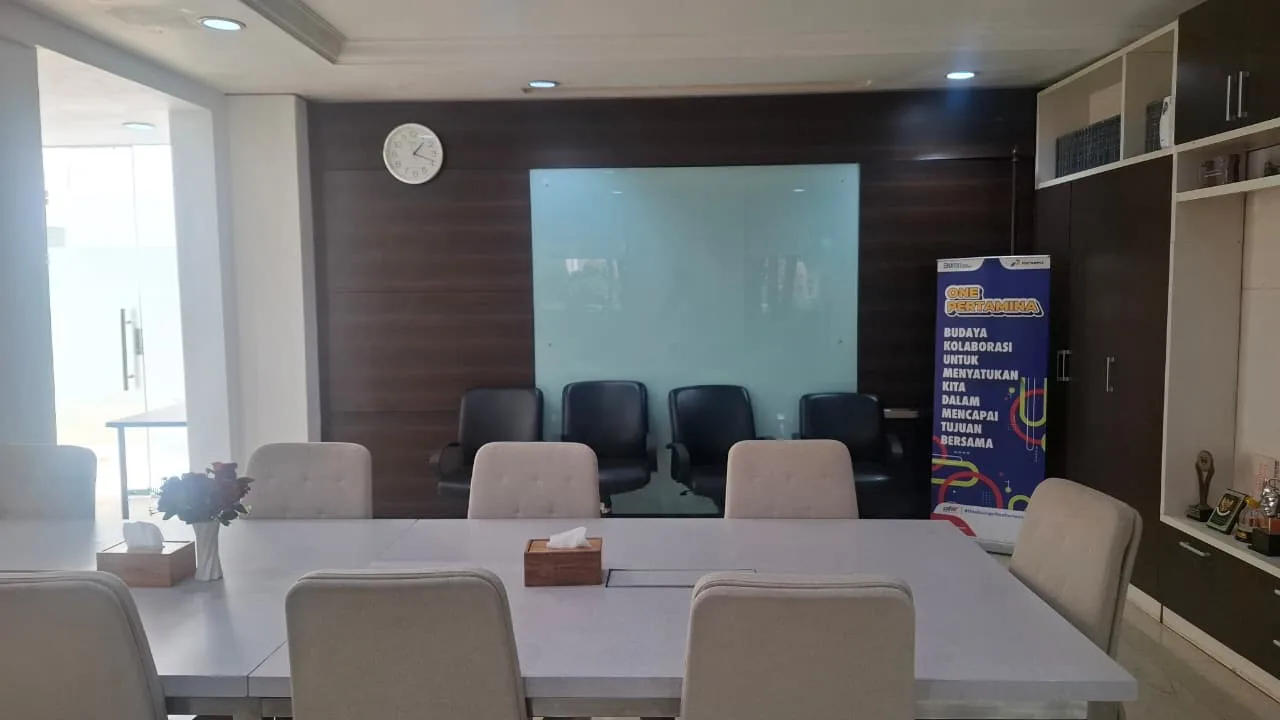
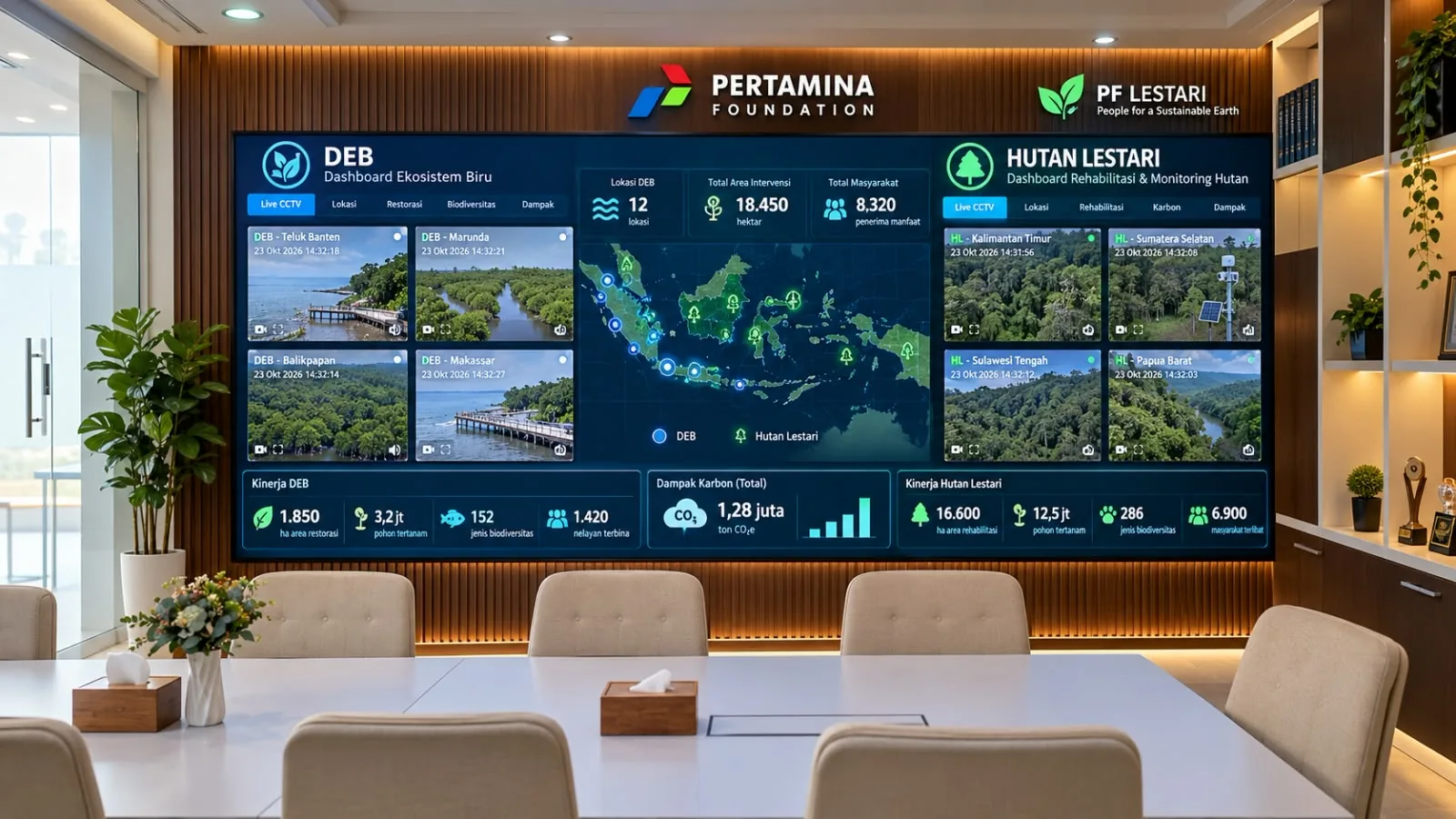
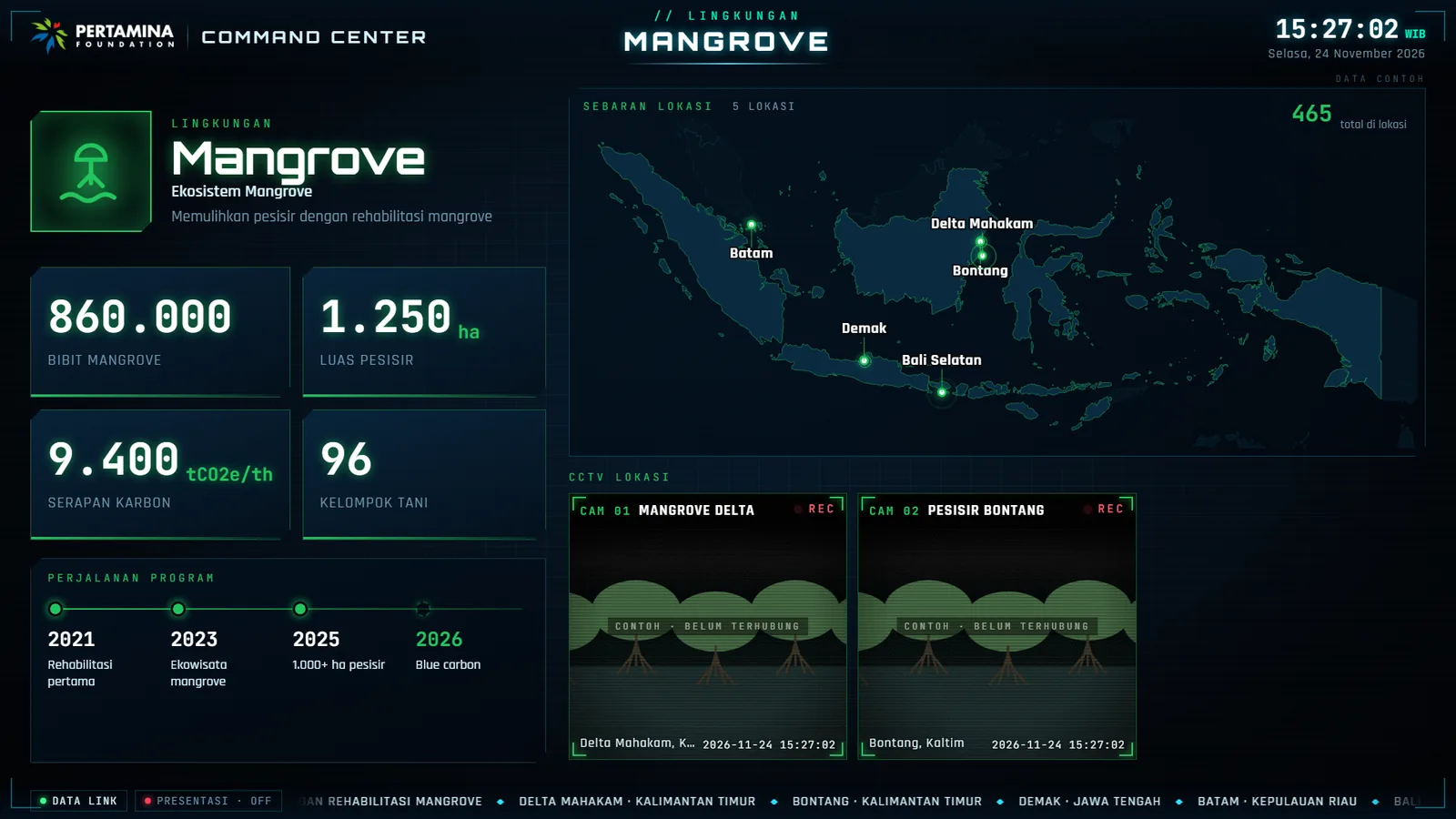
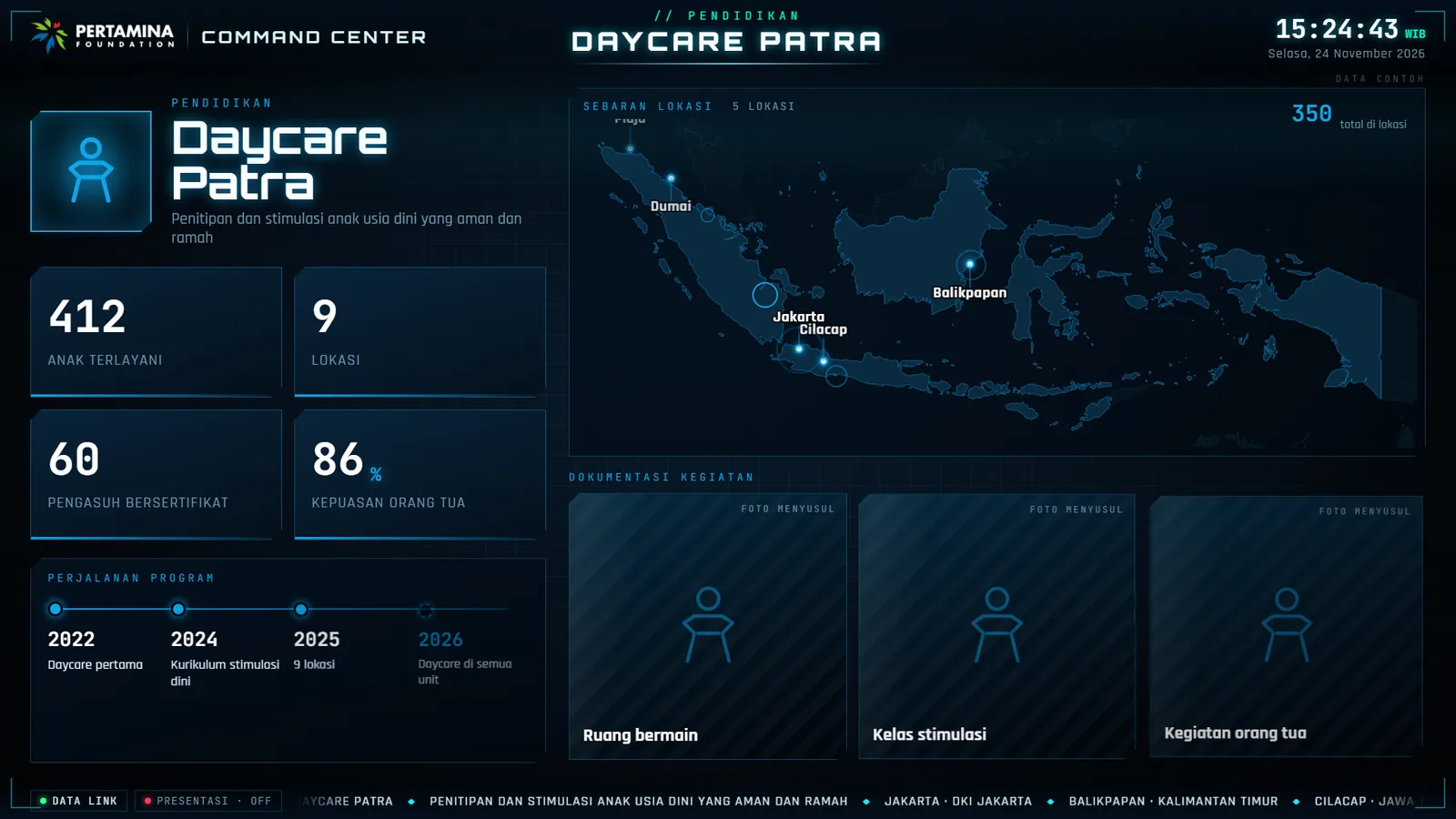
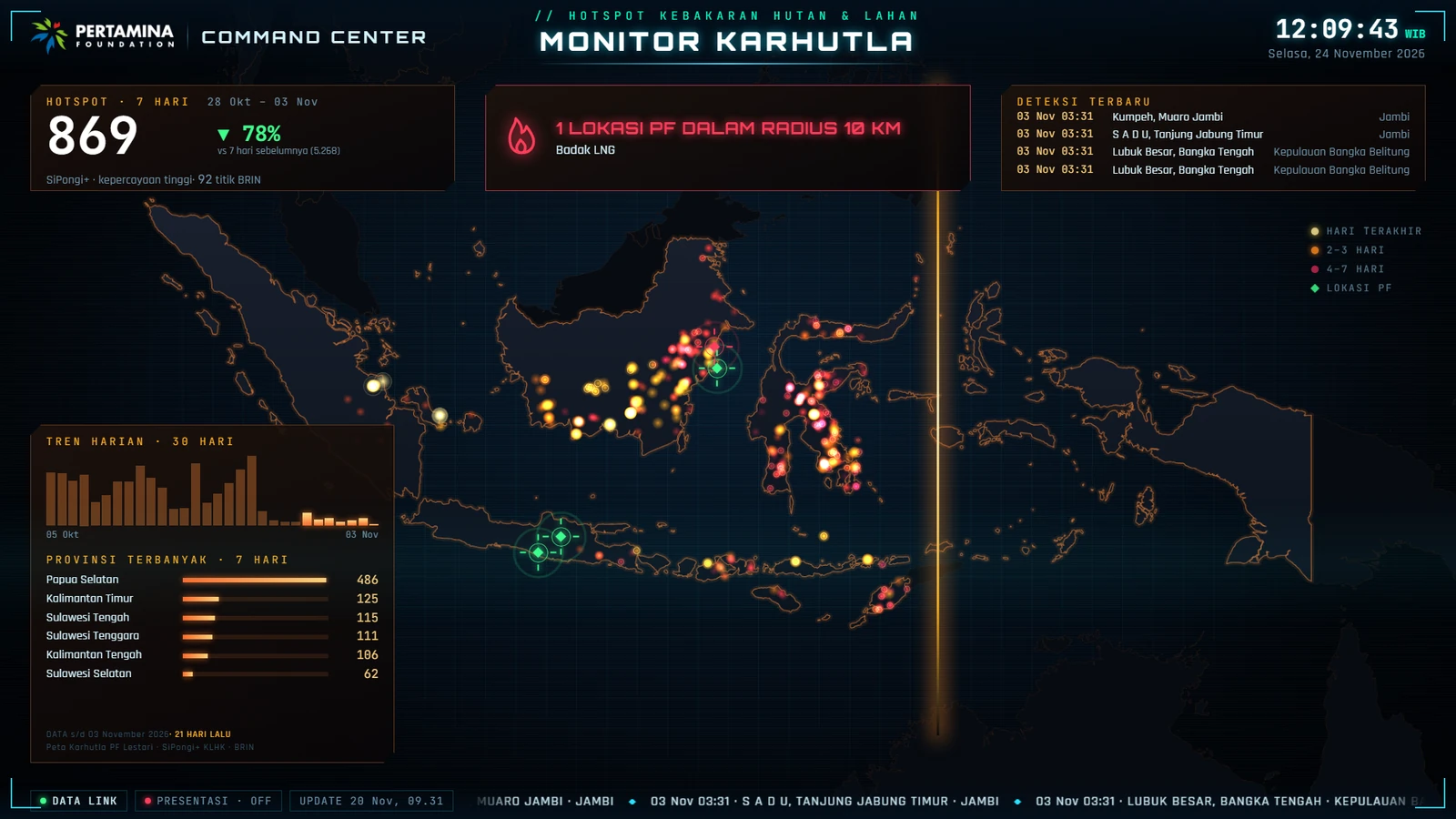
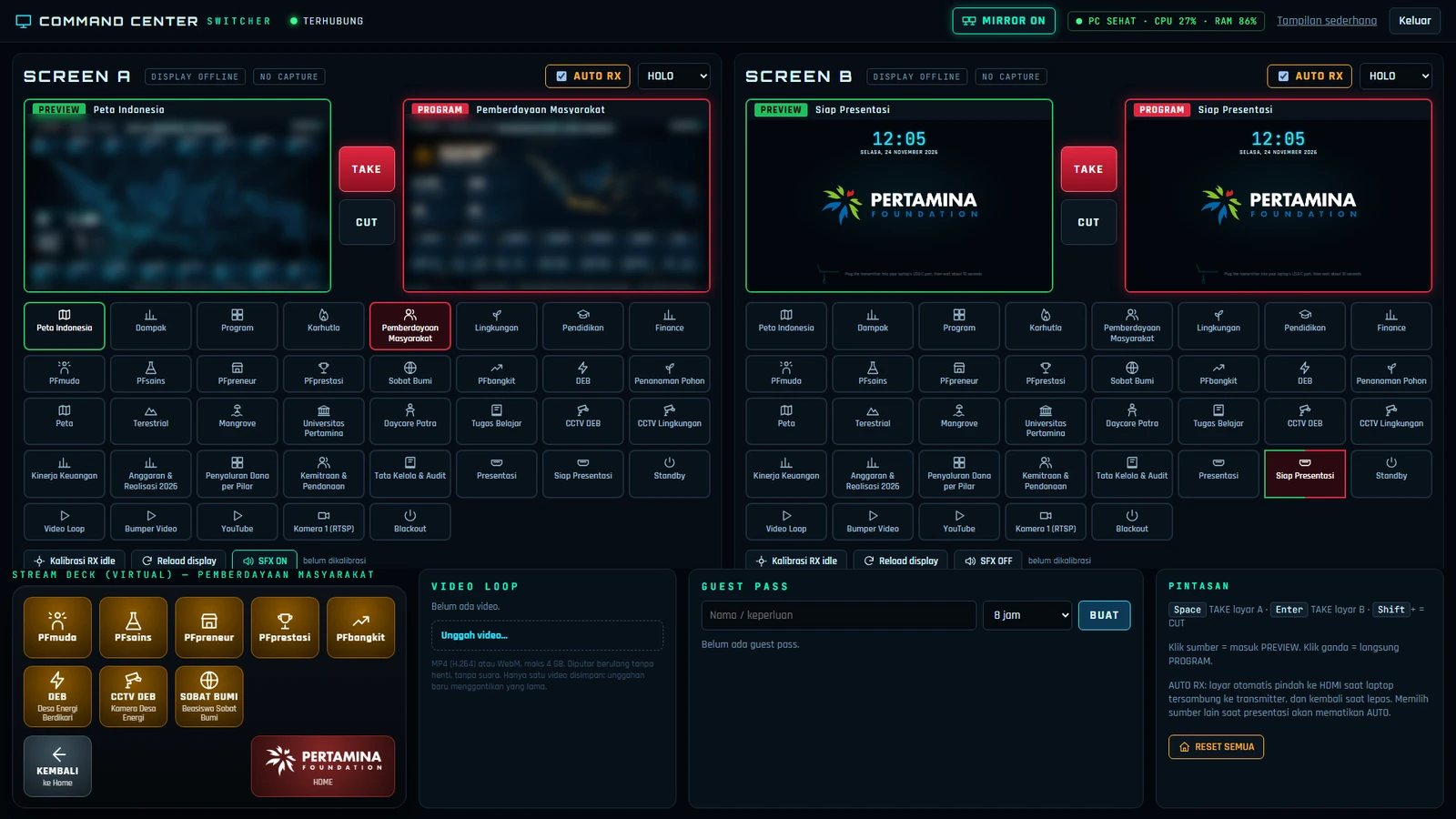
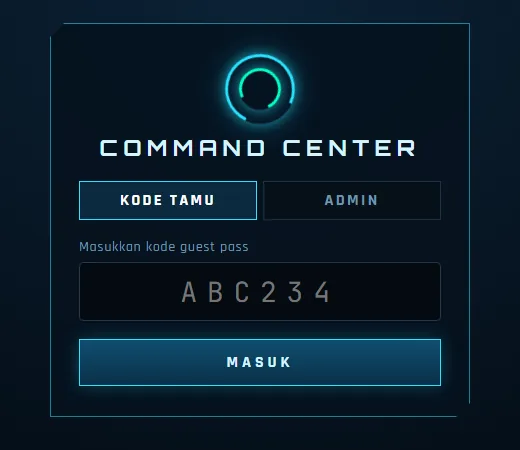
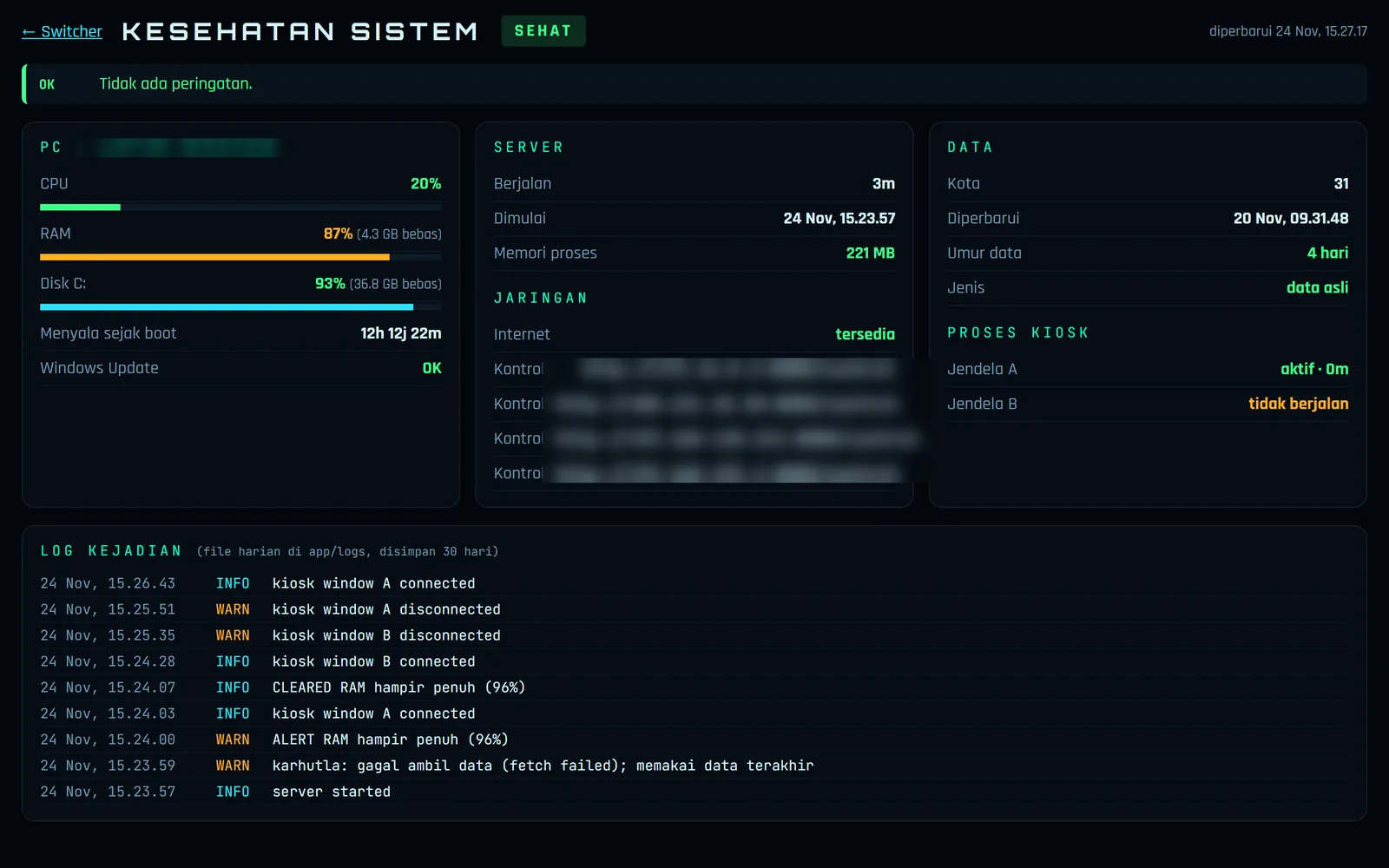
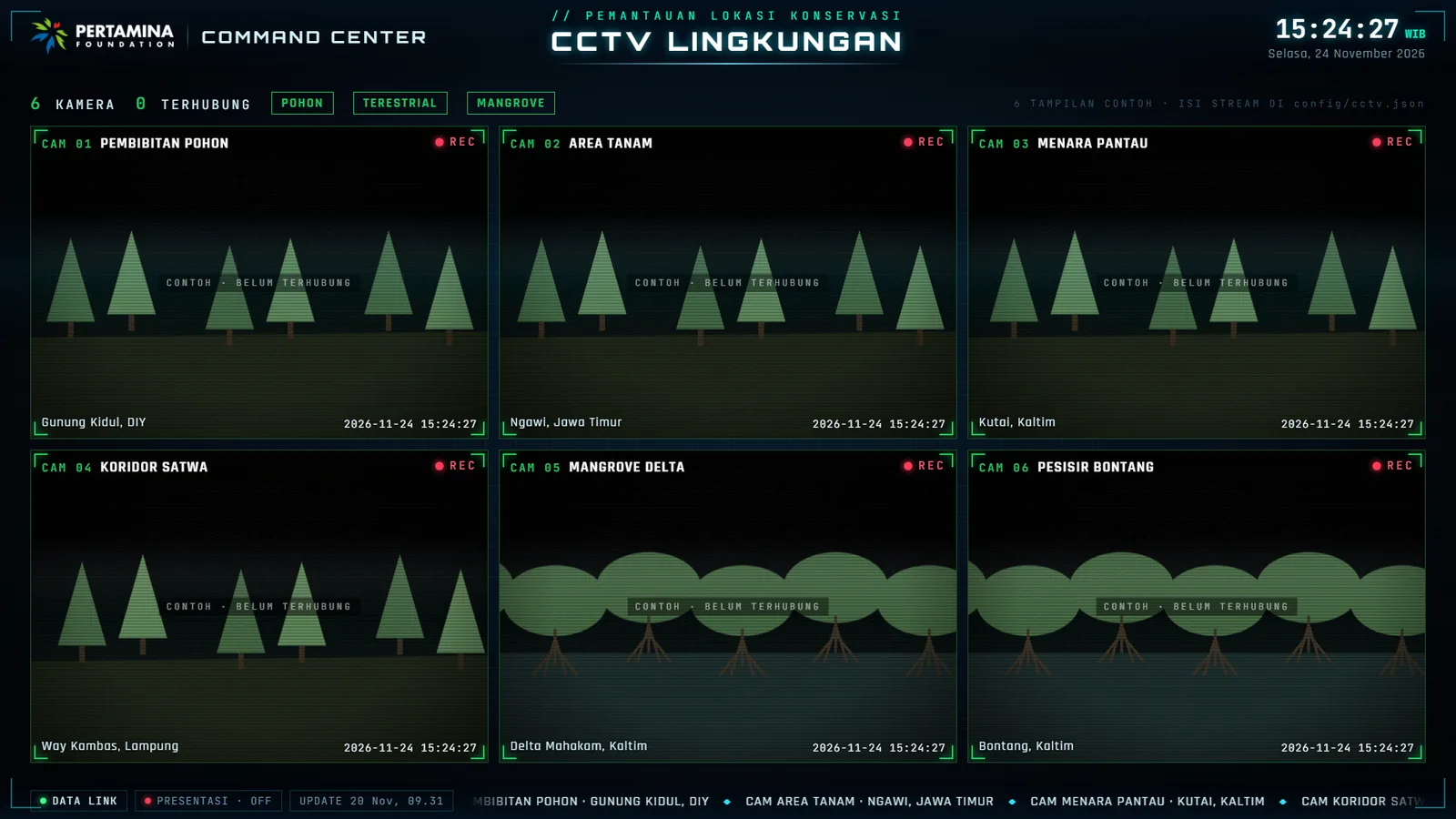
Recorded once, where the work happens
Numbers are born in the work apps (selection, monitoring, forests, staff tasks) and flow into one copy with no names.
Kept apart
One number, one owner
Each indicator belongs to the programme person who records it; staff edit with their office account, by their seat in the programme tree.
On the record
Names never reach the room
Only totals cross into the room’s copy; names and ID numbers stay in the source systems.
On the record
A room that runs itself
A hardware keypad on a driver I wrote; a presenter’s laptop appears on the second screen by itself; a stuck window reopens on its own.
Any crowd
IT out of sight
Support works over the private network on a separate screen that never shows on the TV.
Kept apart
Where it started
A dashboard initiative in 2025 and a visitor kiosk with a province map came first; the room is what they grew into.
People decide
Learneda wireless HDMI receiver always outputs a picture, so the room detects a presenter from the image, not the signal.
NextBehind many of these moments is money: grants and advances that must be explainable afterwards.
Part 2 · 2026
Systems built for one live moment: a ceremony where officials sign on a tablet while the hall watches, a field app that handed school uniforms to a whole community in one day, and leadership’s command room.
Discover.
Live moments forgive nothing: a signature wiped on a tablet in front of officials, a crowd of families in a field with no signal, a leadership room where switching screens stops the meeting.
Design.
Each built for one live moment: no login that can fail on stage, no network that has to cooperate, no setup anyone has to touch.
Deliver.
Ceremonies signed live, a field app verified on its full list of children, and a command room that runs itself.
Sole author · WebSocket · Offline-first · Thermal printing · Kiosk
Tap a page to open it full screen; swipe for the next. Every page is also in the PDF.
Muktiadi Akhmad Januar · Part 2 · Money that can be audited
What it isThe records behind the foundation’s money: grant disbursement to partner campuses and staff cash advances, each change kept in a history nobody can rewrite, and every printed document verifiable by QR.
Discover.
Grant money flows to campuses and field teams, and every rupiah must be explainable later. Paper forms and spreadsheets cannot prove who changed what, or that a printed document is the real one.
Design.
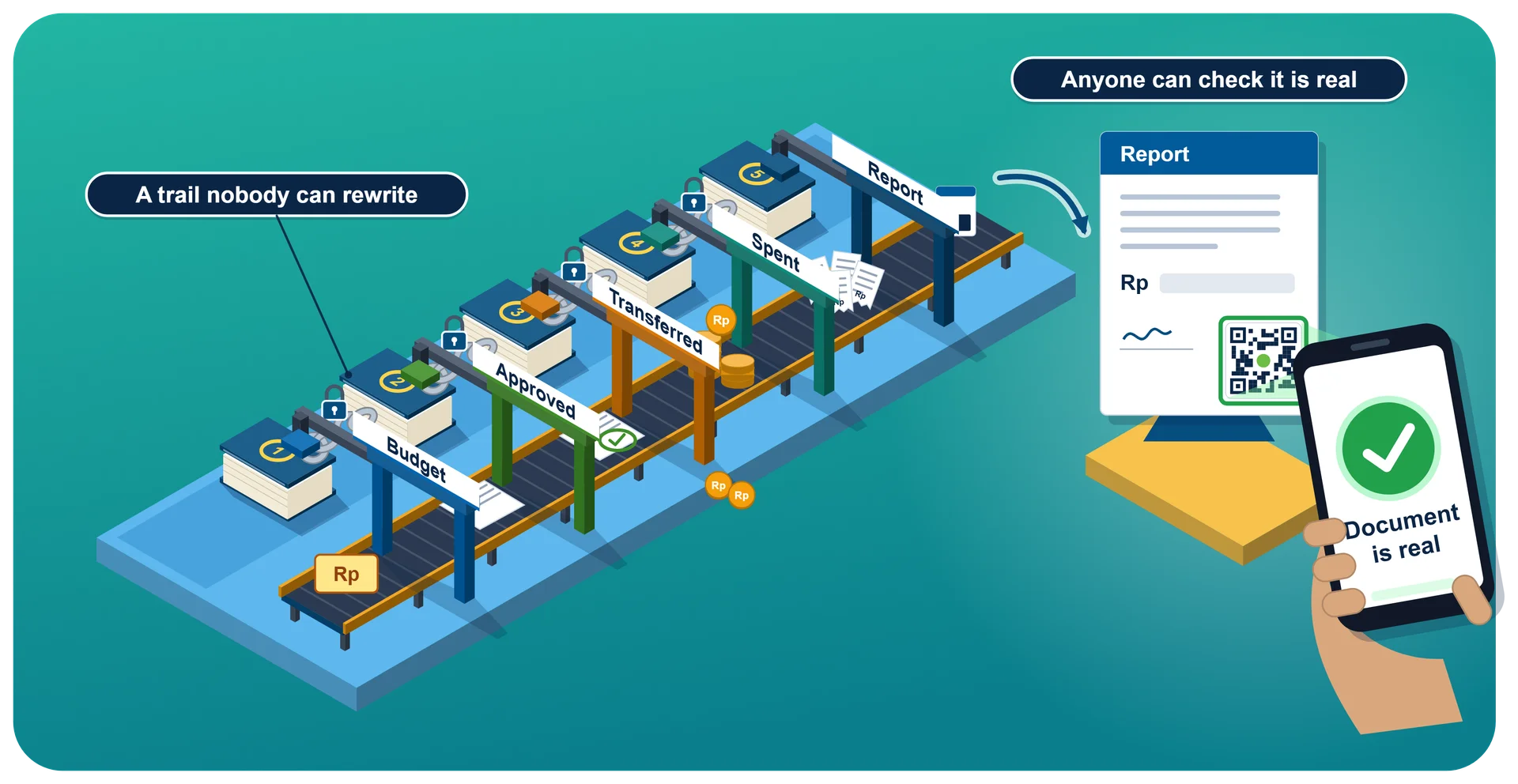
The same two ideas matured across three systems in three months: a history nobody can rewrite, and a page anyone can use to check a document is real.
Deliver.
A disbursement record for the partner campuses that an auditor can follow, and documents anyone can verify by QR.
3
systems in three months, one idea
0
people who can approve their own request
1
QR on every printed page
∞
history kept: a change is a new line, never an edit
1August 2026
Field monitoring, overnight
Sole author, one night
The three paper forms encoded as data; GPS and time stamped into each photo; a git-style history of every change; printouts with a QR.
2September 2026
Grant disbursement for the partner campuses
Analyst, architect and first builder; a colleague built most of the wider portal
Every change written with its audit entry in one atomic step; the browser never touches the database; each issued document verifiable by QR and fingerprint, with no names exposed.
3October 2026
Cash advances inside PFdrive
Architect and builder
Eleven stages, no self-approval, the official Excel layout read and written in the browser, and a QR on every printed report.
Learnedan audited record should never vanish, so deletes became a logged flag, and the public verify page honours it.
NextThe same two ideas, on the screens campuses and staff actually use.
Muktiadi Akhmad Januar · On screen
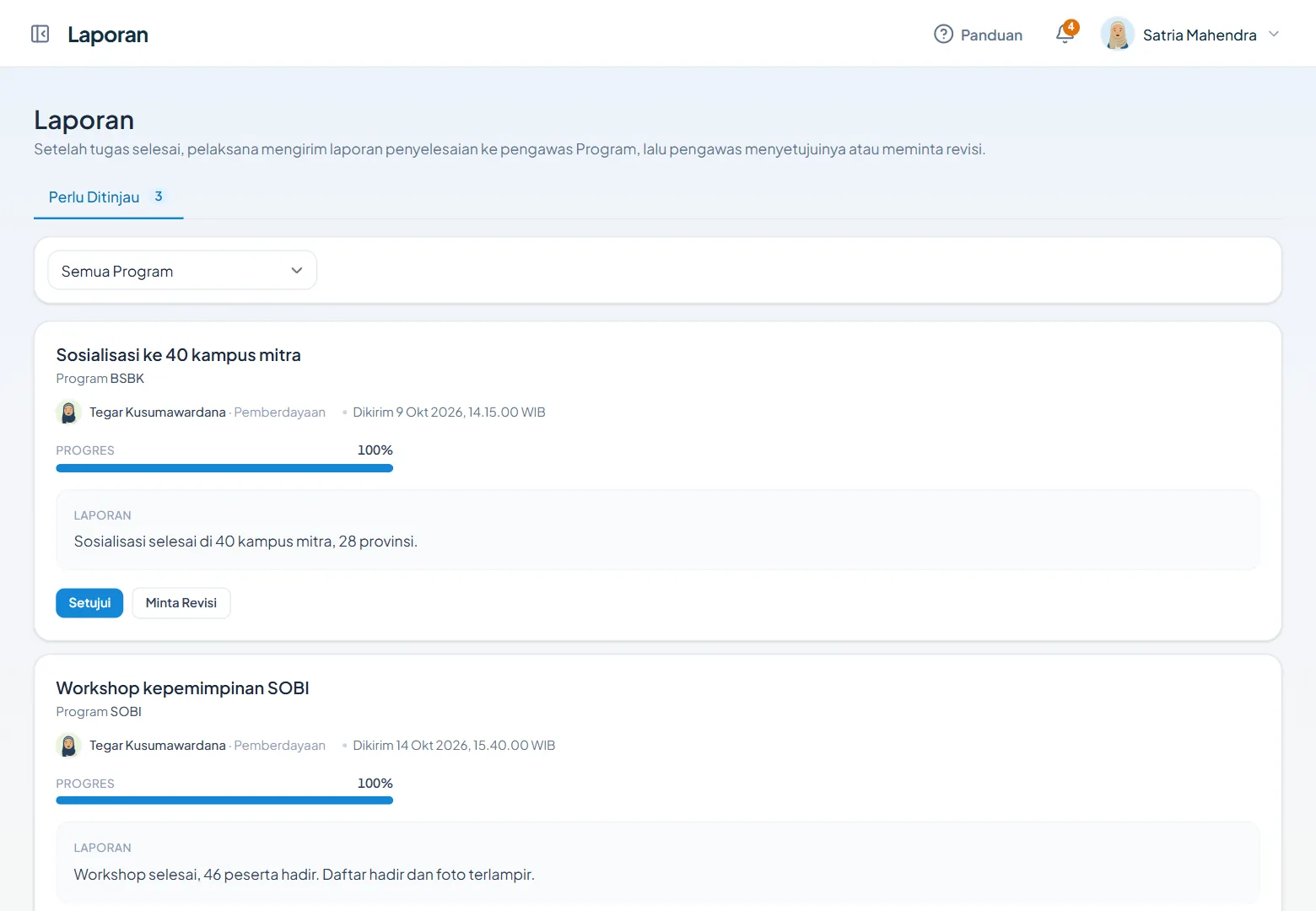
The two ideas as the people using them see them: partner campuses reporting a grant, and staff taking a cash advance from budget to report. Example data throughout.
Grant disbursement to partner campuses
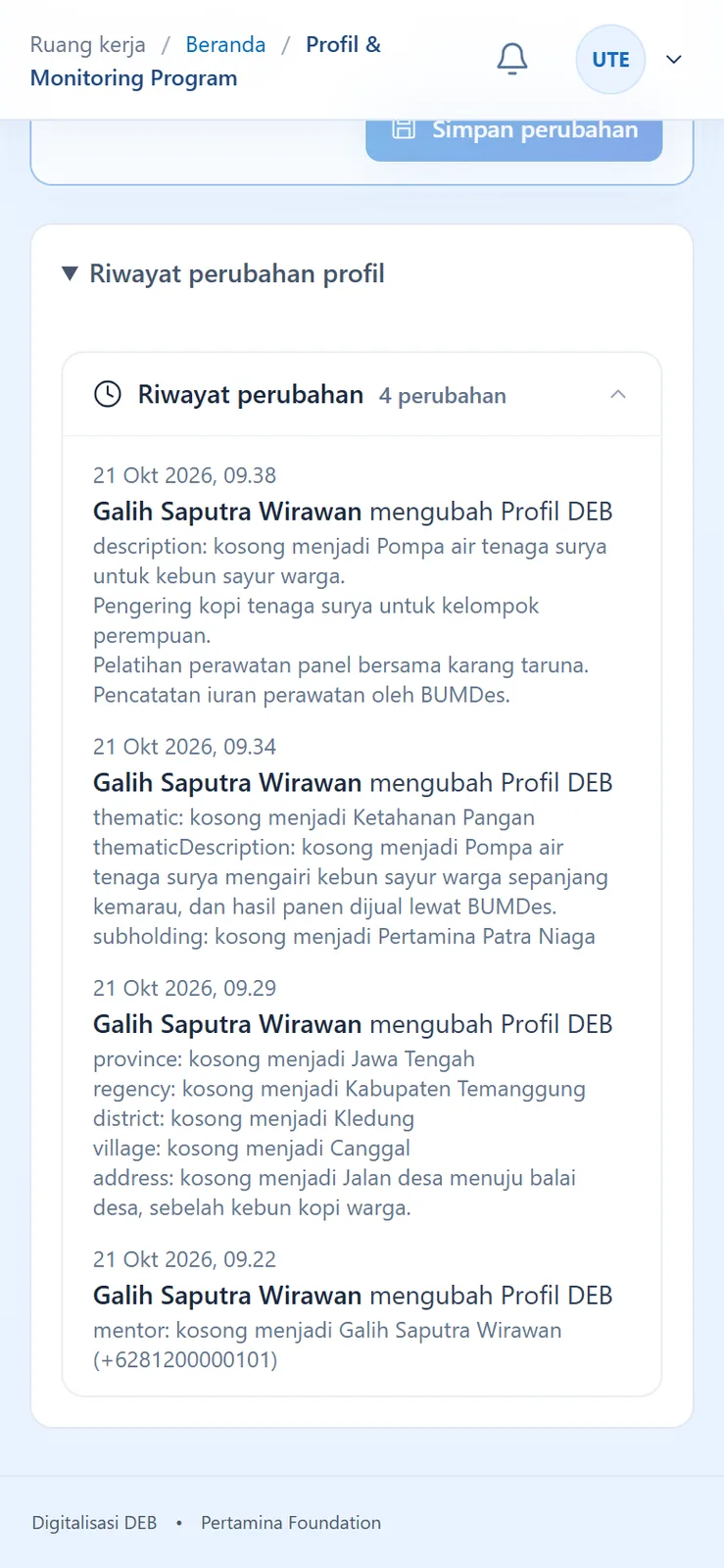
Every change kept, with who and when.
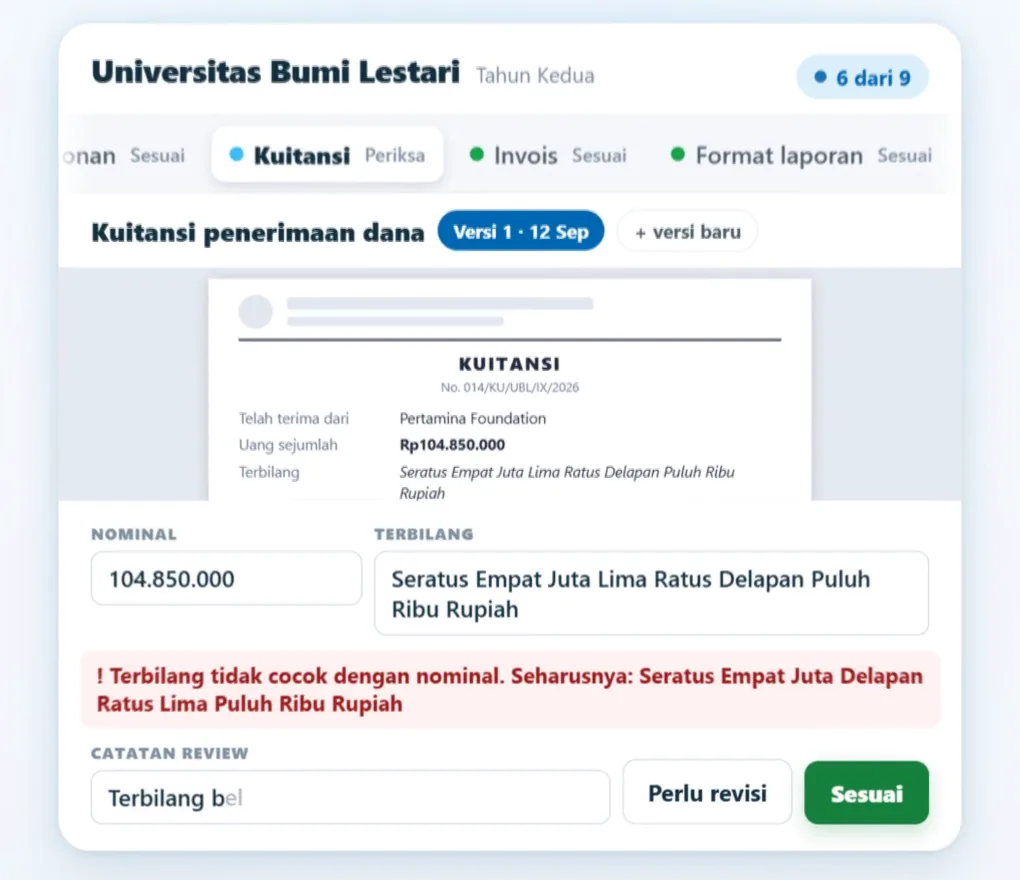
An amount whose words disagree is refused.
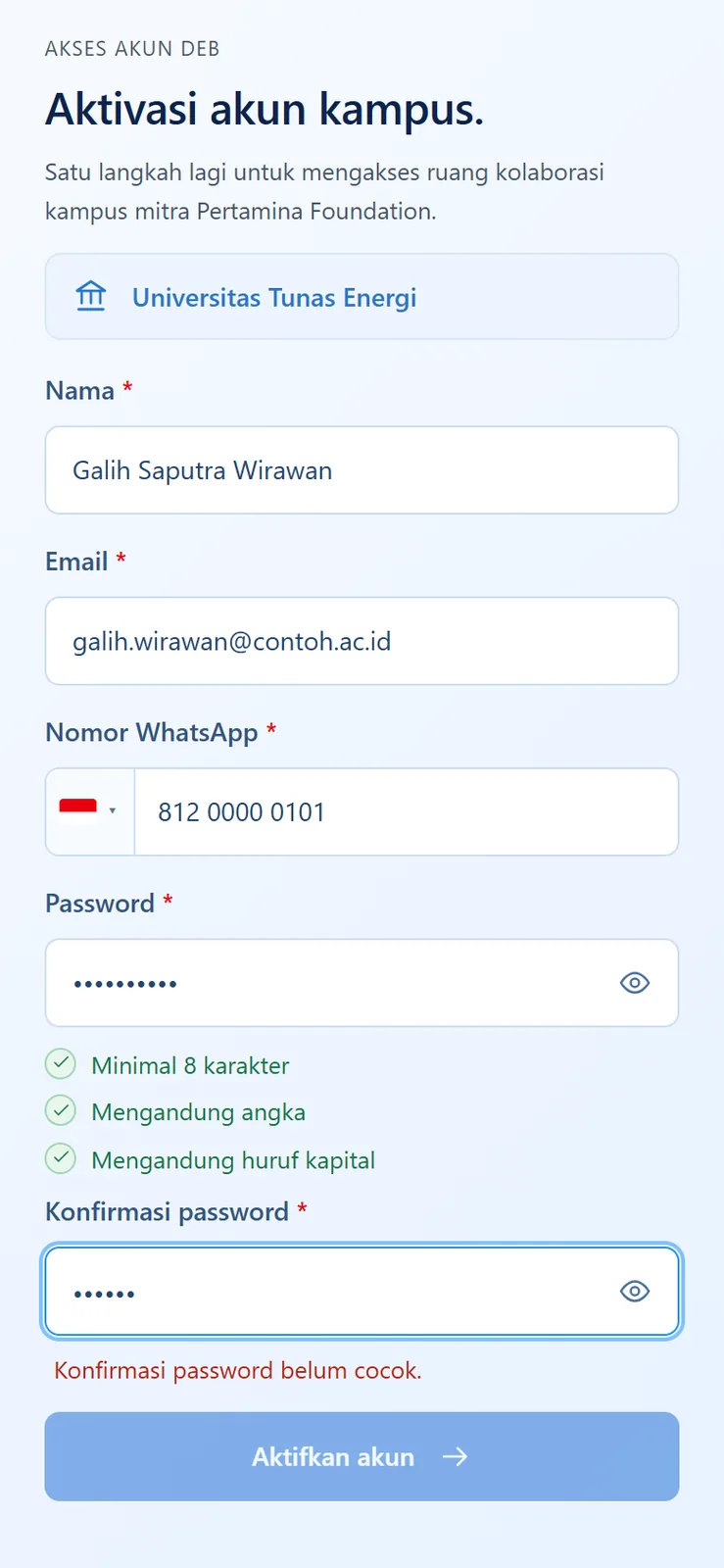
Each campus signs in
One account per campus, checked on activation.
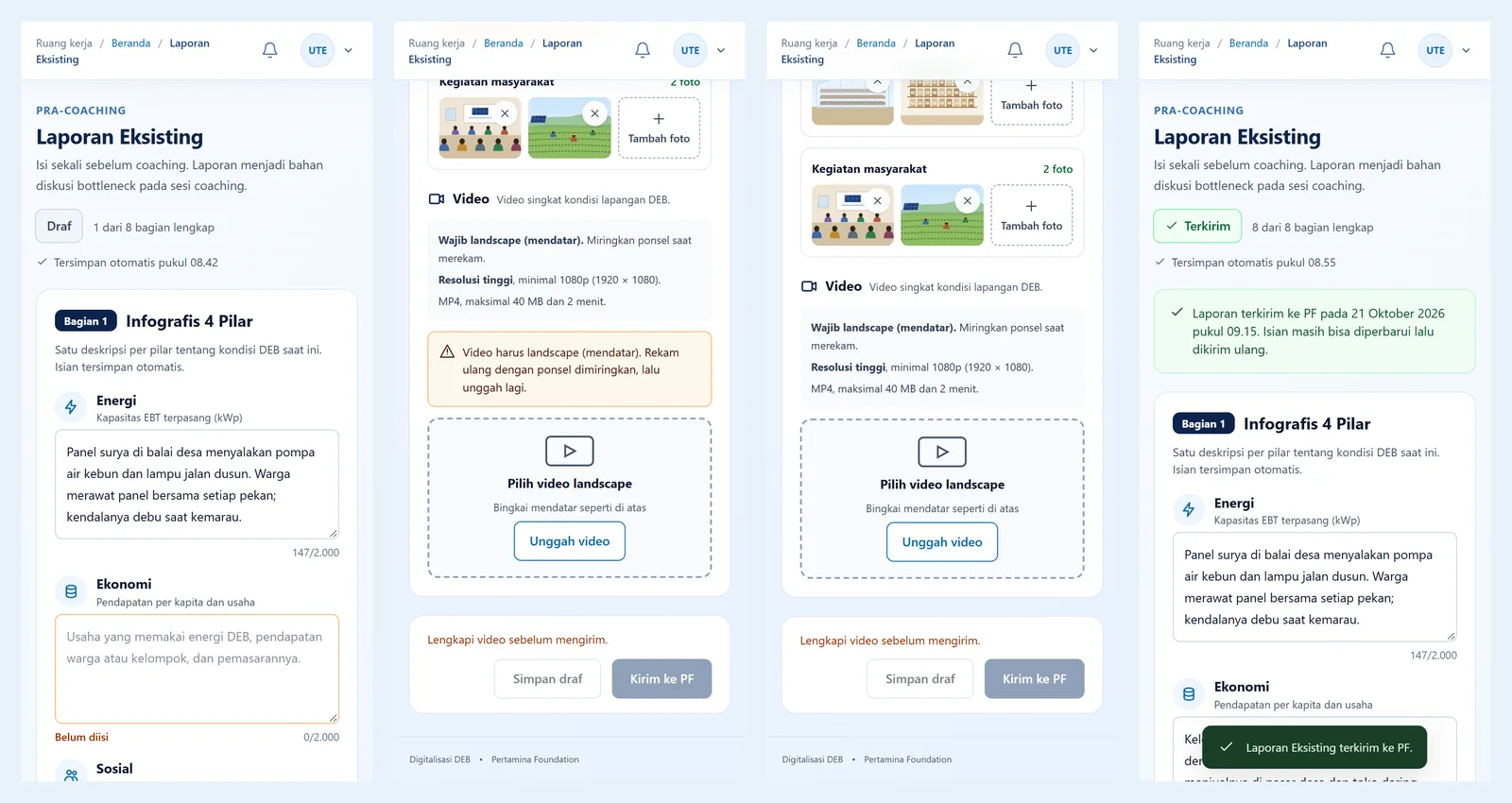
Reports in steps
Each stage reported with its documents.
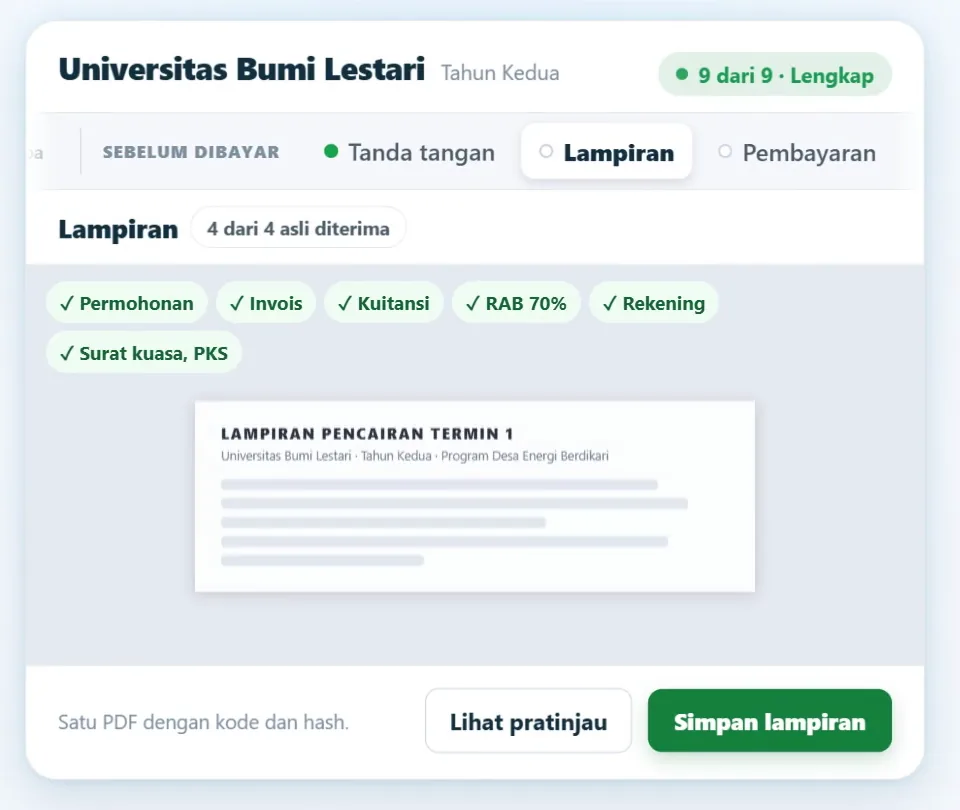
A QR on every page
Each page of each document can be checked.
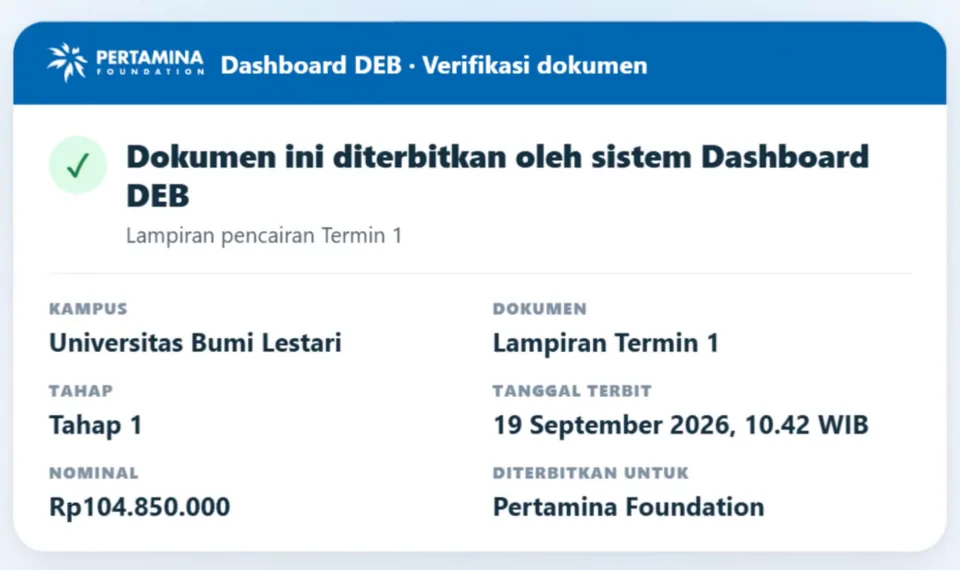
Anyone can verify
The QR opens the record it was printed from.
Cash advances inside PFdrive
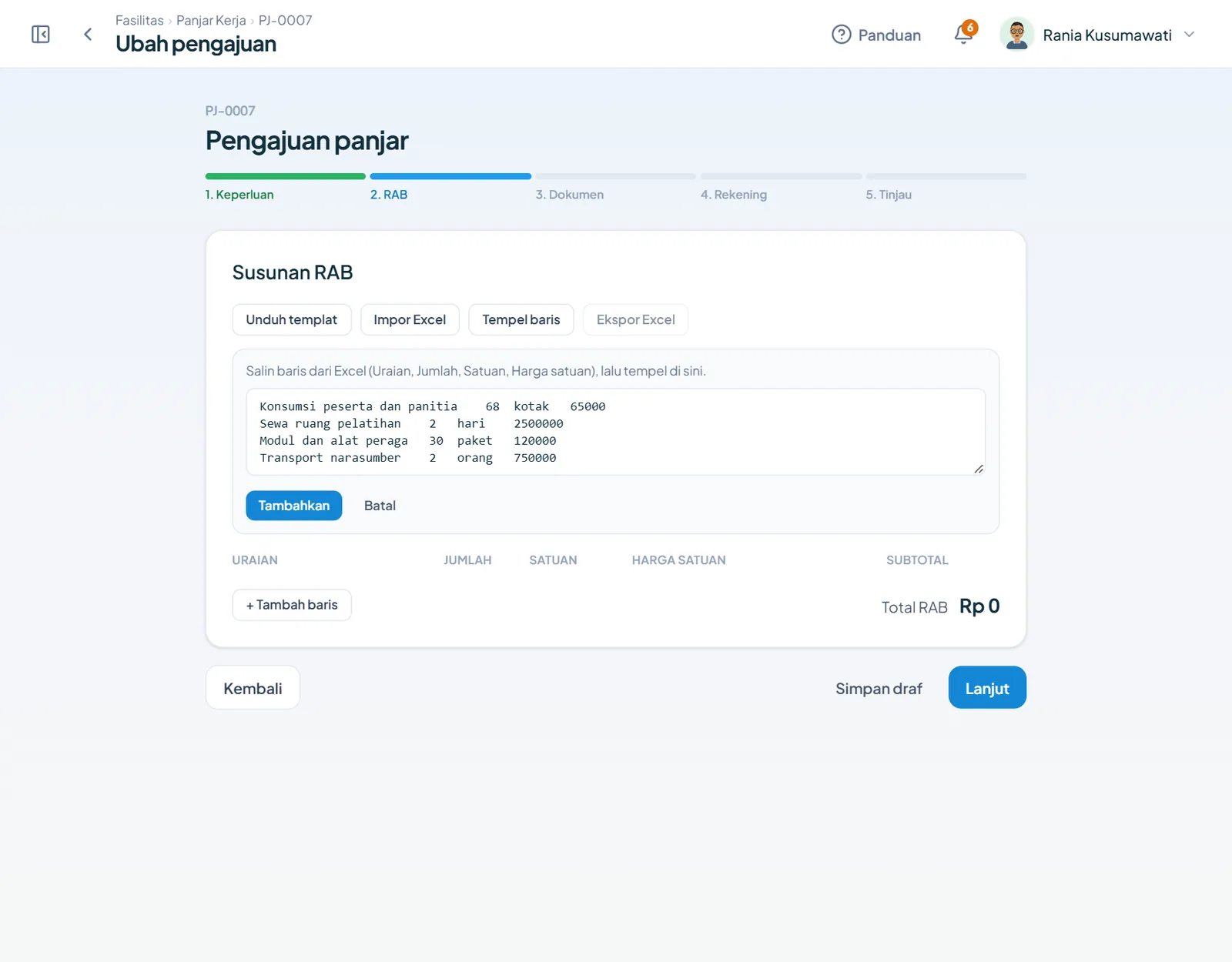
The budget arrives in the official layout.
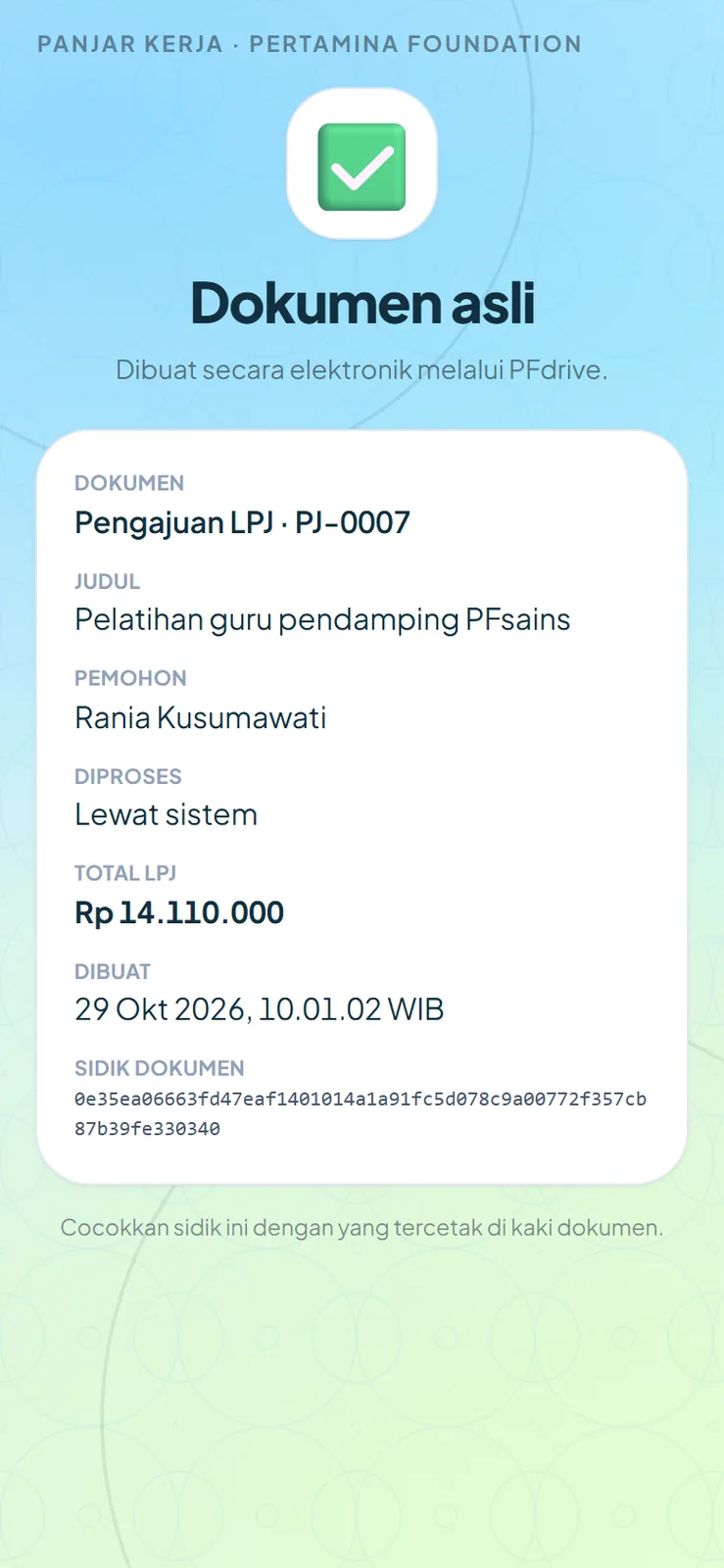
A phone confirms the paper matches the record.
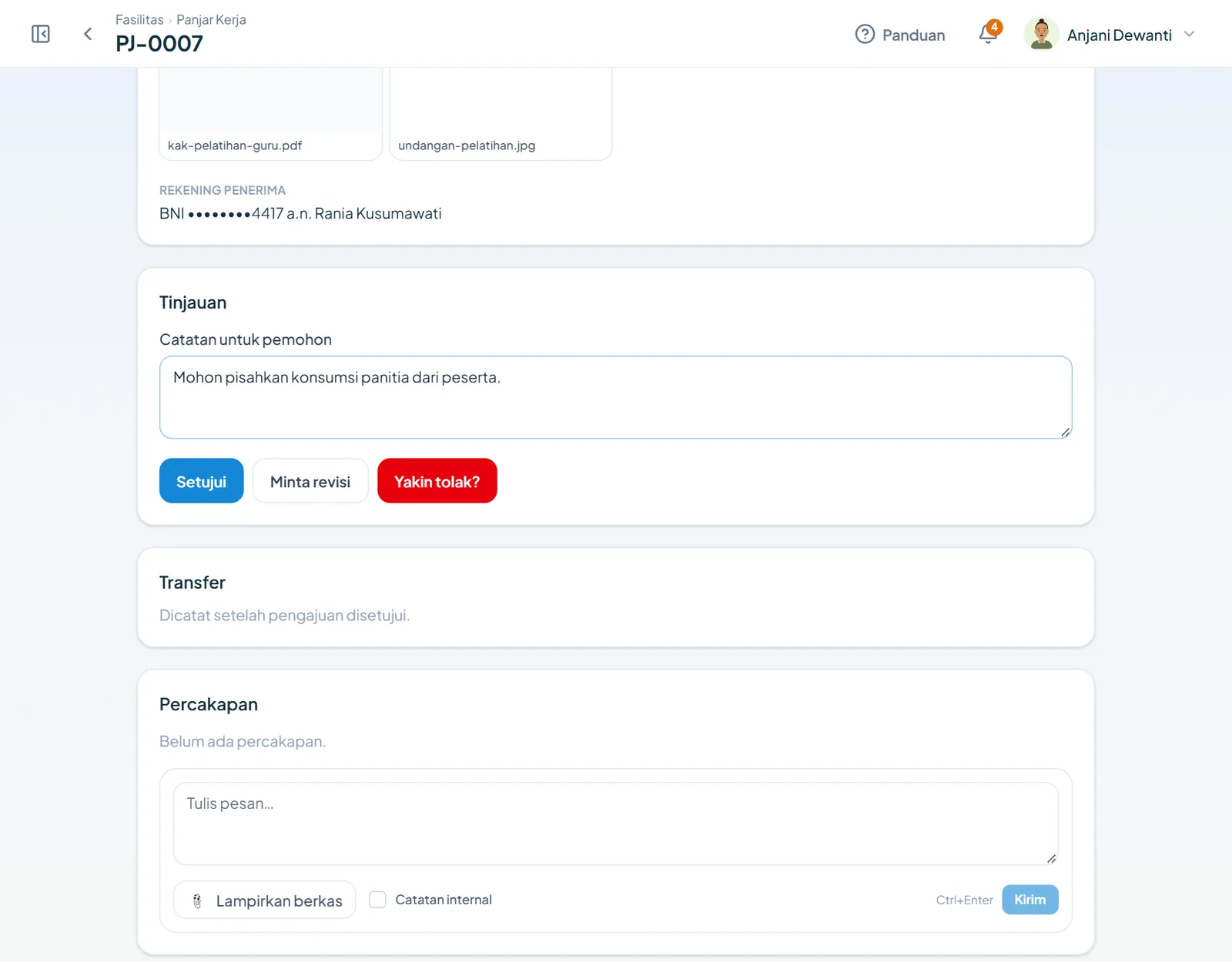
Reject with a reason
Two taps, and the reason travels with it.
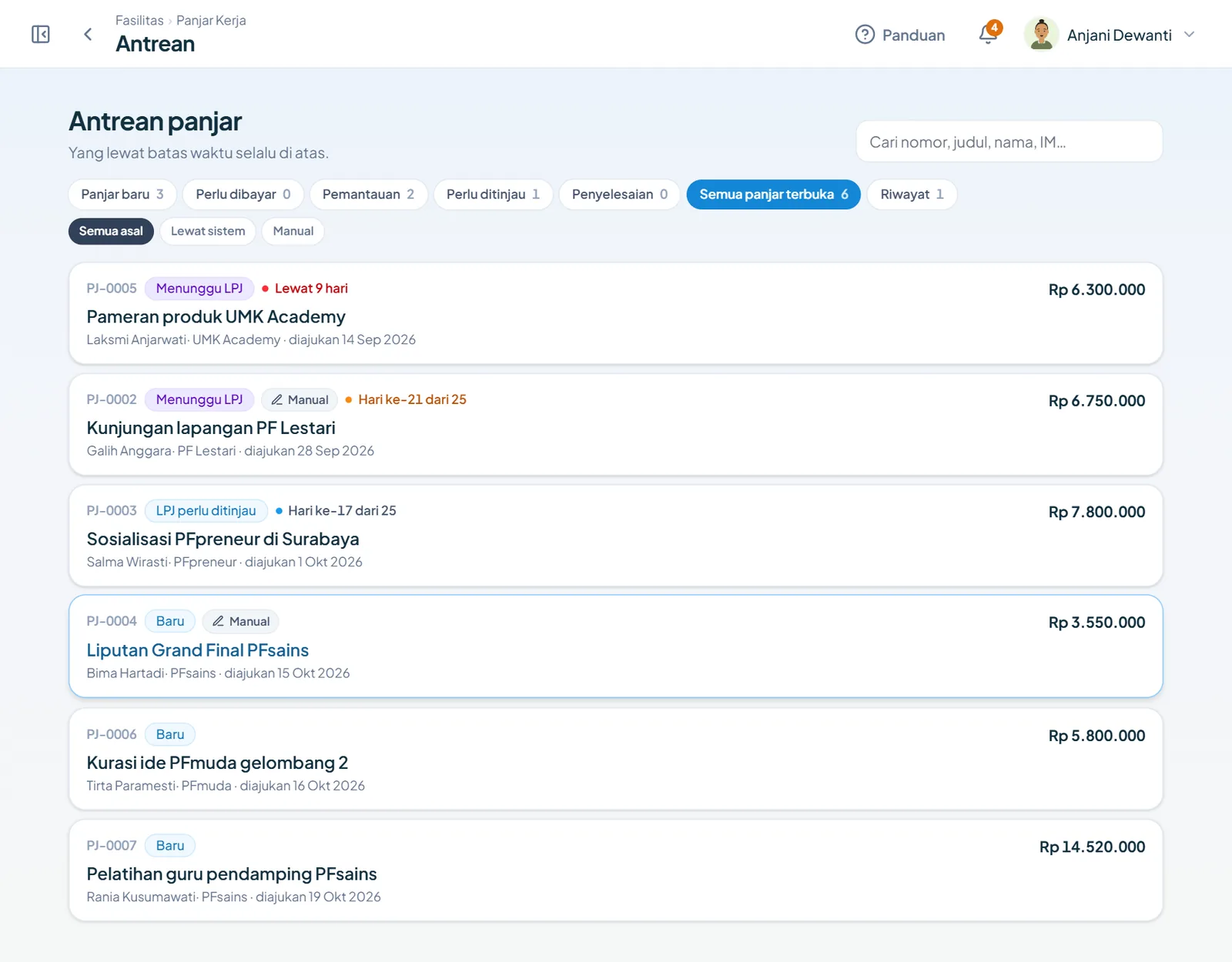
Overdue always on top
The deadline clock starts at the transfer.
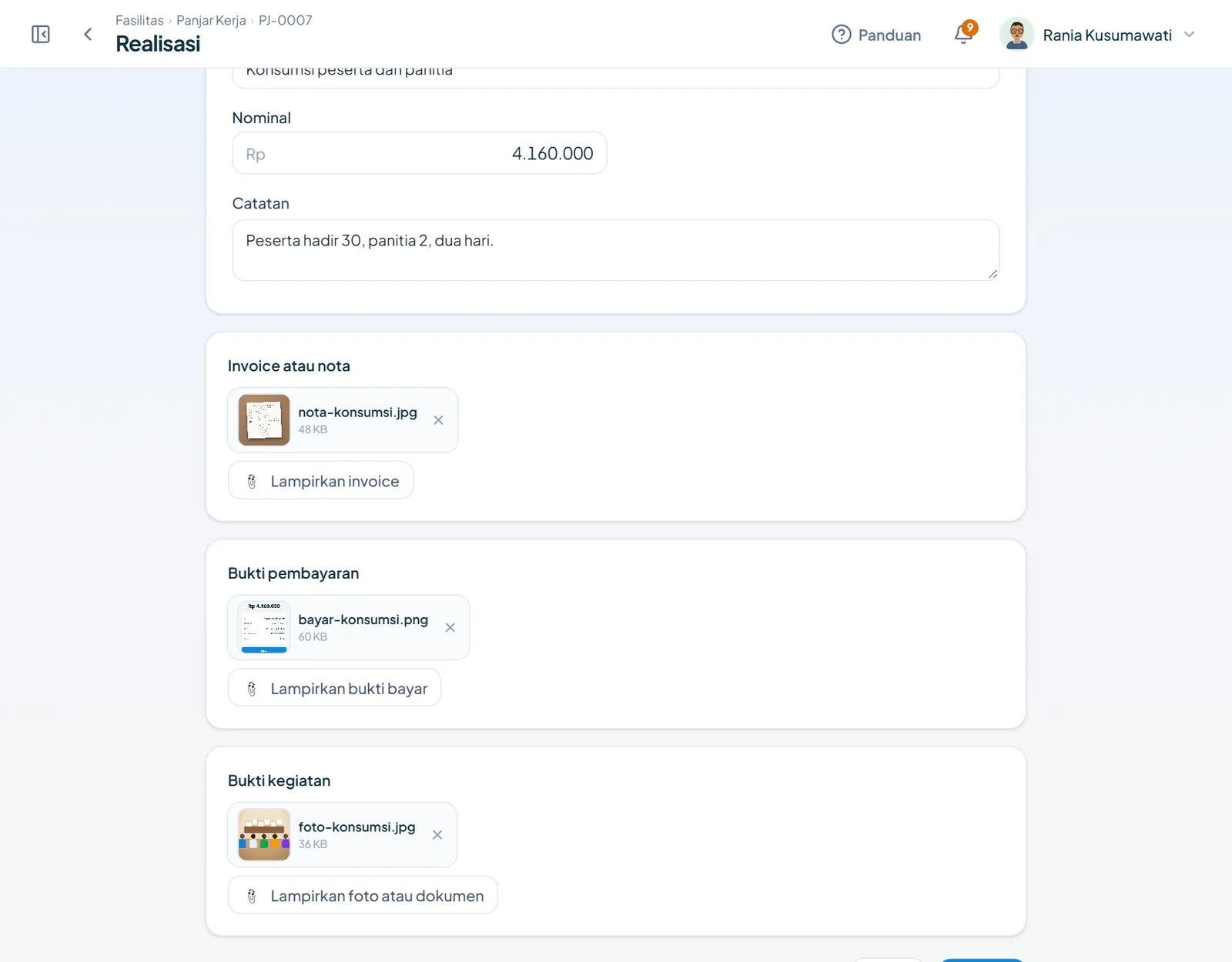
Spending with proof
Each line of spending carries its receipt.
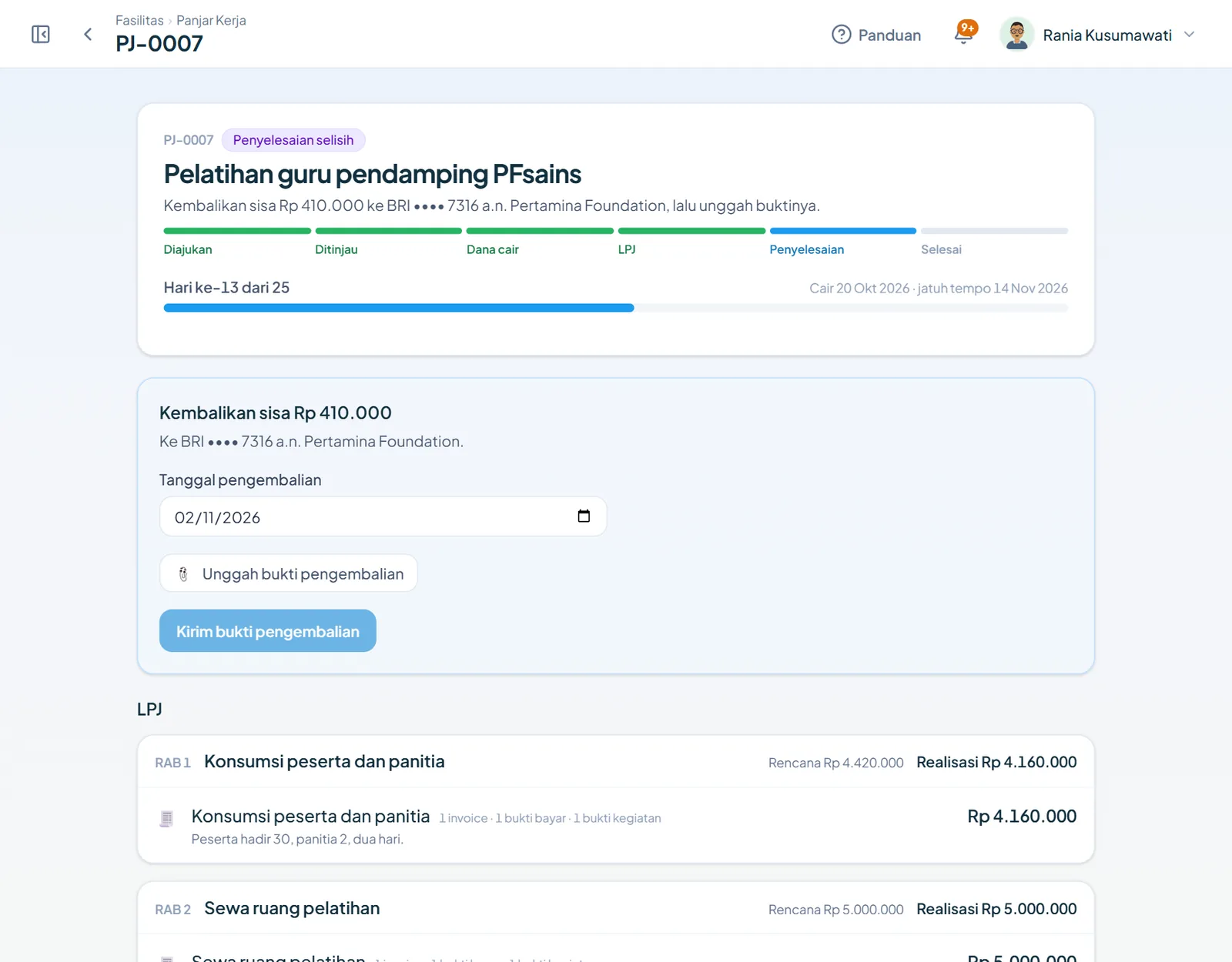
The remainder returns
What was not spent is returned and recorded.
Learnedan amount is trusted only beside its source, so each campus review now opens on the decree’s own line.
NextUnder all of these sits the estate that keeps them running: the infrastructure.
Part 2 · 2026
The records behind the foundation’s money: grant disbursement to partner campuses and staff cash advances, each change kept in a history nobody can rewrite, and every printed document verifiable by QR.
Discover.
Grant money flows to campuses and field teams, and every rupiah must be explainable later. Paper forms and spreadsheets cannot prove who changed what, or that a printed document is the real one.
Design.
The same two ideas matured across three systems in three months: a history nobody can rewrite, and a page anyone can use to check a document is real.
Deliver.
A disbursement record for the partner campuses that an auditor can follow, and documents anyone can verify by QR.
Analyst and architect; first builder of the disbursement module · Append-only audit · QR verification · Backend for frontend
Tap a page to open it full screen; swipe for the next. Every page is also in the PDF.
Muktiadi Akhmad Januar · Part 2 · Infrastructure
What it isThe foundation’s IT estate, run by one person: apps served from the edge, servers in Indonesia with a standby, an office server for developer desktops and code, a private network, monitoring and email.
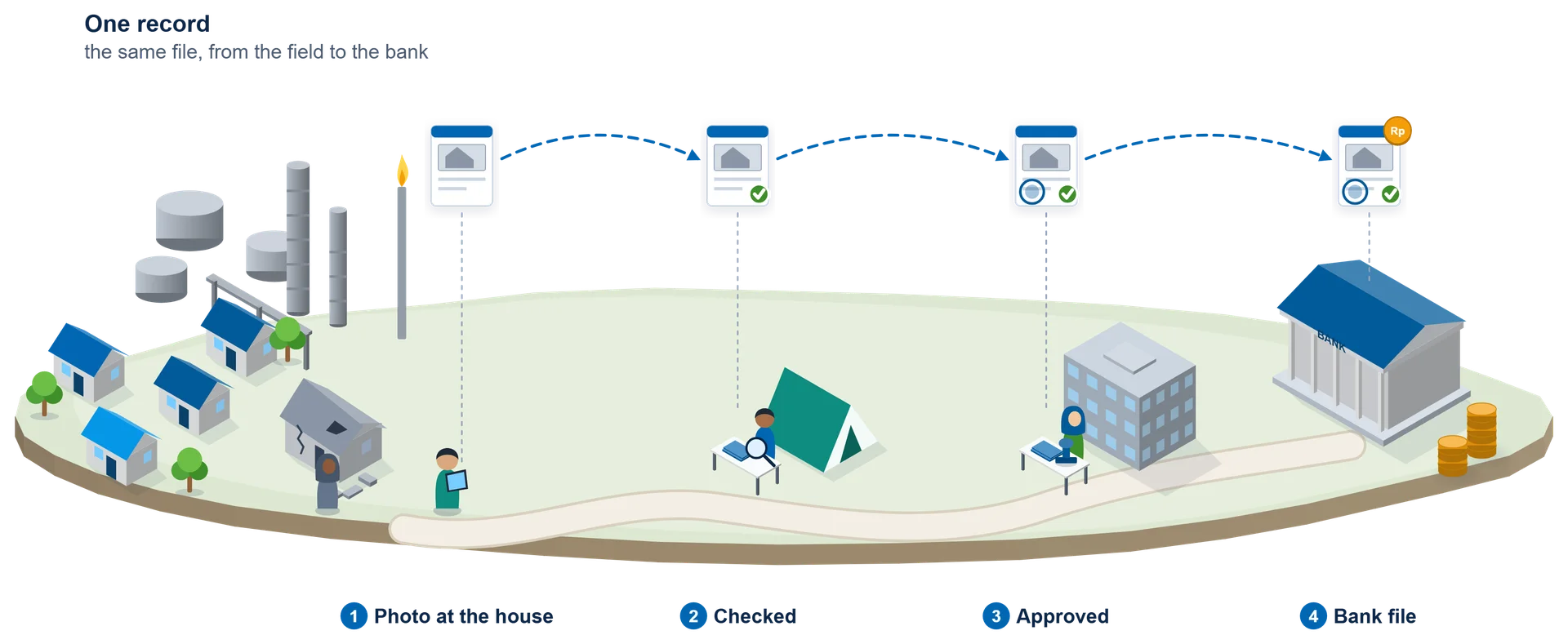
Discover.
A small IT team had to keep public platforms up through national registration peaks, give developers managed machines and keep code inside the organisation, on a small budget and without exposing anything to the internet.
Design.
A hybrid estate a small team can run: the edge in front, cloud servers with a standby node, and an office server for desktops, code and files, all reached through one private network.
Deliver.
Every app watched, code kept inside the organisation, developer desktops managed, remote work with nothing exposed, and a written plan for the year after.
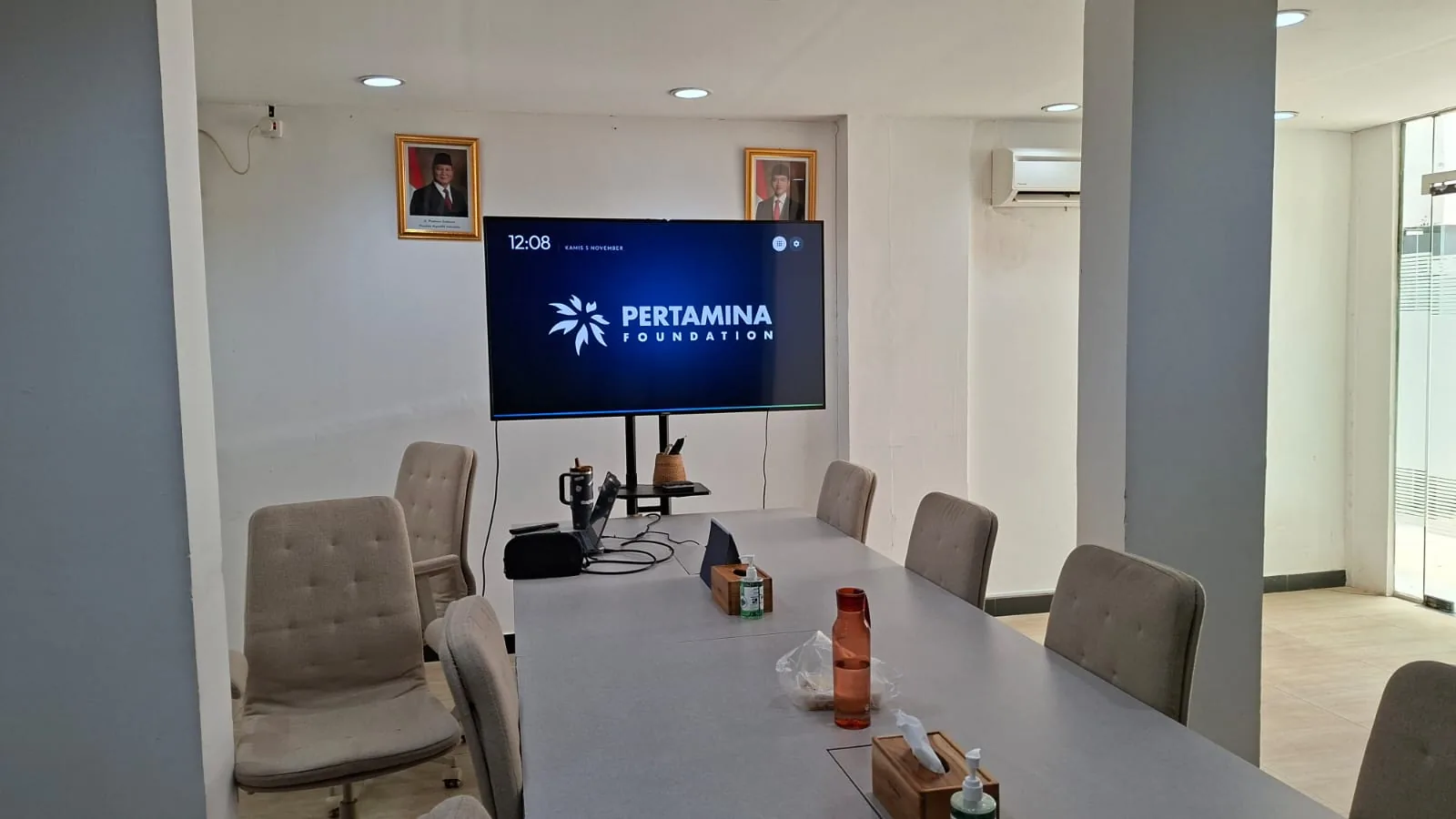
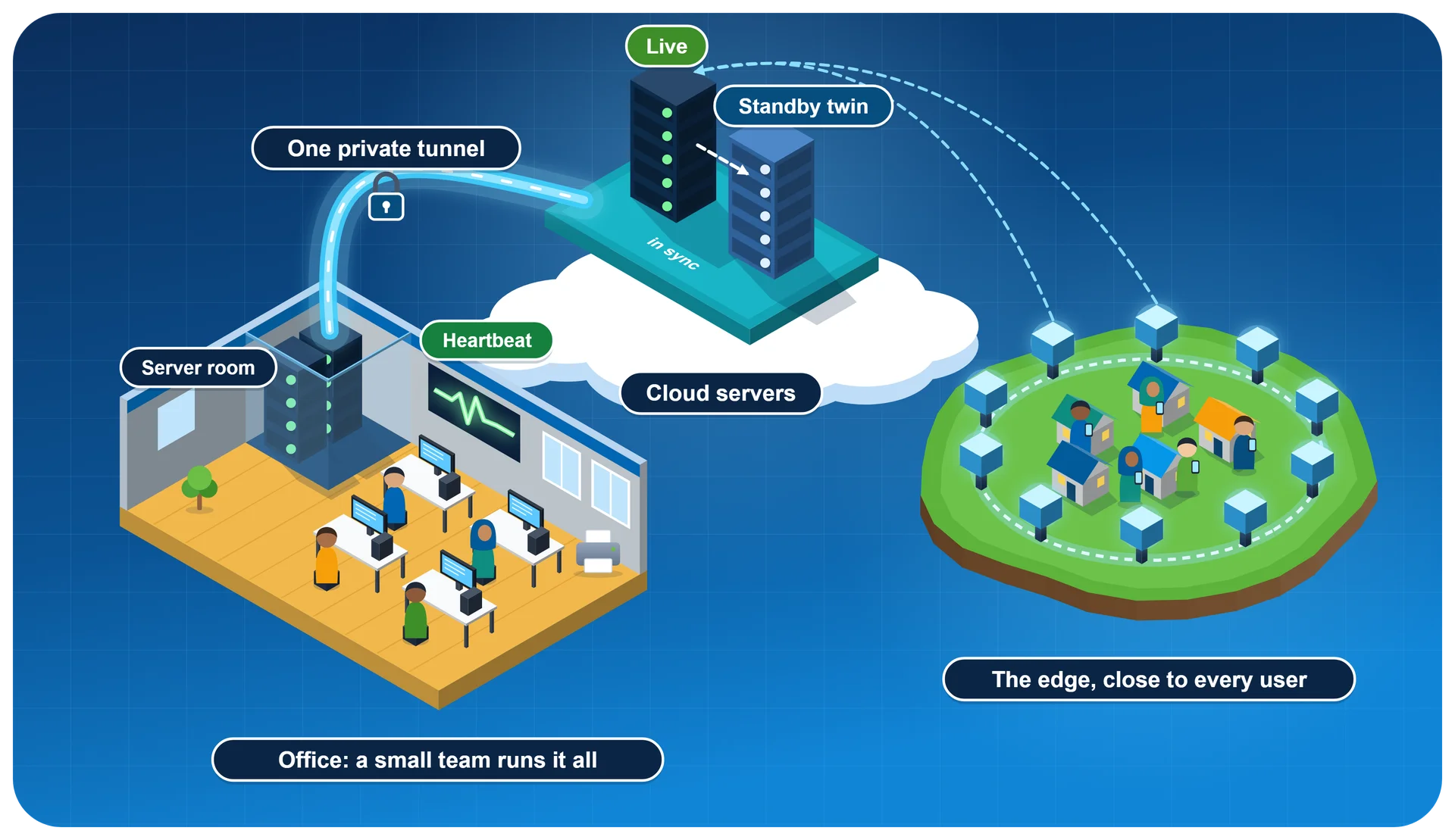
The edge in front
Every public app is a static build served close to its users, rebuilt automatically when code reaches a release branch; short links run on their own edge database.
Any crowd
Servers in Indonesia
Production databases on cloud servers in the country, so participants’ data stays home; files and database backups in object storage.
Kept apart
A standby twin
A second server on standby for production, which also hosts the private network’s control and the uptime monitor.
Any crowd
An idle office server, put to work
Developer desktops cloned from one sealed image, a file share and a private Git server with CI, on networks that cannot see each other.
Kept apart
Code that only one door deploys
Everyone pushes to Git; the production branch is locked and needs a green pipeline.
On the record
A private network, nothing exposed
A self-hosted zero trust overlay; every path allowed by policy, all-to-all switched off, interns reach only their own desktop.
Kept apart
Watched around the clock
Every app’s uptime is monitored against a monthly target, and the command room’s screens heal themselves.
On the record
Email chosen on data, not habit
The delivery provider was picked after comparing five on data residency, price at volume and overage.
On the record
Certificates that cannot be abused
An internal authority constrained so it can only sign internal names.
On the record
Learnedcloud credit can run out before the year does, so every server is now traced to a programme and forecast.
NextOn top of the estate runs the data: every app writes once, and one database feeds the command room.
Muktiadi Akhmad Januar · The data
Each app sends its totals into one central database, which fills the command room’s two screens, the PFdrive summary, the monthly report and board material.
Record once, where the work happens
Programme staff enter a number in the app they already work in; nobody keeps a second spreadsheet for the recap.
Kept apart
One number, one owner
Each indicator belongs to the programme person who records it, and edit rights follow their seat in the PFdrive programme tree.
On the record
Totals only, past the gate
Names and national ID numbers stay in the source apps; only aggregates reach the central database and the room.
On the record
A dictionary and checks on entry
Every indicator is defined once, and a value that breaks its rule is caught when it is entered, not when a director reads it.
On the record
A tab for programmes without an app
Programmes that have no system of their own report through a data tab in PFdrive, into the same database.
Any phone
Every change kept
Each edit to a number keeps its history, so the room can always say where a figure came from.
On the record
NextOne person, eight functions: what that asks of the design, and the plan that hardens it.
Muktiadi Akhmad Januar · The plan
The group’s IT guideline assumes eight separate functions. At the foundation, I hold all eight. So the design has to make one person safe: machines that judge, keys nobody carries, access that follows the job.
8
IT functions the group’s guideline assumes
1
person holding them at the foundation
The directors were not asked to approve technology. They were asked for four decisions with milestones, framed as three outcomes: spend less, comply with the data protection rules before they take effect, and see who does what with which data.
Access follows the job
One account per person; every connection checked for identity, device and role. A leaver loses every door within a day; interns and vendors get access that ends on a date.
On the record
Participants feel nothing
Applicants and judges keep the same public apps; only the staff side moves behind the gateway.
Any phone
Machines judge
Four rooms and three gates from laptop to production; a failed pipeline stops by itself, and a critical finding cannot go live whoever asks.
On the record
AI agents pass the same gates
Interns, developers and AI agents never hold production keys or real data; whoever writes a change never approves it.
People decide
Keys nobody carries
Secrets move to a vault and only the deploy machine holds production keys, so a lost laptop takes no access with it.
Kept apart
Build or buy, written down
Self-hosted first, with written triggers that move to a paid service without redoing identity and policy work.
People decide
Learnedsystem and security changes need a human hand, so they ship as reviewed scripts I run, each refusing unsafe reruns.
NextAn architect’s other output is paper: the blueprint that lets others build, buy and audit.
Part 2 · 2025 to 2026
The foundation’s IT estate, run by one person: apps served from the edge, servers in Indonesia with a standby, an office server for developer desktops and code, a private network, monitoring and email.
Discover.
A small IT team had to keep public platforms up through national registration peaks, give developers managed machines and keep code inside the organisation, on a small budget and without exposing anything to the internet.
Design.
A hybrid estate a small team can run: the edge in front, cloud servers with a standby node, and an office server for desktops, code and files, all reached through one private network.
Deliver.
Managed developer desktops, code kept inside the organisation, remote access with nothing exposed, documented recovery targets, and a budget case for next year.
Architect and operator · Proxmox · Zero trust · Recovery targets · Cost
Tap a page to open it full screen; swipe for the next. Every page is also in the PDF.
Muktiadi Akhmad Januar · Part 2 · Architecture
Today every app builds its own login, data, backup and security, like a generator in every house. The enterprise architecture blueprint I drew for the foundation proposes one grid run by one team: programmes plug in, and a new programme is a configuration job, not a new vendor.
A migration in four stages, each delivering on its own
1Foundation
identity, gateway, shared services
2Core and pilot
one programme moves first
3Migration waves
the rest, domain by domain
4Optimisation
retire the old generators
Eight principles
Capabilities stay, applications change
Six business domains stand on six shared services: identity, master data, documents, notifications, audit and privacy, analytics.
Kept apart
One door, one account
One account with multi-factor sign-in, a gateway that checks rights, then counters for applicants, staff, the public and leadership.
On the record
One owner per piece of data
Every data entity has one source and one owner; reports read a masked copy so they never slow the apps.
Kept apart
Data protection built once
Nine layers under every feature, from consent per purpose to parental consent and retention, inherited by every app instead of rebuilt.
On the record
Learnedprogramme rules hard-coded in the old portal turned every new programme into code, so the blueprint makes programmes configuration.
NextBlueprints are only useful written down: documents that let someone else procure, audit or run the system.
Muktiadi Akhmad Januar · Part 2 · Architecture documents
What it isThe documents that let others build, buy and audit: a tender package with traceable requirements, process models of every programme, a controlled documentation set, and an honest review of my own work.
Discover.
A system that lives in one person’s head cannot be procured, audited or handed over. The organisation needed documents a vendor could price, an auditor could check and a successor could run.
Design.
Documents written for the people who come next: a vendor pricing a rebuild, an auditor checking compliance, a successor running the system without me.
Deliver.
A tender package a vendor can price, with hundreds of traceable requirements and data protection designed in.
What the tender package specifies, in proportion
A vendor can price it, an auditor can check it, and a successor can run it without me.
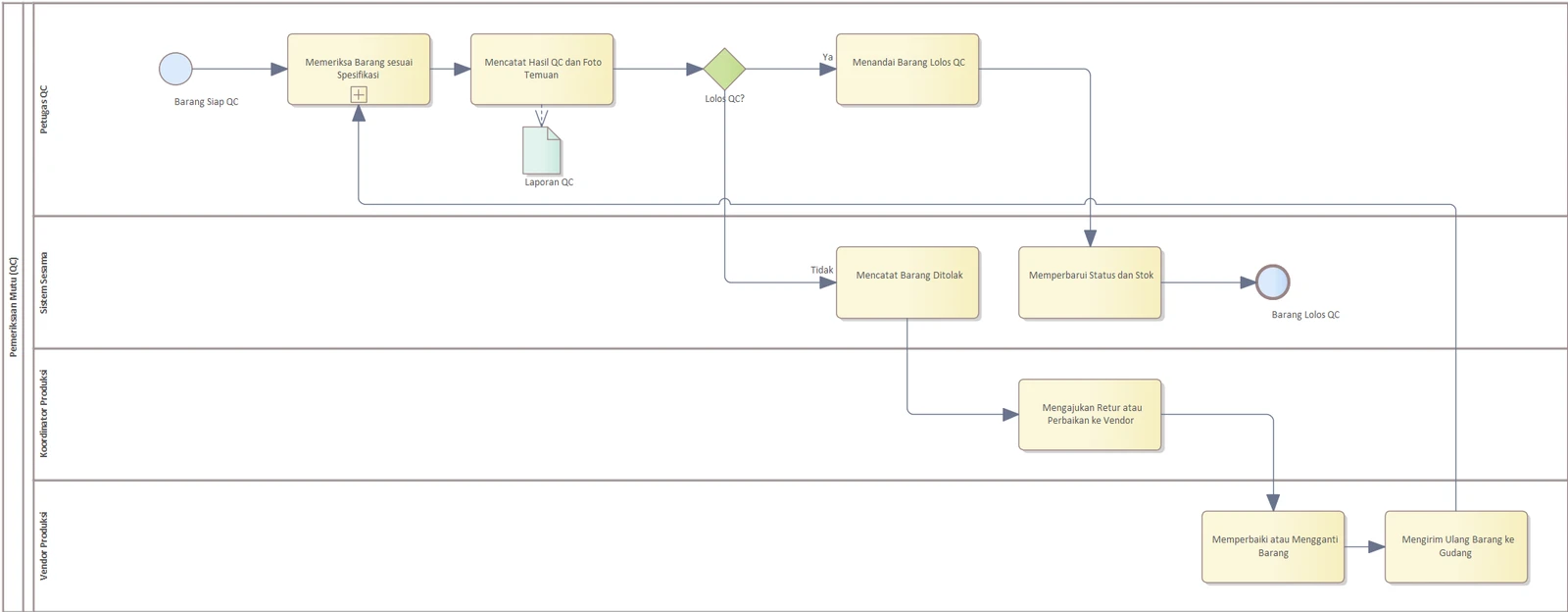
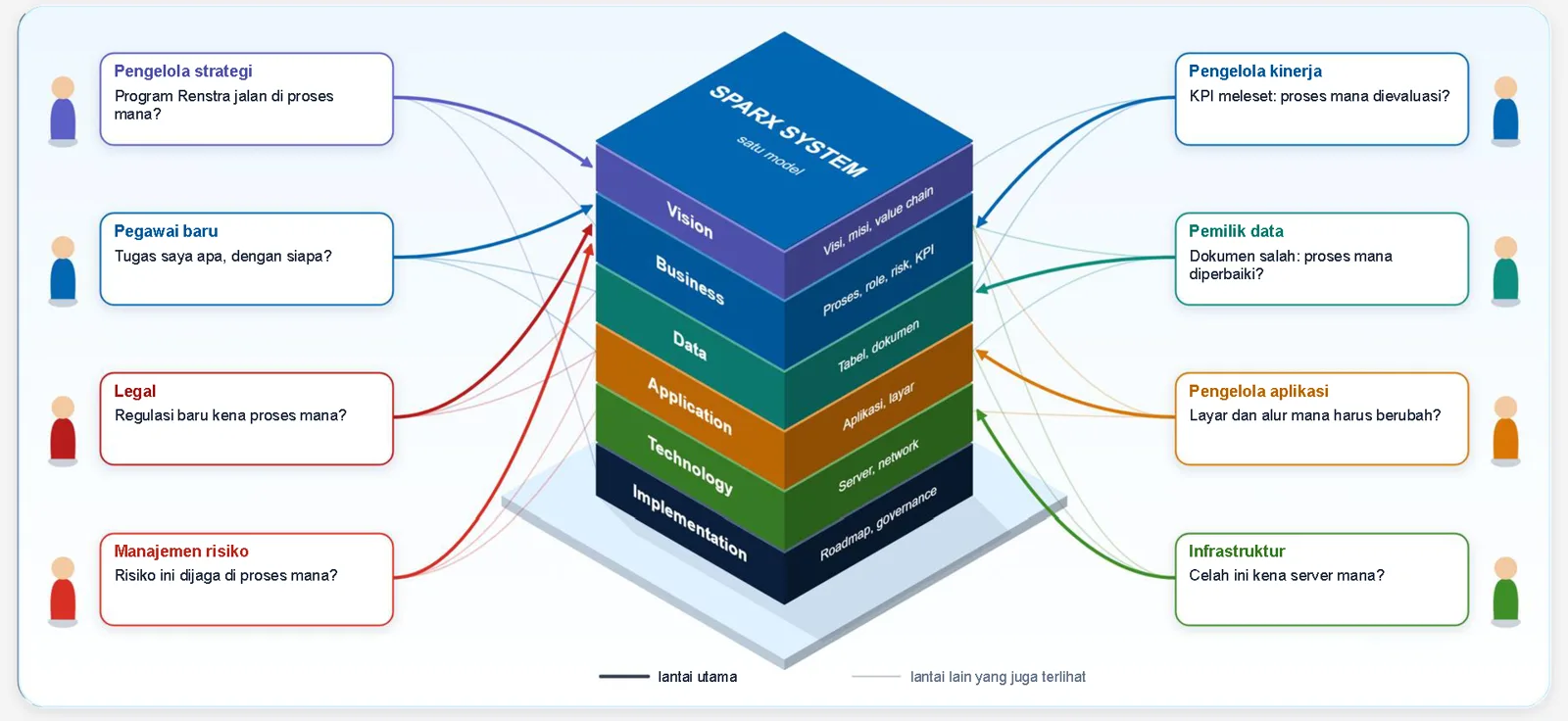
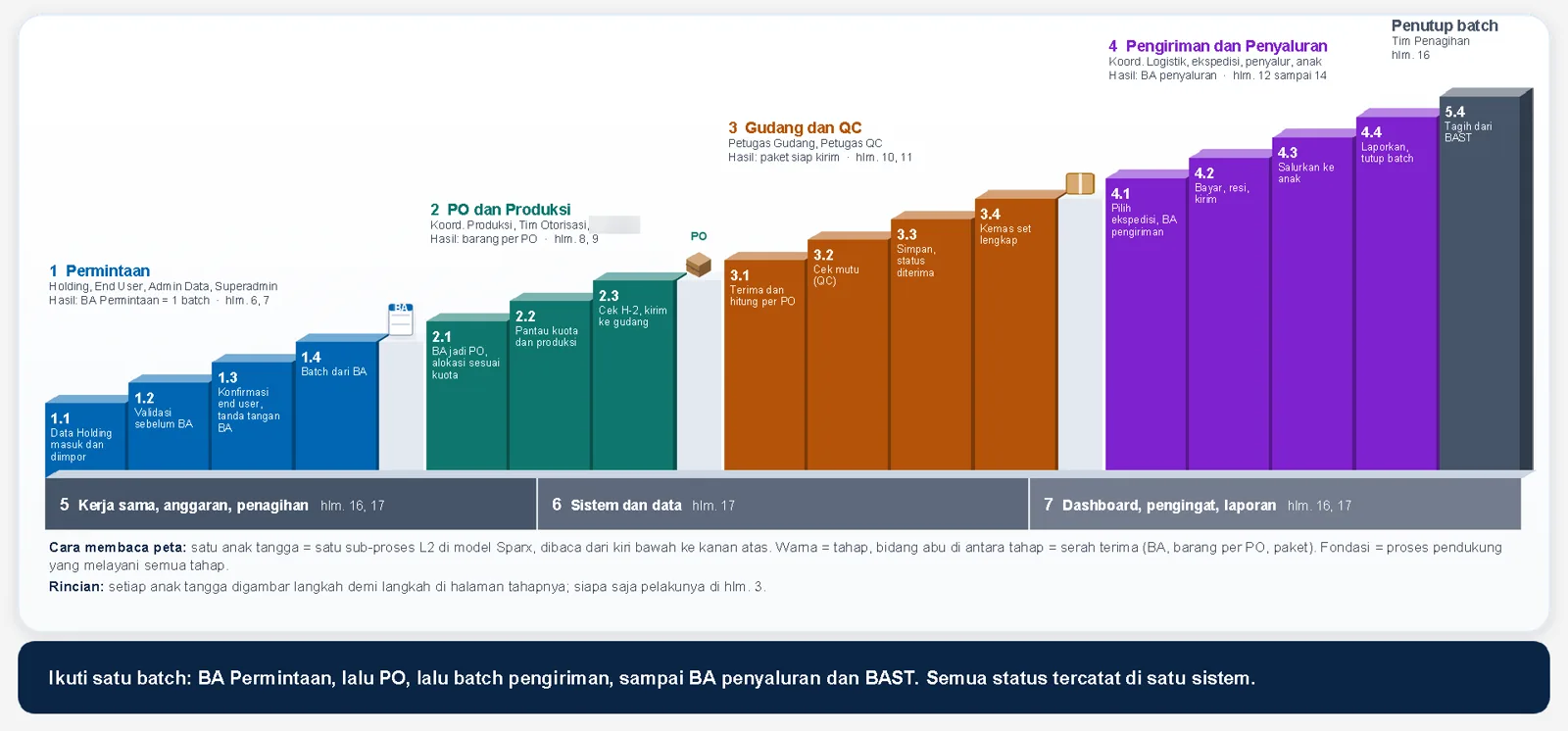
A tender package for PFSeries 2.0
Charter, requirements, reference architecture, RFP, pricing method, acceptance tests, and an exit plan that makes the vendor prove a restore.
On the record
Process maps from the people who do the work
Every programme walked through step by step in workshops, drawn as process models, validated with the owner, kept up to date.
People decide
A controlled documentation set
A numbered set of technical, manual, decision and guide documents, published as PDFs.
On the record
A quality review of my own work
Dozens of findings with line-level evidence, stated plainly as a self-assessment, not an independent one.
On the record
Training passed on
After a systems analysis course, a knowledge transfer deck for the team: one model, six floors, from procedure to audit. The only deck reviewed five times.
People decide
A presales exercise
A document management proposal with three priced options and a clickable prototype with end-to-end tests.
People decide
Learneda rebuild can discard what the field proved, so the tender makes the vendor keep traits like account-free judge seats.
NextOne more part of the foundation’s work happens outdoors: in planting sites, with drones and tags.
Part 2 · 2026
The documents that let others build, buy and audit: a tender package with traceable requirements, process models of every programme, a controlled documentation set, and an honest review of my own work.
Discover.
A system that lives in one person’s head cannot be procured, audited or handed over. The organisation needed documents a vendor could price, an auditor could check and a successor could run.
Design.
Documents written for the people who come next: a vendor pricing a rebuild, an auditor checking compliance, a successor running the system without me.
Deliver.
A tender package a vendor can price, with hundreds of traceable requirements and data protection designed in.
Sole author · Requirements · Data protection · BPMN · Presales
Tap a page to open it full screen; swipe for the next. Every page is also in the PDF.
Muktiadi Akhmad Januar · Part 2 · PF Lestari
What it isPF Lestari is the foundation’s reforestation programme. I built its field tools: an ID and a QR bracelet for every tree, an offline field camera, and drone LiDAR surveys of the planting sites.
Discover.
A planted tree is only worth reporting if it can be found and checked again. Field photos lose their location by the time they reach the office, and a tree without a durable ID cannot be verified.
Design.
Field tools for the foundation’s reforestation programme: an identity for every tree, a camera that works without signal, and planting sites surveyed from the air.
Deliver.
Gold, then Platinum at the Annual Pertamina Quality Award 2026 for the programme, and every tree given an ID it can be found by.
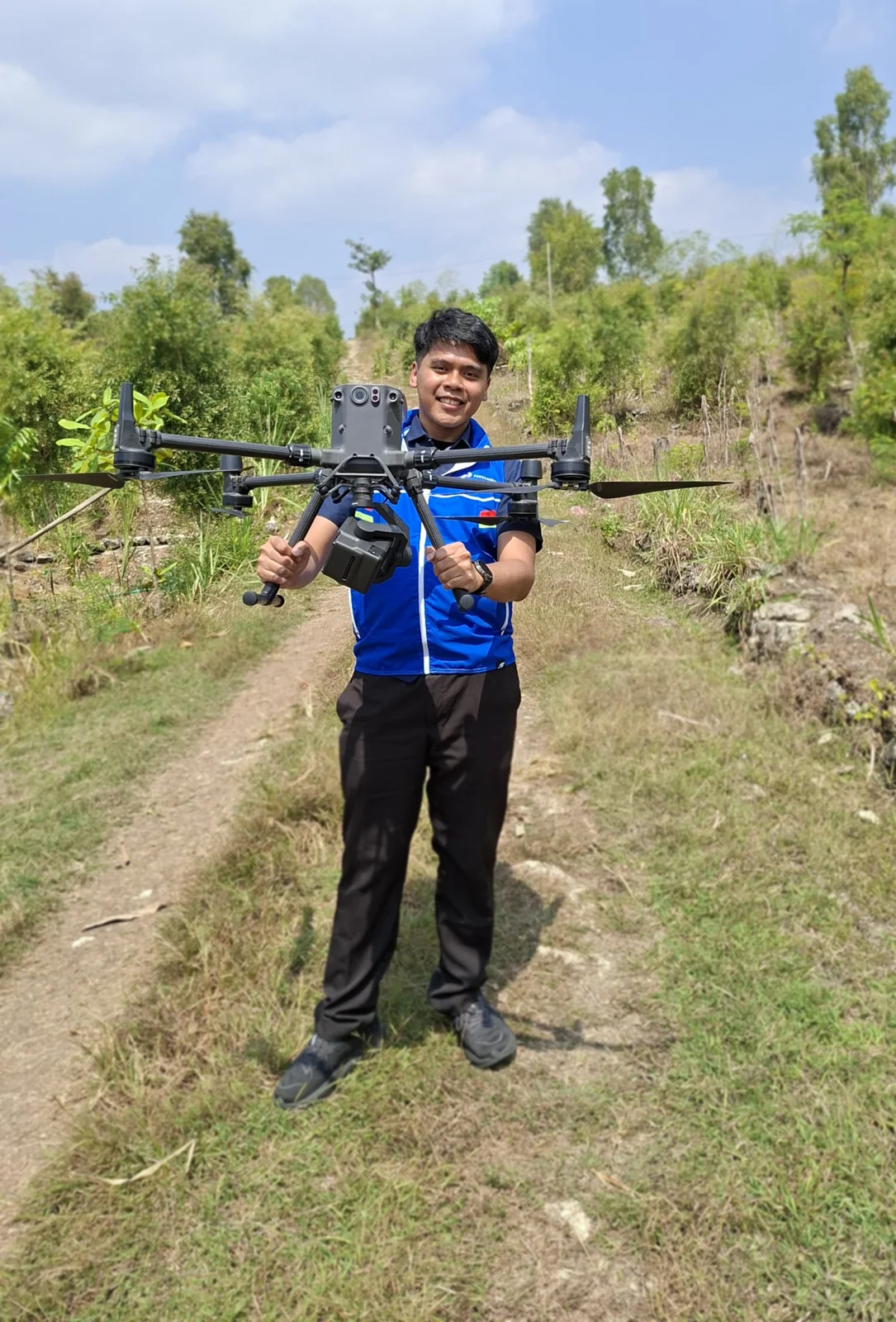
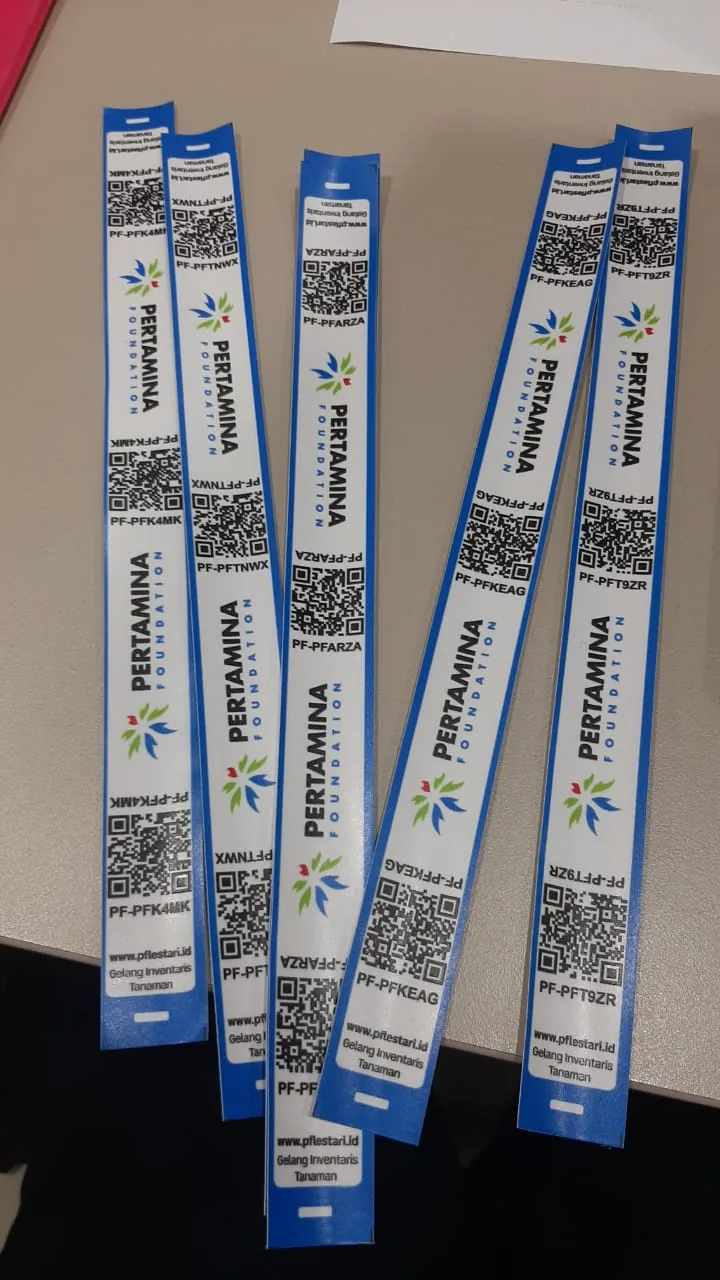
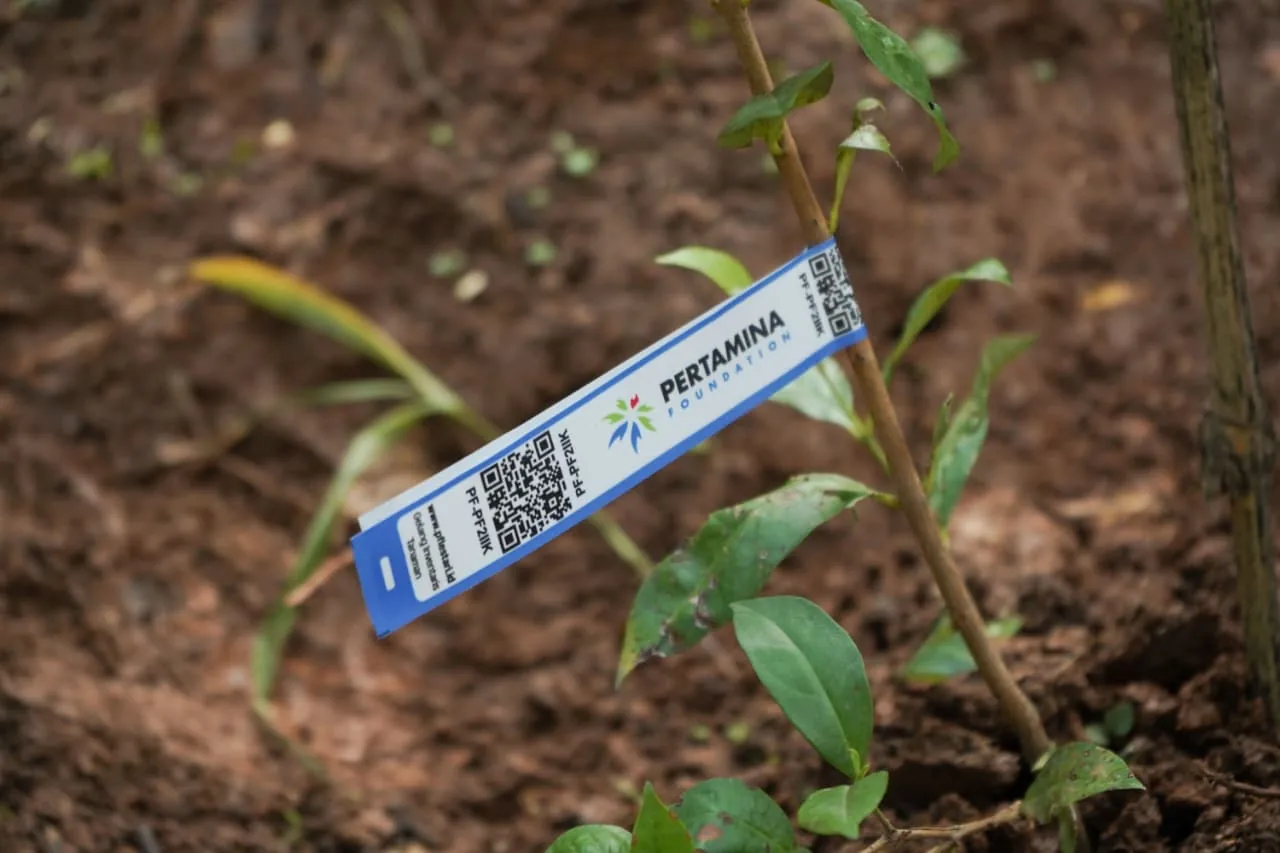
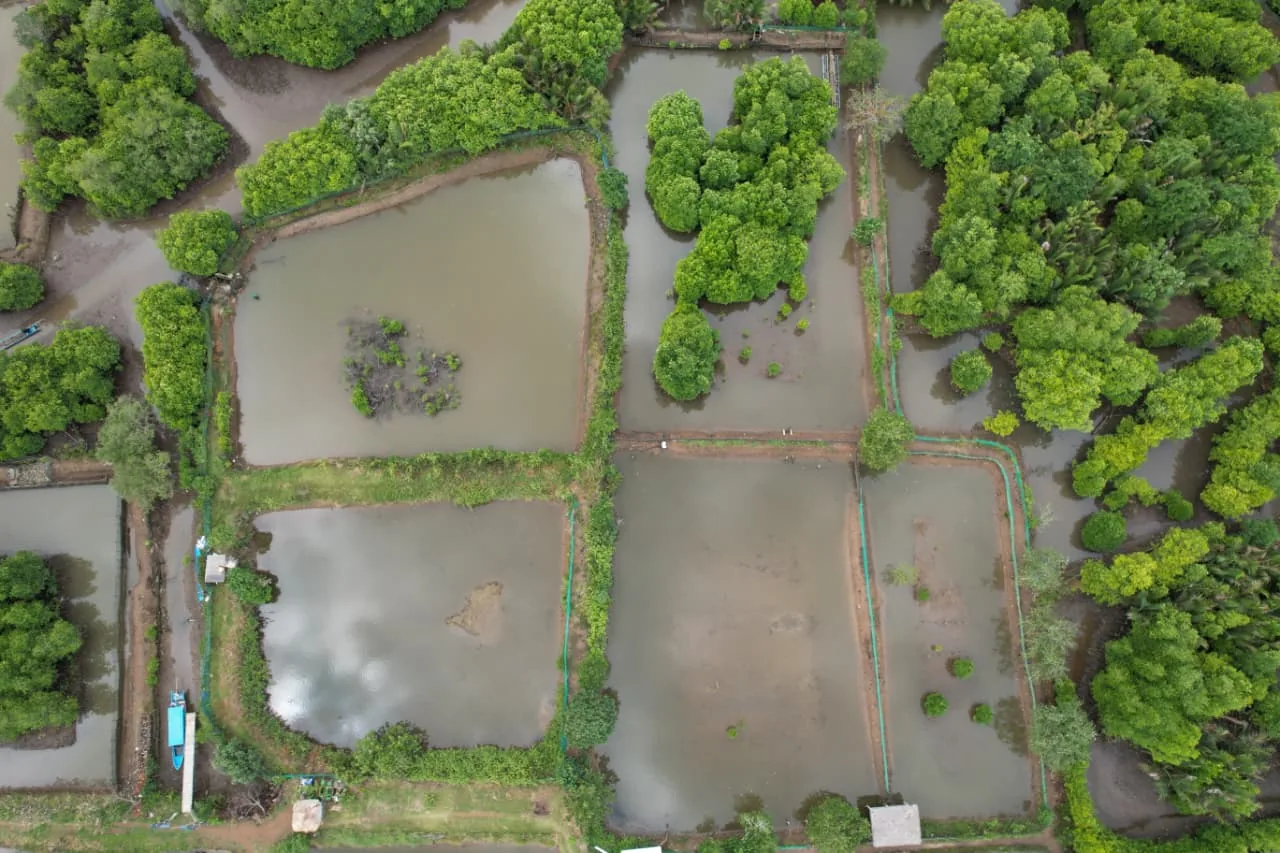
An ID for every tree
IDs with two check characters that catch a wrong digit, printed as QR bracelets that open the tree’s page, many thousands per run.
On the record
A field camera that waits
An offline camera that waits for a good GPS fix, tags the tree by QR, and exports a day’s work as one file.
Any signal
Sites seen in 3D
Drone LiDAR surveys of the planting sites, viewable in 3D in a browser.
Any phone
Safety gear, checked in the browser
A detection model I trained runs on the device: no GPU server, no footage leaving it. A proof of concept; its accuracy is still modest.
Any phone
Learneda geotagged photo is useless unless tied to its tree, so the field camera now scans the tree’s bracelet QR.
NextThe band itself, redesigned: one cut, two trees.
Muktiadi Akhmad Januar · Tag v2
The first band worked but wasted material: glued stickers and two tails per band. The new one is cut from one strip, two bands nested head to tail, and the tail threads through three slots to lock itself, so it holds in rain and sun and loosens as the tree grows.
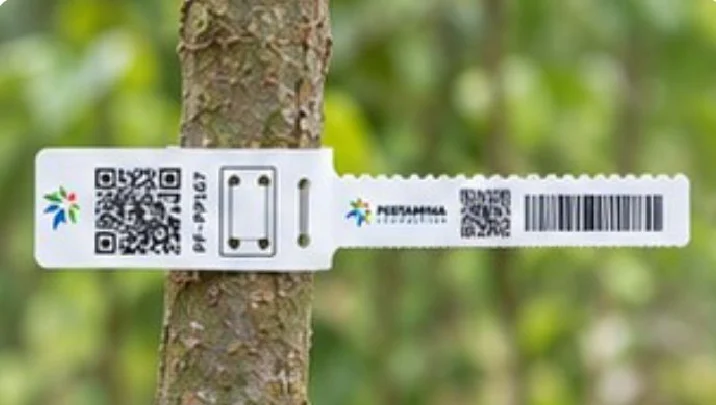 Visualisation · proposed, pilot first
~70%
less material per band than v1
2
bands from every strip of the roll
0
glue, and no offcut left on the site
Designed to be manufactured
Die cut on a roll, no sharp corners, no offcuts: every cut point audited and rounded.
On the record
Still readable when damaged
A big QR on the head and a small QR, code and barcode on the tail as a backup.
Any signal

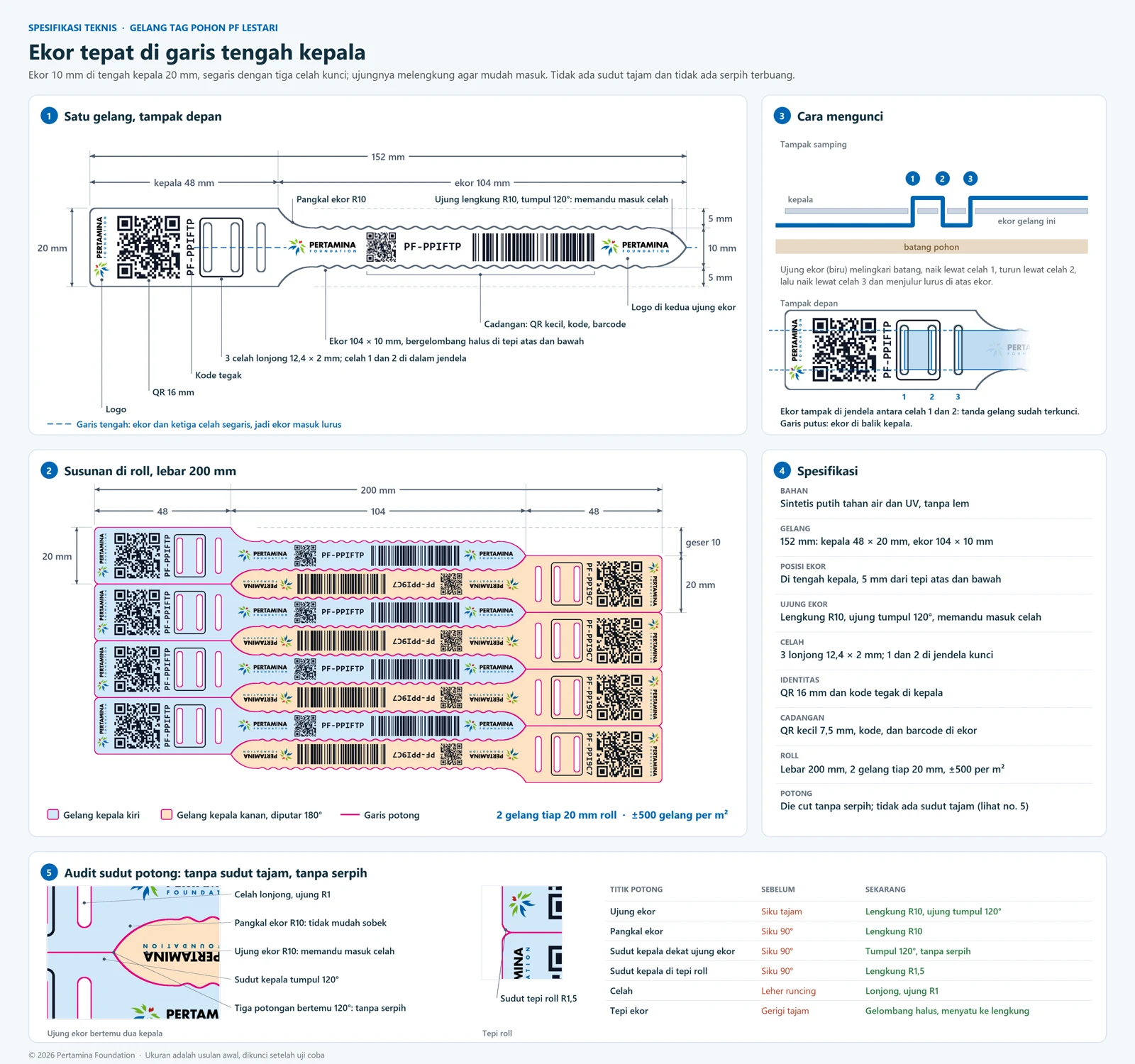
NextFrom the printed band to a tree on the map, in the field.
Muktiadi Akhmad Januar · In the field
A tree’s first minute, in five steps
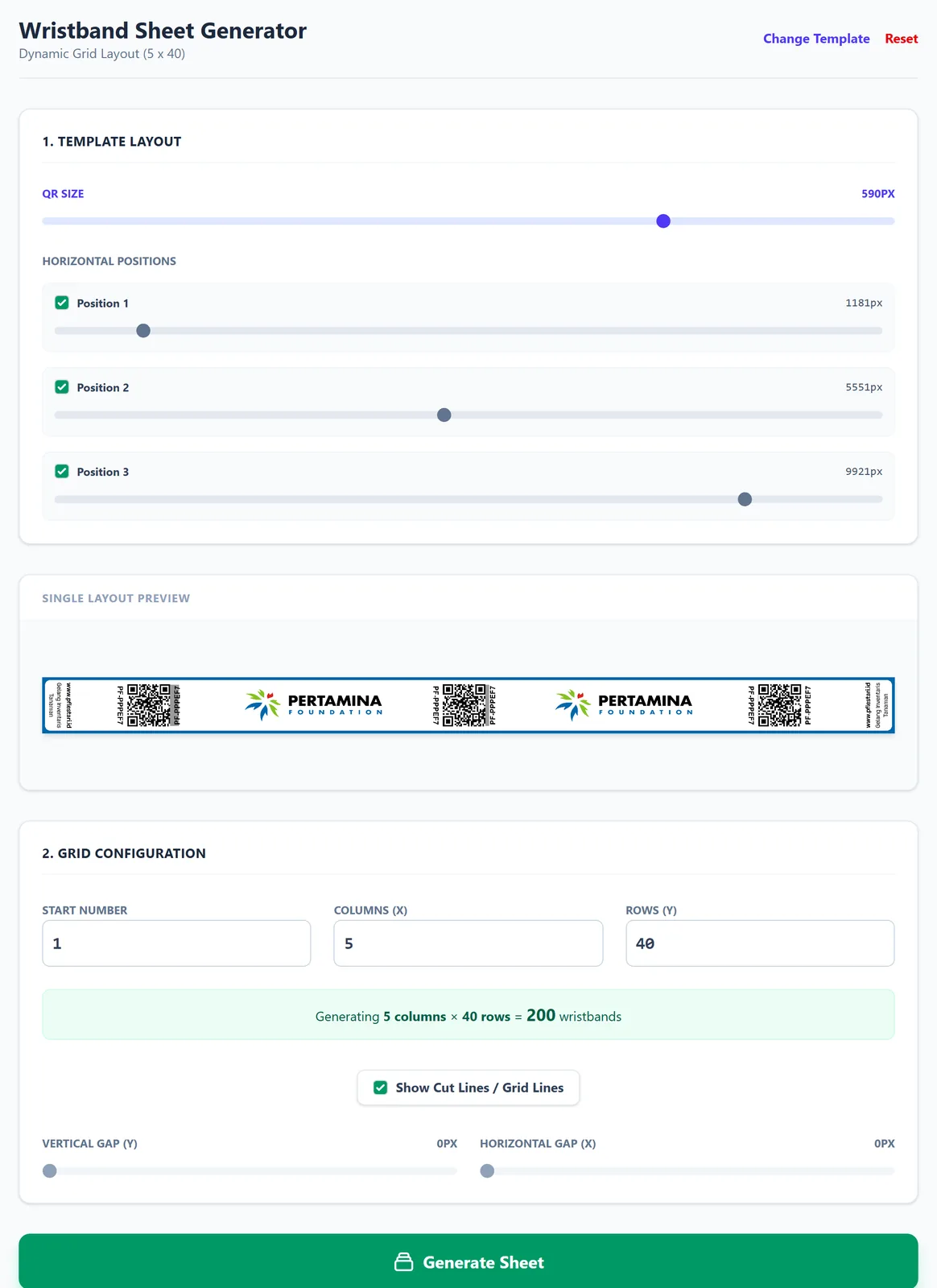 1
Generate a sheet of IDs
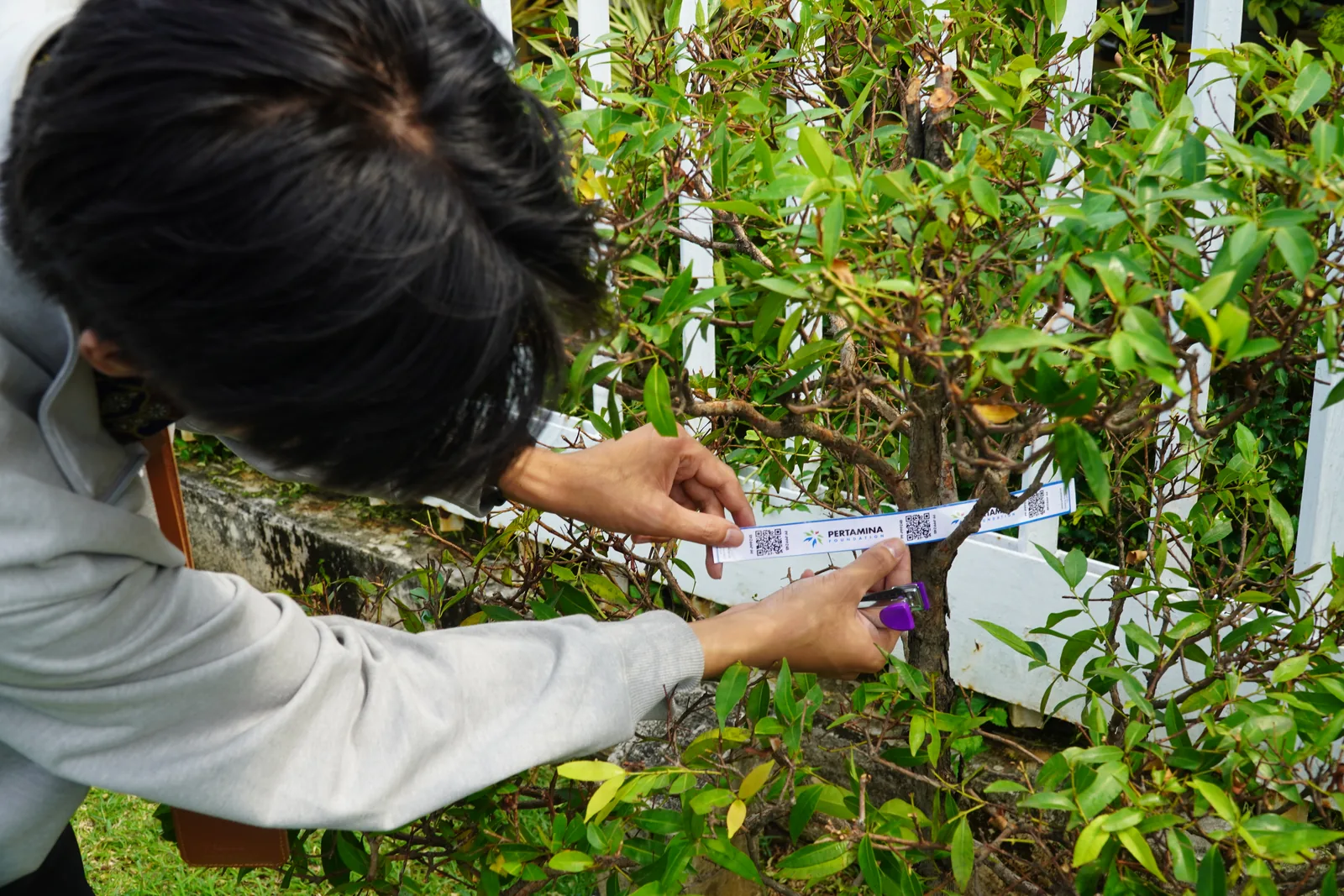 2
Band the tree
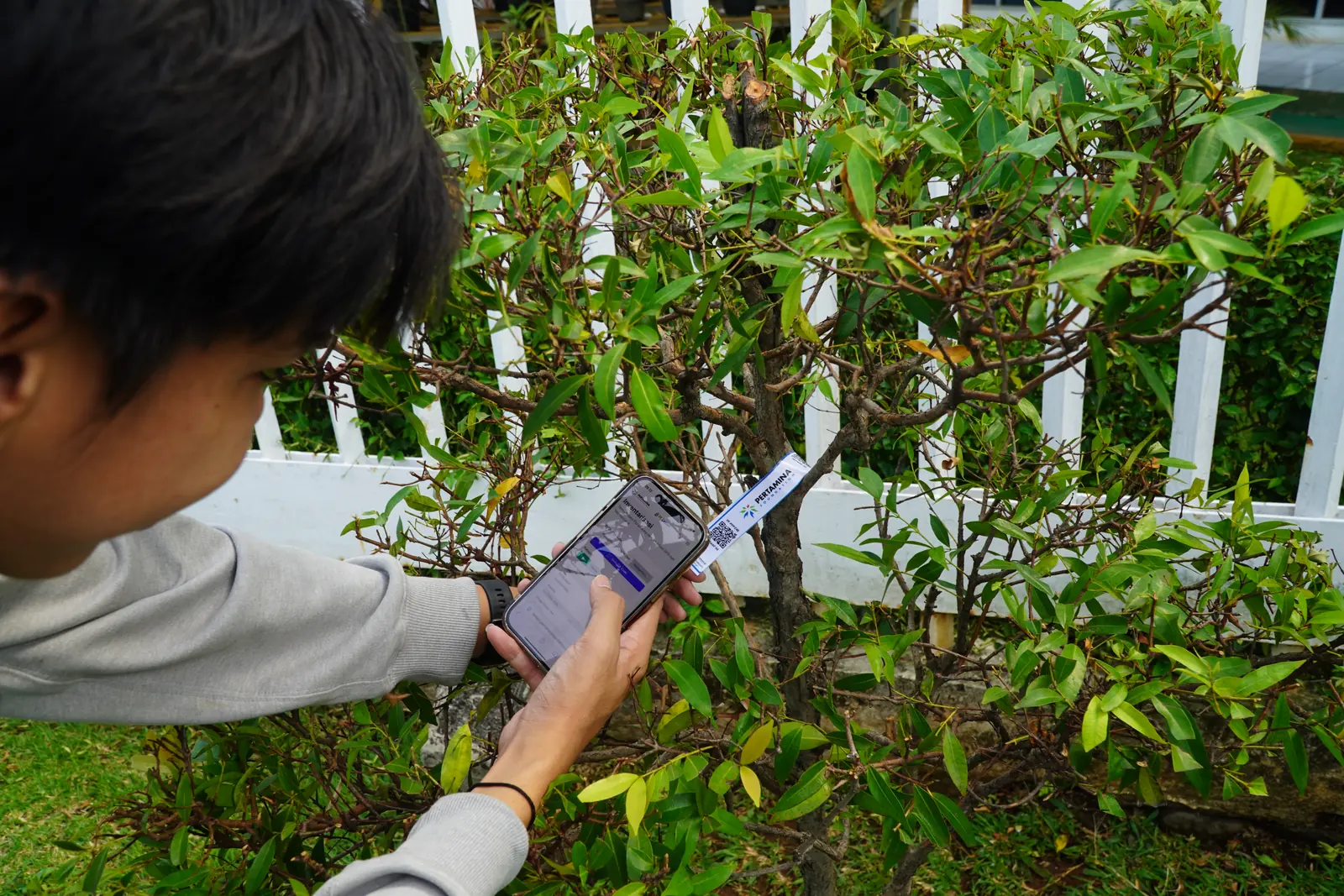 3
Scan the band
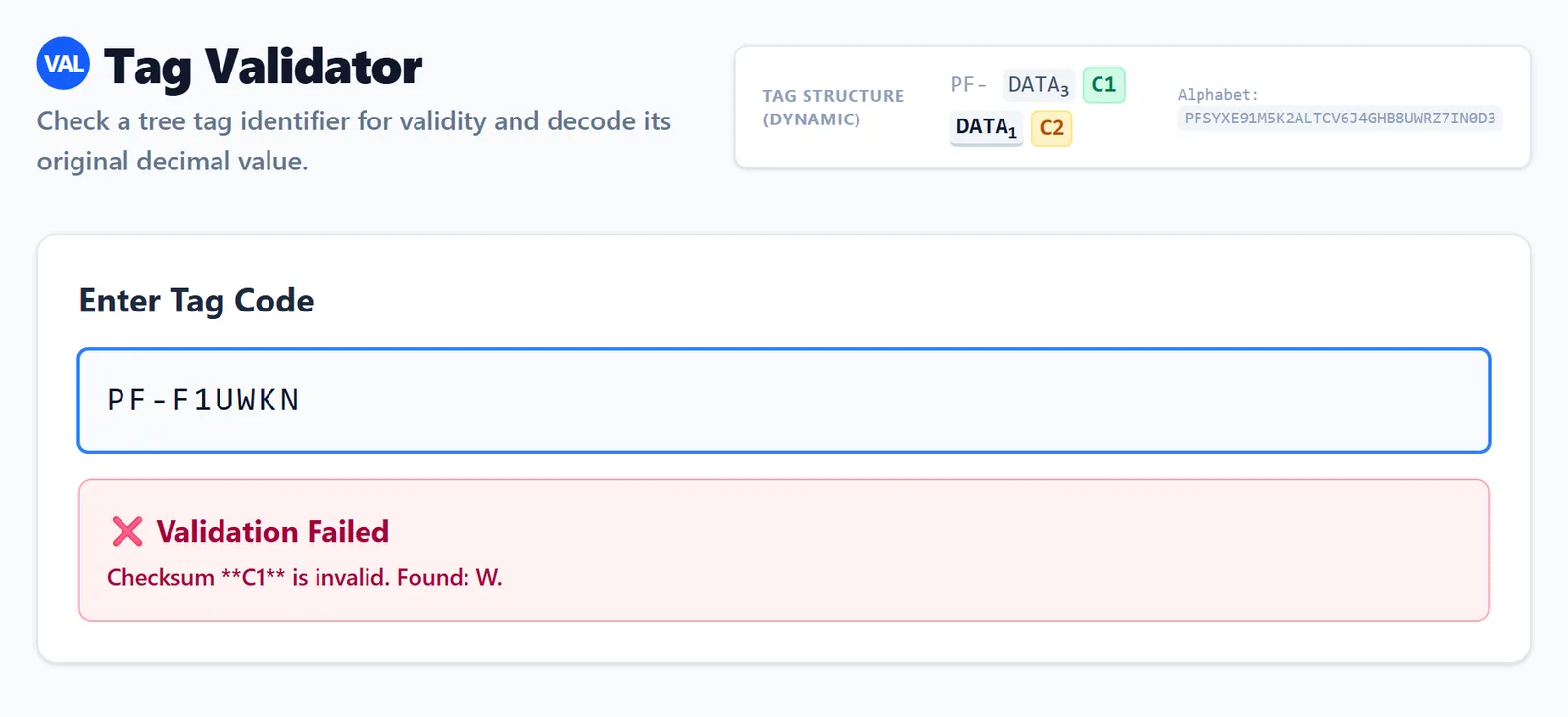 4
A mistyped ID is caught
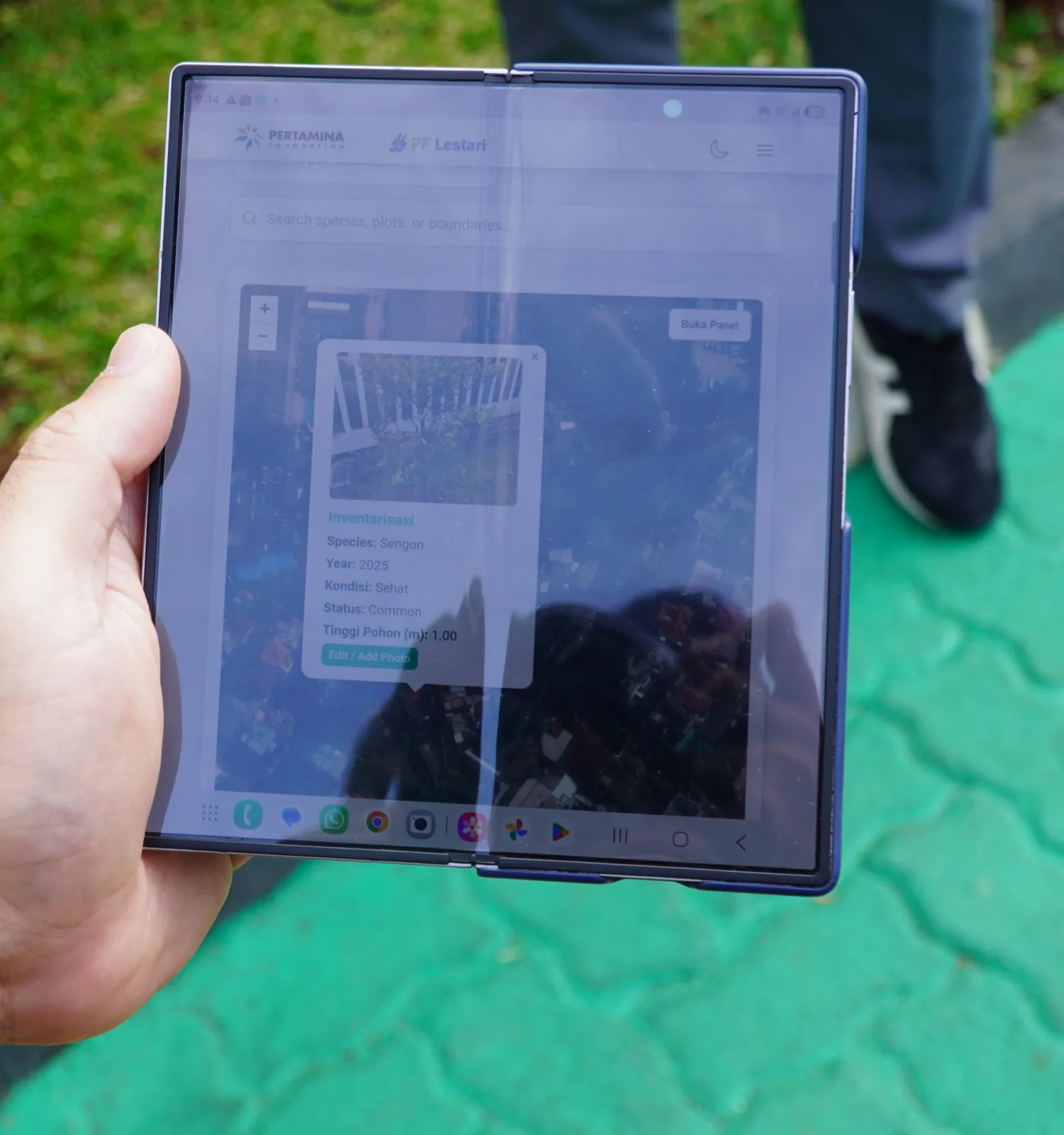 5
The tree, on the map
Then every visit, from the air and on the map
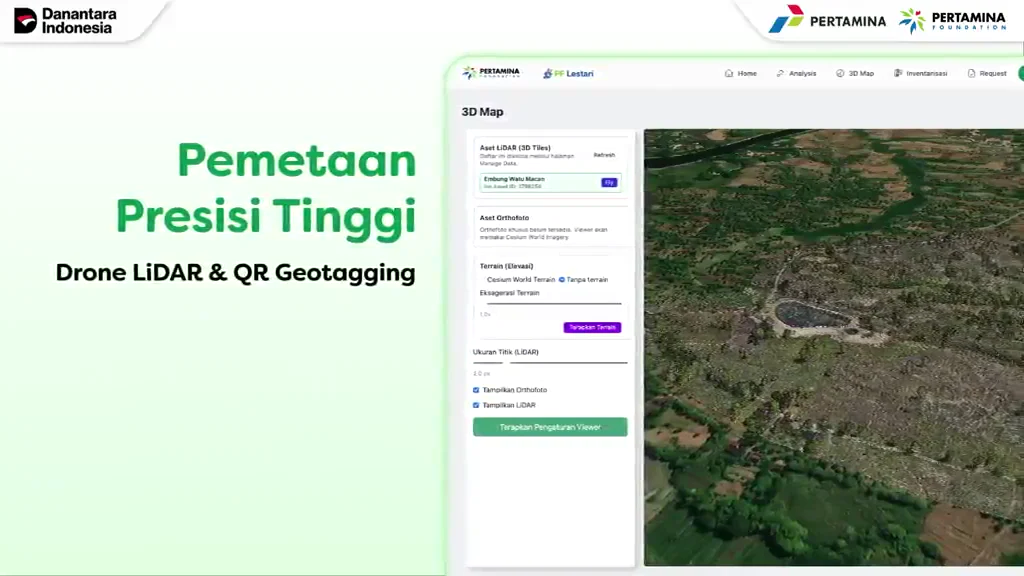
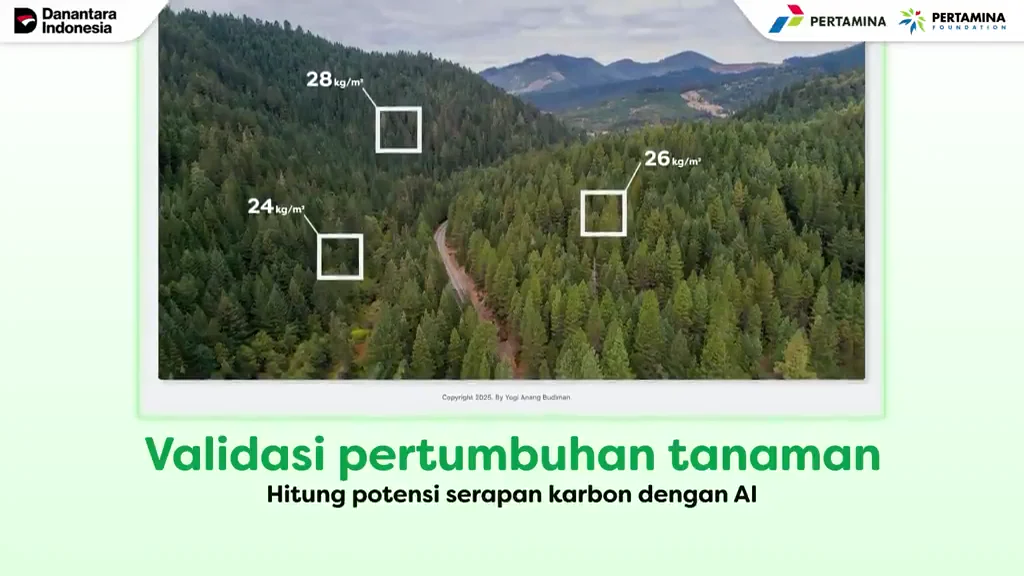
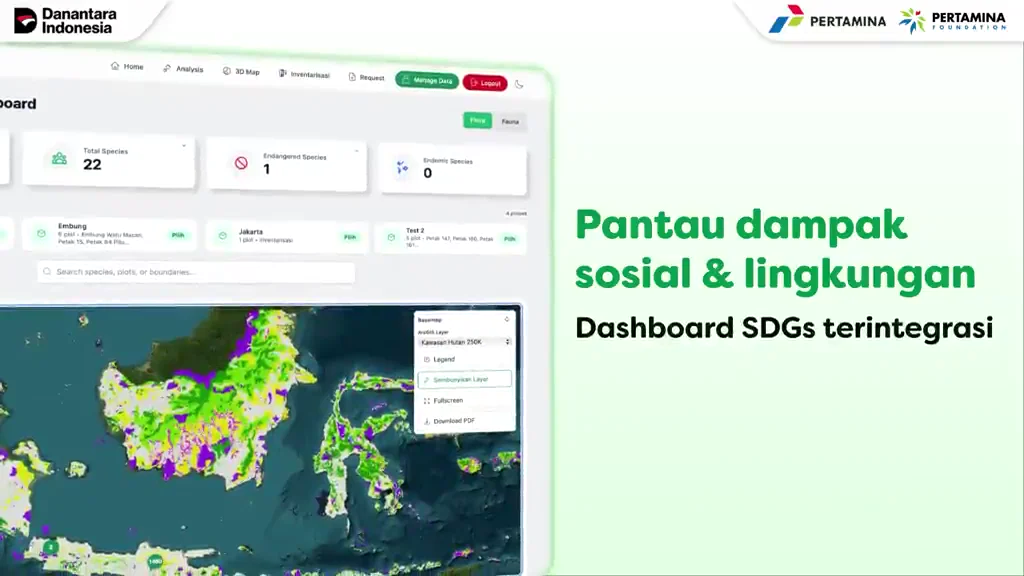
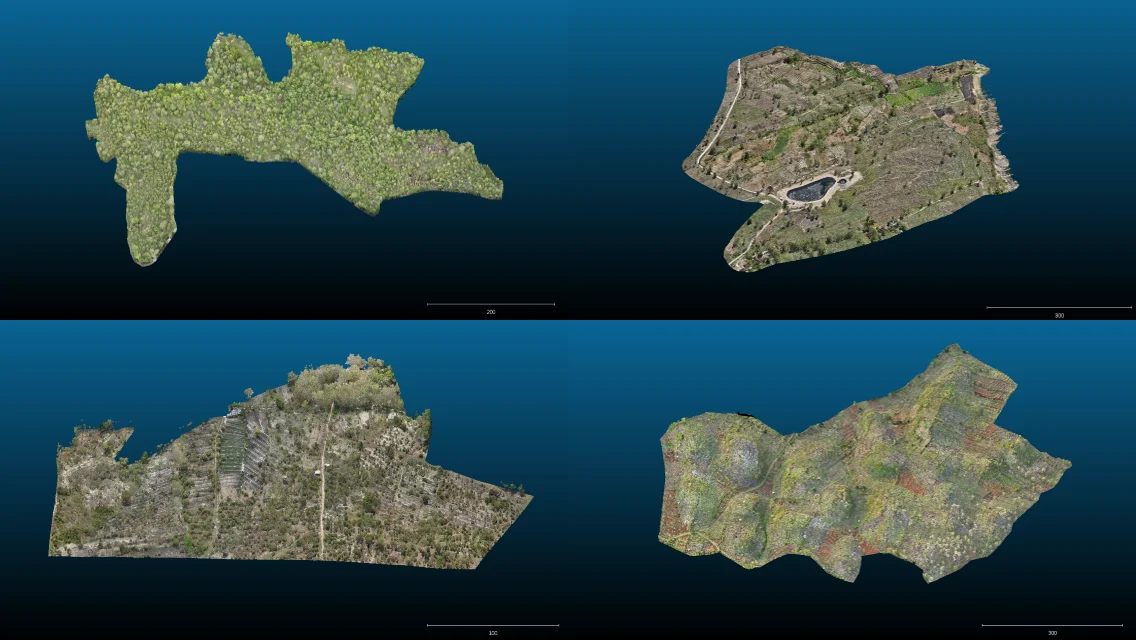
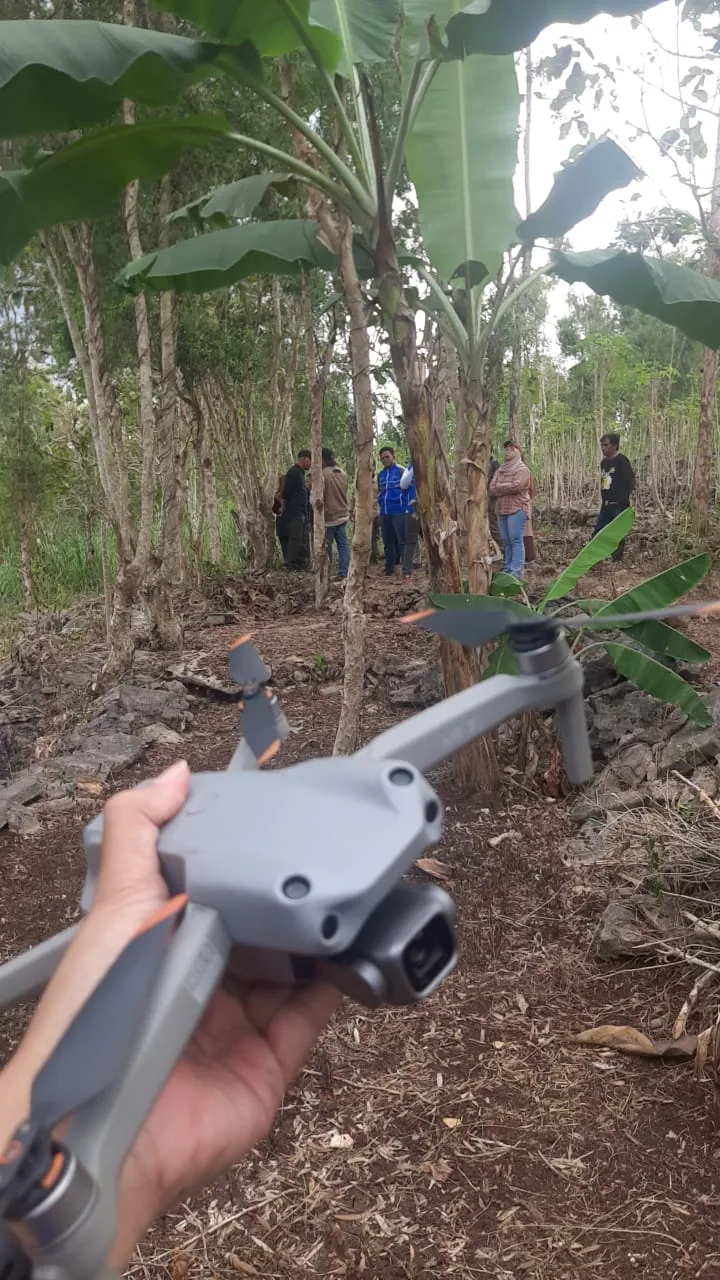
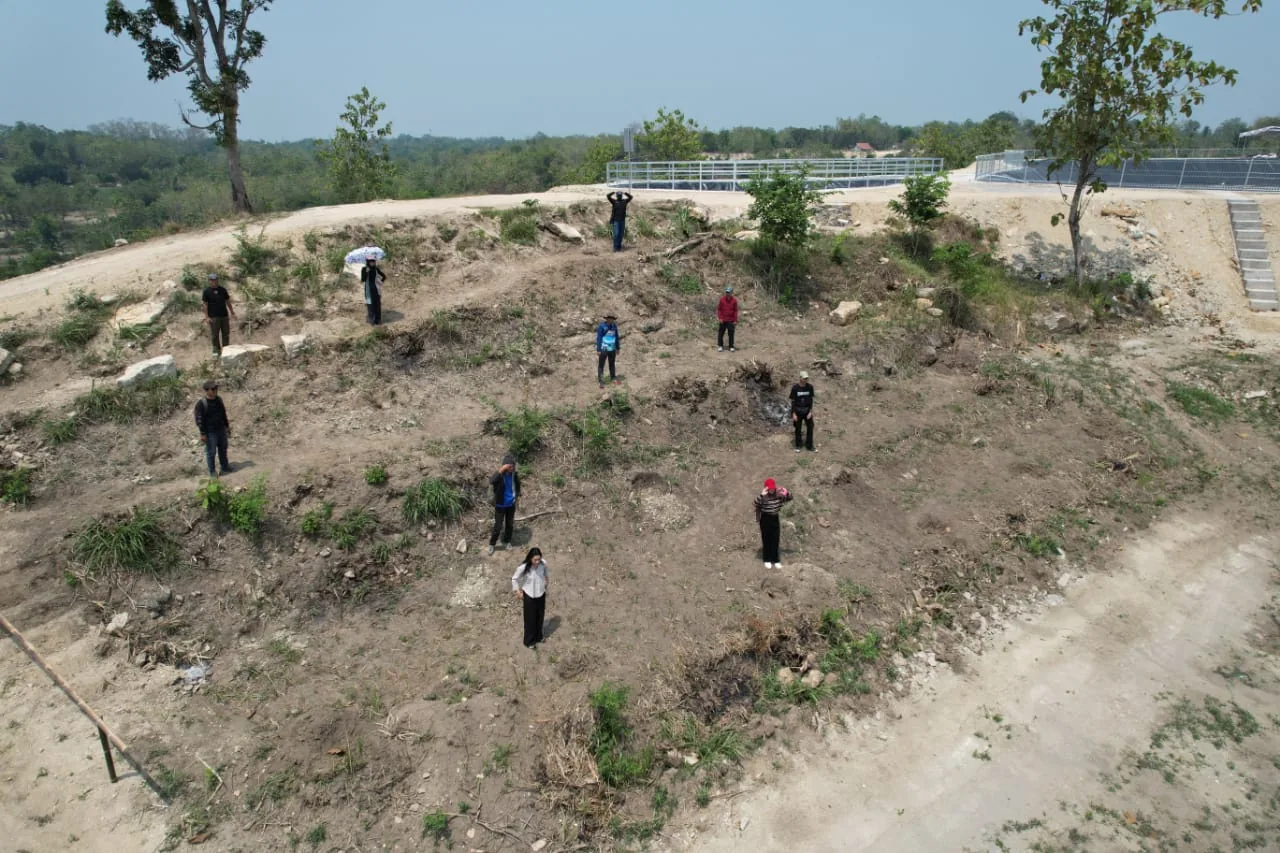
100k
tree IDs in one print run
2
check characters per ID
0
bars of signal needed
Recognition
Gold, then six months later, Platinum.
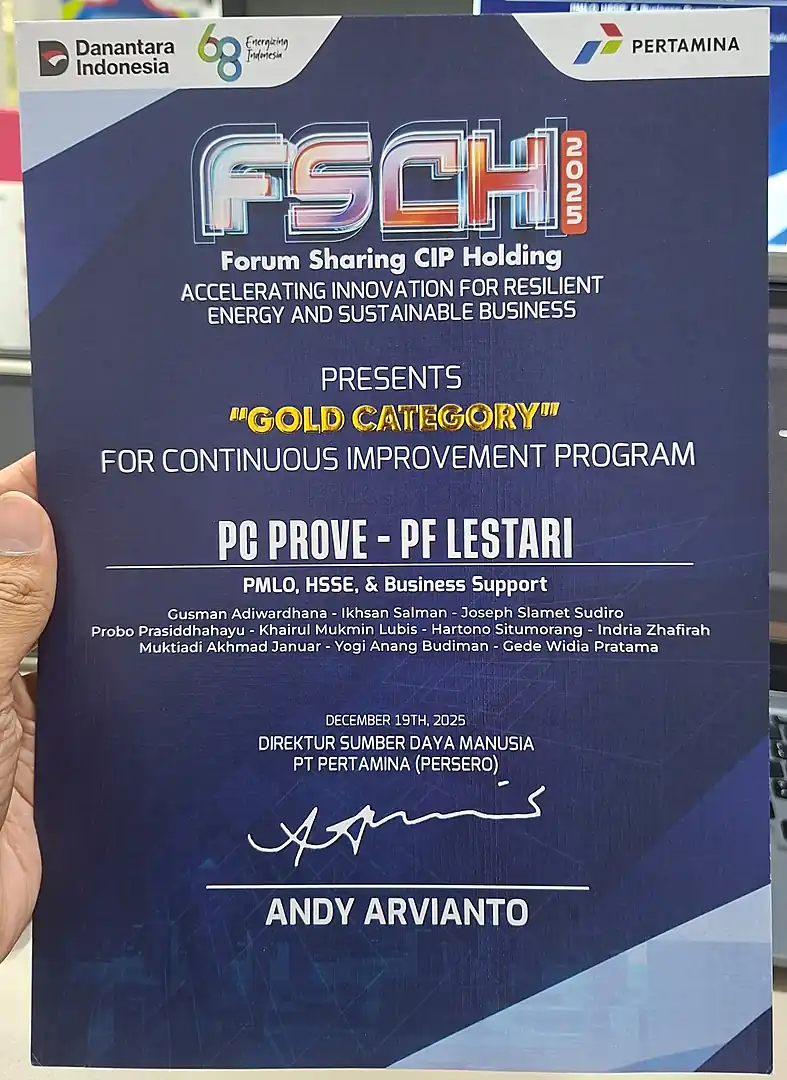
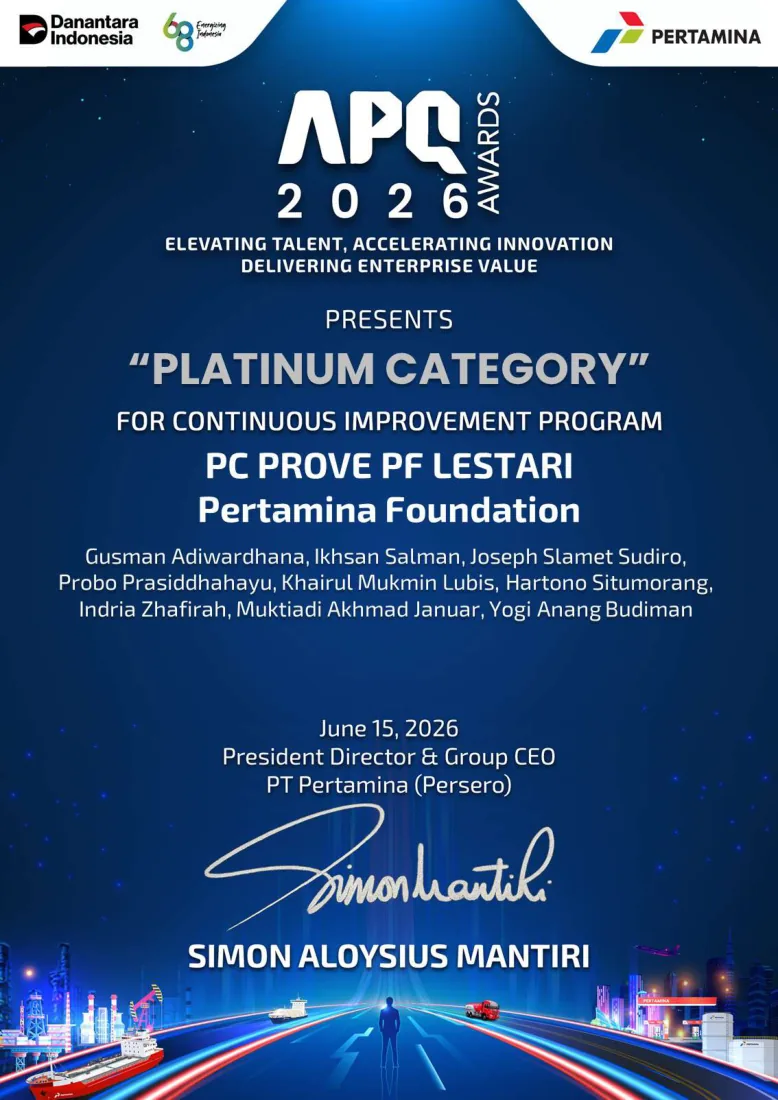
Both awards went to the PF Lestari team for its continuous improvement project. I built its field tools and flew the surveys.
Learnedtags get misread and mistyped in the field, so tree IDs leave out confusable letters and carry check characters.
NextThat closes Part 2. None of these habits began at the foundation; Part 3 goes back to where they were learned.
Part 2 · 2025 to 2026
PF Lestari is the foundation’s reforestation programme. I built its field tools: an ID and a QR bracelet for every tree, an offline field camera, and drone LiDAR surveys of the planting sites.
Discover.
A planted tree is only worth reporting if it can be found and checked again. Field photos lose their location by the time they reach the office, and a tree without a durable ID cannot be verified.
Design.
Field tools for the foundation’s reforestation programme: an identity for every tree, a camera that works without signal, and planting sites surveyed from the air.
Deliver.
Gold, then Platinum at the Annual Pertamina Quality Award 2026 for the programme, and every tree given an ID it can be found by.
Built the field tools; part of the award-winning team · Offline PWA · LiDAR · In-browser vision
Tap a page to open it full screen; swipe for the next. Every page is also in the PDF.
Muktiadi Akhmad Januar · Part 3 · Before the foundation
Part 3
Where the habits came from
None of the habits in Parts 1 and 2 started there. They were learned in a refinery crisis, in HR analytics across refineries, in a semester of engineering in Europe, in control systems for machines, and in a lab teaching student teams to build.
Refinery crisis response Fast compensation that must survive an audit Pertamina HC Reports, plans and permits rebuilt by hand
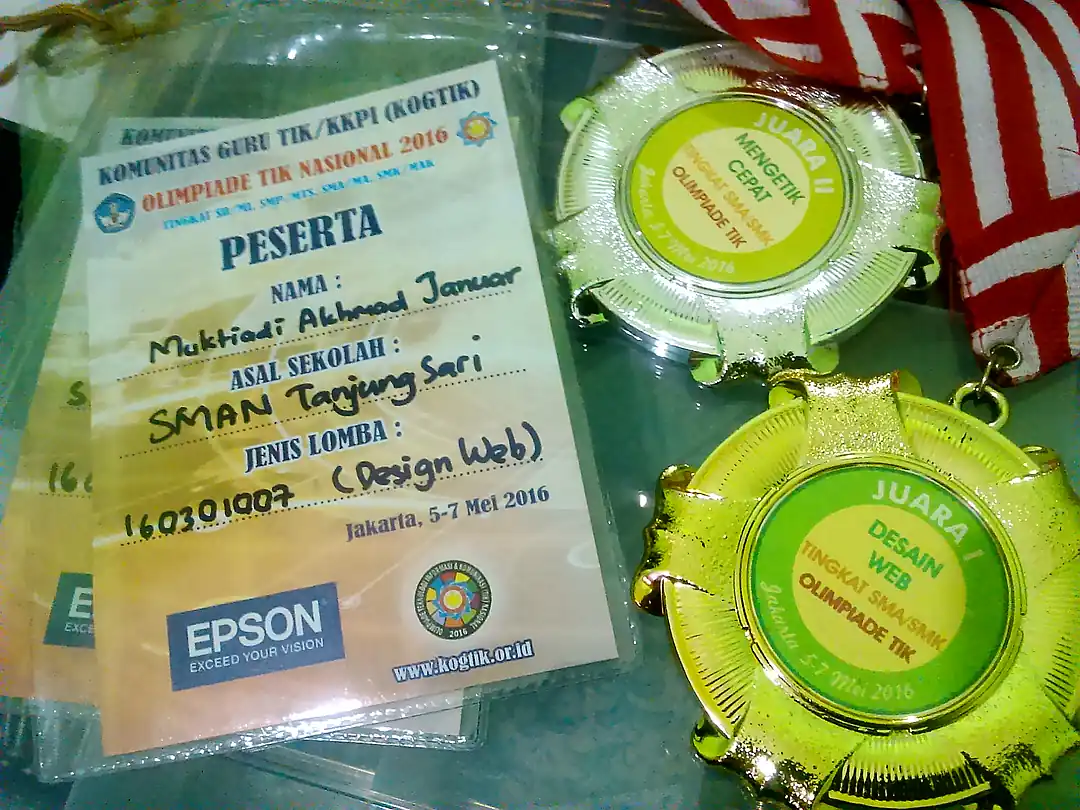 Where it started Machines and sites that cannot go down
 A semester in Europe Engineering, in another country
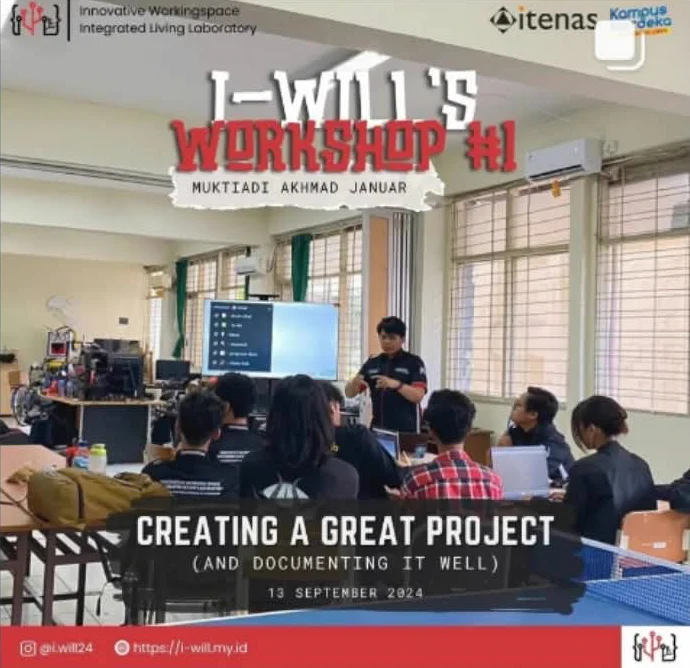 The living lab Student projects finished, shown and written down
NextFirst the case I would tell first: the Balongan refinery fire, where most of these habits were learned under pressure.
Part 3
Where the habits came from
None of the habits in Parts 1 and 2 started there. They were learned in a refinery crisis, in HR analytics across refineries, in a semester of engineering in Europe, in control systems for machines, and in a lab teaching student teams to build.
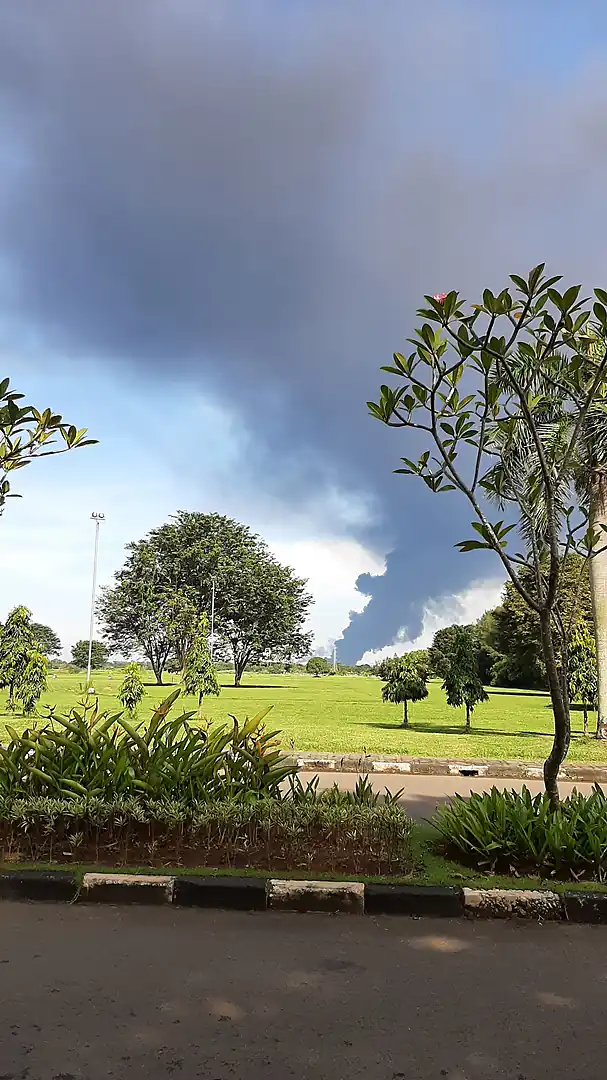
Muktiadi Akhmad Januar · Part 3 · Refinery crisis response, 2021
March 2021, Balongan
Black smoke over the company housing, seen from my own street. The shelter for every evacuated family was inside the complex where I lived.
Two weeks after my internship ended, a fuel tank at Refinery Unit VI caught fire. Late that afternoon my manager called: come to the shelter, bring whatever you have. Hundreds of families sat on mats with whatever they had carried out, and nobody could plan food, mattresses or medicine without a list. So I opened a registration post on a folding table.
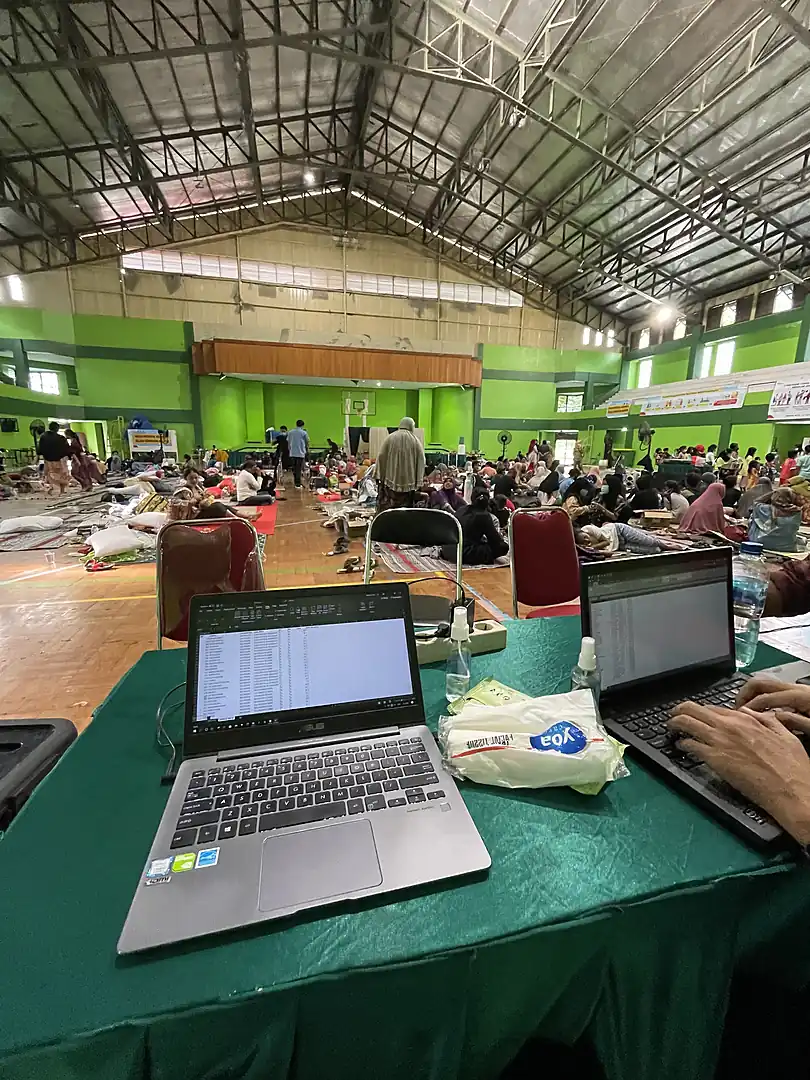
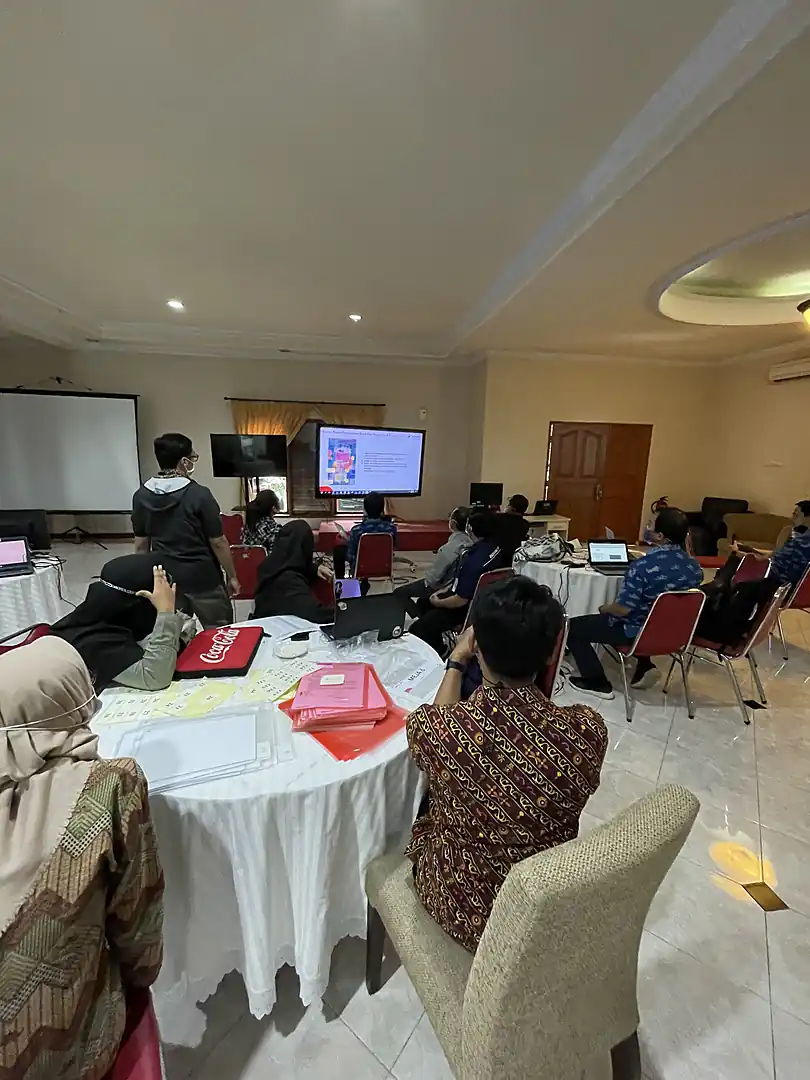
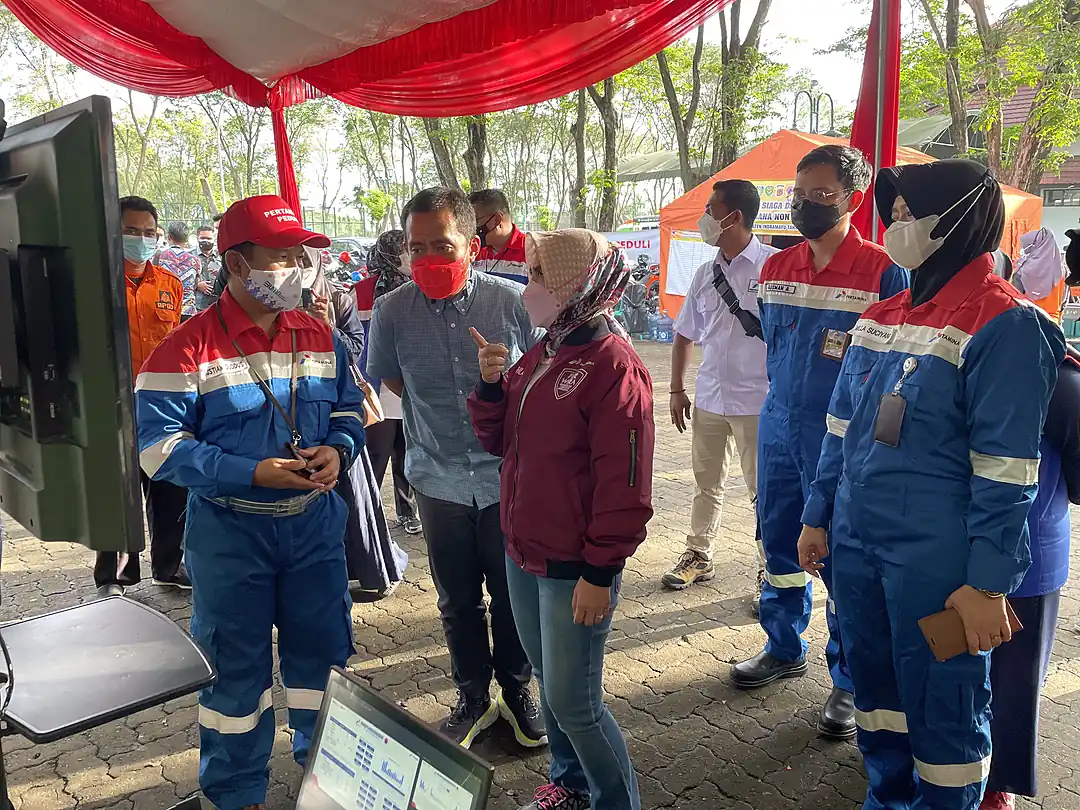
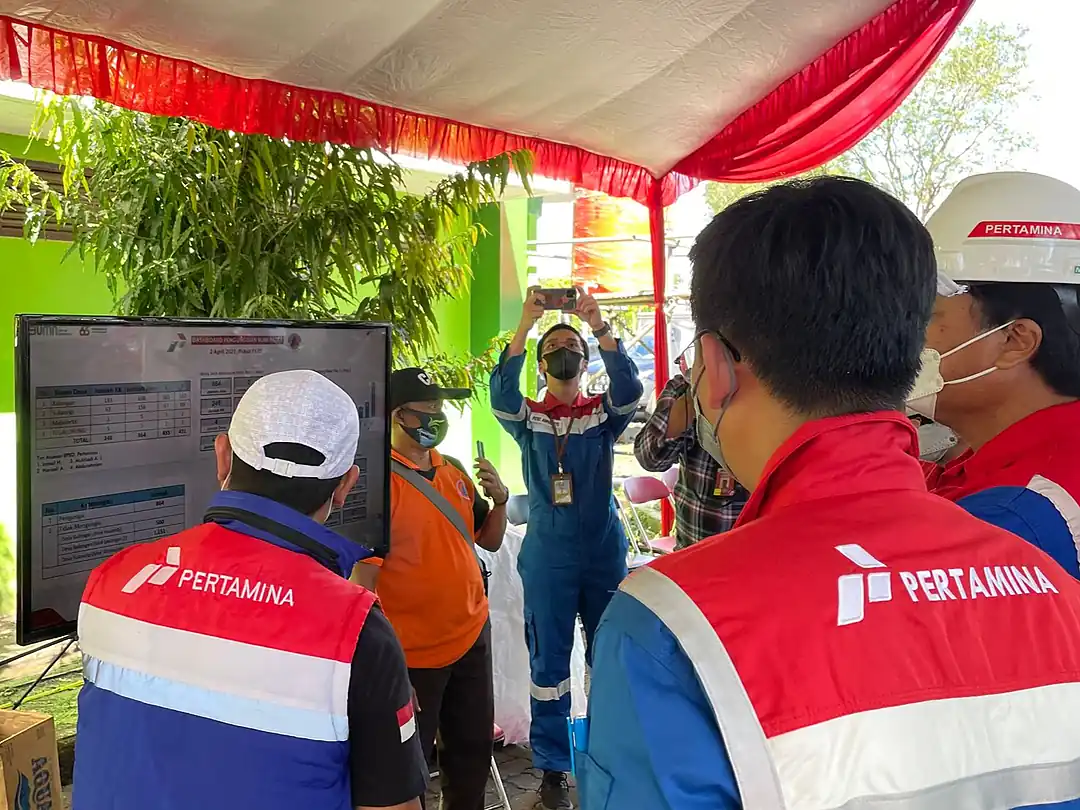
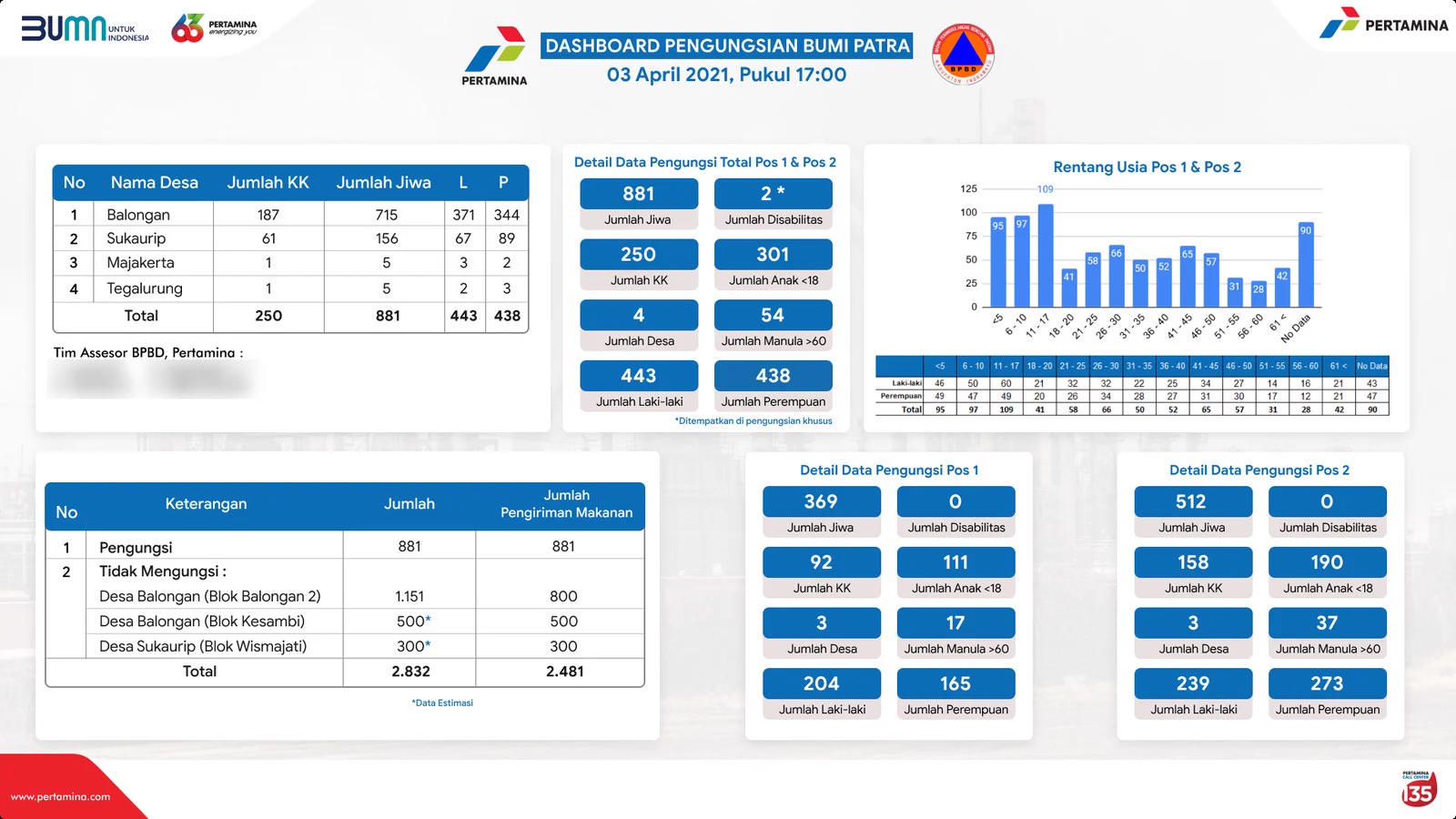
The first night
Families registered by hand; the count went out on national TV and set the aid.
The next weeks
Brought into the response team for the compensation data.
About a month
One platform live: surveyors, appraisers, the bank and the back office on one record.
Two years
Every payment claimed back from the insurer; the force majeure closed.
Years later
Audited by BPK, the state audit board. It passed, without me in the room.
NextFrom counting people to counting damage: the system four organisations wrote into.
Muktiadi Akhmad Januar · The platform
What it isAfter the 2021 fire at Pertamina’s Balongan refinery, damaged houses in the surrounding villages had to be assessed and compensated. I led the data, system and infrastructure for the platform that took each house from a field photo to a bank file.
Discover.
After the refinery fire, damaged houses across the surrounding villages had to be assessed and compensated quickly, with every payment defensible to auditors later. A spreadsheet per team, typed documents and hand-made bank lists could not survive that.
Design.
One platform for the whole compensation chain, plus the field network and print servers it ran on. Data, system and infrastructure lead on a one-year contract.
Deliver.
Live in about a month. The records passed the insurance claim audit and, years later, the state audit by BPK.
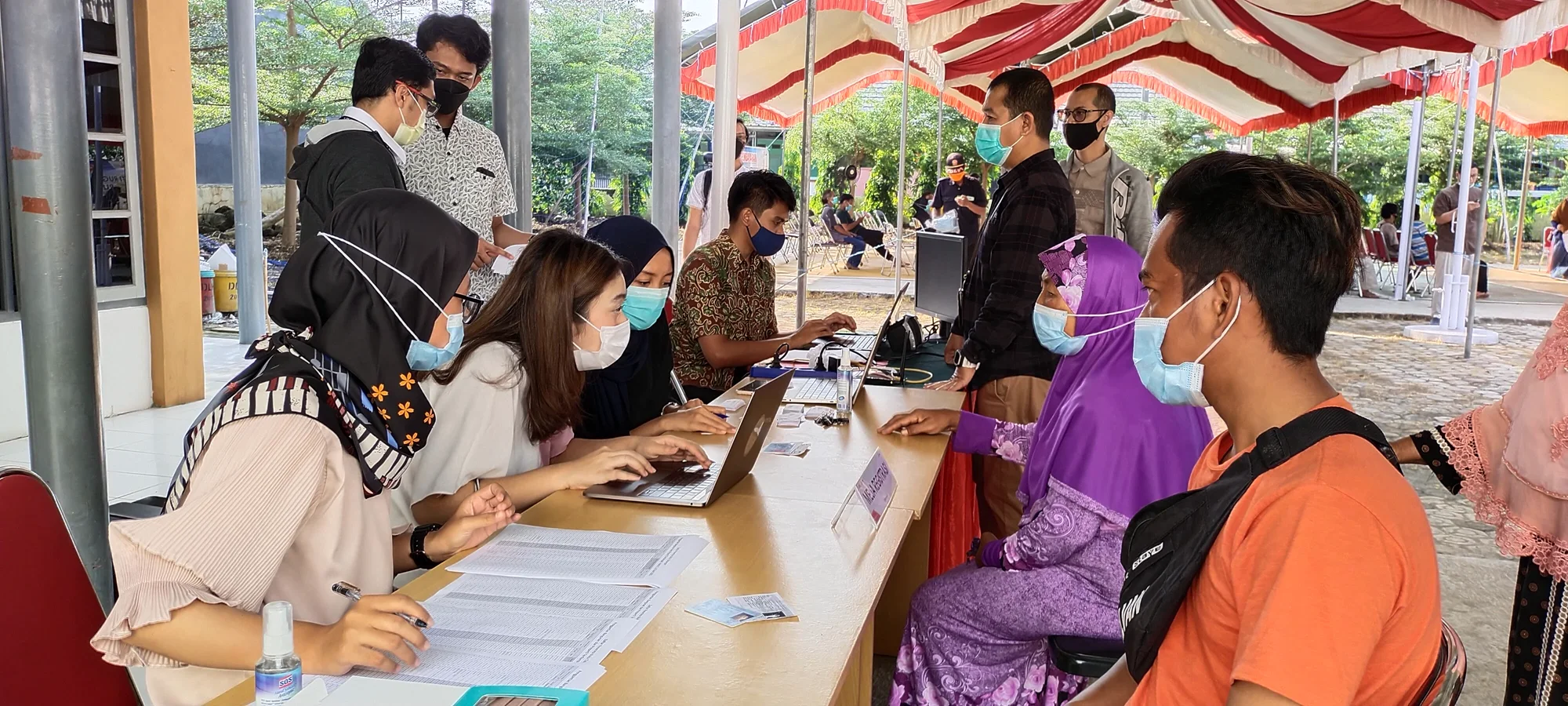
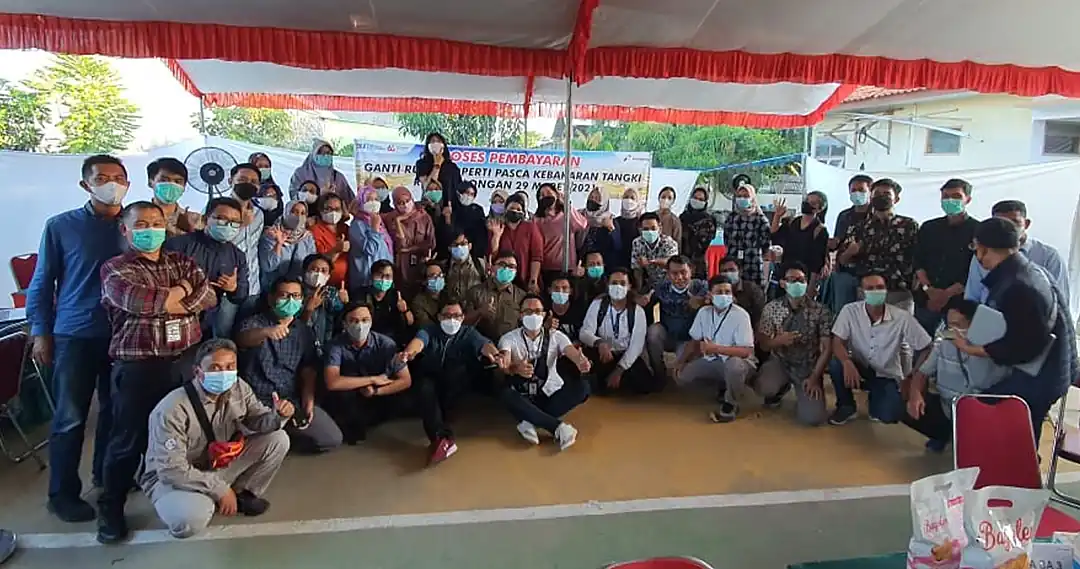
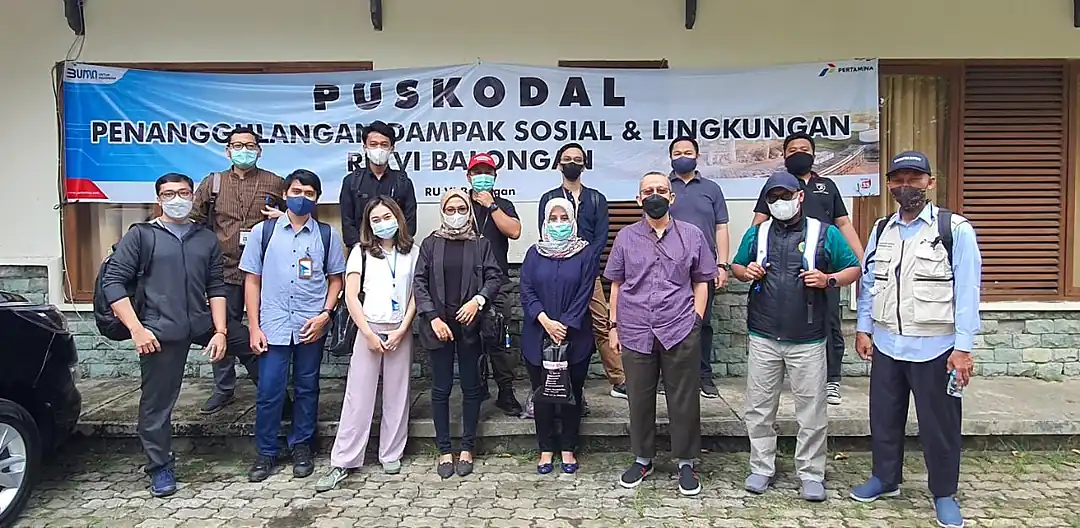
One house’s record, from the field to the audit
Field photo
and description, per house
Assessed
PUPR building, Pegadaian value
Computed
compensation, per owner
Documents
berita acara, kuitansi
Bank file
approved records only
Audit
insurance, then BPK
The room
Eight parties had to trust one record.
~1 month
from the first meeting to a live platform
BPK
the state audit, years later, after the insurer’s: passed
One record per house
3,323 buildings surveyed by 16 teams in seven field days, each with its photos, the building assessment and the property valuation on one record.
On the record
Money computed, never typed
Every item and the building estimate summed per house, the total spelled out in words, and the handover letter and receipt printed for a whole village at once.
On the record
Payment lists from approved records only
Exported only from records that passed every stage, so the payment list and the platform could never disagree. The insurer later got its own read-only view.
On the record
A live view nobody needs training for
Progress and money out aggregated live, beside a shelter dashboard in Power BI read without training.
Any phone
Records are judged years later, by people who were not there. The system has to answer for itself.
Learnedrecords are judged years later by auditors who never ask, so I capture evidence with the record, never afterwards.
NextBefore the crisis, the same instinct had already changed how Pertamina’s refineries report on their people.
Part 3 · 2021 to 2022
After the 2021 fire at Pertamina’s Balongan refinery, damaged houses in the surrounding villages had to be assessed and compensated. I led the data, system and infrastructure for the platform that took each house from a field photo to a bank file.
Discover.
After the refinery fire, damaged houses across the surrounding villages had to be assessed and compensated quickly, with every payment defensible to auditors later. A spreadsheet per team, typed documents and hand-made bank lists could not survive that.
Design.
One platform for the whole compensation chain, plus the field network and print servers it ran on.
Deliver.
Live in about a month. The records passed the insurance claim audit and, years later, the state audit by BPK.
Data, system and infrastructure lead · Web platform · Power BI · Field ICT · Audit
Tap a page to open it full screen; swipe for the next. Every page is also in the PDF.
Muktiadi Akhmad Januar · Part 3 · Pertamina human capital
What it isTools built inside Pertamina’s human capital function: monthly HC reporting adopted across every refinery, Ampera for planning employee transfers, and Covid Ranger, a WhatsApp chatbot for residents’ exit permits.
Discover.
Monthly HC reports were rebuilt by hand at each refinery with no comparable view for executives, transfer planning meant half a day rebuilding boxes in PowerPoint, and residents needed exit permits that guards could check.
Design.
Tools built inside the HC function, on what people already used: Power BI, their own Excel files, WhatsApp.
Deliver.
HC reporting adopted across every Pertamina refinery, a four-hour meeting cut to 47 minutes, and thousands of residents served by chat.
A four-hour transfer meeting became 47 minutes, and the HC dashboard was launched by the VP of Human Capital.
47′
HC reporting, every refinery · 2020
Power BI, the tool management already opened, with KPIs refined together with the HC team. Copied at a second refinery, then adopted at all of them, and launched by the VP of Human Capital.
People decide
Ampera, the transfer planner · 2020 to 2021
One page that reads the team’s own Excel files and writes the plan back. Nothing to install; personnel data stays on the laptop.
Any phone
Covid Ranger · 2021
A WhatsApp chatbot, because every resident already had WhatsApp: a supervisor approves in the chat, the guard scans a QR. Thousands of residents, hundreds of conversations a day.
Any phone
Learning and knowledge, group-wide · 2024 to 2025
Process analysis for one integrated learning and knowledge platform, a revamped HC corporate dashboard, and the rollout videos.
Kept apart
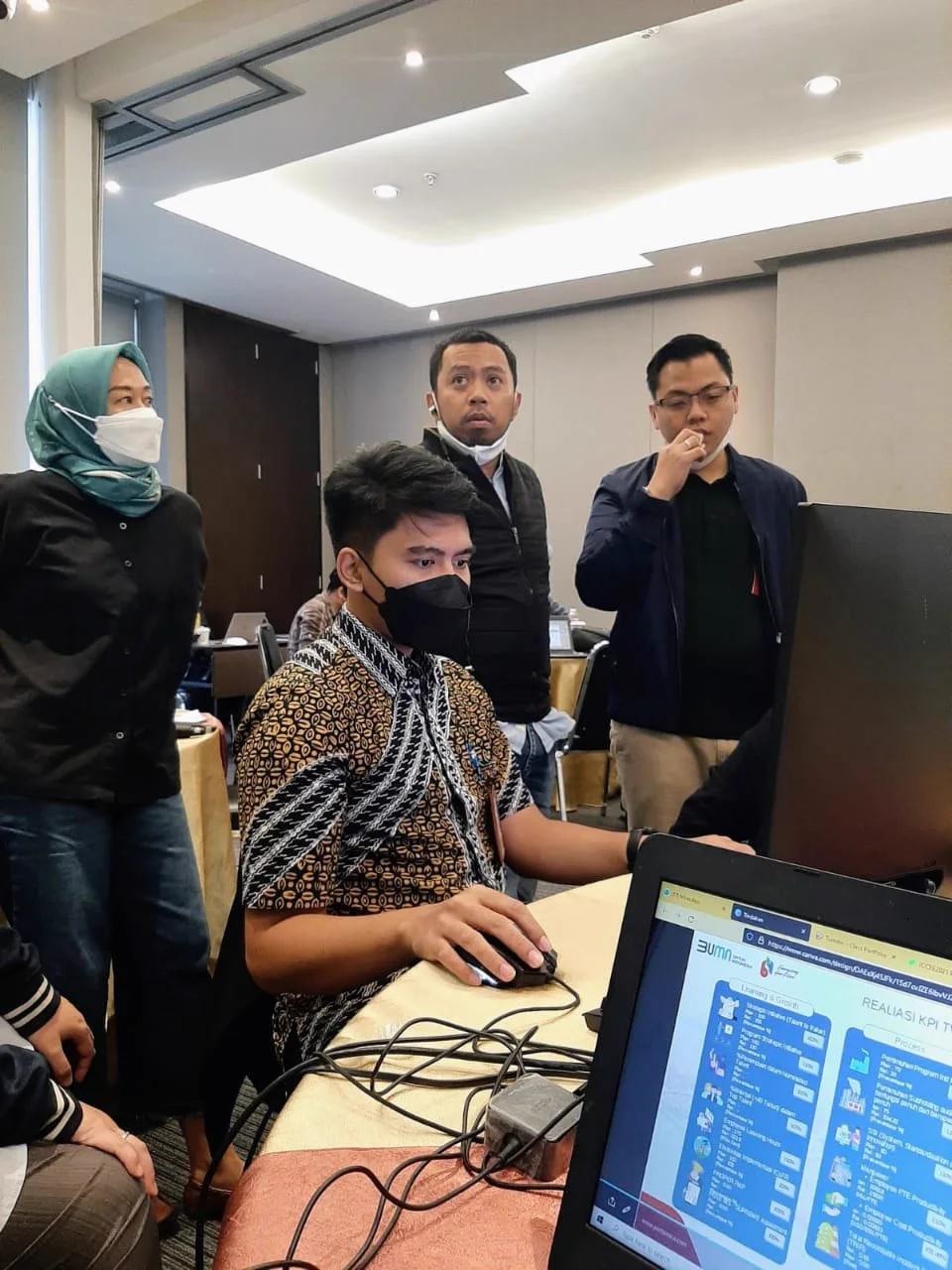
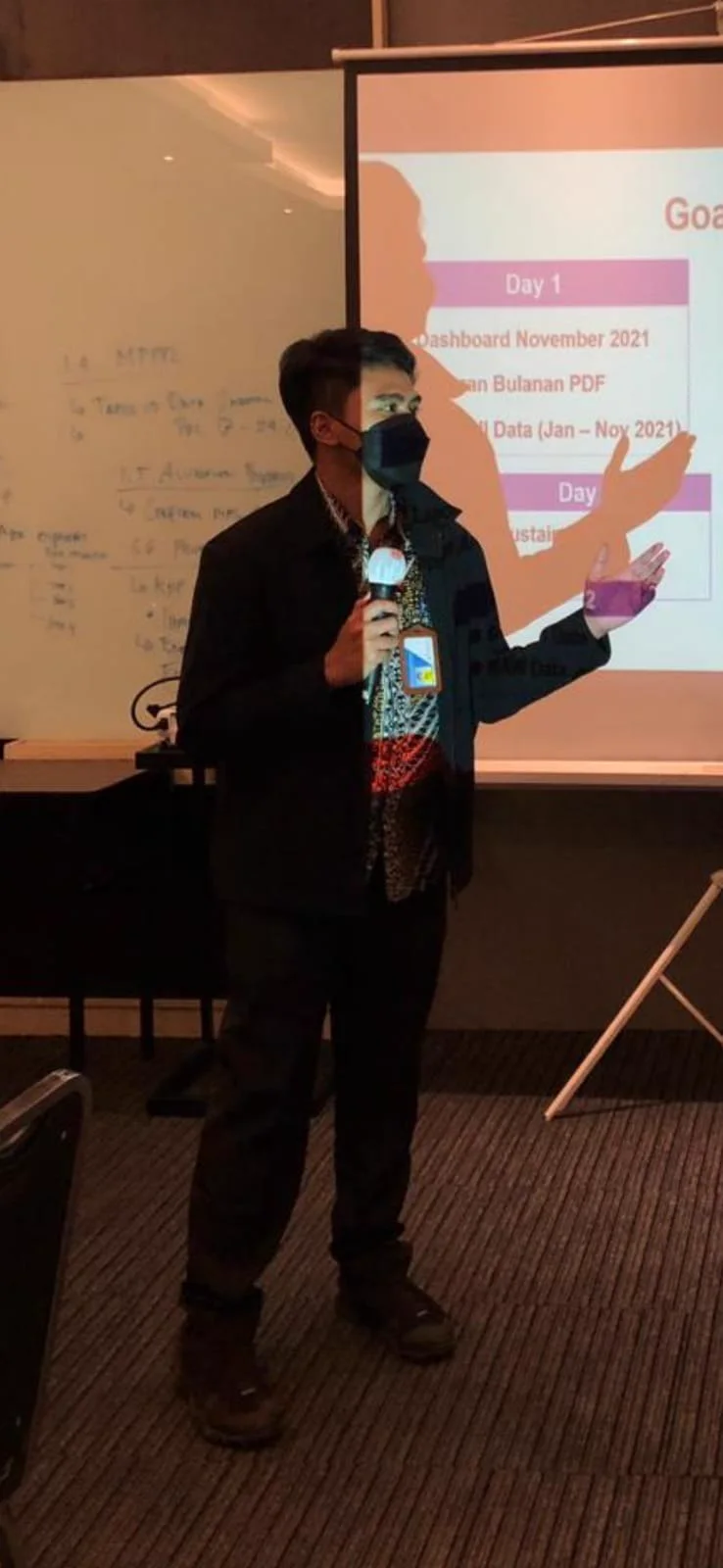
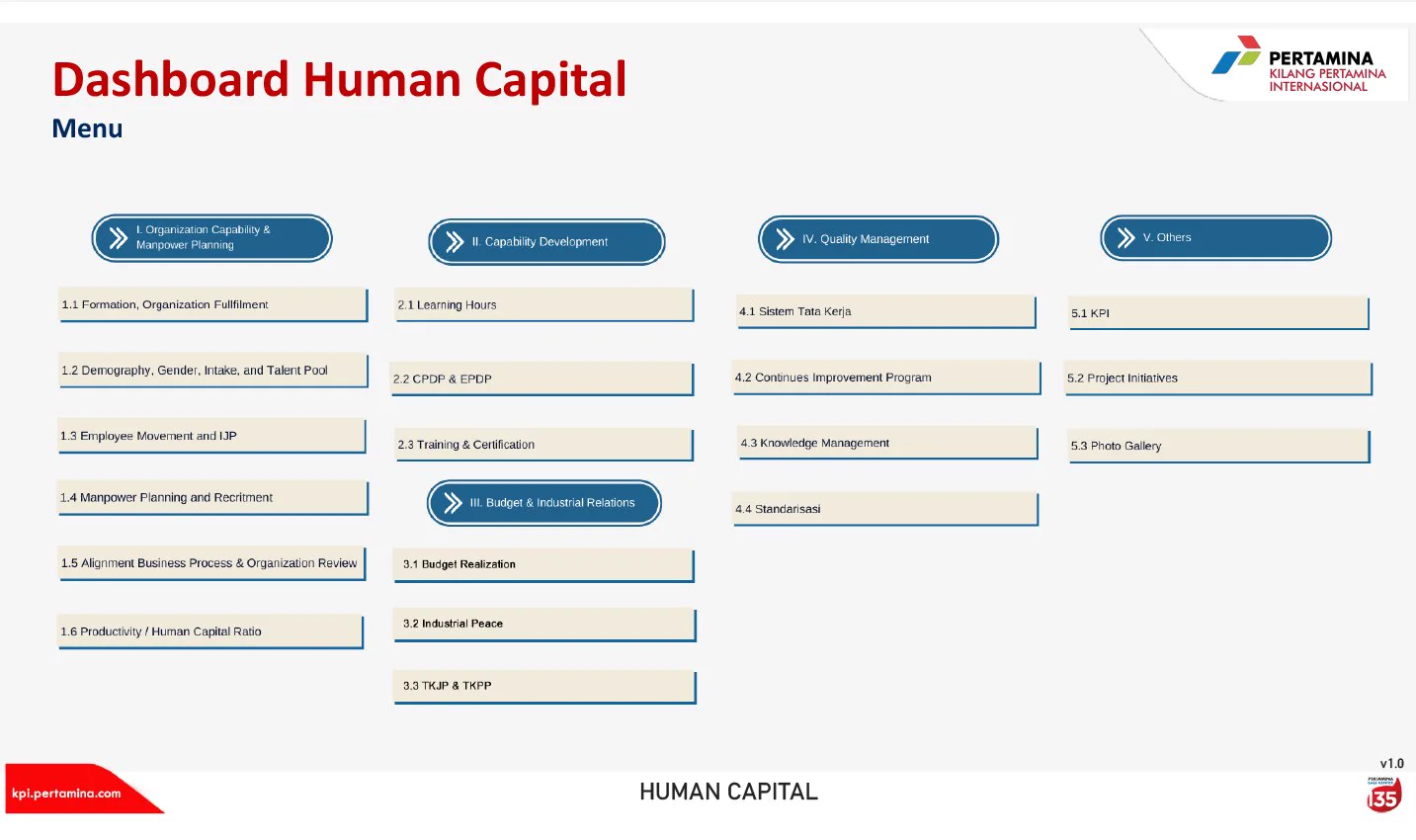
December 2021 · KPI head office
The dashboard handed over in a two-day workshop with the VP of Human Capital.
Day one: the November dashboard, the monthly PDF report and the year’s data. By 2022 it was the company-wide version, one menu for all of HC.
Covid Ranger, 2021An exit permit in the app every resident already had.
Learnedadoption cost decides whether a system gets used, so the HC dashboard lived in Power BI, the tool management already opened.
NextUnder the software sits an engineer’s training, and it started early: a medal at sixteen, a semester in Hungary.
Part 3 · 2020 to 2025
Tools built inside Pertamina’s human capital function: monthly HC reporting adopted across every refinery, Ampera for planning employee transfers, and Covid Ranger, a WhatsApp chatbot for residents’ exit permits.
Discover.
Monthly HC reports were rebuilt by hand at each refinery with no comparable view for executives, transfer planning meant half a day rebuilding boxes in PowerPoint, and residents needed exit permits that guards could check.
Design.
Tools built inside the HC function, on what people already used: Power BI, their own Excel files, WhatsApp.
Deliver.
HC reporting adopted across every Pertamina refinery, a four-hour meeting cut to 47 minutes, and thousands of residents served by chat.
Analyst and builder · Power BI · Excel in the browser · WhatsApp
Tap a page to open it full screen. Every page is also in the PDF.
Muktiadi Akhmad Januar · Part 3 · Where it started
What it isBefore software platforms: a first national medal at sixteen, a semester of mechanical engineering in Hungary, years as a university’s sole web administrator, and instrumentation and control for a bioenergy machine.
National Computer Olympiad, 2016
First in web design, second in speed typing.
Childhood
How does it work?
A metal box with a round button, taken apart. The question every chapter of this book still asks.
2016, age 16
Two medals, one plan with three fallbacks
Found the National Computer Olympiad two days before registration closed, slept on a university lab floor, came home with first place in web design and second in speed typing.
2018, Hungary
A semester of mechanical engineering abroad
Computer science at Itenas (GPA 3.87) with an exchange semester in Hungary; seven of us represented Indonesia at the university’s Researchers’ Night.
Then the engineering work
University web systems · 2016 to 2019
Sole administrator of a university’s web systems and its new student admission application, with continuous uptime for the whole contract.
Any crowd
Bio CNG control · Itenas, 2024 to 2025
Led the instrumentation and control system: an embedded architecture for real-time control, monitoring and safety, in a Rp2.8 billion LPDP-funded project.
On the record
Learnedthe first medal came from a plan with three fallbacks; every launch since has had one.
NextThen a semester in Europe: mechanical engineering in Hungary, and Indonesia’s booth at Researchers Night.
Part 3 · 2016 to now
Before software platforms: a first national medal at sixteen, a semester of mechanical engineering in Hungary, years as a university’s sole web administrator, and instrumentation and control for a bioenergy machine.
Discover.
Machines that cannot fail need control systems someone can trust, and a university needed its admission site up around the clock with a single technical person behind it.
Design.
Before software platforms: control systems, autonomy and a workshop.
Deliver.
Control for an LPDP-funded bioenergy machine, a drone wingman for Indo Defence 2024, and years of uptime as the sole administrator.
Engineer · STM32 · ESP32 · CAD · 3D printing
Tap a page to open it full screen. Every page is also in the PDF.
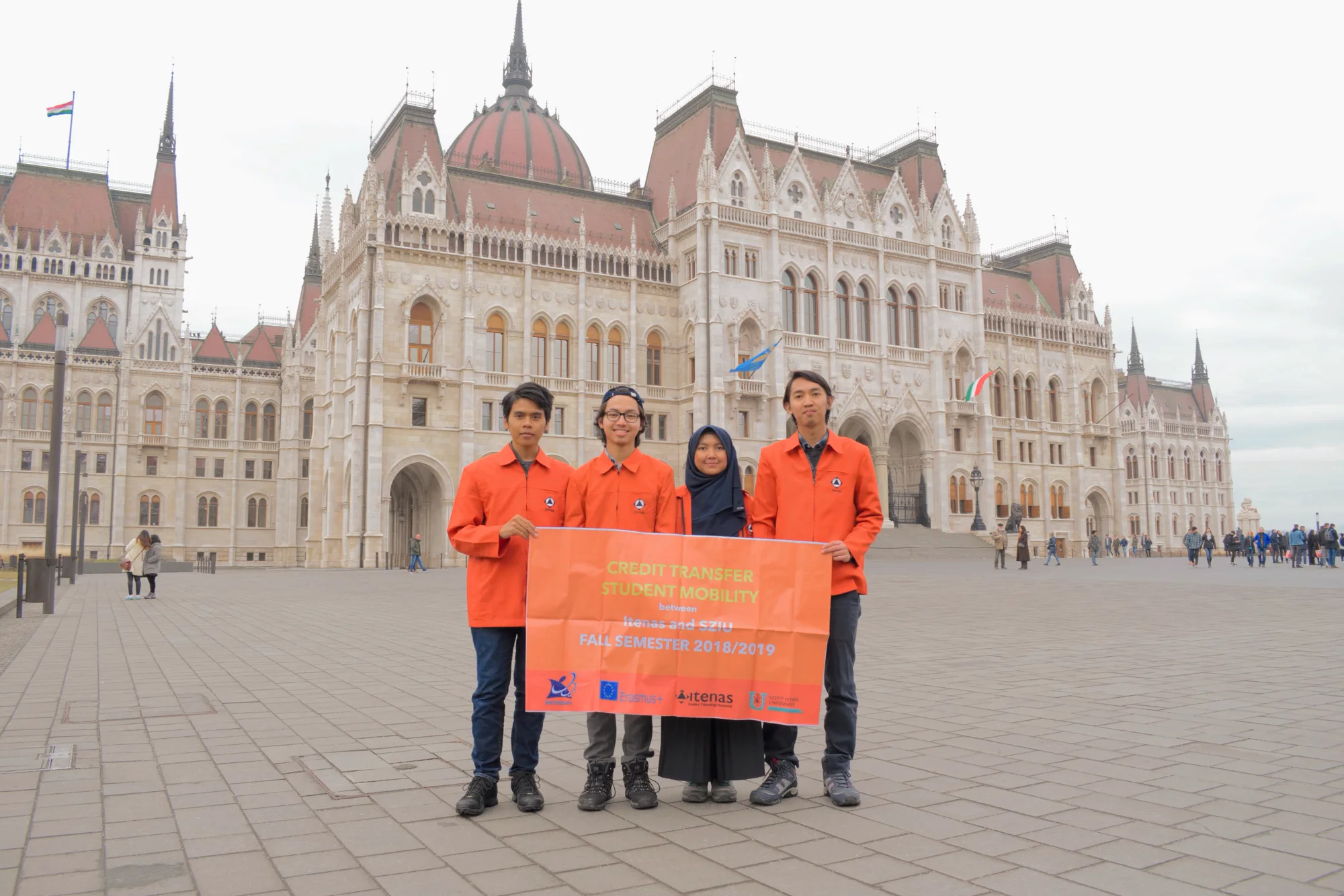
Muktiadi Akhmad Januar · Part 3 · A semester in Europe
Part 3 · Fall semester 2018/2019 · Erasmus+
In the fall semester of 2018/2019 I was one of four Itenas students on an Erasmus+ credit transfer at Szent István University in Gödöllő, Hungary: a computer science student placed in the Faculty of Mechanical Engineering, taking CAD, electronics, quality management, informatics, and Open Lab, where a supply chain problem became an IoT solution proposal.
Four Itenas students with the exchange banner in front of the Hungarian Parliament, Budapest.
The semester on videoMy playlist from the exchange in Hungary, 2018/2019, opening on the testimony.A computer science student, in a mechanical engineering faculty
Where the workshop and the control systems in this book began.
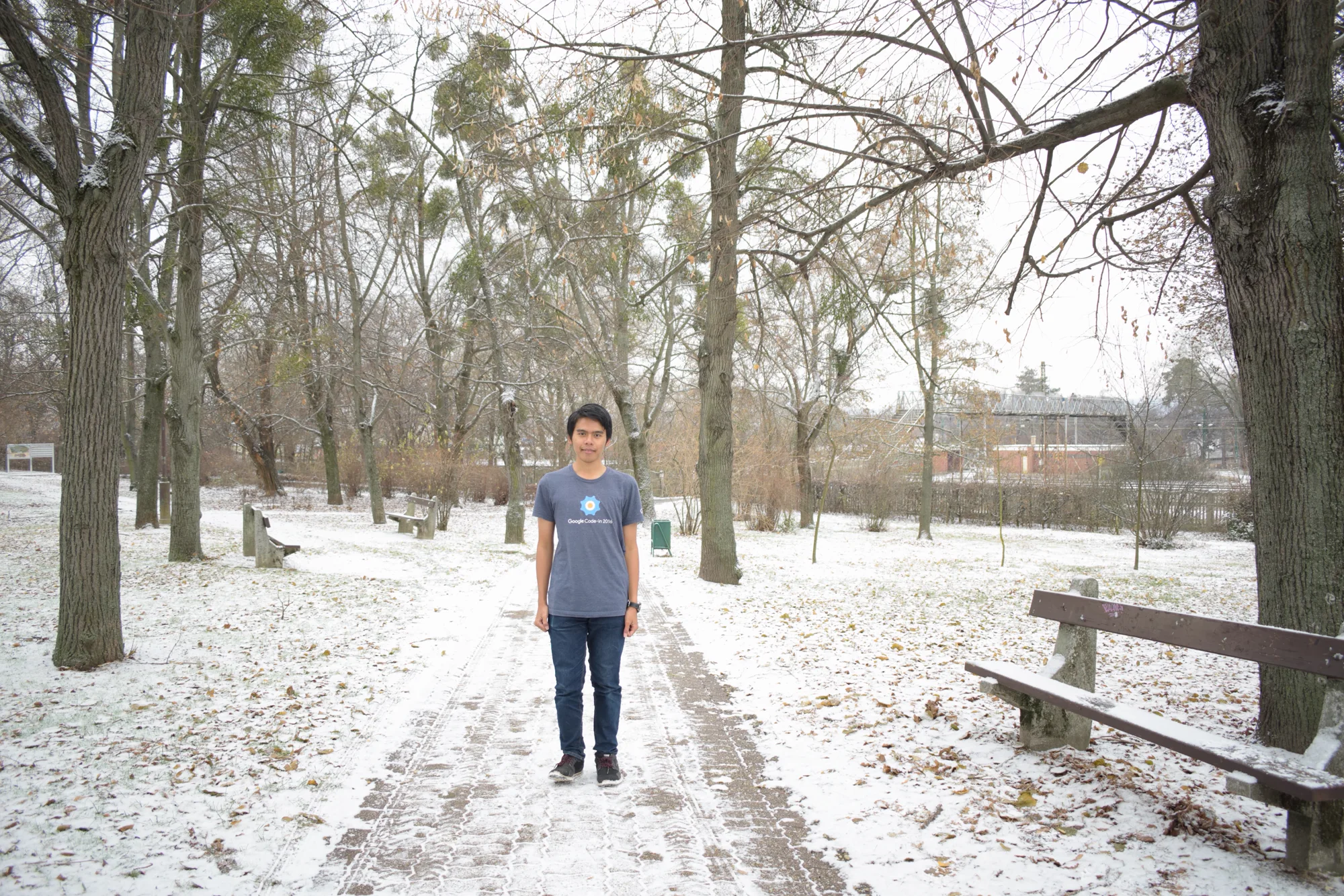
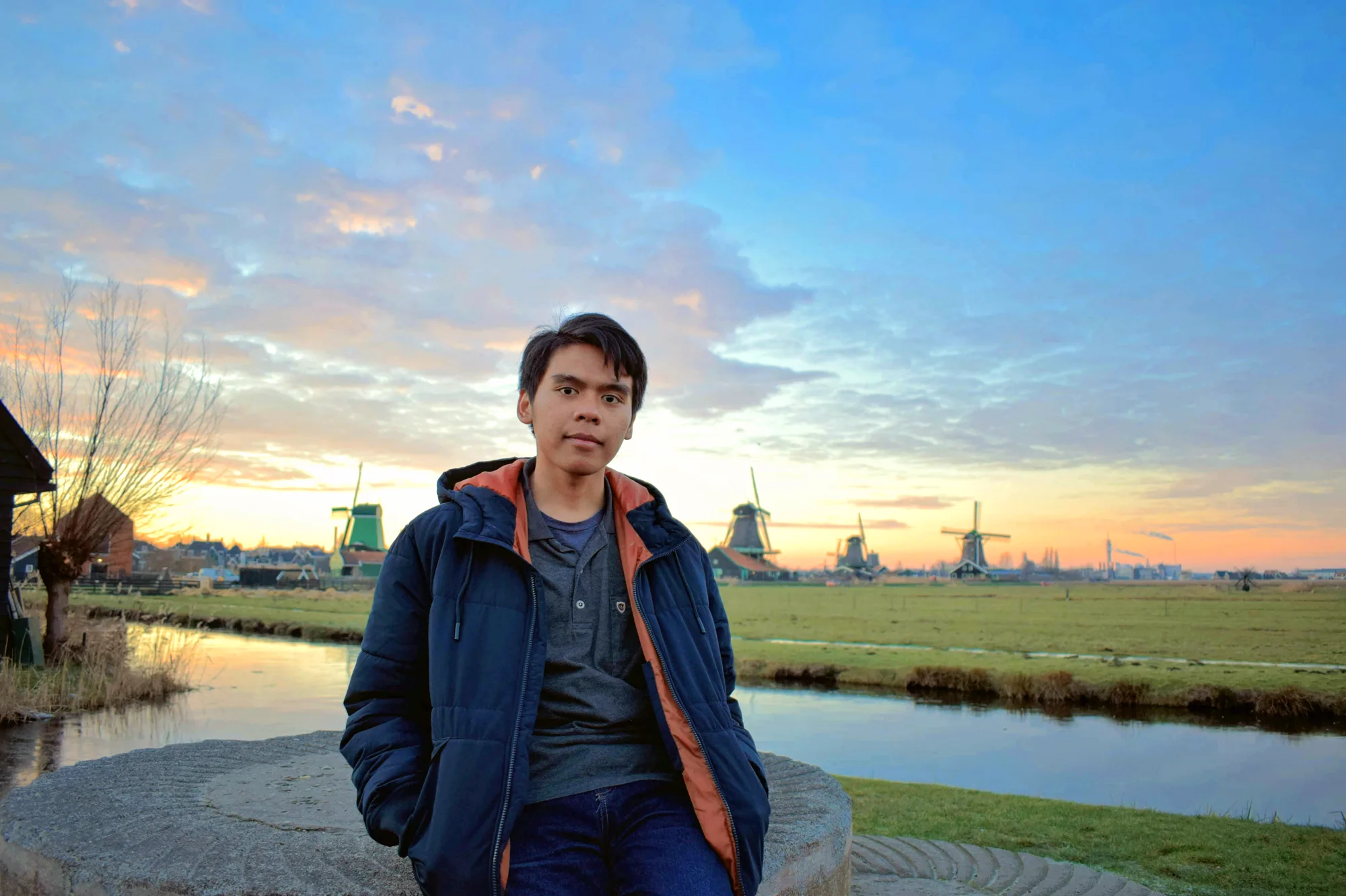
Learnedthe courses outside my field stayed with me longest, which is why CAD, electronics and control sit beside the software in this book.
NextAnd one evening that taught more than a course: Researchers Night, and the Indonesian booth.
Muktiadi Akhmad Januar · Researchers Night
Every year the university’s Researchers Night ends in a Global Village: a booth for every country in the Rector Hall, local families walking round with their children. On 28 September 2018 seven of us represented Indonesia: perkedel, bala-bala, rendang and wedang jahe cooked in a tiny Hungarian kitchen, and a stack of Javanese totopong we thought were decoration.
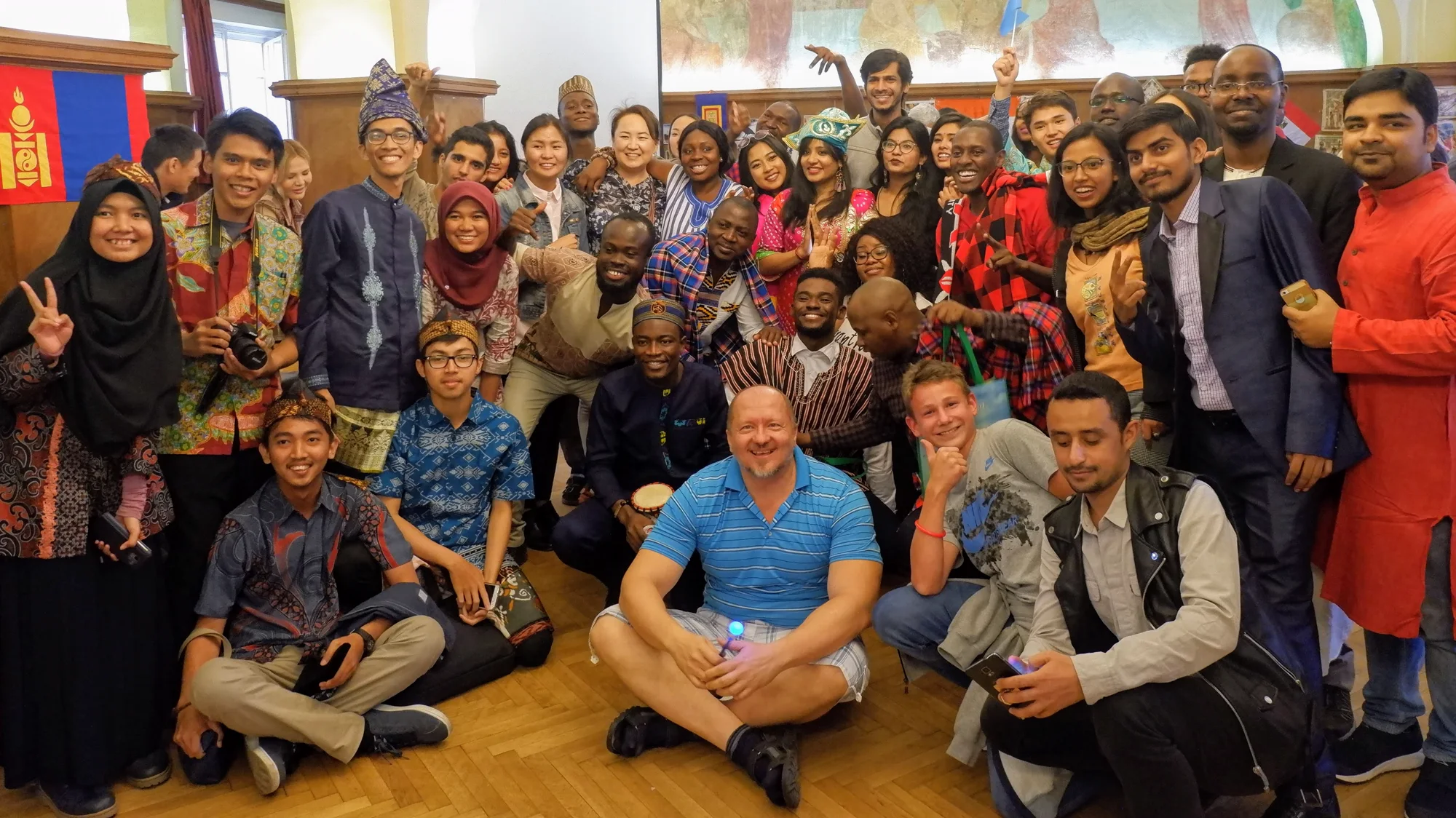
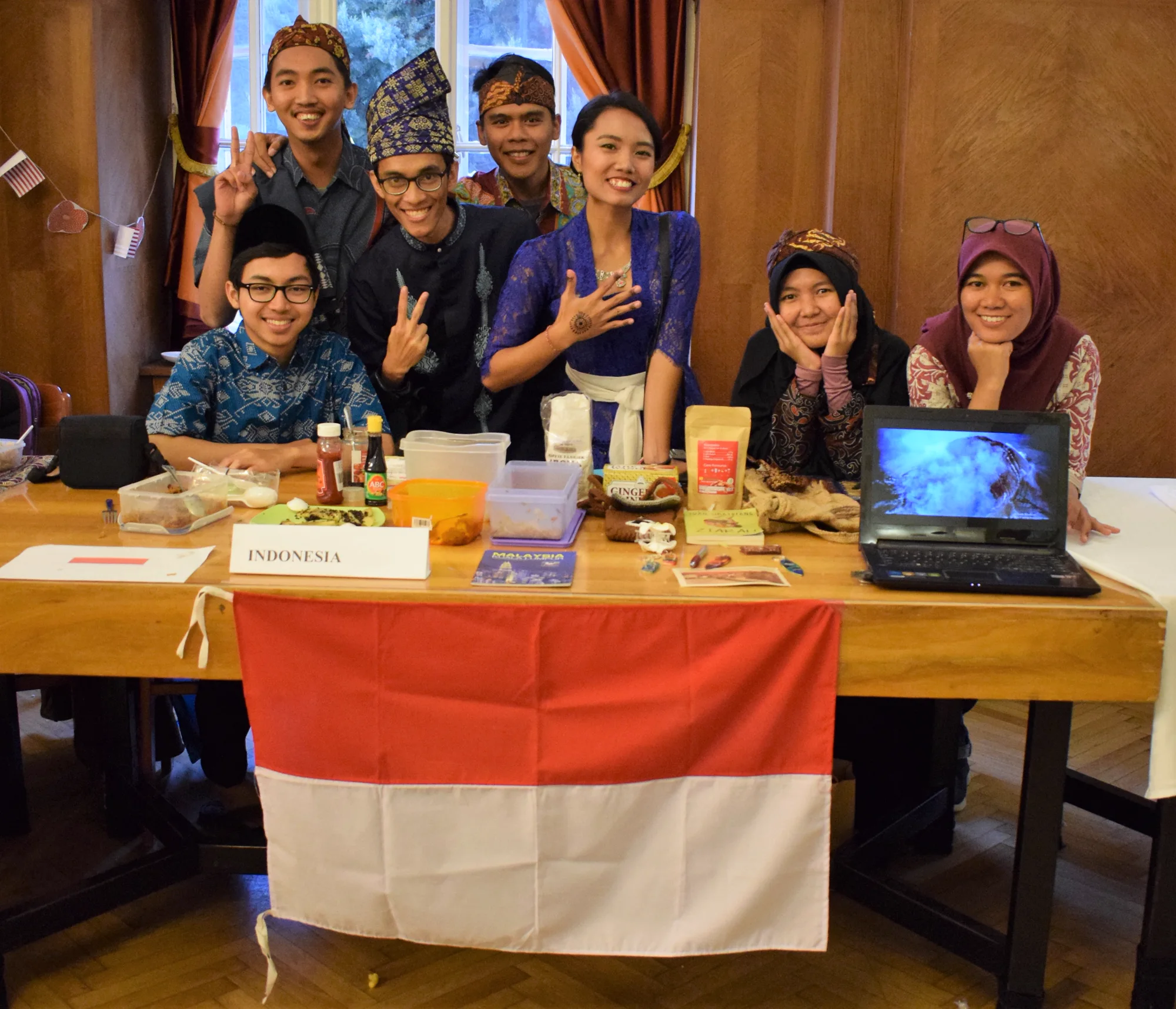
“Cultural exchange actually works. Not through presentations or pamphlets, but through letting someone wear a piece of your tradition and seeing their face light up.”
Students from every booth lined up to try the totopong. We spent half the night teaching people to fold and tie them; one student wore one over his keffiyeh until the end. The exchange went both ways: one of us came home in a Turkish fez.
NextThen the living lab, where I taught student teams to build, and flew a drone as a wingman.
Part 3 · 2018 to 2019
In the fall semester of 2018/2019 I was one of four Itenas students on an Erasmus+ credit transfer at Szent István University in Gödöllő, Hungary: a computer science student placed in the Faculty of Mechanical Engineering, taking CAD, electronics, quality management, informatics, and Open Lab, where a supply chain problem became an IoT solution proposal.
Discover.
A computer science student in a mechanical engineering faculty, in a new language and climate, far from home for the first time.
Design.
Taking the courses outside my field, and saying yes to everything around them.
Deliver.
CAD, electronics and quality management on top of computer science, and seven of us representing Indonesia at the university’s Researchers Night.
Exchange student · Erasmus+ · Mechanical engineering · CAD
Tap a page to open it full screen; swipe for the next. Every page is also in the PDF.
Muktiadi Akhmad Januar · Part 3 · The living lab
What it isAt Itenas’ Innovative Workingspace Integrated Living Laboratory (I-WILL), I advised student teams on IoT and engineering projects, led the drone-as-a-wingman integration for the Sergap-Senyap electric military vehicle, and ran the lab’s first workshop.
Discover.
A lab full of student teams and hardware, and a drone integration due at a national defence expo: projects had to be finished, shown and written down, not only demonstrated once.
Design.
Advice at the bench, a workshop on finishing and documenting a project, and a drone that flies as a wingman to an electric vehicle.
Deliver.
The Drone-as-a-Wingman system prepared for the Indo Defence 2024 Expo and Forum, and the lab’s first workshop on 13 September 2024.
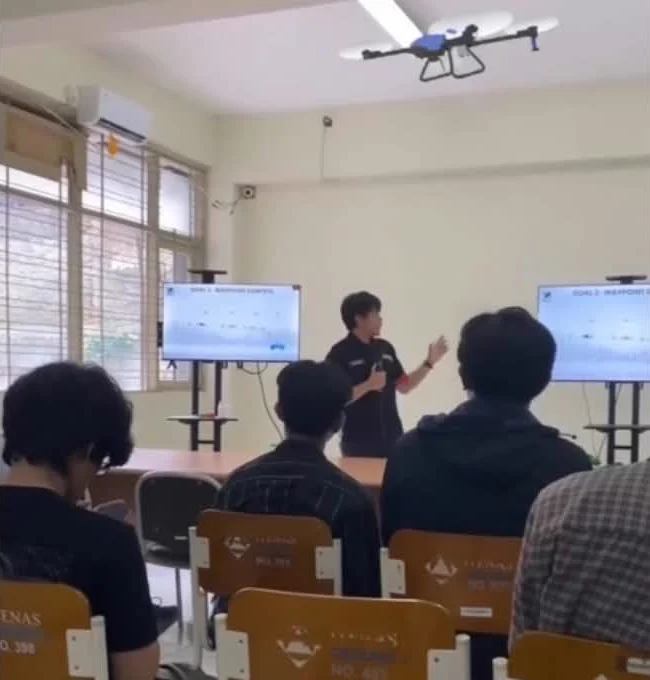
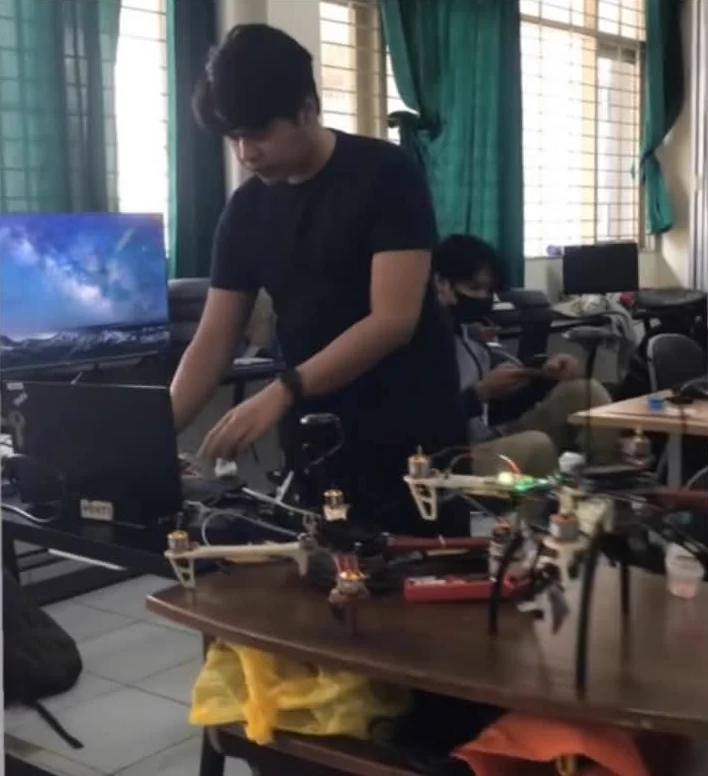
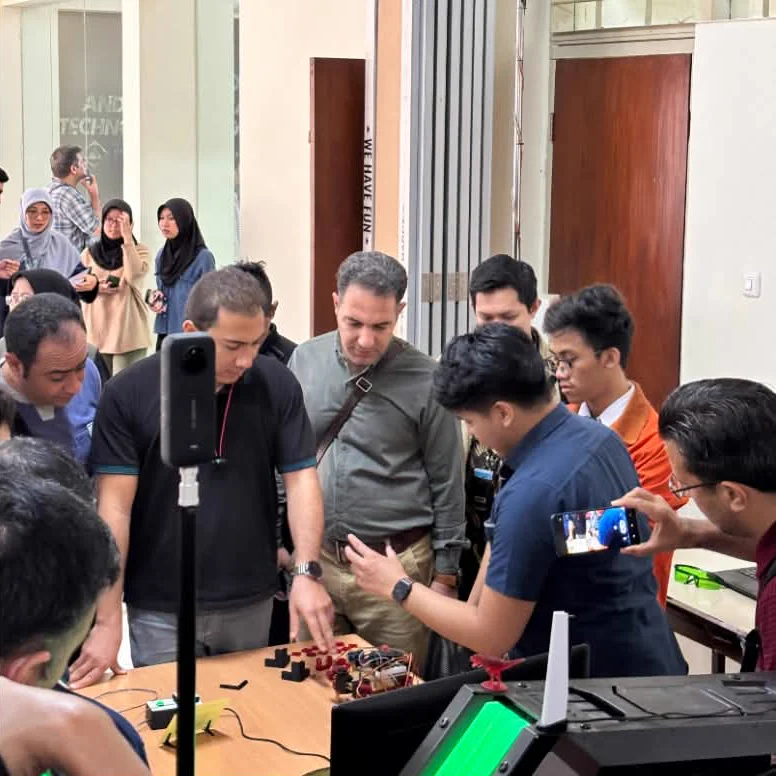
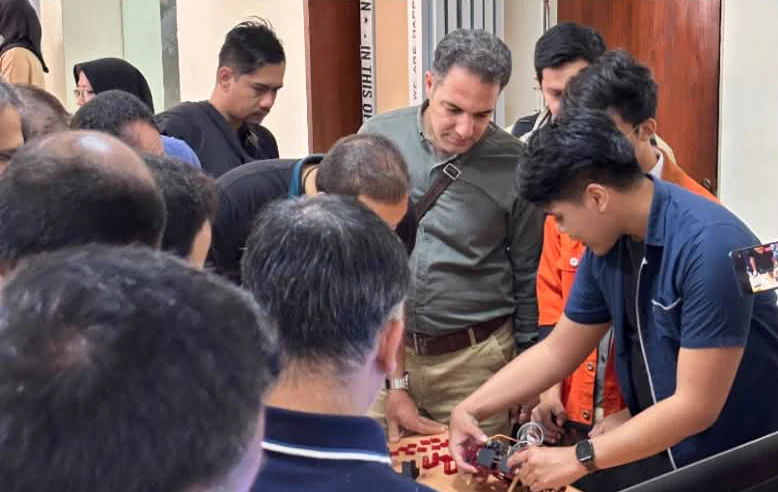
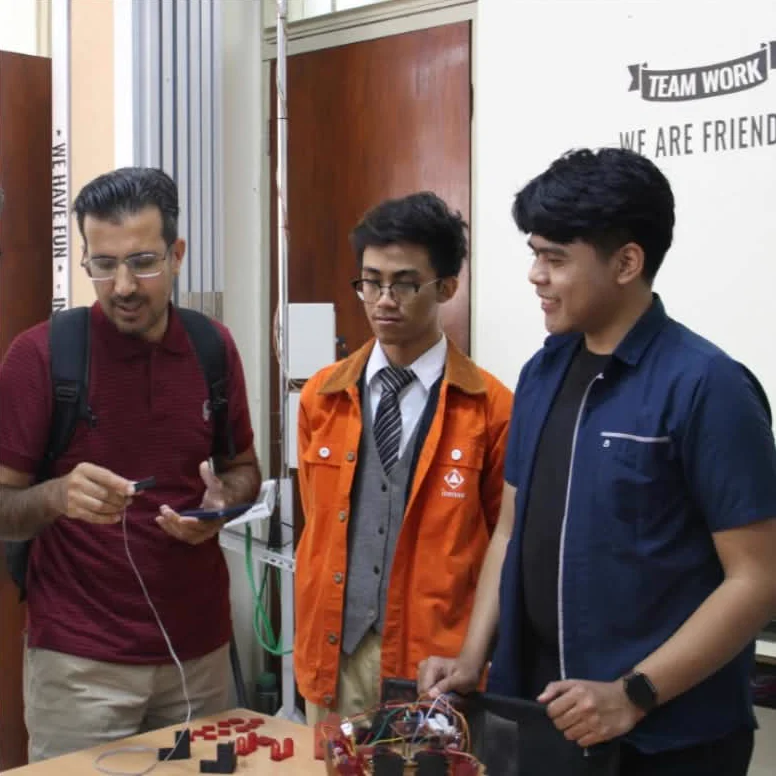
A drone as a wingman
Led the drone integration for the Sergap-Senyap electric military vehicle: a drone that flies as an add-on to it, prepared for the Indo Defence 2024 Expo and Forum.
The lab’s first workshop
Creating a great project, and documenting it well: how to scope a build, finish it and write it down so the next team can carry it on.
Learneda project the next team cannot rebuild is only half done, so the lab’s first workshop was about documenting the work, not only making it.
NextThen the same lab as a test room: a car that maps it with one cheap camera.
Muktiadi Akhmad Januar · One camera, one map
Mapping a room usually takes a stereo camera or a LiDAR. I wanted to know whether a single wireless FPV camera could do it if an AI model guessed the depth of every frame. So I built a car I could drive from a PC, put the camera on it, and fed each frame through Depth Anything V2 into RTAB-Map, a mapping algorithm, in the lab’s workshop room.
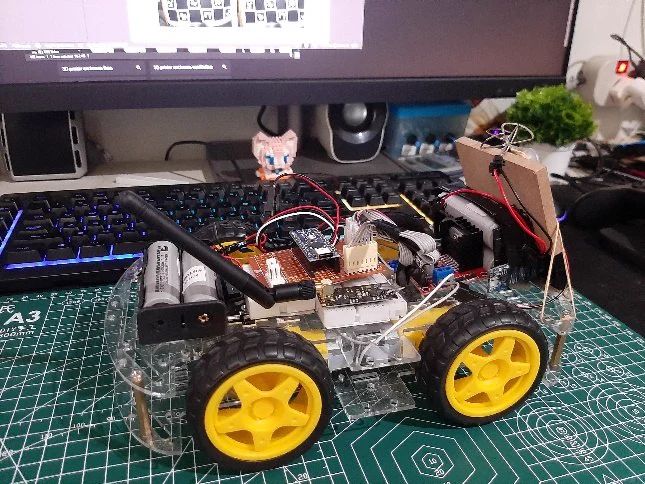
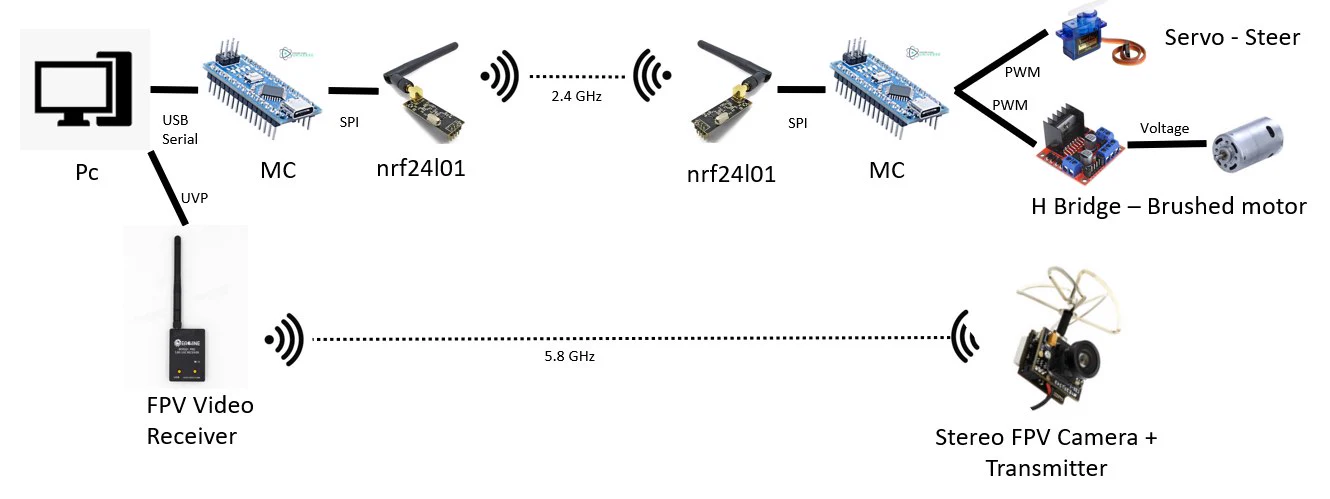
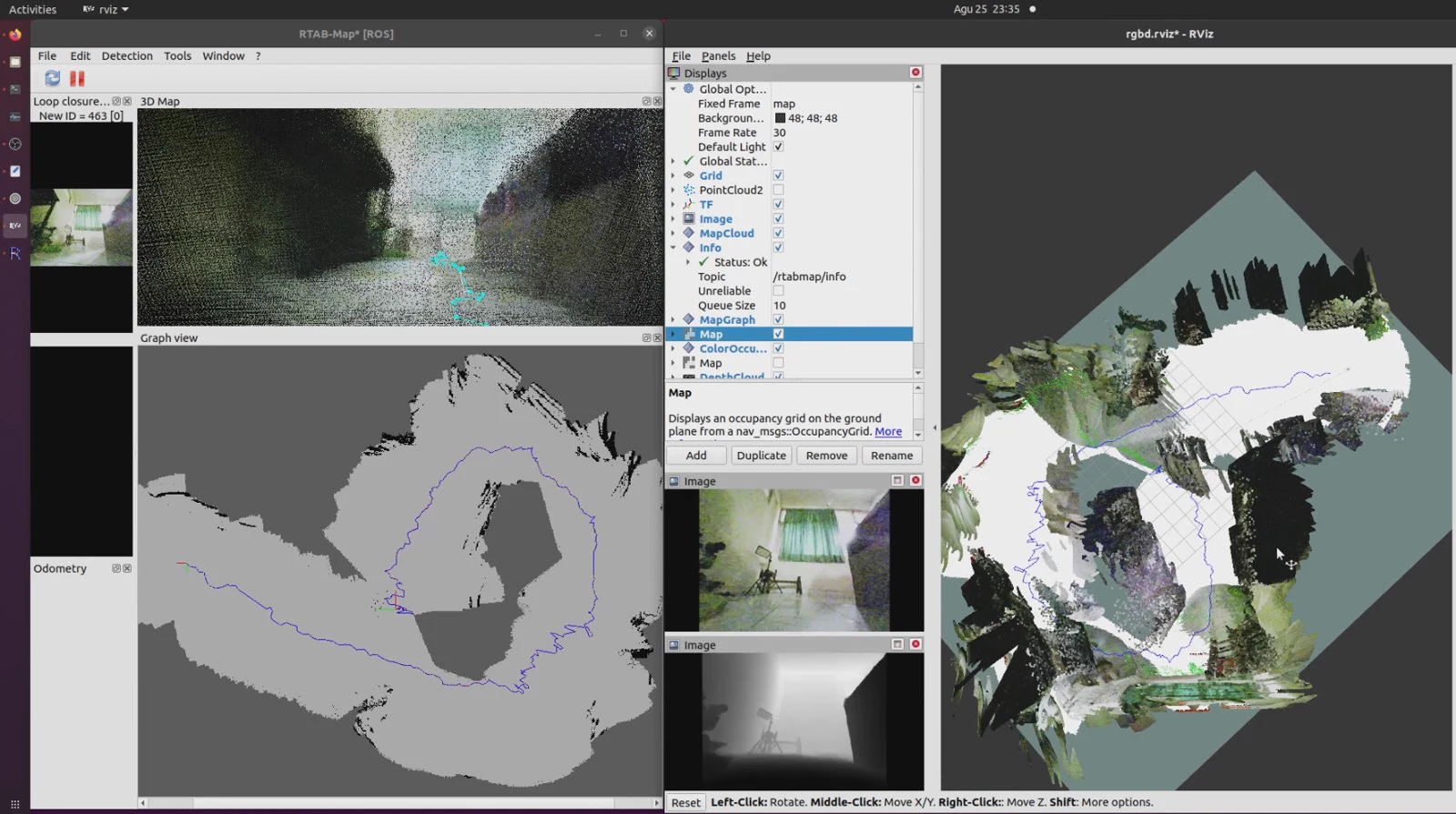

1
camera: no stereo pair, no LiDAR
0.06
frames a second lost: 30.04 in from the camera, 29.97 out with depth
3.3 lux
and the map still recognised the places the car came back to
48%
of one RTX 4090 graphics card, mapping live
Three model sizes on a public drone benchmark
| Model | Error | Per frame |
|---|---|---|
| Large | 1.67 m | 92 ms |
| Base | 2.02 m | 36 ms |
| Small | 2.29 m | 22 ms |
The large model is the most accurate; the small one is four times faster. The choice depends on the robot, not the paper.
NextThat closes Part 3. Part 4 is what I build for myself, starting with the workshop at home.
Part 3 · Jul to Dec 2024
At Itenas’ Innovative Workingspace Integrated Living Laboratory (I-WILL), I advised student teams on IoT and engineering projects, led the drone-as-a-wingman integration for the Sergap-Senyap electric military vehicle, and ran the lab’s first workshop.
Discover.
A lab full of student teams and hardware, and a drone integration due at a national defence expo: projects had to be finished, shown and written down, not only demonstrated once.
Design.
Advice at the bench, a workshop on finishing and documenting a project, and a drone that flies as a wingman to an electric vehicle.
Deliver.
The Drone-as-a-Wingman system prepared for the Indo Defence 2024 Expo and Forum, and the lab’s first workshop on 13 September 2024.
Senior project advisor · IoT · Drones · Teaching
Tap a page to open it full screen; swipe for the next. Every page is also in the PDF.
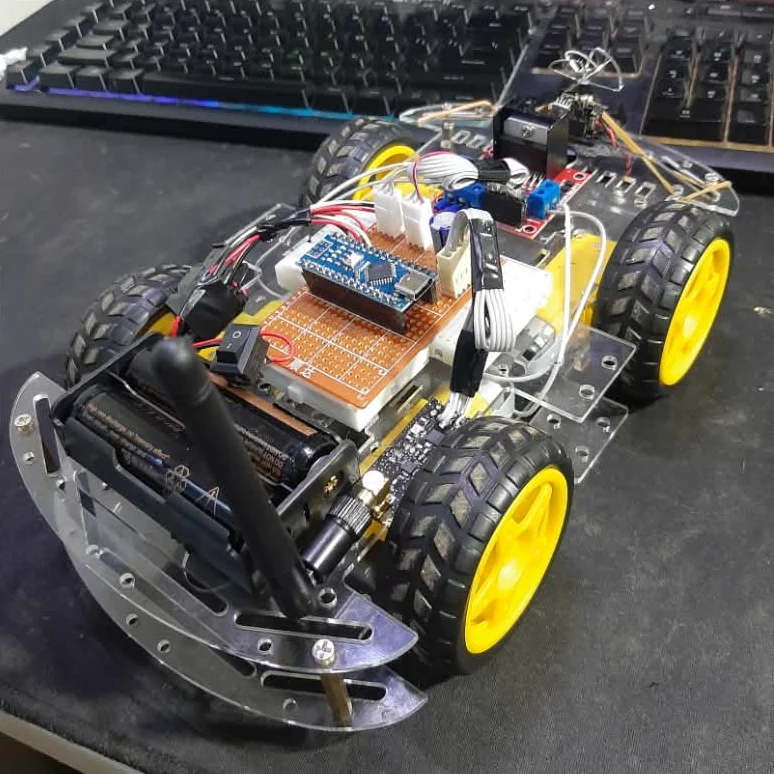
A remote car with its own live camera, built at home on an evening.
Muktiadi Akhmad Januar · Part 4 · Beyond work
Part 4
What I build for myself, and why it matters to clients
Evenings and weekends are where new tools get tried before they reach a client: a workshop of small machines, an offline finance app, a video engine, and Sea Wake, the passion project where everything goes into one world.
NextFirst the workshop at home, where the habit of asking how a thing works began; then the products, engines and game I build for myself.
Part 4
What I build for myself, and why it matters to clients
Evenings and weekends are where new tools get tried before they reach a client: a workshop of small machines, an offline finance app, a video engine, and Sea Wake, the passion project where everything goes into one world.
Muktiadi Akhmad Januar · Part 4 · The workshop at home
Things built at home because the shop could not sell them, or sold them at a price that made no sense: a 900 degree force-feedback wheel, a head tracker, a 25 kHz fan controller, a water tank that measures itself, a water heater, an air filter. Each one began with a question about how something works.
IDR 120,000
A 900 degree force-feedback wheel
Five times the rotation of version one, three pedals, a frame that stays on the desk.
IDR 50,000 vs 6.5 million
A head tracker
Turn your head toward a corner and the in-game camera turns with you. It sticks to the side of a headset.
Laser cut
A button box with a backlit faceplate
The first thing the laser cutter made, misaligned first attempt included.
Electronics
A 25 kHz fan controller, no oscilloscope
Designed around a 555 timer in an online simulator, with parts I could actually buy.
Four sensors
A water tank that measures itself
Air pressure, ultrasonic and laser all failed; the fourth sensor cost almost nothing.
Physics first
A water heater built on one fact of physics
Hot and cold water in a tank do not mix, so a single-pipe house could have hot showers.
Two versions
An air filter that taught me CAD
Version one in laser cut MDF; version two in cardboard and tape. Both clean the air.
Prototype
A racing dashboard
A laser cut gauge face, an LCD and the wiring behind it, driven by the game’s telemetry.
Poor man’s force feedback
Each version’s flaws became the specification for the next.
50k
rupiah for a head tracker that sells for 6.5 million
900°
of force-feedback steering for IDR 120,000
Use what is cheap and already there, and spend the effort on the part that matters: the same instinct that later chose Power BI over a new app, and WhatsApp over a new login.
Learneda cheap first version reveals the real requirements, so the steering wheel’s flaws became the specification for the next one.
NextThe builds did not stay on the desk: they were driven, sold and shown.
Muktiadi Akhmad Januar · Off the desk
The builds did not stay on the desk. The dashboard runs with a driving game, the laser cutter earned its keep engraving name tags for a pet shop, a designer in the browser let a buyer lay out their own button box, and a table of prototypes went to the Itenas living lab for visitors to try.
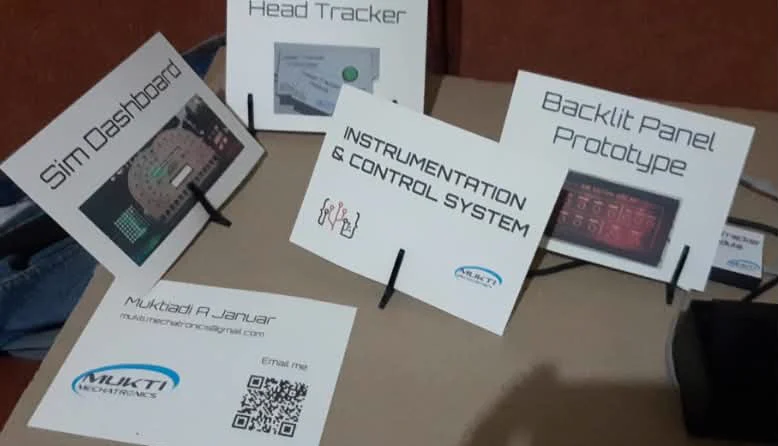
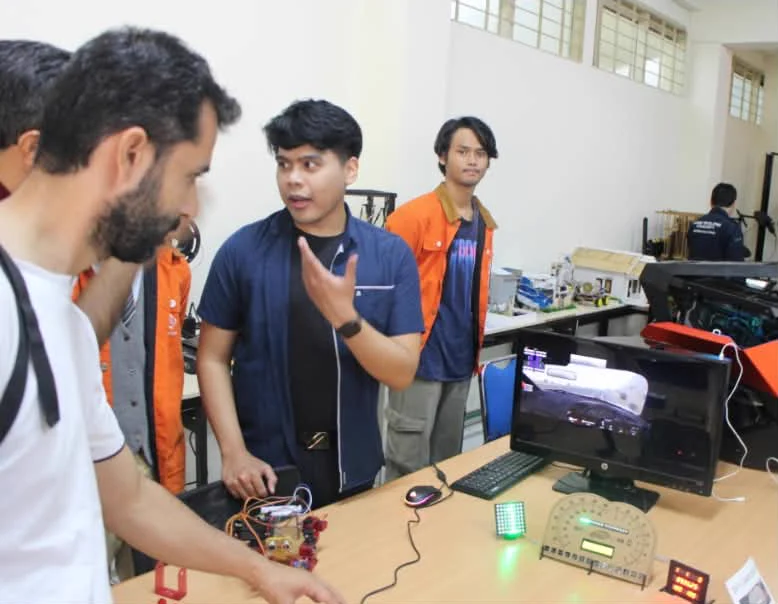
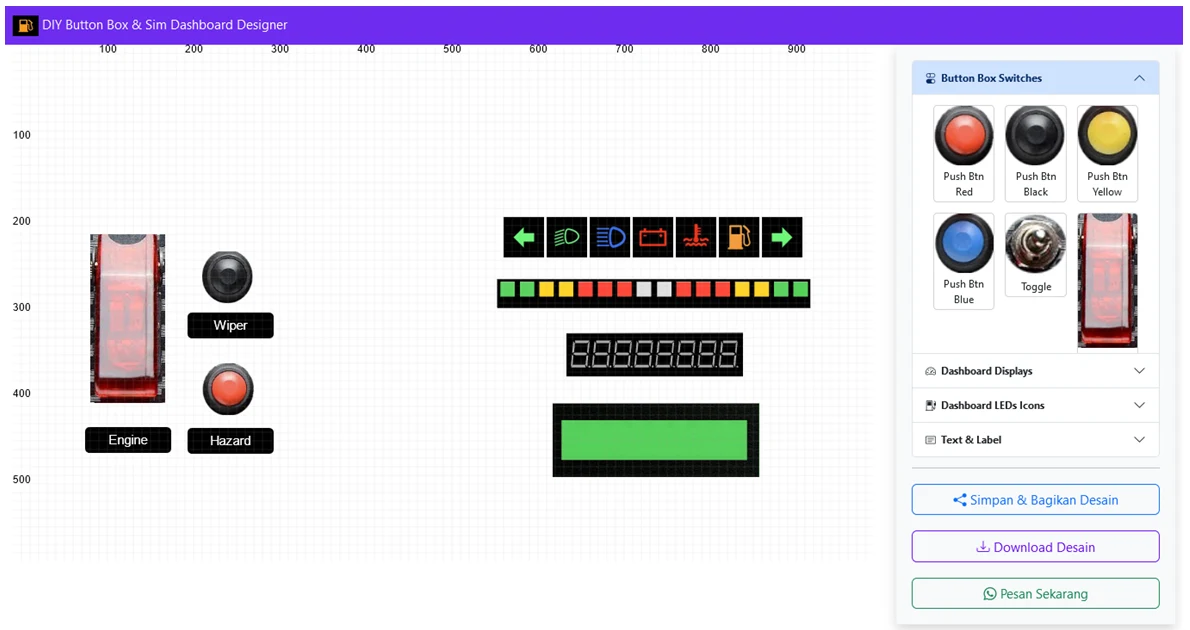
½
Almost half the laser cutter, paid for by one pet shop’s engraved name tags. My only regret is not starting sooner.
NextThe same habit pointed at software: products I run for myself.
Part 4 · 2022 to now
Things built at home because the shop could not sell them, or sold them at a price that made no sense: a 900 degree force-feedback wheel, a head tracker, a 25 kHz fan controller, a water tank that measures itself, a water heater, an air filter. Each one began with a question about how something works.
Discover.
The product on the shelf was too expensive, too closed, or did not fit the house it had to live in.
Design.
Small machines, each a first version cheap enough to fail, so its flaws became the specification for the next.
Deliver.
A head tracker for IDR 50,000 instead of IDR 6.5 million, a 900 degree wheel for IDR 120,000, and a laser cutter half paid for by one pet shop’s name tags.
Maker · CAD · Laser and CNC · 3D printing · Electronics
Tap a page to open it full screen; swipe for the next. Every page is also in the PDF.
Muktiadi Akhmad Januar · Part 4 · Built for myself
What it isProducts I own end to end: Saku, a finance app that looks forward and works offline; BinaTOEFL, a TOEFL course explained in Indonesian; and templates that show a whole product in an afternoon.
Discover.
Money apps only look back at what was already spent and stop working when the signal drops; TOEFL preparation feels like a wall of long tests explained only in English.
Design.
Products I own end to end, from the first screen to the server. They are where I try a new idea before it reaches a client.
Deliver.
Saku live at saku.muktiadi.com, BinaTOEFL with hundreds of practice items explained in Indonesian, and templates that show a whole product in an afternoon.
Saku, money that looks forward
A forecast of what comes next with what-if scenarios, an offline queue that syncs later, and an assistant that only ever proposes drafts you confirm.
Any signal
BinaTOEFL, five questions a day
A 42-unit path with 480 practice items, each explained in Indonesian, and points from practice that unlock a full simulated test.
Any phone
Saku · money that looks forward, live at saku.muktiadi.com (demo data)
 1
 2
 3
BinaTOEFL · five questions a day, every option explained in Indonesian
480
TOEFL items, each option explained
1 day
to build Patungan, from idea to a shared link
Learnedarchiving an account made money vanish from the budget, so archiving now only hides, and tests prove money is conserved.
NextEvery reel frame in this book came out of one of these side projects: an engine that renders video from code.
Part 4 · 2025 to 2026
Products I own end to end: Saku, a finance app that looks forward and works offline; BinaTOEFL, a TOEFL course explained in Indonesian; and templates that show a whole product in an afternoon.
Discover.
Money apps only look back at what was already spent and stop working when the signal drops; TOEFL preparation feels like a wall of long tests explained only in English.
Design.
Products I own end to end, from the first screen to the server. They are where I try a new idea before it reaches a client.
Deliver.
Saku live at saku.muktiadi.com, BinaTOEFL with hundreds of practice items explained in Indonesian, and templates that show a whole product in an afternoon.
Product owner and builder · PWA · Offline queue · AI drafts
Tap a page to open it full screen. Every page is also in the PDF.
Muktiadi Akhmad Januar · Part 4 · Video engines
What it isAn engine that renders product reels and narrated films from code: a timeline written in HTML, captured frame by frame in headless Chrome, with music and sound, in portrait and landscape.
Discover.
An app that people only understand once someone walks them through it, and a screen recording that turns small text into a blur on a phone.
Design.
An engine that renders a timeline written in HTML into video, frame by frame, in headless Chrome. Products explained in about a minute.
Deliver.
Dozens of reels delivered in portrait and landscape. Every reel frame in this book came out of it.
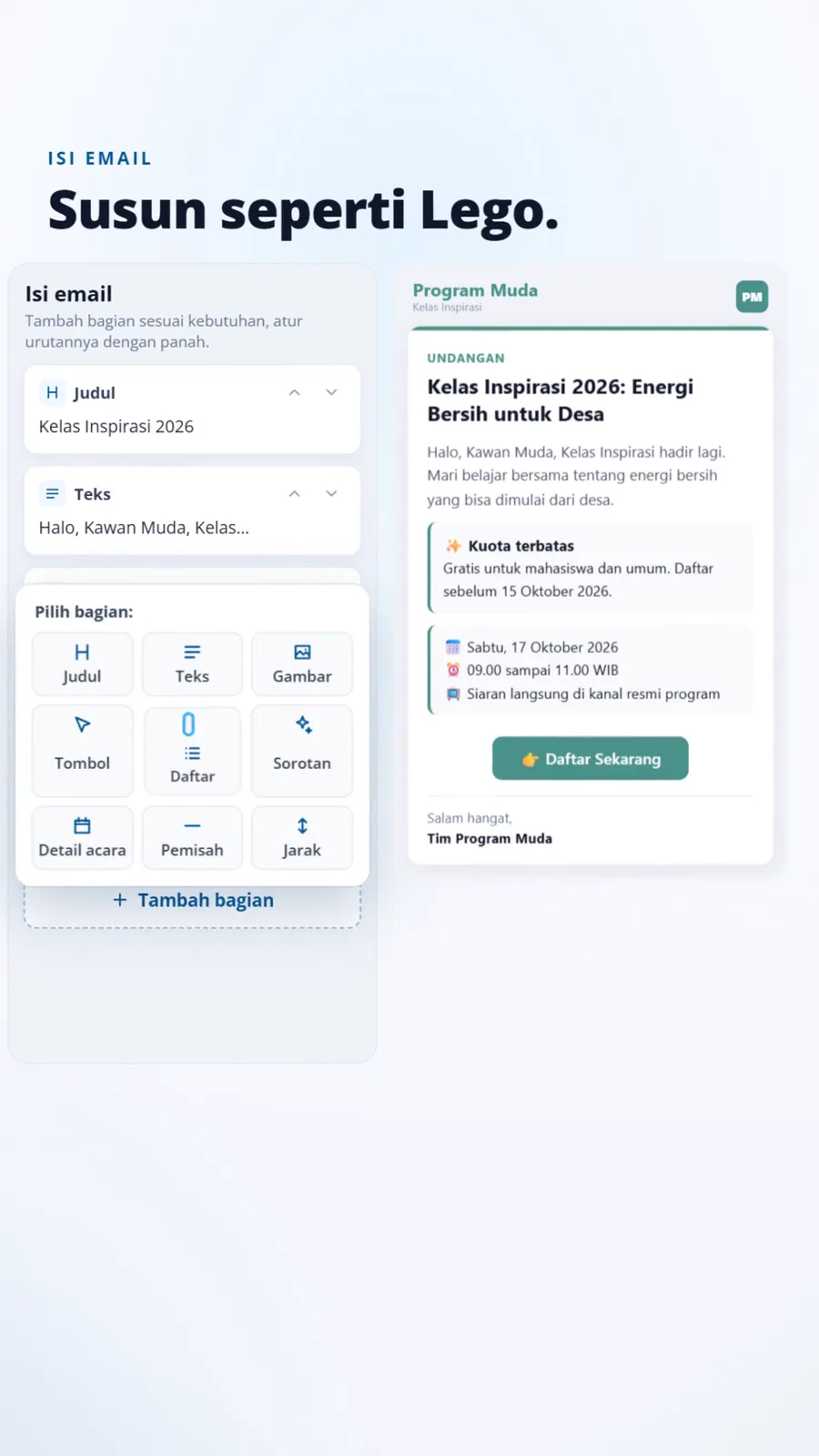
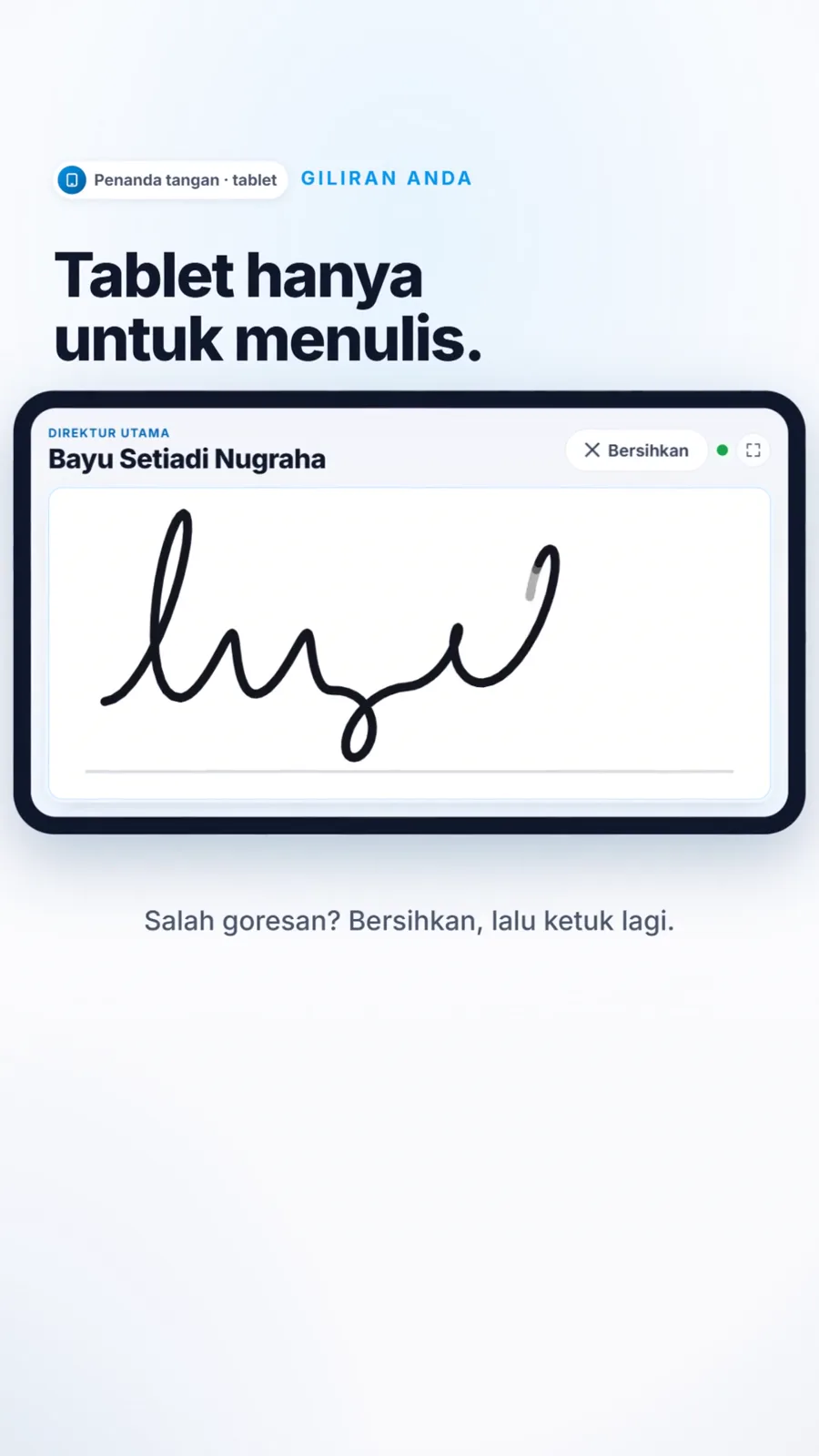
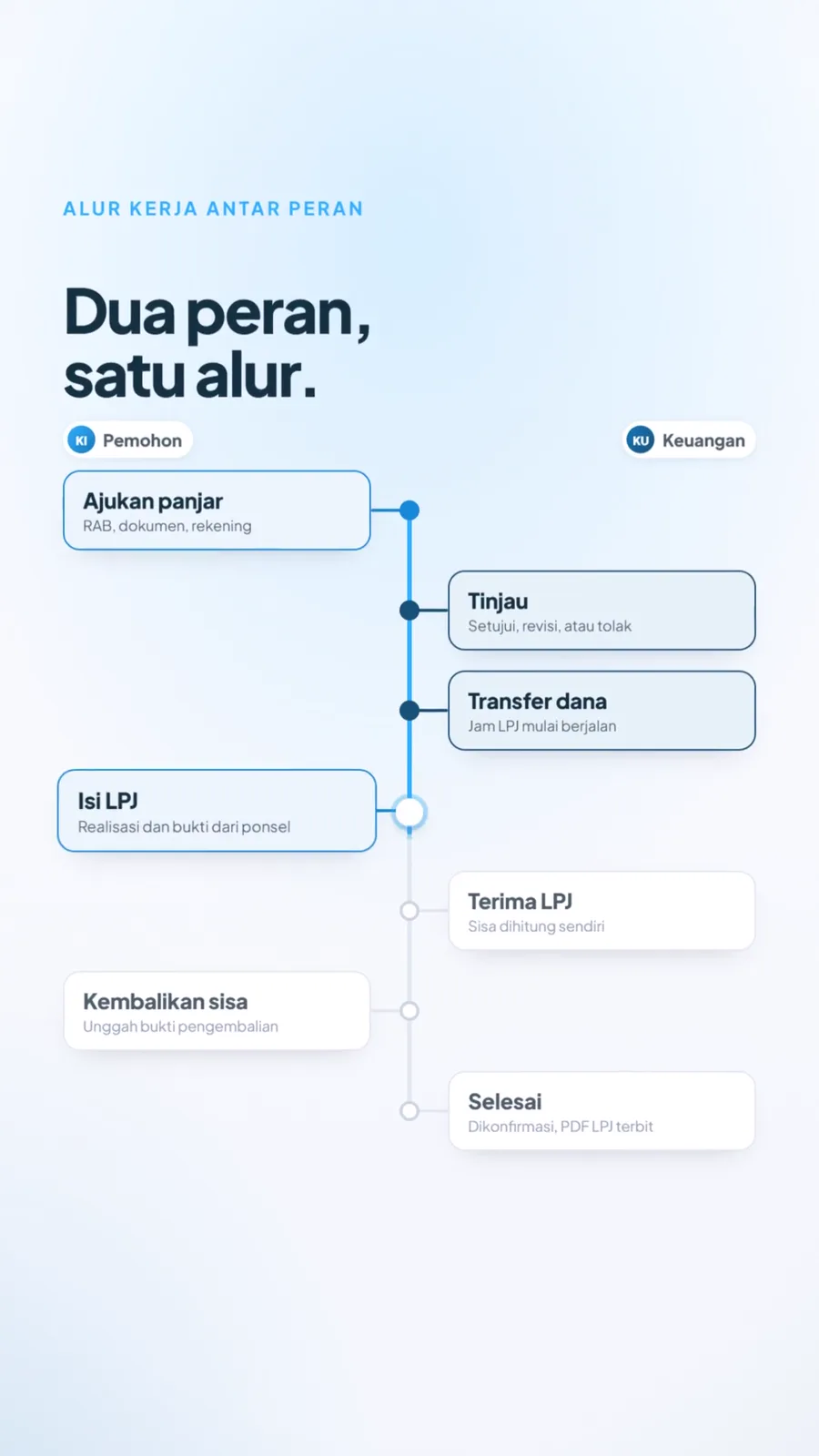
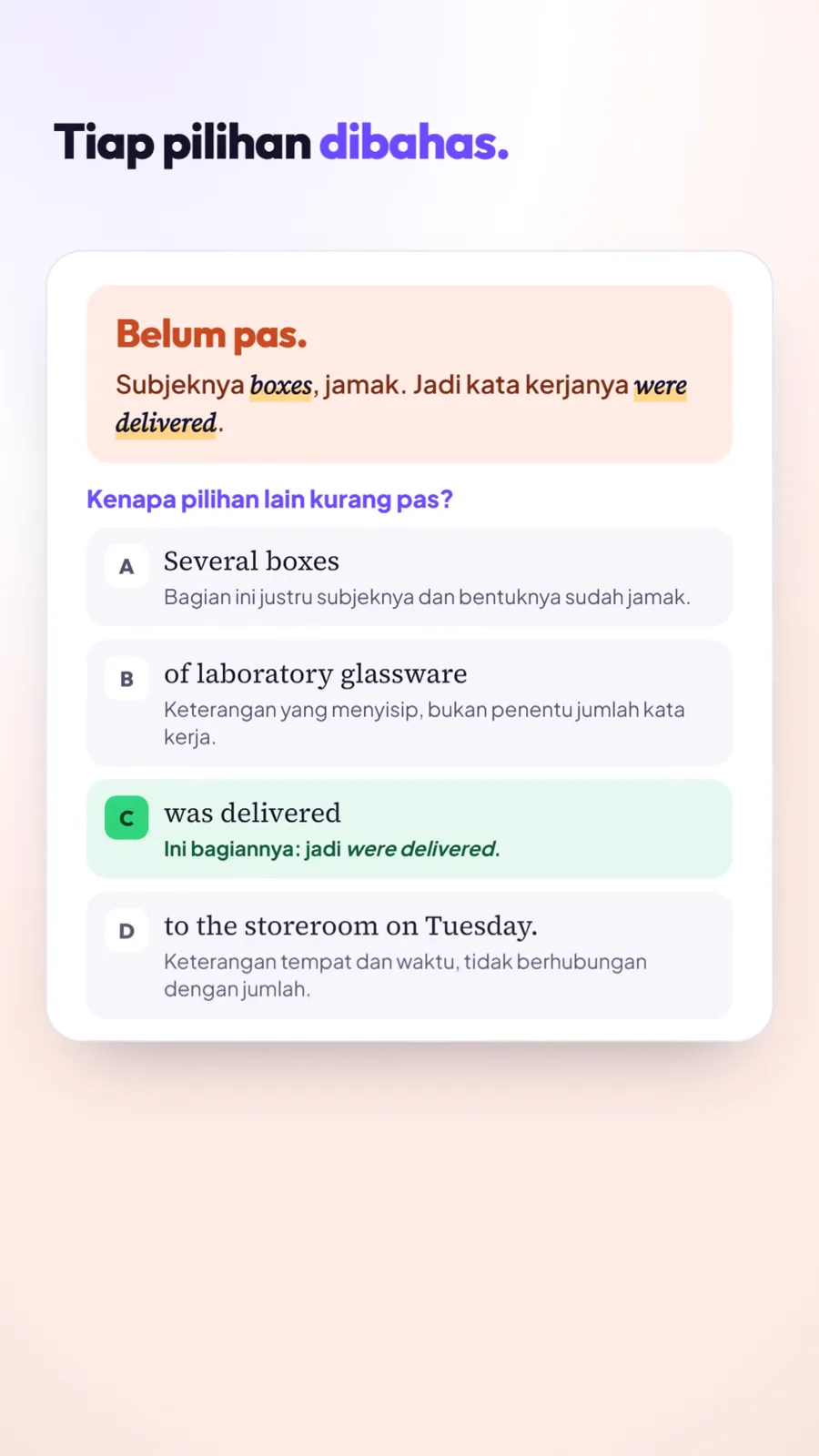
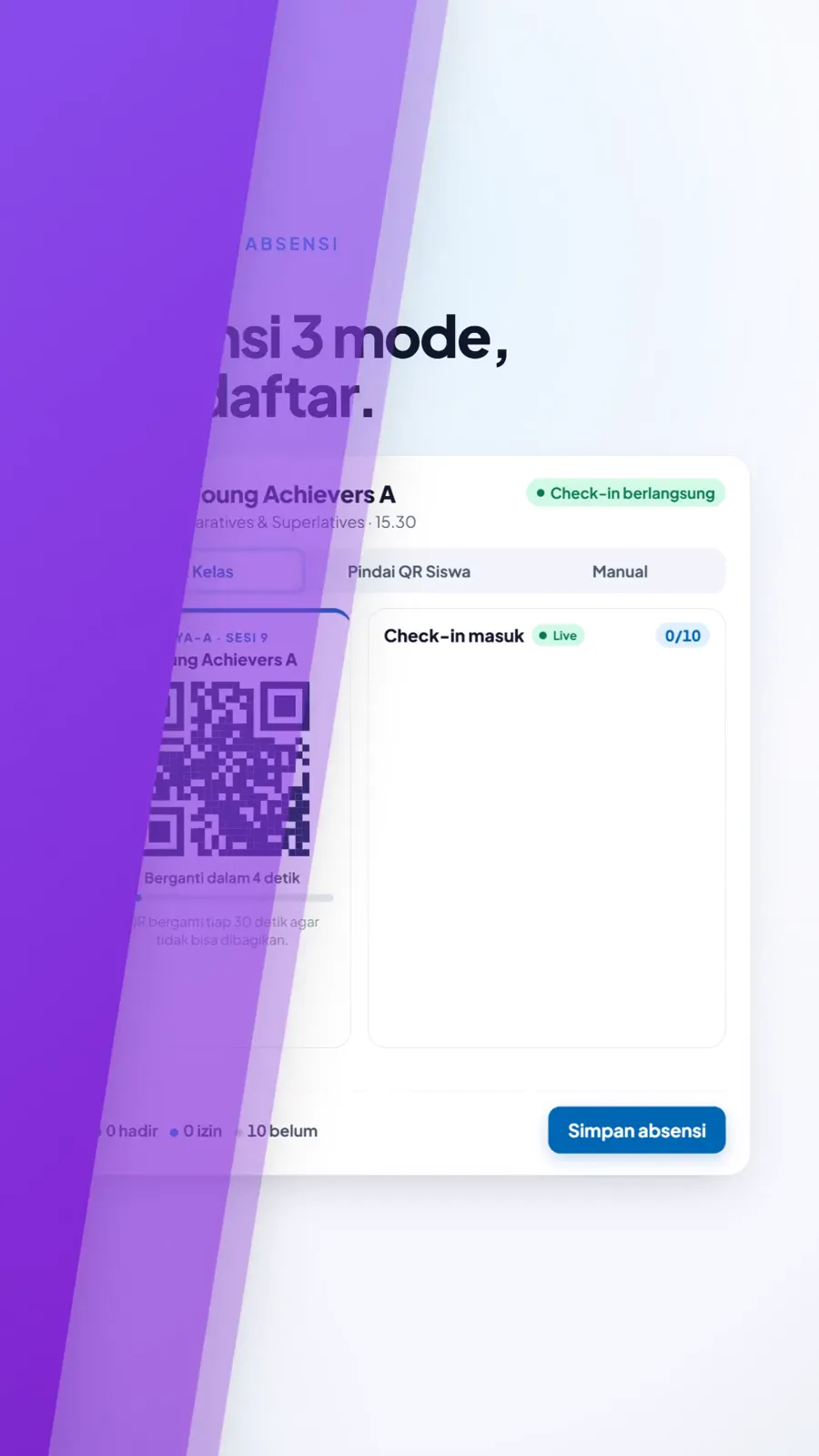
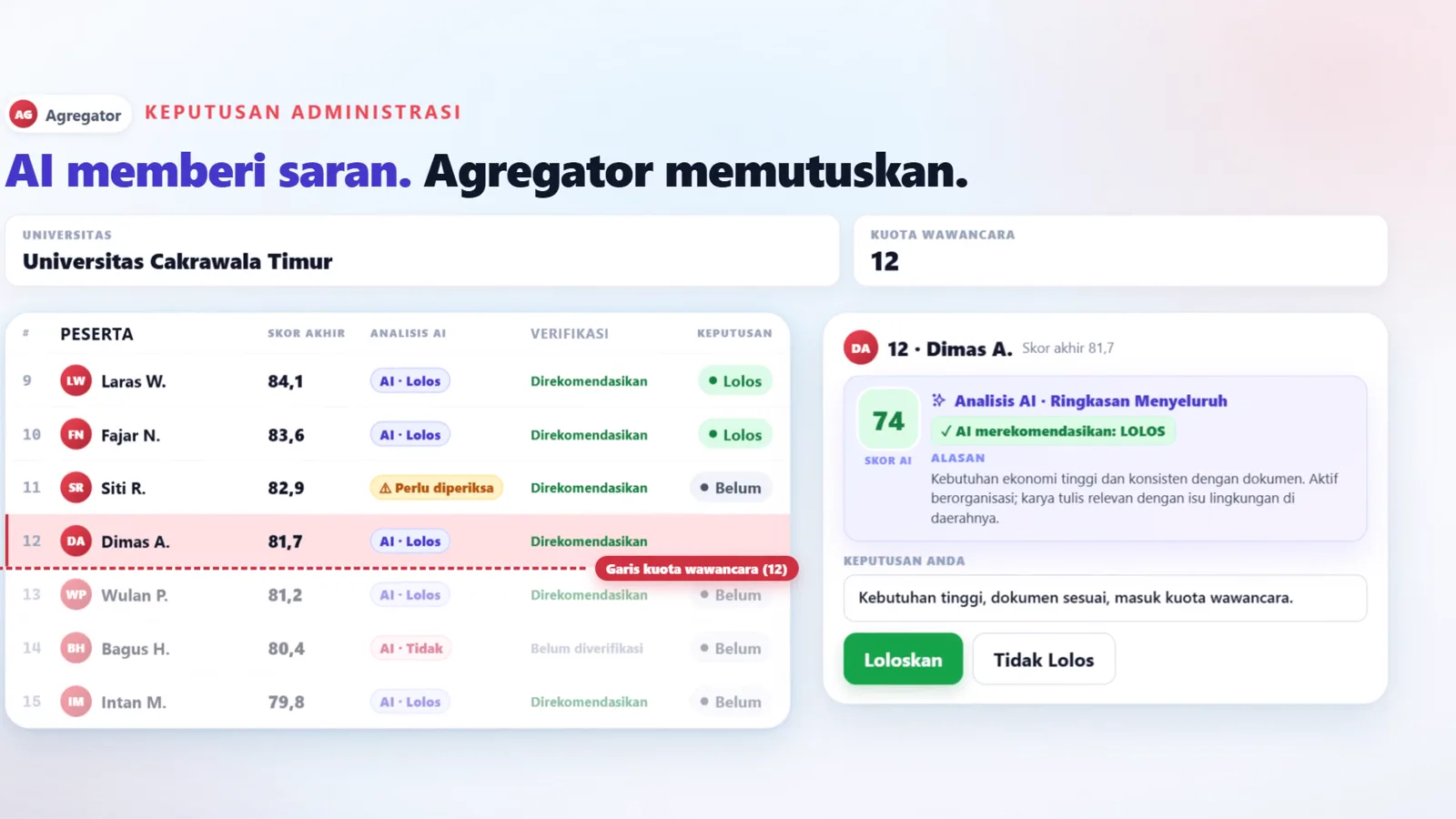
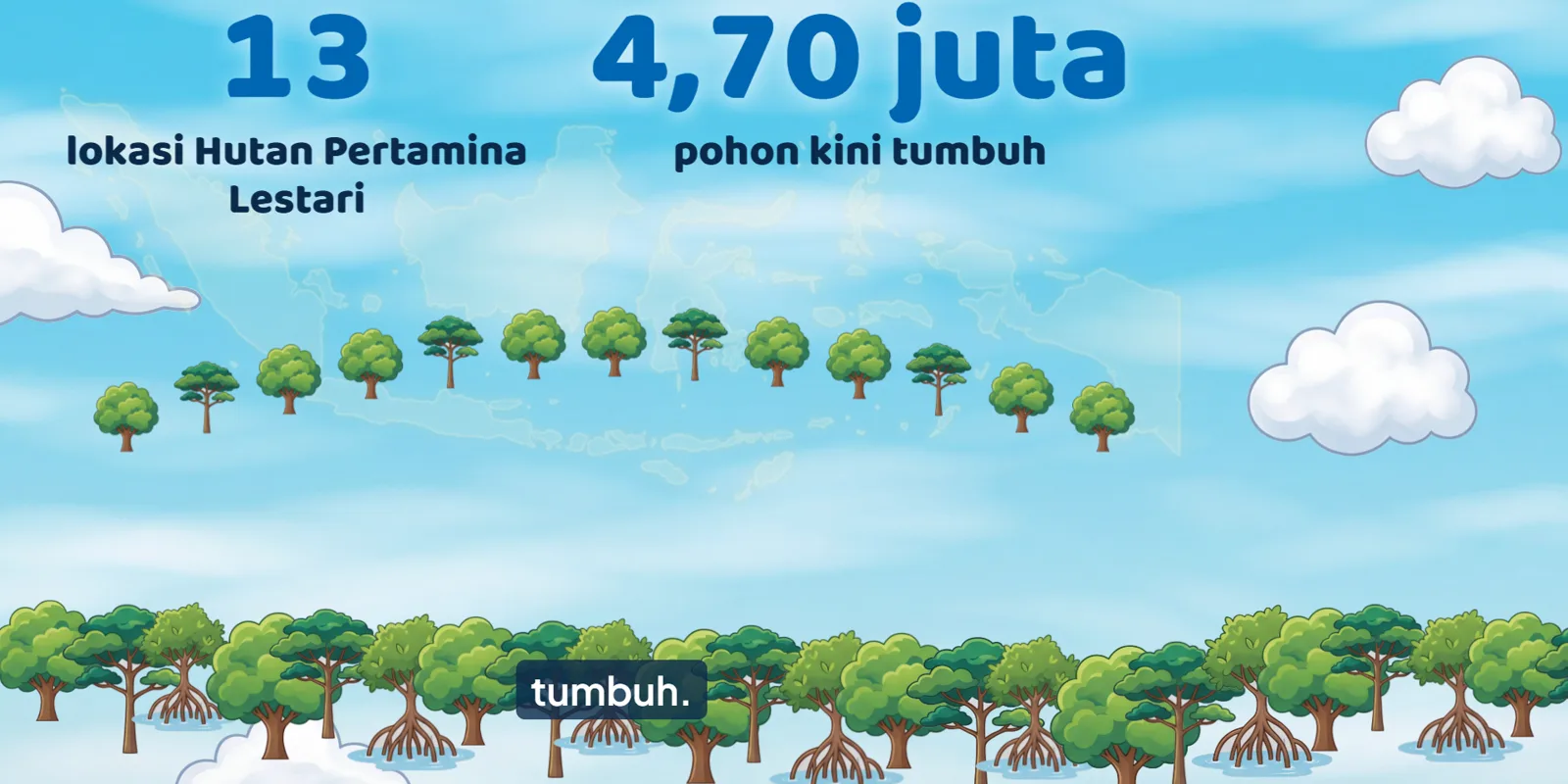
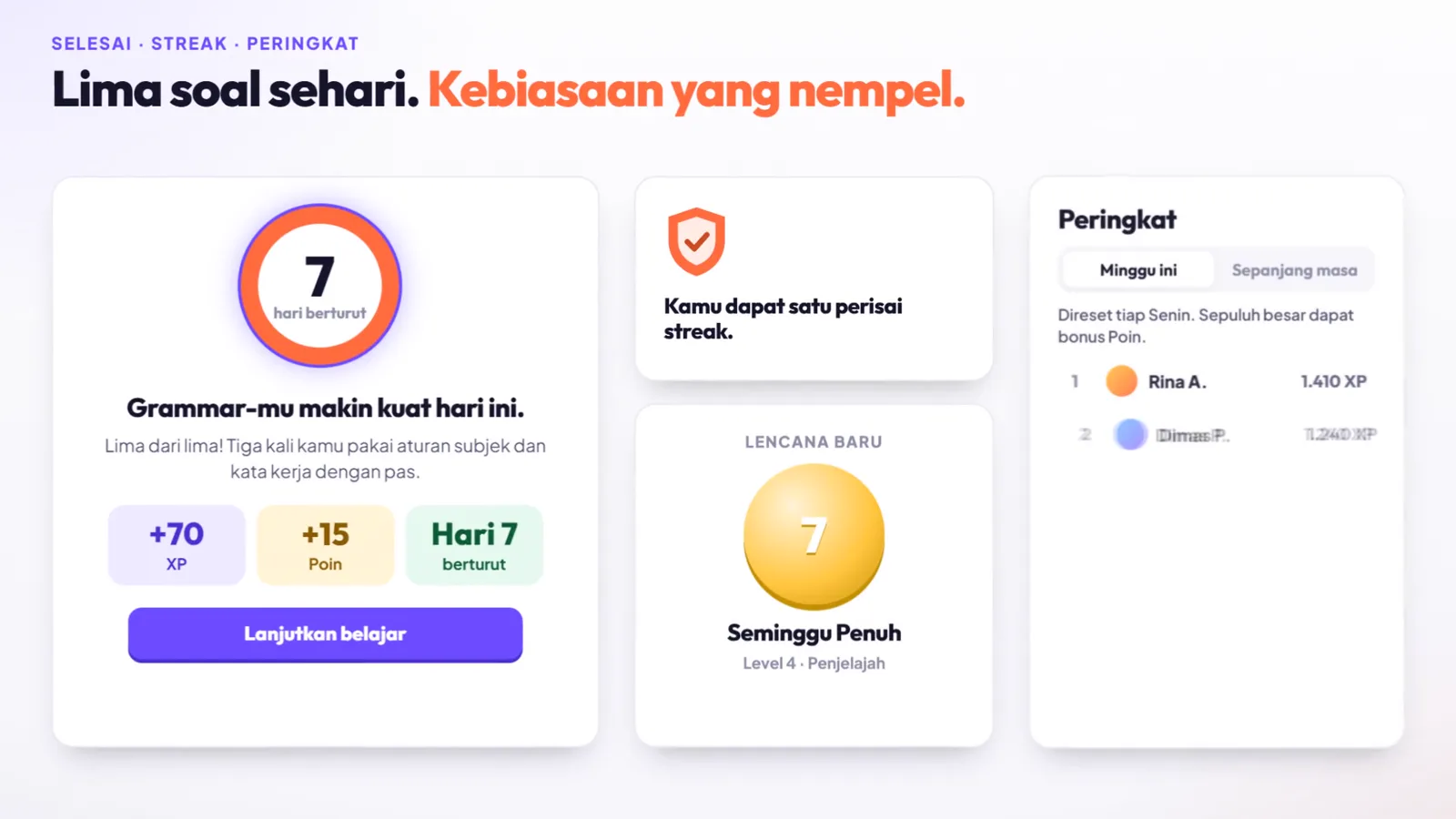
Sharp at any size
The product’s own screens, colours and words rebuilt with example data, then rendered frame by frame with real motion blur.
Any phone
One reel per viewer
A cut for each audience, from the same scenes.
People decide
Every shape a channel wants
9:16 and 16:9, at 1080p and 720p, with music and sound effects.
Any phone
From a brief to a film
A second engine turns a brief into a narrated film with an AI writer, art and voice, checked by AI judges, then rendered the same way.
Kept apart
Learnedtimers and transitions make frames impossible to repeat, so every element is computed from time alone, which unlocked real motion blur.
NextThe last project goes furthest: a game engine, built to test how far one architect can direct AI agents.
Part 4 · 2026
An engine that renders product reels and narrated films from code: a timeline written in HTML, captured frame by frame in headless Chrome, with music and sound, in portrait and landscape.
Discover.
An app that people only understand once someone walks them through it, and a screen recording that turns small text into a blur on a phone.
Design.
An engine that renders a timeline written in HTML into video, frame by frame, in headless Chrome.
Deliver.
Dozens of reels delivered in portrait and landscape. Every reel frame in this book came out of it.
Designer and builder · Headless Chrome · ffmpeg · Motion design
Tap a page to open it full screen. Every page is also in the PDF.
Muktiadi Akhmad Januar · Part 4 · A passion project
What it isSea Wake is my passion project: a boat-building game on an engine of my own, with a simulated ocean, weather, electrics and rescue missions. It is where I pour everything I have learned into one world, wholeheartedly, to explore how far each skill can go.
Discover.
Every project before this used one slice of what I know: control systems in the workshop, platforms at the foundation, films from code. I wanted one world where all of it goes in at once, with nothing held back, to find the limits.
Design.
A sandbox on my own Rust engine. I set the vision, the architecture rules and the gates, and directed up to four AI agents to build it with me.
Deliver.
From a single cube on an empty ocean to a cargo ship in a storm in ten days: naval physics, electrics, weather, rescue and a game that films its own devlog.
Wholehearted, with nothing held back
Every skill in this book, poured into one world, to see how far it all goes.
What went in, and where in this book it was learned
Electrics, PLCs and microcontrollers
Batteries, breakers and lamps wired on layers; controllers you program in Lua.
From control systems, p. 52
A helm console you design
Gauges, switches and screens placed on a dashboard of your own.
From the racing dashboard, p. 59
Weather, tides and rescue
Moving weather, 2.5 m spring tides, search and rescue calls at night.
From surveys in the field, p. 45
Hulls that flood honestly
Compartments found per launch; a capsized hull traps air and floats.
From a semester of mechanical engineering, p. 52
Building from blocks
Boats and cars from 20 cm blocks, up to a 392,000-block cargo ship.
From CAD and the workshop, p. 58
A game that films itself
Every feature lands with its film, recorded by the game from a script.
From the video engines, p. 61
A book inside the game
A hundred and ten pages of in-game guide, written with each feature.
From guides drawn from live screens, p. 25
New ground, to the limit
Naval hydrodynamics, an FFT ocean, shaders and procedural sound: all first attempts.
Learned here, from scratch
Learneda project you love is where you find your limits, so I let this one take everything; and since agents type it, I chose Rust, which refuses to compile the memory bugs I would otherwise have to catch by eye.
NextHow one person builds a world this size: the rules, the gates, and four AI agents.
Muktiadi Akhmad Januar · The method
A world this size is more than one person can type in ten days. So I wrote the vision, the architecture rules and the gates, and directed up to four AI agents working in parallel against them. The method, not the line count, is the point.
How one architect directs four agents
10
days from an empty repository to a storm at sea
1,786
tests every change must pass before it merges
392,119
blocks in the cargo ship, re-meshed in under a millisecond
Rules the agents cannot break
A frozen fingerprint test fails if any bit of the simulation changes; the compiler enforces module boundaries; nothing merges past format, lint and 1,786 tests.
On the record
Physics that does not cheat
Buoyancy per hull piece, planing lift and friction from naval references, and trapped air that keeps a capsized hull afloat.
People decide
One ocean for physics and pictures
One wave spectrum driven by the wind, computed once and shared by both.
Kept apart
A devlog that cannot exaggerate
A tool reads the game’s own history and has the game film each episode from that day’s build.
On the record

Stills from footage the game recorded of itself. About 276,000 lines of Rust in ten days, typed by agents against rules I wrote.
NextEvery system in this book, set against the same six failures.
Part 4 · Nov 2026
Sea Wake is my passion project: a boat-building game on an engine of my own, with a simulated ocean, weather, electrics and rescue missions. It is where I pour everything I have learned into one world, wholeheartedly, to explore how far each skill can go.
Discover.
Every project before this used one slice of what I know: control systems in the workshop, platforms at the foundation, films from code. I wanted one world where all of it goes in at once, with nothing held back, to find the limits.
Design.
A sandbox on my own Rust engine. I set the vision, the architecture rules and the gates, and directed up to four AI agents to build it with me.
Deliver.
From a single cube on an empty ocean to a cargo ship in a storm in ten days: naval physics, electrics, weather, rescue and a game that films its own devlog.
Creator, architect and director · Rust · wgpu · FFT ocean
Tap a page to open it full screen; swipe for the next. Every page is also in the PDF.
Muktiadi Akhmad Januar · What it all survives
Every system in this book, set against the same six failures: the habit of designing for what goes wrong, not the happy path.
| System | Weak or no signal old phones, rural networks | A crash mid-task closed tab, dead battery | Everyone at once deadline night, a full hall | One part down a server, a carrier, a vendor | A mistake with live data a bad release, a wrong list | Proof it is real audit, QR, signatures |
|---|---|---|---|---|---|---|
| PFSeries 2.0 p.8 | Light pages from the edge; uploads detour six ways | Form saved as you go; a failed save stays with a retry | Parts kept apart; email in throttled batches | A heartbeat names the slow part; maintenance without a release | Guarded scripts: dry run, backup, refuse when unsure | Audit trail, QR certificates, IDs with a check character |
| Case Challenge recorder p.19 | Video sent in parts while the team talks | Resumes from the first part that did not land | Teams start any time in a window of days | Each part tries several ways in | A rehearsal proves the path before the real attempt | Four server checks before the parts are stitched |
| Sobat Bumi judging p.17 | A tap is a saved score; a failed save rolls back | Hundreds of judges on one-link seats, no accounts | The final list checked name by name against the decree | Every score on the record, by seat and time | ||
| PFdrive p.29 | Installable; files handled on the device | Short links keep working when the main server is down | No one approves their own request | PDFs verifiable by QR; history as a side effect of work | ||
| Attendance and live Q&A p.29 | Taps saved on the phone and sent safely | Retries never double count | A whole hall checking in at once | Moderators choose what reaches the screen | Attendance anonymised after the event | |
| SESAMA field app p.36 | The whole list on every device | A community served in one day | Prints over USB or Bluetooth with no network | A handover counts only when its photo is confirmed | Numbered slips; QR codes with no personal data | |
| Command Center p.36 | A stuck window reopens itself | Screens and server watched; the room heals itself | IT works on a screen the room never sees | Totals only; names never reach the room | ||
| Signing Ceremony p.36 | Only pen strokes cross the network | A reconnecting screen redraws the ink exactly | Any number of screens follow one pen | A vector PDF for the archive | ||
| Scholar contracts p.26 | Launch test as one fake scholar, traces removed after | The signed text checked to the character | ||||
| Money and advances p.38 | A history nobody can rewrite | Every printed document verifiable by QR | ||||
| Lestari field camera p.45 | Works offline; waits for a good GPS fix | A day’s work exported as one file | Tree IDs with two check characters | |||
| Saku p.60 | An offline queue that syncs later | Nothing lost when the app closes | AI proposes drafts, never bookings | |||
| Balongan platform p.49 | A field network built for the response | Every damaged house in a month | Bank files only from approved records | Passed the insurance and the state audits |
Learnedevery row here grew from a failure that really happened in one of these systems, so the next system starts with the fix built in.
NextWhat all of this says about how I work, with the pages that prove each habit.
Every system, one test
Every system in this book, set against the same six failures: the habit of designing for what goes wrong, not the happy path.
Tap a page to open it full screen. Every page is also in the PDF.
Muktiadi Akhmad Januar · What all of this says
The habits you have already seen at work in this book, grouped the way my name card reads, each with the pages that prove it. The claim comes after the evidence.
Discover.
Sit with the person who owns the problem
A brief is someone’s guess at the problem; the person who lives with it every day knows where it really hurts.
Find the root cause, not the symptom
A fixed symptom comes back on the busiest day; a fixed cause stays fixed.
Design.
Build the working thing first
Nobody can judge a document, but everyone can use a prototype, and what they do with it is the real requirement.
Design for the worst connection
If it works on one bar of signal on deadline night, it works everywhere else.
Let AI read, keep people deciding
AI reads thousands of pages without tiring, but a decision about a person needs a name that answers for it.
Deliver.
Make every change recorded and reversible
Mistakes will happen; what matters is that each one can be seen, explained and undone.
Write it so others can build it
A system only one person understands stops the day that person leaves.
Decks that ask for decisions
Plans written for directors as outcomes and decisions with milestones, never a shopping list of technology.
As-is pages that tell the truth
Every plan starts from an honest page of what runs today, including what is not done yet.
Build or buy, written down
Self-hosted where it is cheaper and safer, with written triggers for when to pay a vendor instead.
Teaching what I learn
Training staff on new systems, guides drawn from live screens, and courses turned into knowledge transfer for the team.
How the code gets typed
Most of the code in this book was typed by AI coding agents, working under rules I wrote.
An engineering memory per repository, tests that freeze behaviour, merge gates, scripts that refuse to run unguarded. The architecture, every decision, every review and every production run are mine.
Learnedequal options look undecided and an early pick looks biased, so I weigh the options first, then recommend one with confidence.
NextHow to read this book, what in it is illustrative, and who else built what.
What all of this says
The habits you have already seen at work in this book, grouped the way my name card reads, each with the pages that prove it. The claim comes after the evidence.
Tap a page to open it full screen. Every page is also in the PDF.
Muktiadi Akhmad Januar · Notes and colophon
Notes and colophon
How to read it
Every chapter opens the same way: Discover the pain, Design the system, Deliver the change.
The foot of each page gives one thing learned and why the next page follows. The tabs at the top and on the page edge jump between parts; in the PDF every page number and title is a link.
What is real, and what is drawn
Screenshots use example or demo data; names, ID numbers and contacts are blurred or replaced. Dashboards redrawn as diagrams use illustrative values.
Where the work is under a non-disclosure agreement, charts show shape, not counts. Proposals are labelled as proposals, visualisations and AI renders as such.
Who else built what
The awards went to the PF Lestari team. A colleague built most of the grant portal; teammates extended ONE LoOK; P-Mobile is the group’s app, not mine. The living lab’s projects belong to its student teams.
Photographs come from colleagues, event coverage and my own camera.
How it was made
One source with muktiadi.com/work: the same components draw the web pages and this book, printed by a headless browser. Diagrams and illustrations are drawn in code.
Set in Plus Jakarta Sans. 2026 edition, 24 November 2026.
Made with the habits it describes: one source for the web and the page, every page looked at as a picture before it ships, and every number traceable to a file, a commit or a person.
The drawings in this book, all made in code
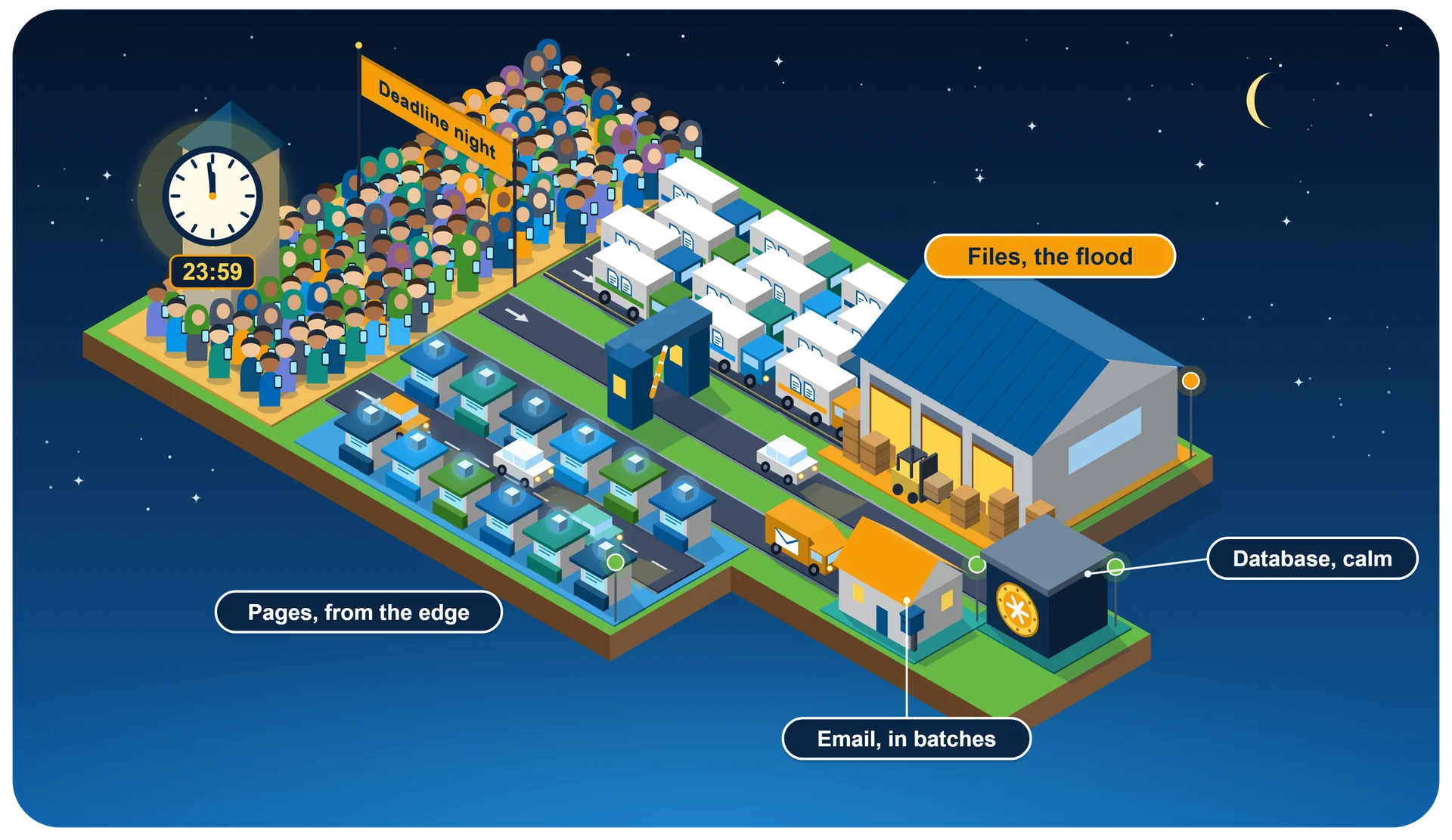
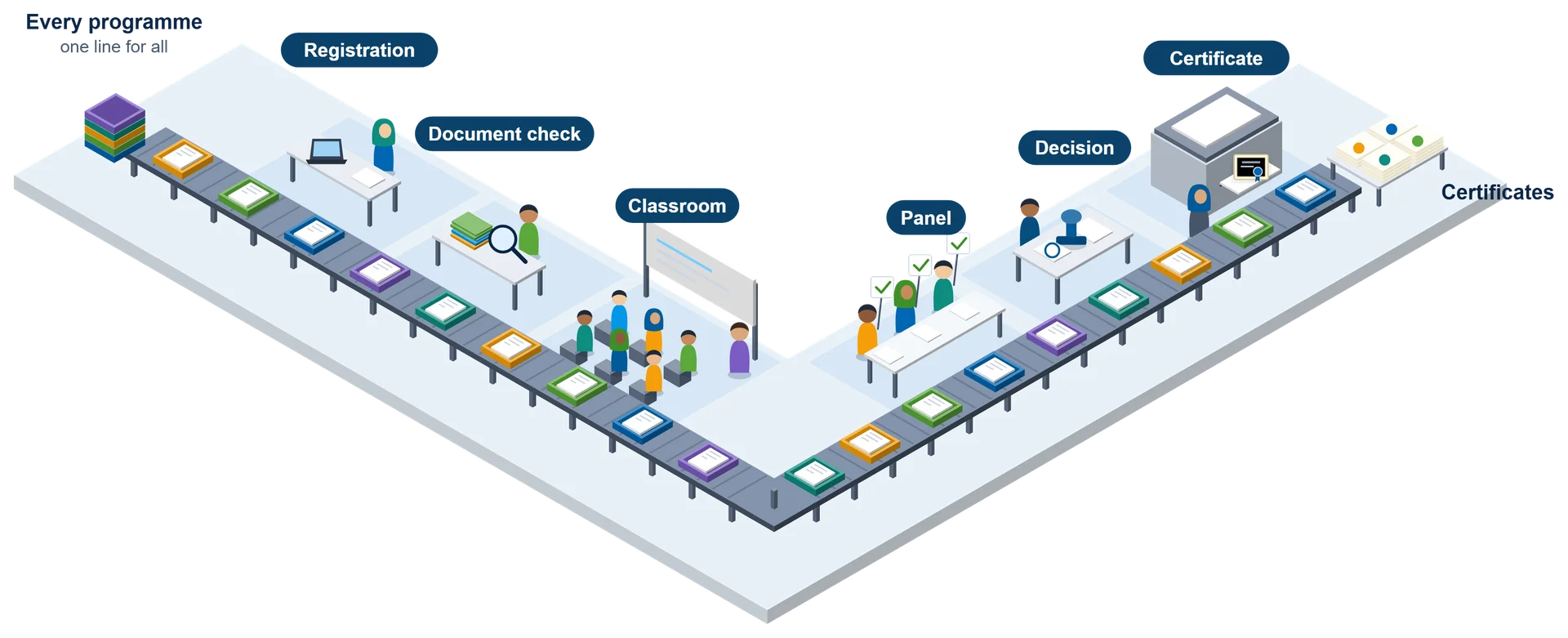
NextThank you for reading. The back cover says how to reach me.
Notes and colophon
Screenshots use example or demo data; names, ID numbers and contacts are blurred or replaced. Where the work is under a non-disclosure agreement, charts show shape, not counts. The awards went to the PF Lestari team, and the living lab’s projects belong to its student teams.
Tap a page to open it full screen. Every page is also in the PDF.
Organisations invest in business outcomes, not in technology. So I build technology meant to disappear.
The best systems do not demand attention. They remove friction, respect time, and support decisions quietly, until the only thing anyone notices is the outcome: a programme that runs, a decision made in time, an audit that passes.”
Muktiadi
Muktiadi Akhmad Januar
Solutions Architect · South Jakarta, Indonesia
Bring me the problem.
If there is something you want to see working, in software, AI or hardware, I would be glad to talk. I reply in English or Indonesian.
Email [email protected]